



The Chinese men's basketball team being swept by South Korea is purely a reflection of the difference in strength.



In the previous game, the Chinese men's basketball team lost to South Korea at Beijing Wukesong Arena, but the post-game public opinion was not as negative as I had expected. Thanks to China's furious comeback in the final moments, we only lost by 4 points. The team's fighting spirit at the end led many to conclude that the loss was just due to carelessness and a slow start, not fully unleashing their potential.
After all, a few months ago at the Asia Cup, we beat this same South Korean team, which made Lee Hyun-jung cry after dominating the last game. Coach Guo Shiqiang said after the game, "I have always reminded the players that no game is ever a repeat. Just because you won at the Asia Cup doesn't mean you can win this time."
Coach Guo's words are indeed correct; no game is ever a copy. Tonight, the Chinese men's basketball team played even worse.
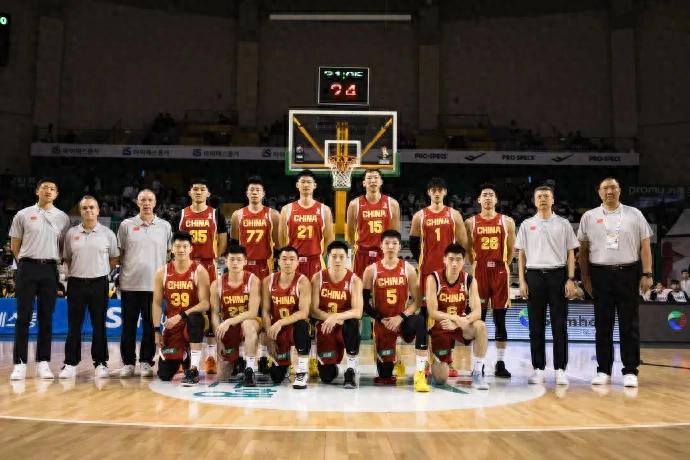
Compared to the previous game where we consistently tried to exploit Zhou Qi inside for mismatches, today we had no clear plan at the start, or rather, the players on the court seemed clueless about what to do. They awkwardly passed the ball around the perimeter with no offensive focus, forcing a bad shot as time ran down.
When the offense couldn't get going, the only option was to "find Zhou Qi," but repeated mistakes followed. One pass went directly out of bounds, which was laughable. Last game, our offense was too simple and old-fashioned, relying on the center inside and four others feeding him. Today’s offense was basically nonexistent—just chaotic play.
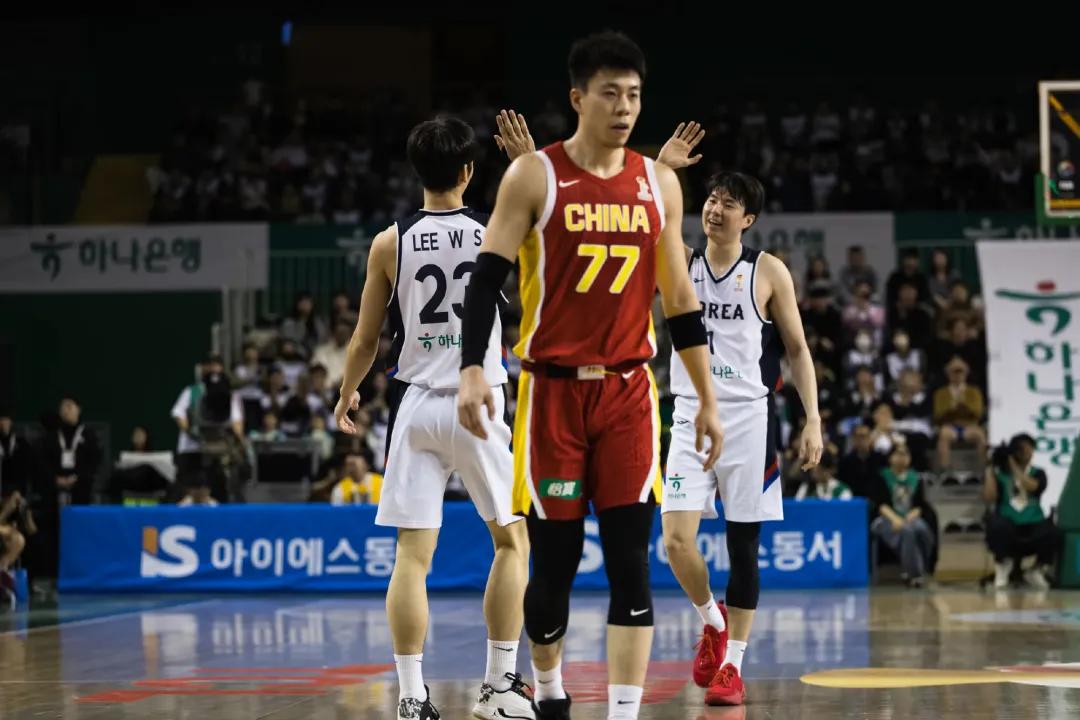
Liao Sanning came in to try to save the offense, and his two drives finally made the team's attack a bit smoother. Unfortunately, he got carried away and kept pushing forward even when the Koreans double-teamed him.
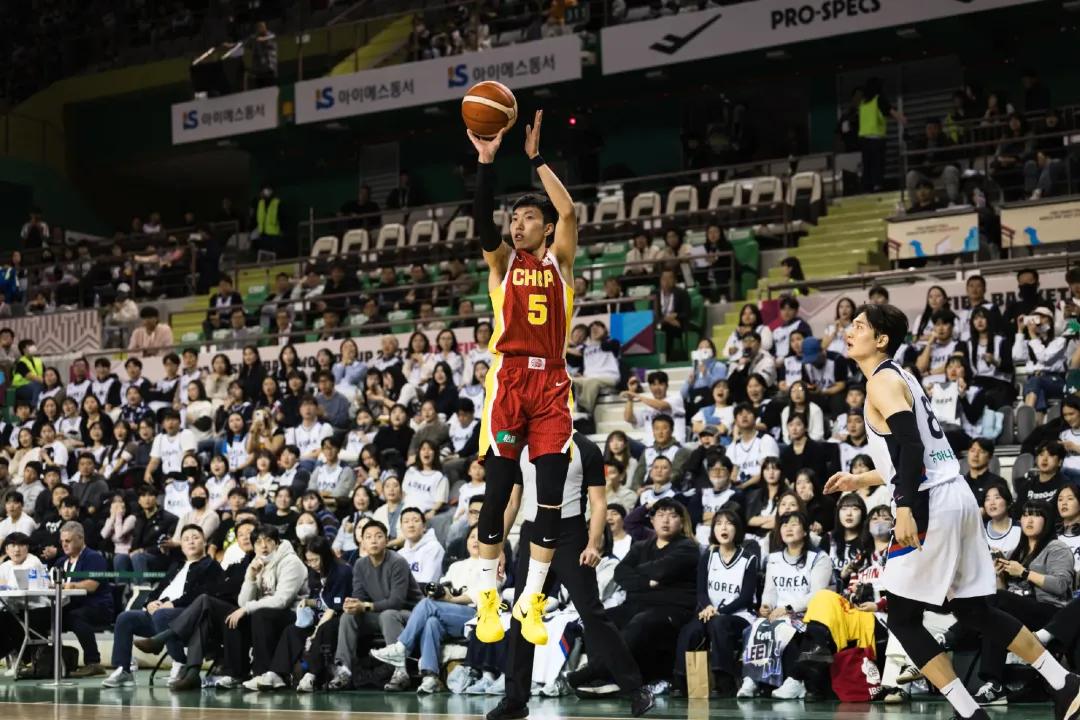
Our three-point shooting is no longer just bad; it basically doesn't exist. In the first quarter, 0 for 6; in the second quarter, the first 5 attempts also missed, totaling 11 consecutive missed three-pointers. When people are extremely disappointed, they become speechless; when speechless, they end up laughing. I cannot understand why our men's team is so terrible from beyond the arc.
It’s not only the offense; our defense was leaking everywhere, and the problem guarding the three-point line remained. After the last game, everyone knew Lee Hyun-jung had to be stopped, yet in this game, he didn’t even attack aggressively. South Korea’s offensive focus shifted to Lee Jung-hyun, who went 6 for 6 and scored 16 points, exploding again.
Lee Hyun-jung, who dominated the last game, started by setting screens and creating chances for teammates, building their confidence. South Korea made 7 of 10 three-pointers by halftime, shooting 61% overall. Our team only made 1 out of 12 three-point attempts, with just Cheng Shuaipeng scoring one.
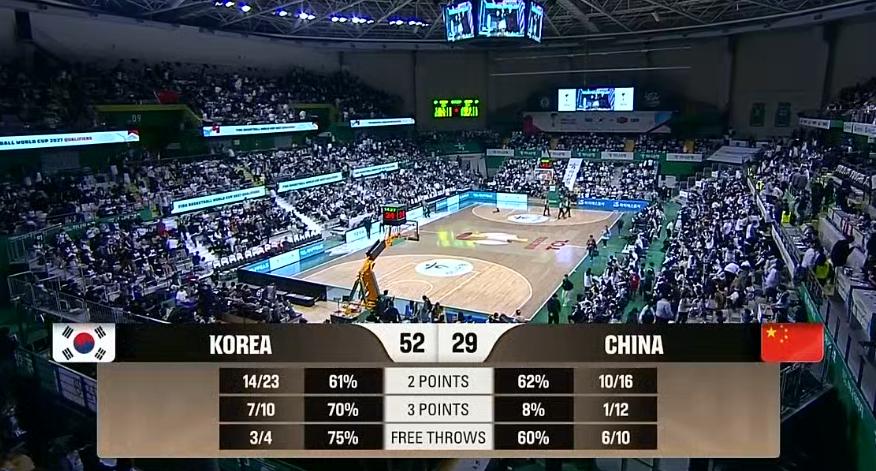
With such a shooting disparity, falling behind by 23 points is quite normal. Not only did we miss three-pointers, but we also missed free throws. This is not surprising since the team has always been poor at free throws, even during the Asia Cup, where free-throw shooting remained unreliable.
Of South Korea’s 7 three-pointers in the first half, if I recall correctly, none were by Lee Hyun-jung. The Koreans used two completely different approaches over the two games to overwhelm us. In the second half, when Lee Hyun-jung started his one-on-one attacks, the gap quickly grew to over 30 points, and the game lost all suspense.
Later in the game, our zone defense temporarily stopped South Korea from scoring, narrowing the gap a bit. But it offered no comfort to fans—just like the last game’s final moments, one wonders why it wasn’t done earlier.
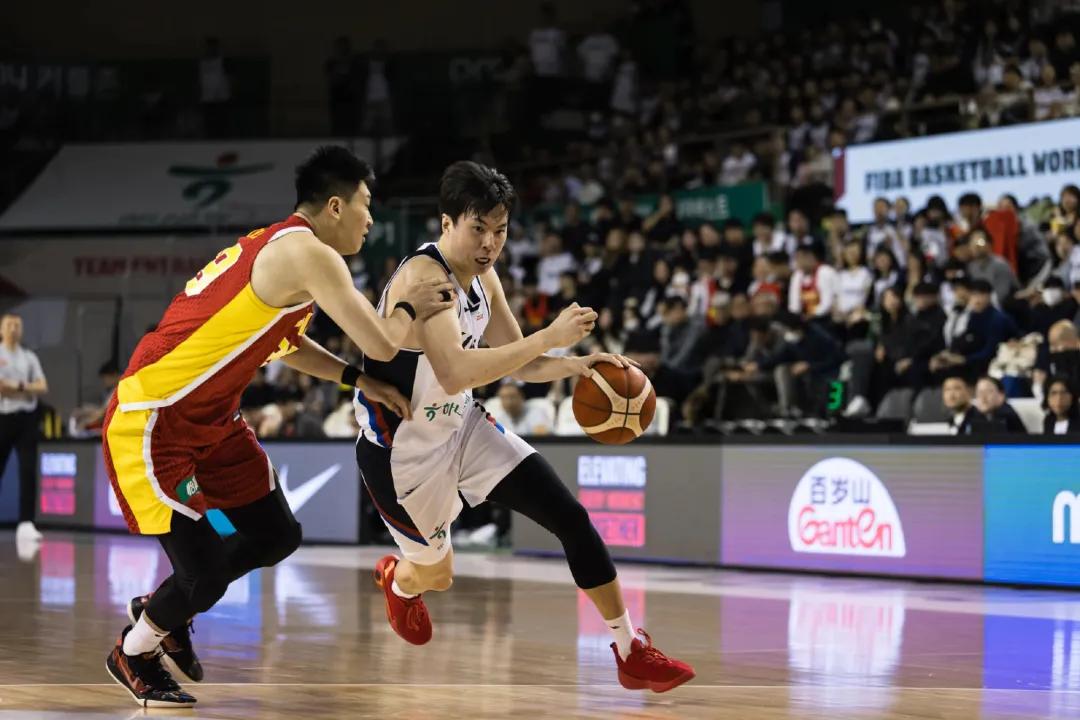
Although we eventually lost by 14 points, remember that at one point, South Korea led by 32 points, an indelible humiliation. When the game still had suspense, we were behind South Korea in every aspect, even losing the battle for rebounds.
Across both games, our three-point shooting was 11 out of 54, conceding a total of 170 points. Stop making excuses; losing twice to South Korea is a true reflection of the gap in strength. Only by acknowledging the difference can we face reality.
Why is South Korea’s offense so smooth, and why can their players make three-pointers? It’s been just over a hundred days since we beat them at the Asia Cup. What exactly happened during this time? Compared to the Asia Cup roster, we’re missing Wang Junjie, Zhao Rui, and Yu Jiahao. Why does it feel like a completely different team?
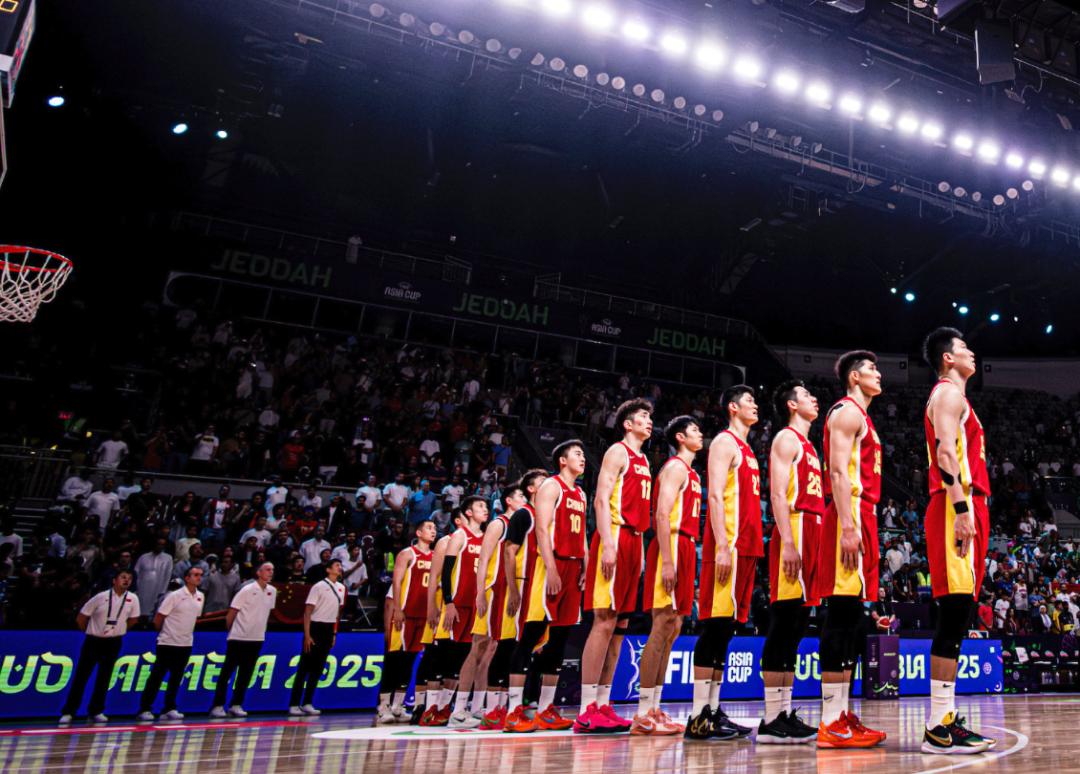
We definitely need Zhao Rui’s driving and leadership, and Wang Junjie’s ability to create offense on his own. But why can’t the remaining players fill the void left by these two? Many of them don’t even play like professional athletes, yet they are all official national team players.
We can only be thankful that these two games weren’t against Japan, who are in the same group. Otherwise, under current circumstances, some people would surely lose their jobs.
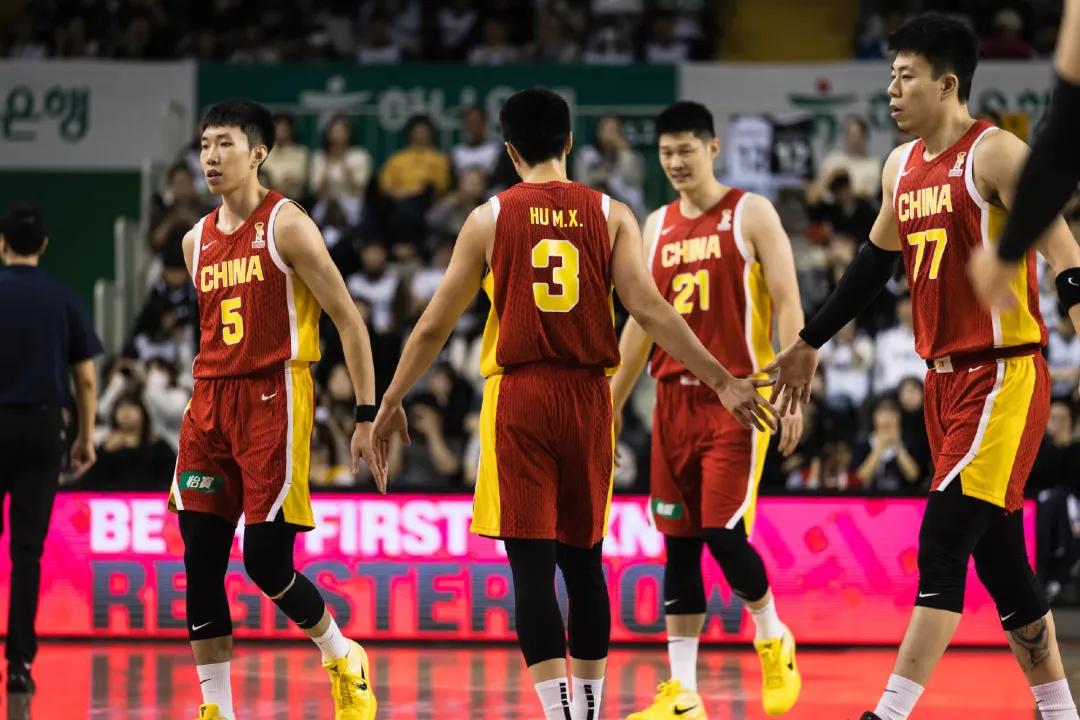
These two games have shattered the confidence that the Chinese men's basketball team had rebuilt at the Asia Cup. Building a tall building is hard, but destroying it takes only a moment.


Wonderfulshortvideo
Steph & LaMelo shot the lights out 🤩


Who’s the most famous person in Snoop’s phone?
"It's the shhh with a hyphen." More Slovenian lessons 😂
Short… SIKE
LaMelo Ball had an amazing game tonight 💫
THIS PLAY WAS INSANE 🤯
What a FANTASTIC FINISH by the @Phoenix Suns 🤩
 Links
Links
 Contact
Address:UNIT 1804 SOUTH BANK TOWER, 55 UPPER GROUND,LONDON ENGLAND SE1 9E
Number:+85259695367
E-mali:[email protected]
 App
App


