



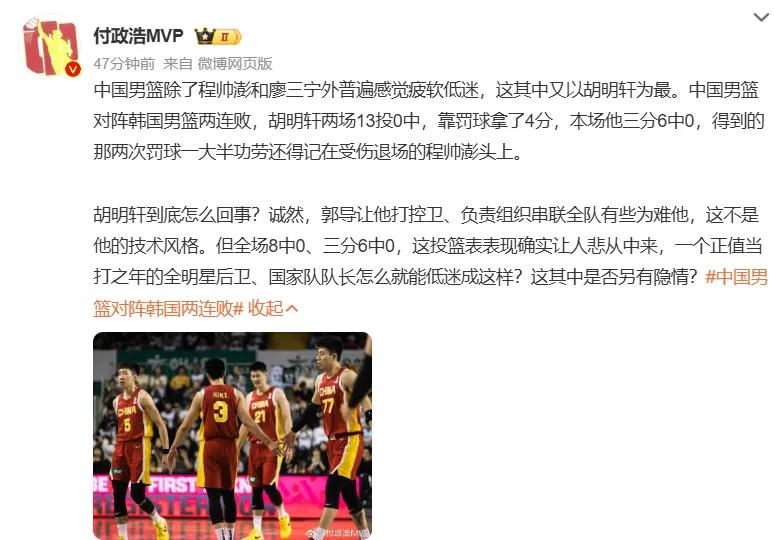
Three games, 19 shots, zero made! Hu Mingxuan is unbelievable! The first Chinese men's basketball player to develop a fear of playing Korea.



In the Asian Cup quarterfinals, he missed all 7 shots, including 5 attempts from three-point range; in the first World Cup qualifier, he was 0 for 4 with 0 for 2 from three; in the second qualifier, 0 for 8 shooting with 0 for 6 from three-point territory.
Altogether, he took 19 shots without making a single field goal—this is how Hu Mingxuan has performed in his last three matches against the Korean team...
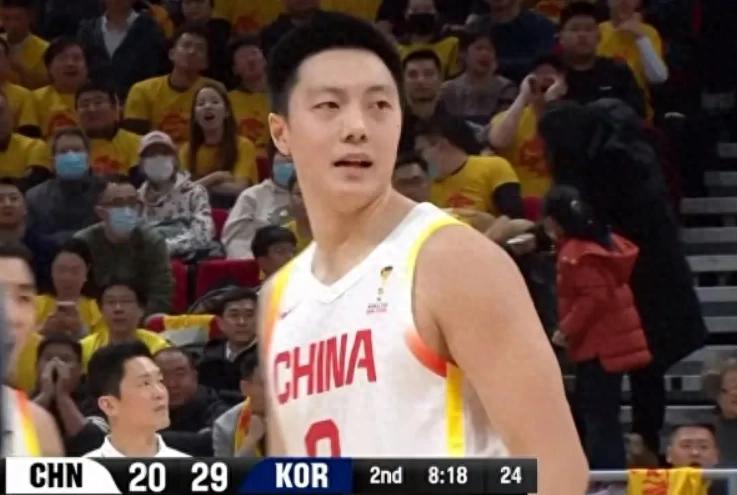
Where did Hu Mingxuan, who scored 26 points on 7 of 10 shooting including 5 of 7 from three in this year’s Asian Cup final and nearly led China to an upset over Australia, disappear to?
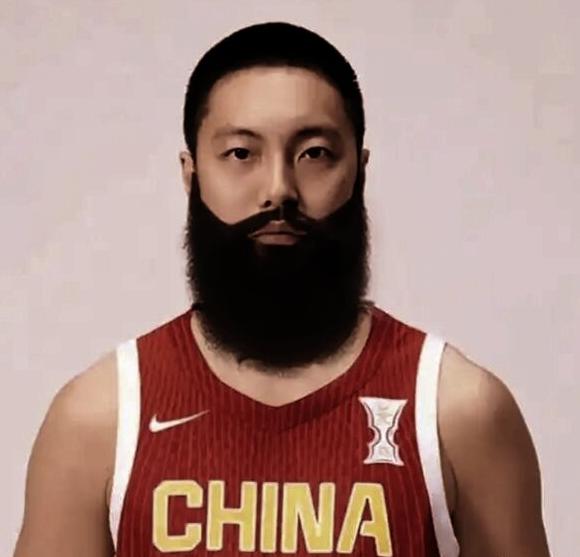
At home, 76-80, and away, 76-90.
The Chinese men's basketball team lost two consecutive World Cup qualifier games to South Korea.
As mentioned, Hu Mingxuan, who was highly anticipated, lost his composure in both matches.
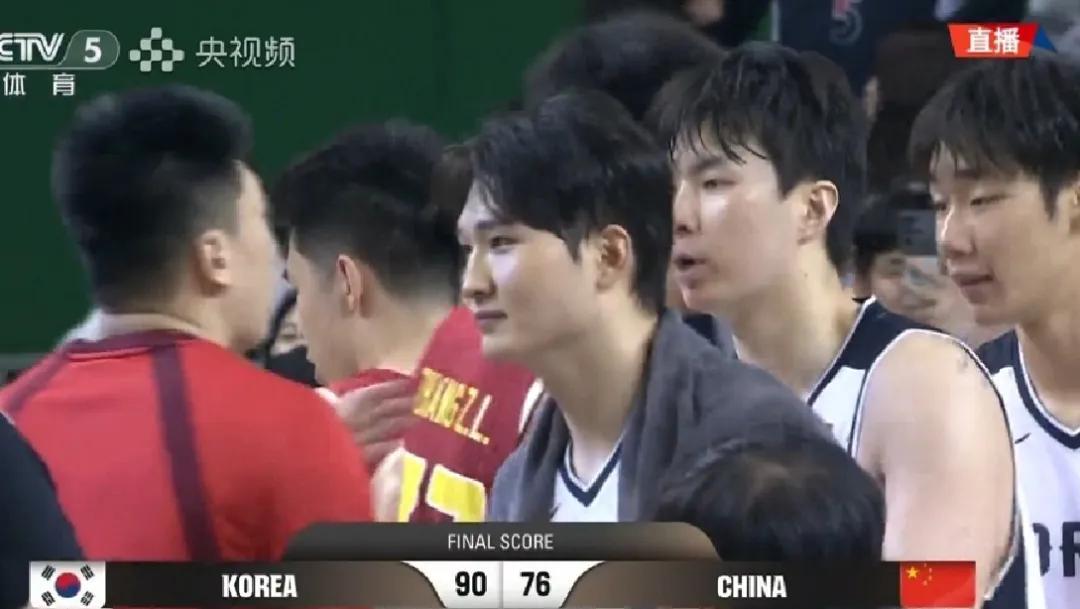
Although the Chinese team’s losses cannot be entirely blamed on Hu Mingxuan, his stats are glaringly disappointing, repeatedly letting fans down, possibly making him the first player with a “fear of Korea” syndrome in history.
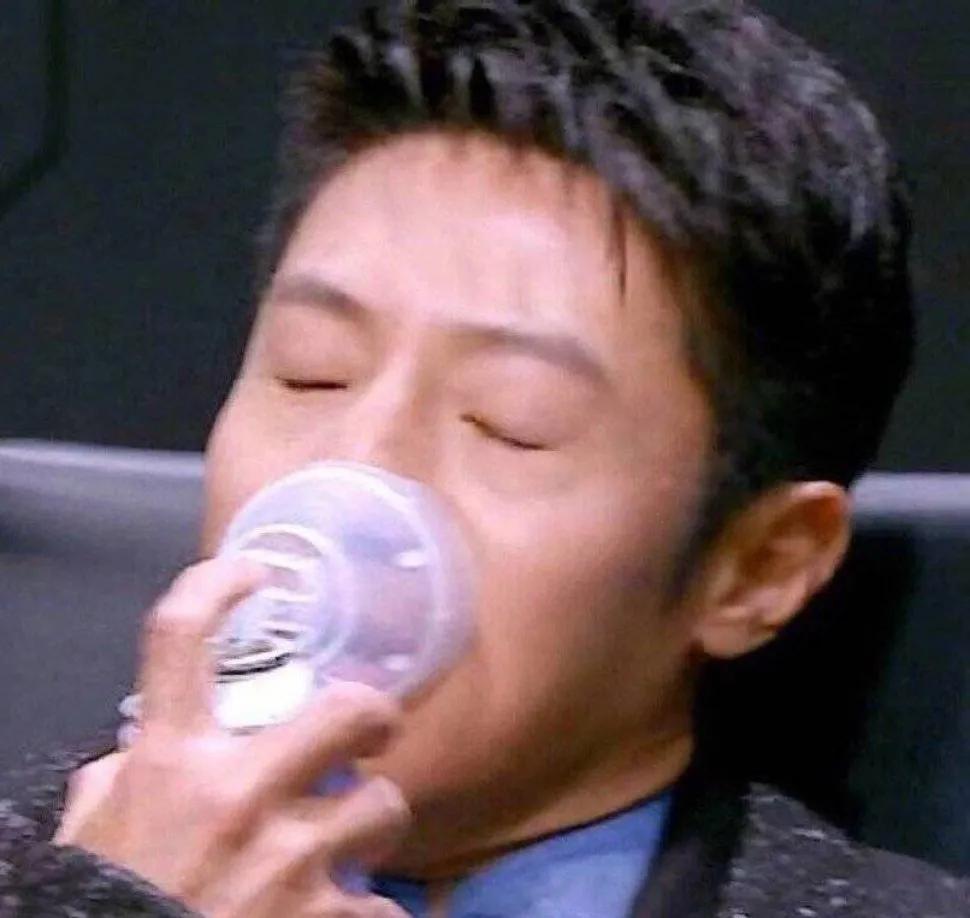
Even though he occasionally shines, with one great game followed by several poor ones, who can tolerate such inconsistency and loss of confidence? A player so unstable might not be suited for high-stakes national team competitions where every game counts.
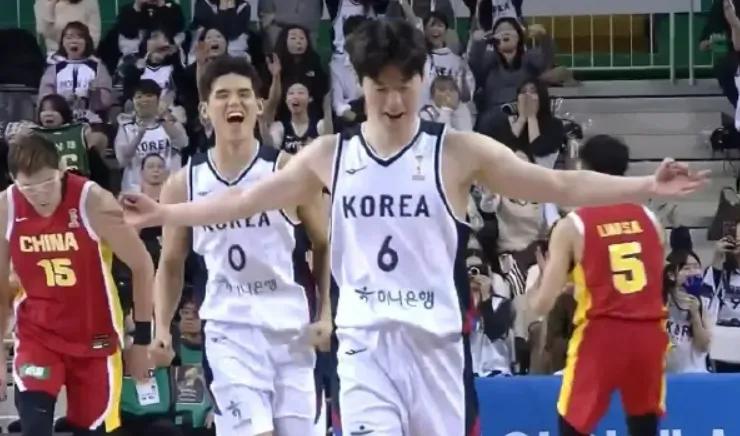
Of course, the Chinese men’s basketball team needs more than just replacing one or two players; especially in playing style and philosophy, they must quickly catch up with modern basketball trends. The Korean team is a prime example worth learning from—free-flowing, positionless basketball emphasizing shooting, almost like an NBA team. They have quietly undergone a qualitative transformation.
The remaining group stage schedule for the Chinese men’s basketball team in the World Cup qualifiers is as follows:
On February 26 next year, against Japan;
On March 1 next year, against Chinese Taipei;
On July 3 next year, against Japan again;
On July 6 next year, against Chinese Taipei.
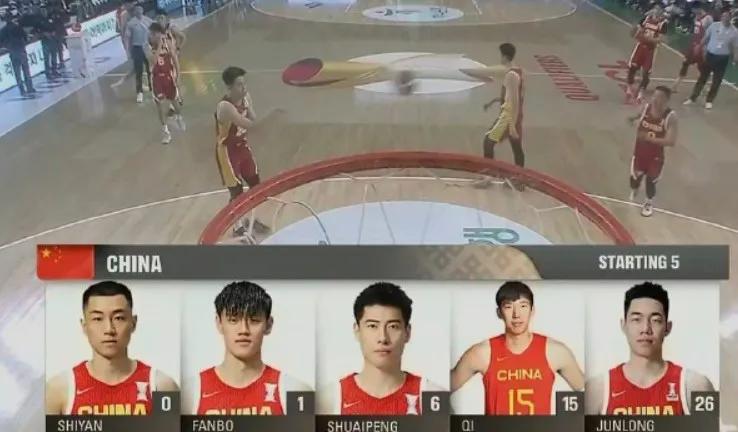
According to the rules, each group has 4 teams, with the top 3 advancing to the second stage, carrying over their first-round records. In the second stage, 12 teams are split into two groups, where the top 3 from each group plus the best fourth-place team (7 teams total), along with host Qatar, qualify for the 2027 World Cup.
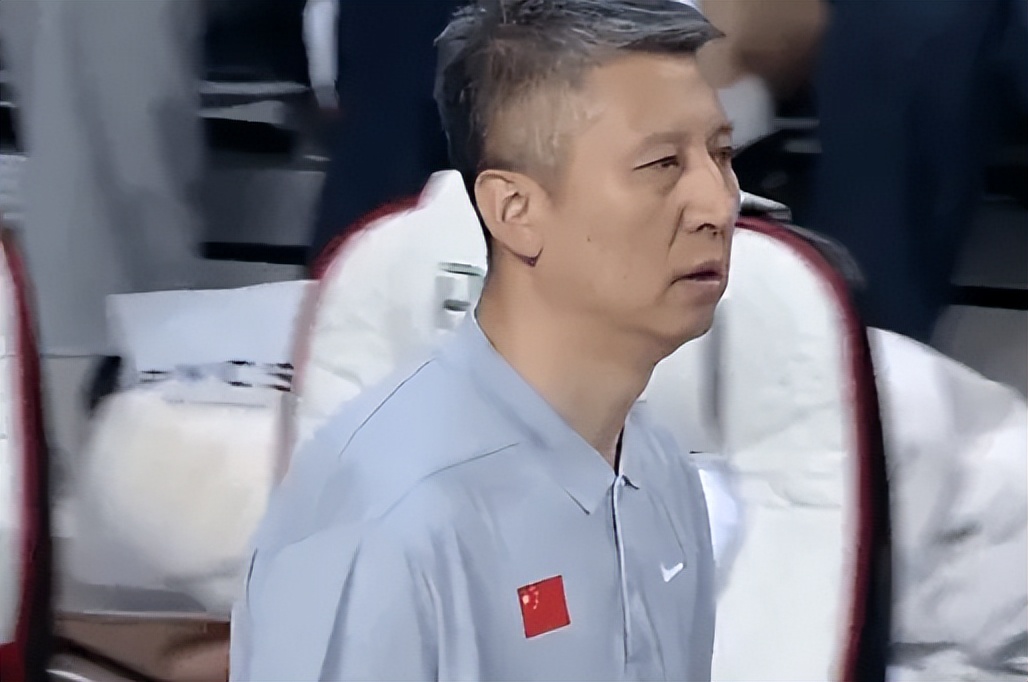
In short, the Chinese men’s basketball team still has a chance to make the World Cup, though the situation looks bleak; if they ultimately fail to qualify, then a complete overhaul should follow naturally.


Wonderfulshortvideo
Steph & LaMelo shot the lights out 🤩


Who’s the most famous person in Snoop’s phone?
"It's the shhh with a hyphen." More Slovenian lessons 😂
Short… SIKE
LaMelo Ball had an amazing game tonight 💫
THIS PLAY WAS INSANE 🤯
What a FANTASTIC FINISH by the @Phoenix Suns 🤩
 Links
Links
 Contact
Address:UNIT 1804 SOUTH BANK TOWER, 55 UPPER GROUND,LONDON ENGLAND SE1 9E
Number:+85259695367
E-mali:[email protected]
 App
App


