



The Rockets' most humiliating defeat of the season came after being overturned by the last-place team by 25 points.



When the Rockets held a 67-45 lead against the Pelicans at halftime, it was unlikely they expected to face their most shameful defeat of the season in the second half and overtime.
After extending their lead beyond 20 points, the Rockets began to slack off on both ends, letting the Pelicans close the gap somewhat in the third quarter. Yet, after three quarters, they still maintained a 16-point advantage. The Rockets, however, failed to stay alert, and within just over two minutes in the fourth quarter, the Pelicans had trimmed the lead to single digits, finally waking Houston up — but by then, the game’s momentum had shifted completely to New Orleans.
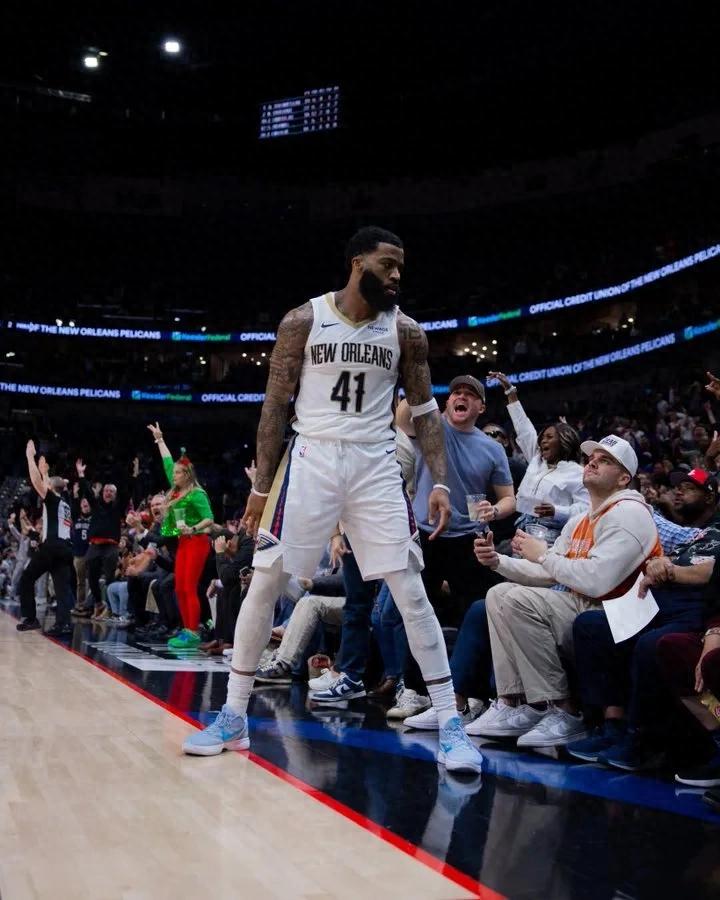
Although the Pelicans spent a long time at the bottom of the Western Conference standings, they have recently won back-to-back games against the Trail Blazers and Bulls, showing upward momentum. With a clear focus on developing Quinn and Fils, the Pelicans now carry no burdens or tanking excuses. This version of New Orleans, seeing a real chance to win, clung tightly to the Rockets.
As the game reached its critical moments, it entered the Rockets' weakest area. In the final minute, Houston deployed their five-big lineup, and then Sengun dribbled inside from beyond the three-point line. The Pelicans’ defender Amen came up to double-team, and Sengun was about to lose the ball when Adams stole it. In the ensuing scramble, Adams was fouled.

The Rockets’ five-big lineup inherently creates very poor spacing, and Sengun choosing to post up inside only invited a trap. It was only thanks to Adams’ steal that this possession was salvaged. Adams made one of two free throws, putting the Rockets ahead by 2 points.
On the next possession, Murphy missed a shot, Sengun grabbed the rebound but drew a foul. With 44 seconds left, if Sengun made both free throws, the Rockets could extend their lead to 4 points and gain a commanding position. However, Sengun missed both attempts.
The basketball gods quickly punished them. Saddiq Bey scored on the next possession, and the Pelicans officially erased the huge 25-point deficit. In the following two possessions, Amen and Quinn each scored two points. With 9.4 seconds remaining, the Rockets had a chance for a game-winning shot.
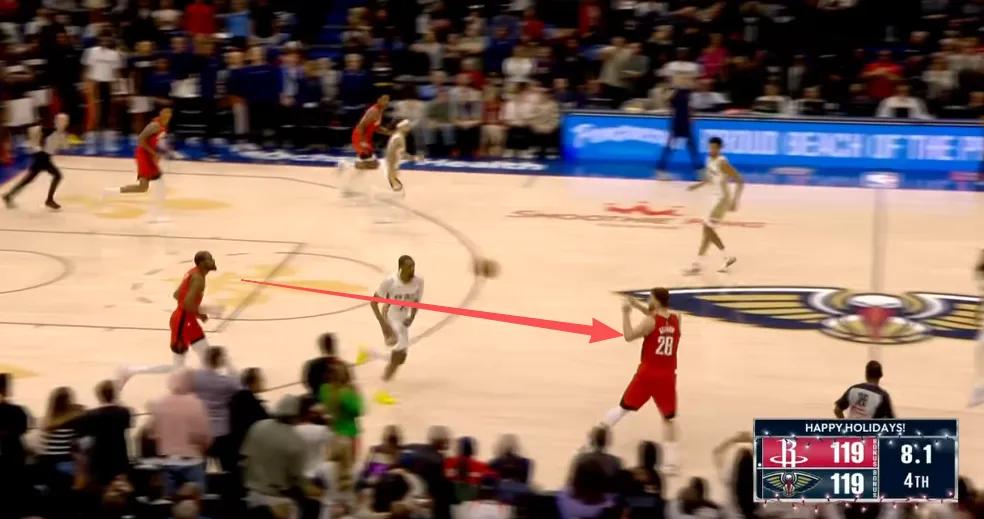
Durant received the ball, Sengun was calling for it, but Durant passed without involving him again. Sengun drove inside from the three-point line once more, got double-teamed again, and his game-winning shot missed, sending the game into overtime.
After shooting an absurd three-pointer against the Nuggets in the previous game, Sengun missed another crucial shot, and earlier he even missed two free throws in a row. I understand Udoka letting Sengun handle critical plays often to build his confidence, but if Durant can’t take control in the final moments, then what was the point of trading for him?
In overtime, a similar scenario unfolded. Durant finally got the ball but then passed it again to Sengun at the 45-degree angle. The Rockets cleared one side of the court to let Sengun post up again. Look at the Rockets’ current lineup: still five big men. Except for the defender guarding Durant, the other four defenders focus all their attention on Sengun.
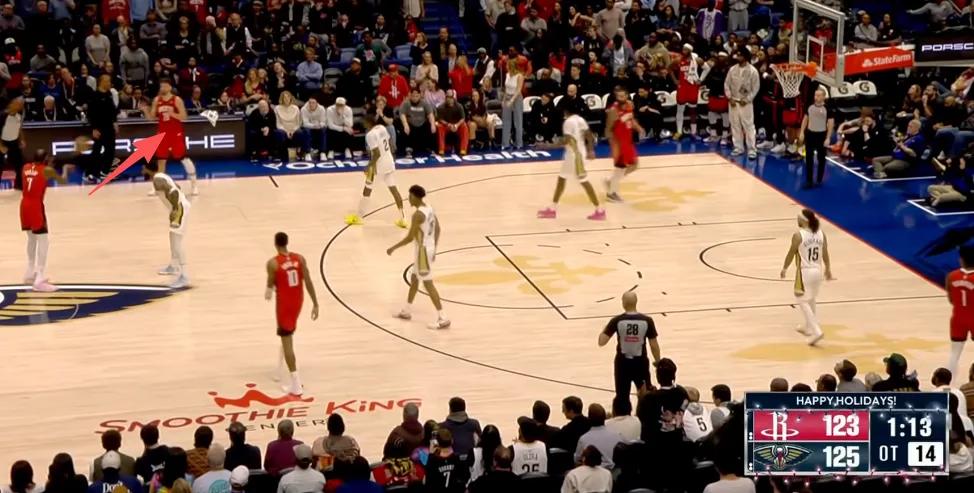
Quinn came up to double-team, Sengun tried to pass early, but a poor pass prevented Adams from catching it, resulting in a turnover gifted to the opponent. In a way, when the Rockets field their five-big lineup and let Sengun handle the ball, they face a 3-on-4 disadvantage. Amen is completely unguarded because defenders know he can’t make shots.

Before this game, Amen’s open three-point shooting percentage was only 15.8%, earning him zero respect from defenders. After that possession, Durant became frantic, scoring two quick baskets—one fast-break dunk and one three-point foul with three made free throws—but the Rockets still trailed by 1 point. After a tactical foul, the Pelicans made both free throws, pushing the lead to 3 points.
In the final possession of overtime, the Rockets finally put Shepard on the floor for the first time in OT. Durant received the ball but was immediately double-teamed; he quickly passed to Shepard, who got a completely open three-point attempt but missed. Later, Sengun grabbed an offensive rebound, and Shepard missed another open three-pointer, sealing the Rockets’ loss.
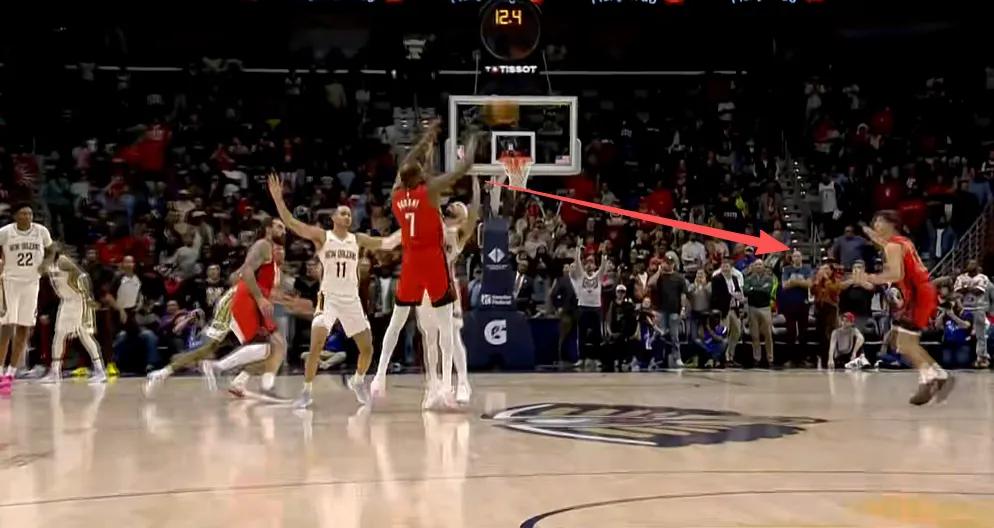
Missing two consecutive open three-point attempts to tie the game is Shepard’s fault. However, at least the Rockets had a tactical plan, maximizing Durant’s role. The five-big lineup isn’t unusable, but when they deploy it and still let Sengun post up while leaving Durant sidelined, the Rockets’ offense becomes a disaster.
Durant played very well today, shooting a perfect 7-for-7 in the first half, including 4-for-4 from three-point range, scoring 18 points with 4 rebounds and 2 blocks. This marks the third time in Durant’s career that he has scored at least 18 points in a half with 100% shooting. For the entire game, Durant was 12-for-15 with 4-for-6 from beyond the arc, missing just one shot inside the paint, finishing with 32 points and 4 blocks. Losing this game was extremely frustrating for Durant.
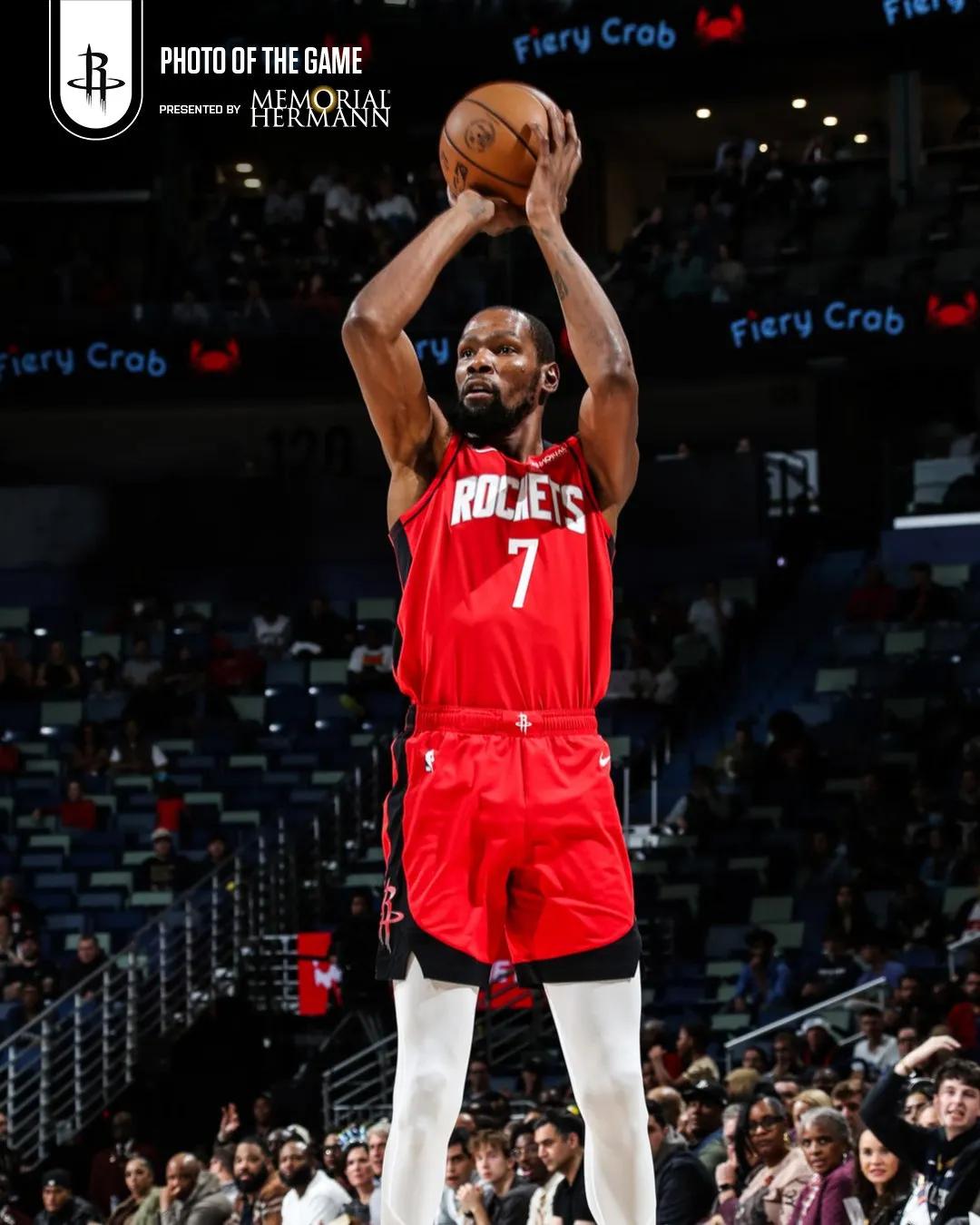
The Rockets’ fundamental problem is not the lack of a good point guard, but their overall poor shooting. Setting aside Durant’s 4-for-6 from three, the rest of the team combined for only 6 makes on 26 attempts. Among starters, Sengun and Amen pose no three-point threat, Jae was off today shooting 1-for-6, and Okogie has improved his three-point shooting this season but hasn’t produced much.
If Okogie were replaced by Adams, the shooting ability and offensive spacing of this lineup would be even worse, which is obvious without watching the game. Relying solely on rebounding, the Rockets cannot win every game. Even when they get fouled after securing a rebound, they can’t guarantee making the free throws.
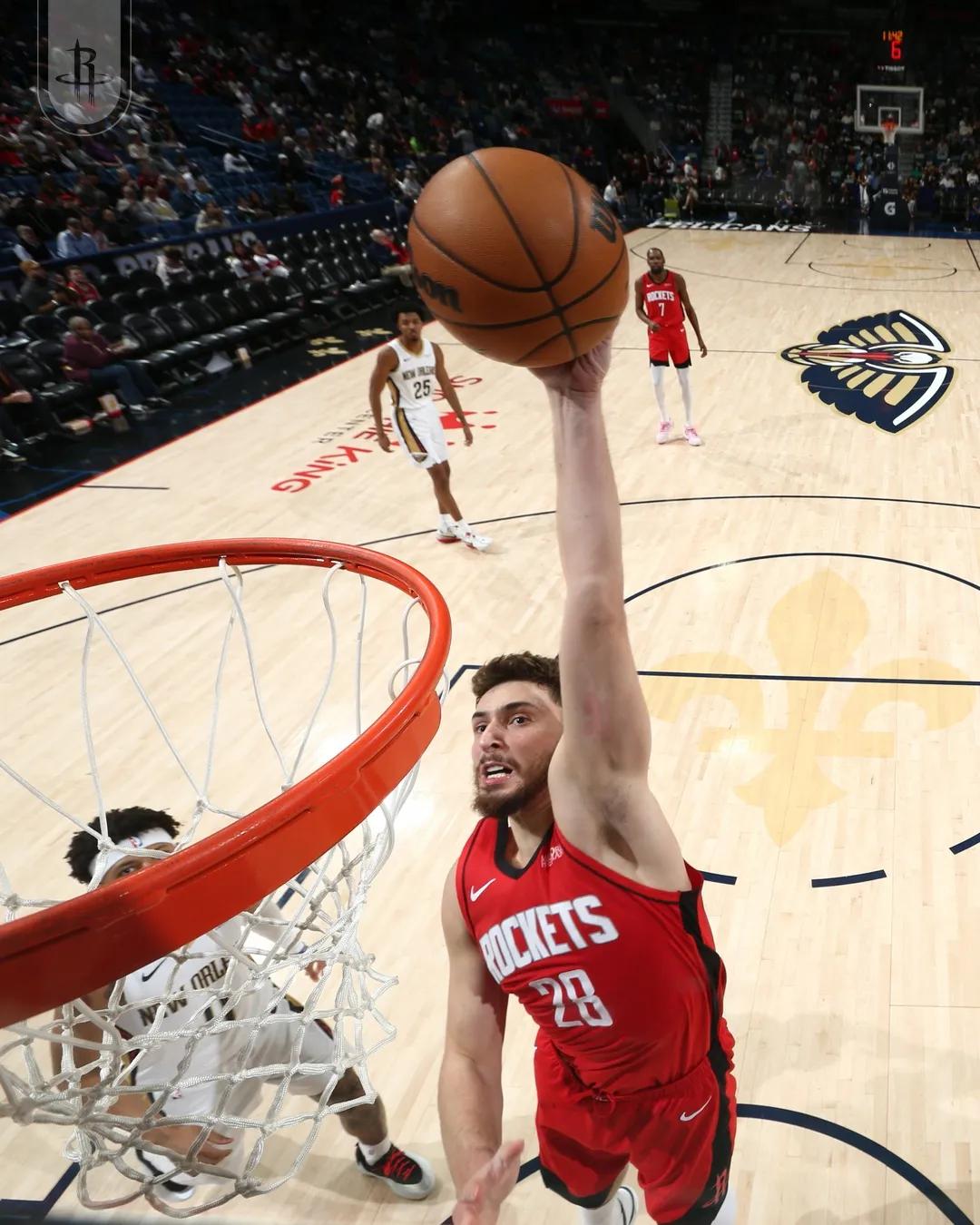
If losing to the Nuggets could be considered a close defeat, then this 25-point collapse to the Pelicans is a complete humiliation. Perhaps the returns of Eason and Fini-Smith will help solve some shooting issues, but Rockets coach Udoka still needs to realize that Durant’s role on this team is not to be a bystander in clutch moments.


Wonderfulshortvideo
Luka & LeBron led the @Lakers to a win, combining for 73-pts on the night 🤩


LaMelo Ball had an amazing game tonight 💫
These two went off tonight 🐝
That pass was ridiculous 👀
LAMELO CALLED GAME 🥶
“Off the launching pad!” 🤯
LeBron is cooking in year 23 👑
 Links
Links
 Contact
Address:UNIT 1804 SOUTH BANK TOWER, 55 UPPER GROUND,LONDON ENGLAND SE1 9E
Number:+85259695367
E-mali:[email protected]
 App
App


