



Portland Media: Trail Blazers Made the Wrong Center Pick Last Summer, Had Chance to Get Quinn but Chose Yang Hansheng


On January 18th Beijing time, in the last two G League games, Yang Hansheng recorded career highs of 22 points and 17 rebounds, but upon returning to the Trail Blazers, he remains unable to secure a rotation spot or produce consistently strong play. This has led to some dissatisfaction from Portland’s media. Today,Portland media outlet Rip City Project wrote about the Trail Blazers’ draft decisions with the headline: "Trail Blazers Clearly Made the Wrong Center Pick Last Summer."Here are the related excerpts from the article —
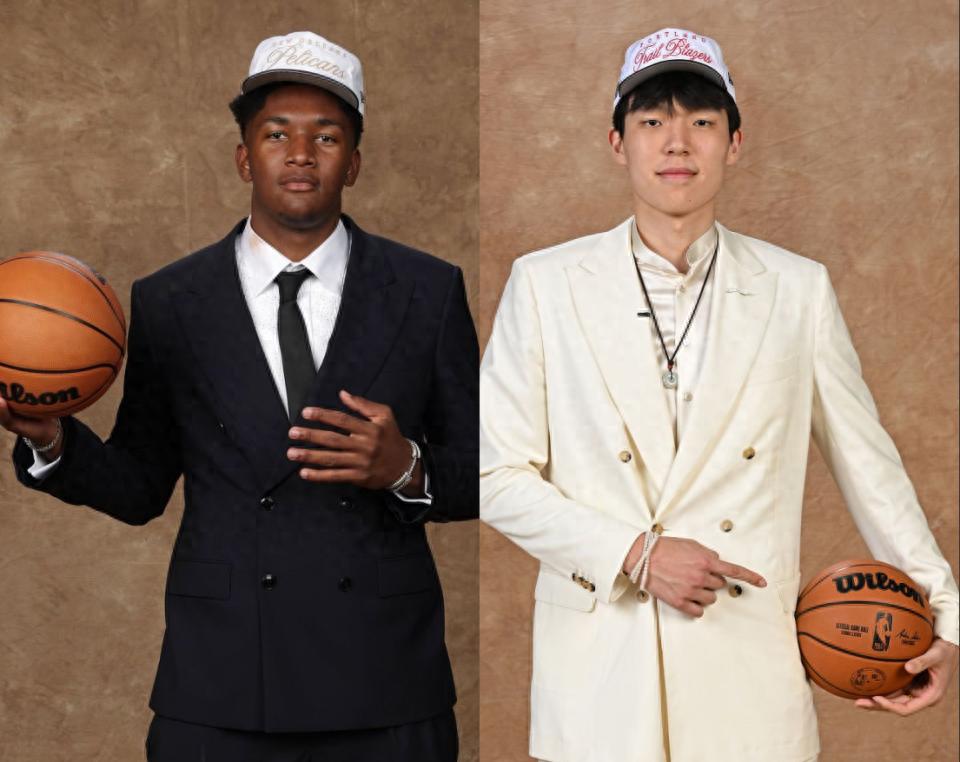
The Trail Blazers originally had an opportunity to select Quinn but instead opted for a riskier and more unconventional choice by picking Yang Hansheng. Now that both rookies are halfway through their first season, it’s clear that Portland’s decision was mistaken.
Quinn currently ranks fourth on the official rookie leaderboard, averaging a well-rounded 12.6 points, 7.6 rebounds, and 4.3 assists per game. In contrast, under coach Chauncey Billups, Yang Hansheng has seen almost no playing time. He still has significant room for improvement on both offense and defense; his current level suggests he is better suited to developing in the G League, gaining experience through extensive playtime to adapt to the NBA’s pace.
If the Trail Blazers’ goal was to strengthen their frontcourt and find a teammate for Klingen, Quinn would have been an excellent fit.Pre-draft projections had Quinn’s pick position right around the Trail Blazers’ 11th overall selection, while Yang Hansheng was widely expected to be chosen only in the second round. Early season performances have already explained why public evaluations of these two rookies’ futures differ so greatly.
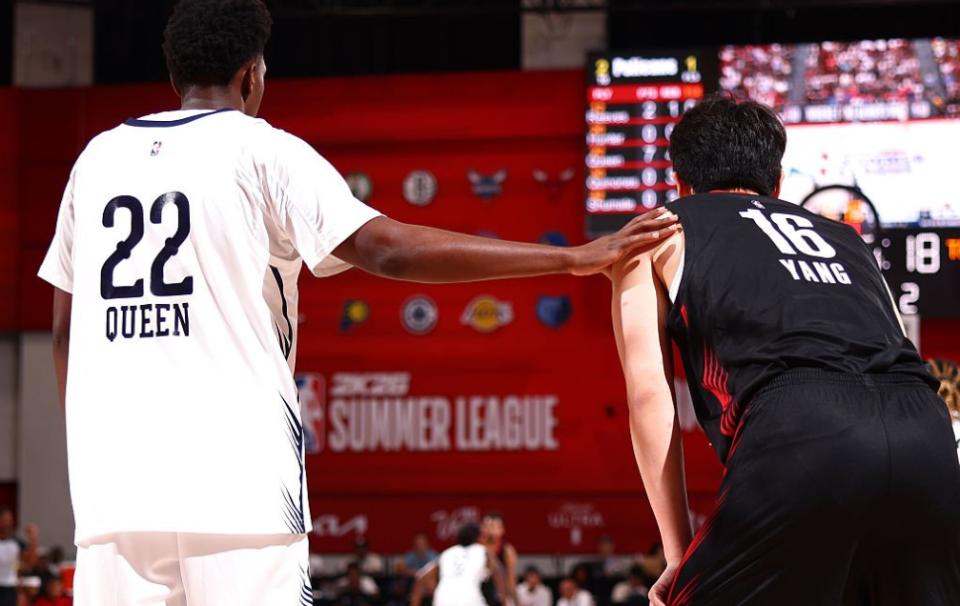
What is even more puzzling,is that Yang Hansheng’s skill set is actually very similar to Quinn’s.Both possess elite court vision and basketball IQ, with the potential to become primary offensive initiators for their teams. However, only Quinn has successfully translated these strengths onto the NBA stage. He demonstrated this ability at the University of Maryland, and since entering the league, his unique playing style has adapted to the NBA’s pace even better than many expected.
Admittedly, Quinn’s weaknesses have also become apparent during his time with the New Orleans Pelicans. Standing 2.06 meters tall, he is not a strong rim protector; additionally, his outside shooting is quite limited, with a three-point shooting percentage of just 17.9%, making it difficult for him to stretch the floor. This has forced the Pelicans to consider how to compensate for these deficiencies.
However, it should be noted,that there is one player who perfectly covers Quinn’s shortcomings — that player is Klingen.

Klingen is a top-tier rim protector, and in his second NBA season, his shooting has improved significantly, attempting 2.8 three-pointers per game with a 31.8% success rate. Had the Trail Blazers paired Klingen and Quinn in the frontcourt, Klingen could anchor the defense inside while Quinn, alongside the team’s athletic backcourt, could orchestrate the offense and fully utilize his passing skills. This combination would have meshed perfectly with Portland’s young core.
Unfortunately, the Trail Blazers chose to "go all in" instead. In theory,Yang Hansheng’s height advantage at his position does indeed offer a higher ceiling — provided he can fulfill his full potential in the NBA. But judging from his nearly stagnant performance this season, that possibility seems increasingly unlikely.
Though Quinn also has rookie flaws, he was clearly the safer pick at the time. Now, the Trail Blazers are paying the price for what appears to have been an unnecessary draft gamble.


Wonderfulshortvideo
Listen as the crowd roars at the sight of Tatum’s first run out this season! 🤩


Tatum gets the putback ➡️ three as his first and second buckets back since returning 🔥 🔥 🔥
Still not over this JT slam from last season 🤯
Featuring his pregame ritual 🙏
JT is back 💚
This was too smooth 😮💨
It has begun… 🫡
 Links
Links
 Contact
Address:UNIT 1804 SOUTH BANK TOWER, 55 UPPER GROUND,LONDON ENGLAND SE1 9E
Number:+85259695367
E-mali:[email protected]
 App
App


