



Foreign media analyze Yang Hansen's dilemma: attention only ensures he won't be cut; a half-second delay in decision-making leads to punishment



On January 25th Beijing time, foreign outlet Finessin Sports analyzed Yang Hansen's current challenges. Despite his delicate technique and feel, the intense NBA competition punishes even the slightest delay in decisions. The media mentioned Yang’s significant exposure but acknowledged it only secures him from being released, without ensuring steady minutes. Here is their analysis—
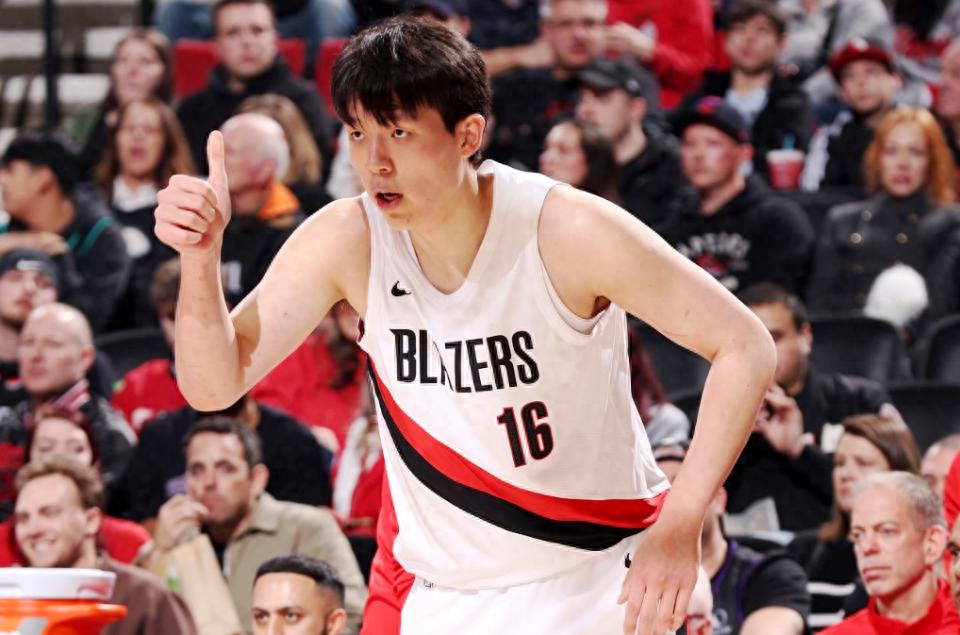
When fans hear "first-round pick," they often picture a glamorous life, but for a struggling rookie big man, daily life resembles a battle for survival. You must work hard to earn the coach’s trust in the NBA rotation while constantly being ready to fly to the G League—where you not only have to dominate but also refine your skills through gameplay. Every possession becomes evidence to prove yourself.
Moreover, playing in the G League is far from a casual summer camp or just gaining experience. The playing space, teammates, and pace differ drastically from the NBA, and there’s immense pressure to prove yourself immediately. In the NBA, doing your part earns you playing time; in the G League, as a first-round big man, everyone expects you to deliver dominant performances. Poor showings invite immediate and overwhelming criticism.
For big men, the NBA’s game pace is another major challenge.In the CBA, Yang Hansen could catch the ball, pause briefly to read the court, then pass to a cutting teammate. But in the NBA, that split-second hesitation allows defenders to quickly rotate, completely blocking passing lanes. The same passing vision turns into turnovers; the same pivot steps get stolen; the same dribbling moves are called for traveling.
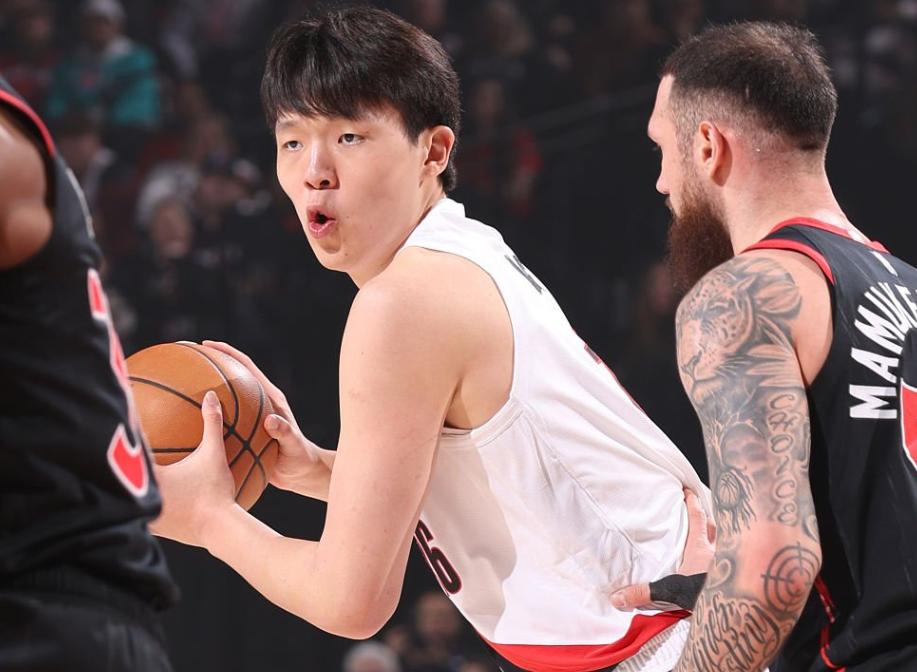
Big men must endure constant physical contact on the court: every pick-and-roll is a collision, every cut is a battle for position, every rebound fight involves elbows and body checks, making easy jumps impossible. If you don’t secure position early, the spot where you receive the ball will be much farther than expected, turning skilled post footwork into rushed hook shots or awkward floaters.
Defensively, the situation is even tougher since every mistake you make is magnifiedA missed shot is a common error; but a defensive lapse lets opponents score easily; late help defense results in "and-one" plays; trying to recover with a foul can land you in foul trouble—all eyes are on you, signaling you don’t deserve to stay on the court.
Adjusting to the "pick-and-roll roll" style might be the biggest hurdle he needs to overcome. In the CBA, he could juggle multiple roles—scoring, rebounding, assisting—and still perform efficiently. Butin the NBA, coaches give a clear "task list": arrive on time for screens, protect the rim while avoiding fouls, make the simplest passing choices, retreat quickly on defense—repeating this cycle relentlessly. Two defensive lapses can freeze your minutes for the entire game.
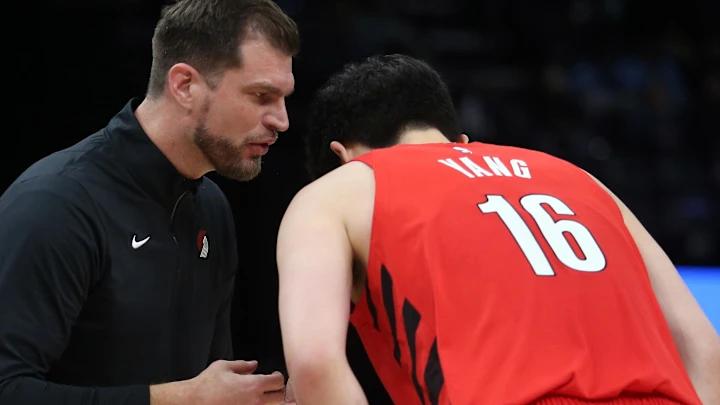
To make matters worse, the Trail Blazers’ roster structure leaves little room for error. The team already has Klingen, who is on a similar development path. This doesn’t mean Yang’s path is blocked, but it does indicate the team has no obligation to force playing time for him. If Klingen provides defensive and rebounding support, Yang must deliver more outstanding performances to earn his chances—for example, quicker decisions, sharper positioning, and consistent hustle.
This is the dilemma he faces: you can have delicate touch and solid skills, but if your decisions lag even half a second, the whole league will punish you.That explains why, despite his talent, he still posts a disappointing average of 2.5 points per game with a 29% shooting percentage.
Even amid struggles, Yang Hansen can still add value to the Trail Blazers in other ways.
Because of Yang’s presence, a Trail Blazers preseason game drew more viewers than most NBA playoff games last year. This is the so-called "800 million eyes" effect. He is not yet a star, but the attention he brings is a valuable asset, and the team knows how to capitalize on it.
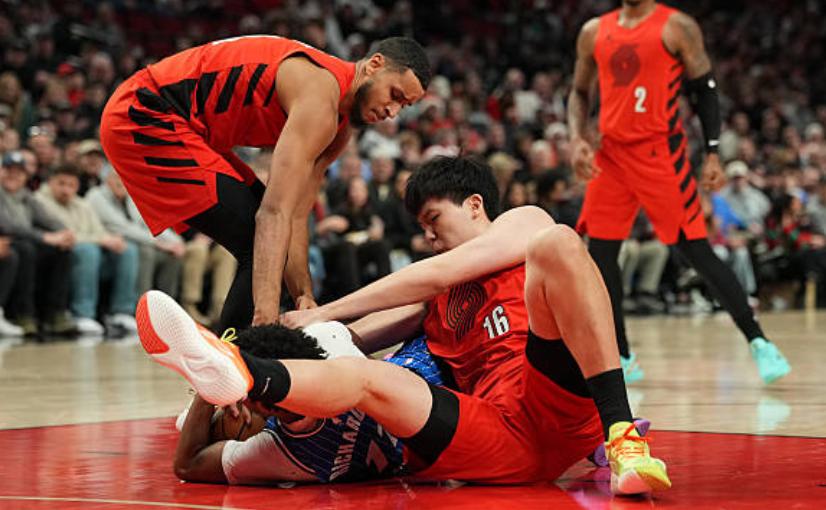
However, thisattention is a double-edged sword: it can earn him the team’s patience but also exposes every mistake under the spotlight.
On one hand, attention converts into commercial value and sponsorship leverage. Teams today don’t just rely on ticket sales; they sell daily media exposure and brand partnership rights. Every clip shared overseas is free marketing for the Trail Blazers; Yang’s massive attention gives the team confidence in business negotiations because they can offer real exposure.
On the other hand, attention boosts merchandise sales and opens recruitment channels. A player doesn’t need to average 20 points to drive jersey and shoe sales; having a large fan base can make him the team’s top merch mover. The team also values long-term brand building: if the Trail Blazers become a preferred destination for top Chinese players entering the NBA, the commercial returns justify greater patience with Yang.
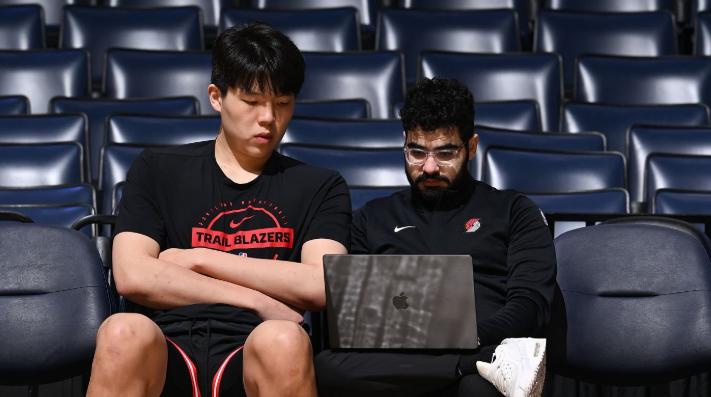
But it’s important to clarify that attention buys him a "chance not to be cut," not "stable playing time."It allows the team to keep giving him chances even after a poor month instead of cutting him outright; it encourages the team to provide professional training staff and more playing opportunities, willing to wait for his growth. But attention cannot guarantee "clutch-time minutes"—when the score is tight, coaches care less about your popularity and only focus on whether you can help the team win.


Wonderfulshortvideo
Steph & LaMelo shot the lights out 🤩


Who’s the most famous person in Snoop’s phone?
"It's the shhh with a hyphen." More Slovenian lessons 😂
Short… SIKE
THIS PLAY WAS INSANE 🤯
What a FANTASTIC FINISH by the @Phoenix Suns 🤩
ON CUE 🎶 Happy Birthday LeBron James 🎶
 Links
Links
 Contact
Address:UNIT 1804 SOUTH BANK TOWER, 55 UPPER GROUND,LONDON ENGLAND SE1 9E
Number:+85259695367
E-mali:[email protected]
 App
App


