



Yuki Kawamura shines in the G League but struggles to secure NBA opportunities! Experts detail the challenges: Height remains the primary obstacle.



On March 8 Beijing time, European basketball expert Stankevicius wrote about Yuki Kawamura, stating that despite his sensational performance in the G League (Development League), this Japanese guard faces limited playing time in the NBA, primarily due to his height.
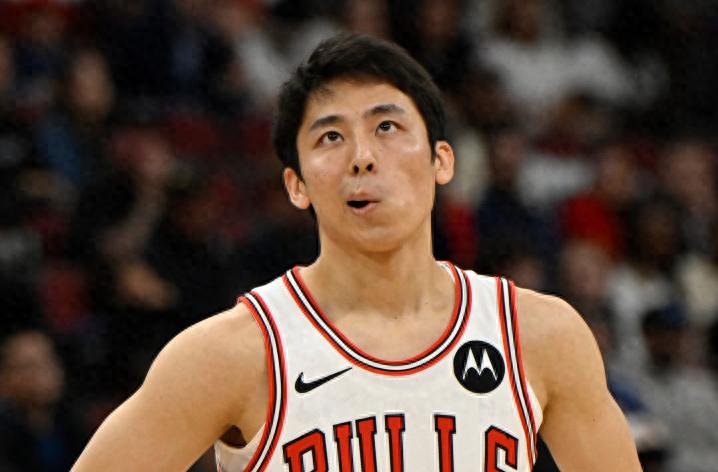
He stands only 1.70 meters tall, making him the shortest active player in the league. In today's modern NBA, which increasingly favors taller, more versatile guards capable of switching across multiple positions, he becomes an easy target defensively. Below is Stankevicius's detailed analysis—
Technically, Yuki Kawamura is already in the NBA.
This Japanese point guard signed a two-way contract with the Chicago Bulls, allowing him to move between the NBA and the G League. However, even with this contract, Kawamura's NBA minutes remain extremely scarce. He spends most of his game time in the G League and has become one of the most efficient facilitators in the league this season.
This naturally raises a question: If Kawamura's skills are sufficient to enter the NBA system, why doesn't he get more opportunities in actual NBA games? The answer lies not in his talent, but in the demands of modern basketball.
Yuki Kawamura shines in the G League.
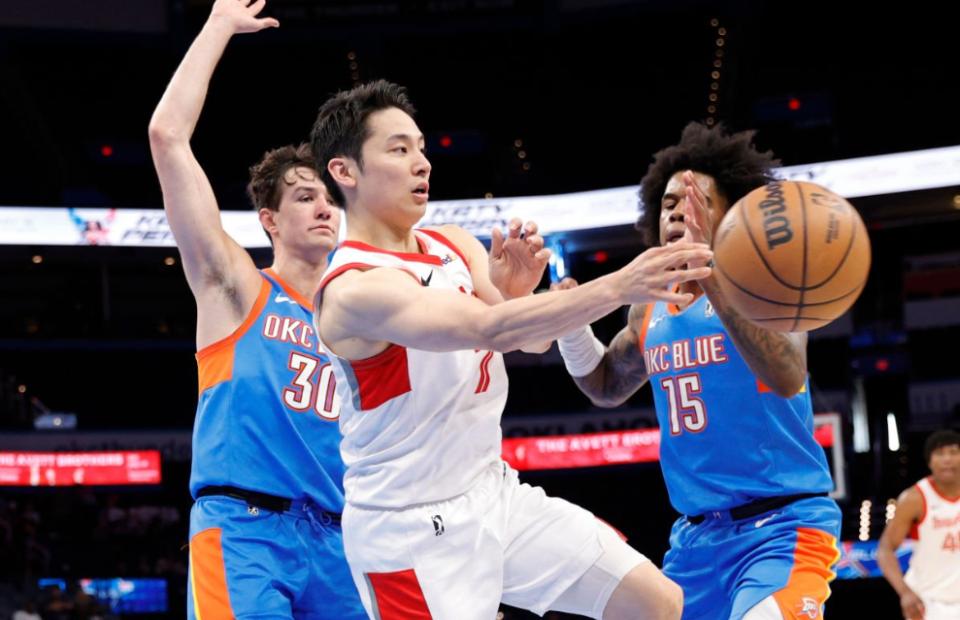
So far this season in the G League, Kawamura averages 17.7 points and 11.3 assists per game, firmly placing him among the league's elite floor generals.
He has had several standout performances recently: scoring 34 points with 16 assists against the Nuggets' G League affiliate; delivering an astonishing 19 assists against the Celtics' G League affiliate.
These statistics demonstrate that he is a player who can consistently control the game. Kawamura can push the pace, attack the paint, and find teammates with creative passes that many defenders cannot anticipate.
His offensive instincts are clear: he knows how to manipulate defenses, when to accelerate, and how to create scoring opportunities for his teammates.
In many ways, he plays like a classic floor commander—a guard who prioritizes orchestrating the offense over personal scoring. From an offensive standpoint alone, his skills are already at an NBA level.
The height disadvantage cannot be changed.
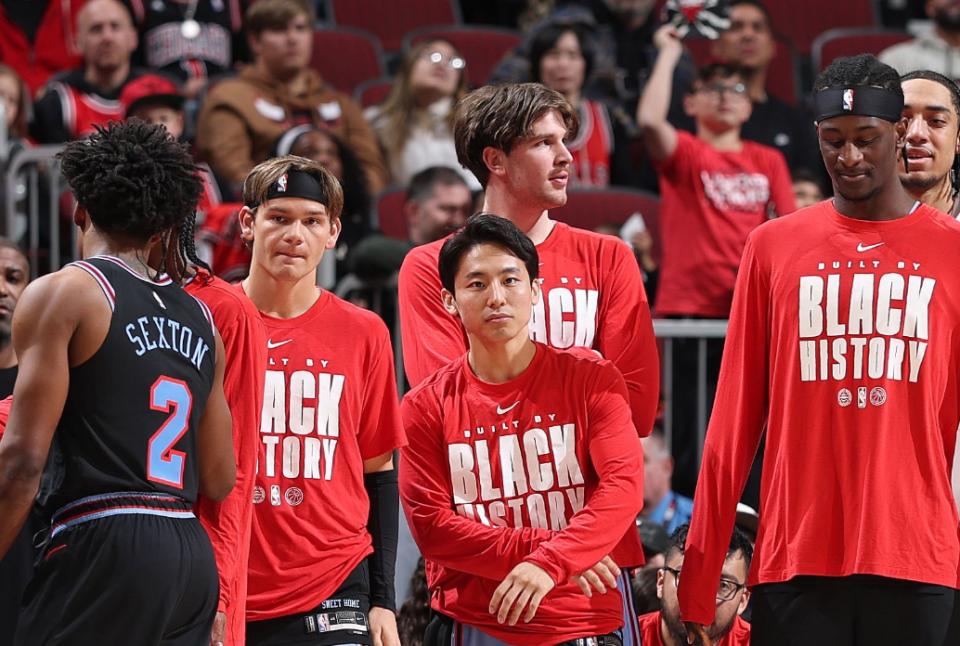
The biggest reason Kawamura struggles to secure consistent playing time in the NBA is something he cannot alter: his height.
Standing at 1.70 meters, he is currently the shortest player in the NBA attempting to establish himself. However, in today's NBA, where guards are increasingly taller and more versatile, this physical disparity becomes a significant barrier.
Most NBA point guards today range from 1.90 to 1.98 meters in height. Even for backup guards, teams value not only organizational skills but also height and defensive versatility. For a player of Kawamura's stature, every defensive possession is a survival test.
Modern NBA offensive systems are designed to exploit physical mismatches. When a short guard is on the court, opponents often target him repeatedly through pick-and-rolls. By forcing switches, the offense can create situations where larger players directly face smaller guards.
Throughout a game, taller players can shoot over him or physically overpower him to drive to the basket. Even if a small guard exerts maximum effort, the physical gap still allows opponents to score easily. Consequently, coaches must constantly consider defensive balance when arranging rotations. A player with outstanding offensive talent, if consistently targeted defensively, can become a defensive liability for the team.
The league is becoming "taller."
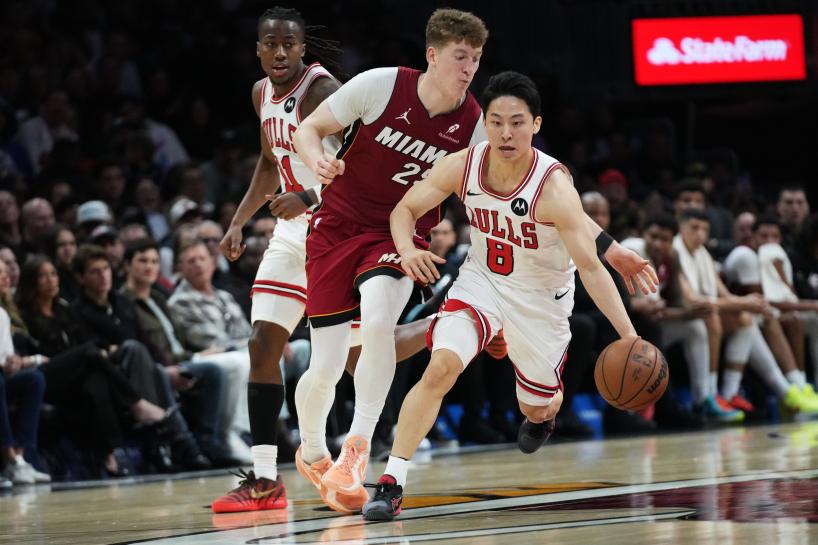
Another unfavorable factor for Kawamura is the evolution of the NBA itself. Over the past decade, teams have increasingly emphasized height, wingspan, and defensive versatility.
Many teams now prefer guards who can defend multiple positions and withstand larger players in switch scenarios. This trend gradually pushes extremely short guards out of the league.
Even skilled facilitators, if lacking the physical attributes required for modern defensive systems, struggle to find stable roles. For Kawamura, this means he must compete not only with other point guards but also with taller guards who possess similar offensive capabilities but offer more flexible defense.
Talent vs. the modern NBA.
Skill, creativity, and elite organizational ability. Kawamura clearly possesses these qualities. His G League performance proves he can control games and elevate teammates; yet the threshold for entering NBA rotations remains extraordinarily high.
Today, height, wingspan, and defensive versatility are key factors in NBA team-building decisions. Players whose physical attributes significantly deviate from mainstream standards must overcome immense difficulties to squeeze into rotations.
This is the challenge Kawamura faces. He possesses the vision, speed, and creativity to orchestrate offense, but now he must prove that his top-tier skills can compensate for being the shortest player on the court.


Wonderfulshortvideo
Listen as the crowd roars at the sight of Tatum’s first run out this season! 🤩


Tatum gets the putback ➡️ three as his first and second buckets back since returning 🔥 🔥 🔥
Still not over this JT slam from last season 🤯
Featuring his pregame ritual 🙏
JT is back 💚
This was too smooth 😮💨
It has begun… 🫡
 Links
Links
 Contact
Address:UNIT 1804 SOUTH BANK TOWER, 55 UPPER GROUND,LONDON ENGLAND SE1 9E
Number:+85259695367
E-mali:[email protected]
 App
App


