



Official website predicts Pistons eliminating Magic 4-1! Cunningham vs. Banchero top pick showdown, rebounding battle becomes key



On April 18 Beijing time, the Magic eliminated the Hornets in the play-in game, securing the last playoff spot in the East. Their first-round opponent is the top-ranked Pistons. Cunningham and Banchero will face off in a top pick showdown. The official website predicts the Pistons will ultimately eliminate the Magic 4-1 and advance to the Eastern Conference semifinals.
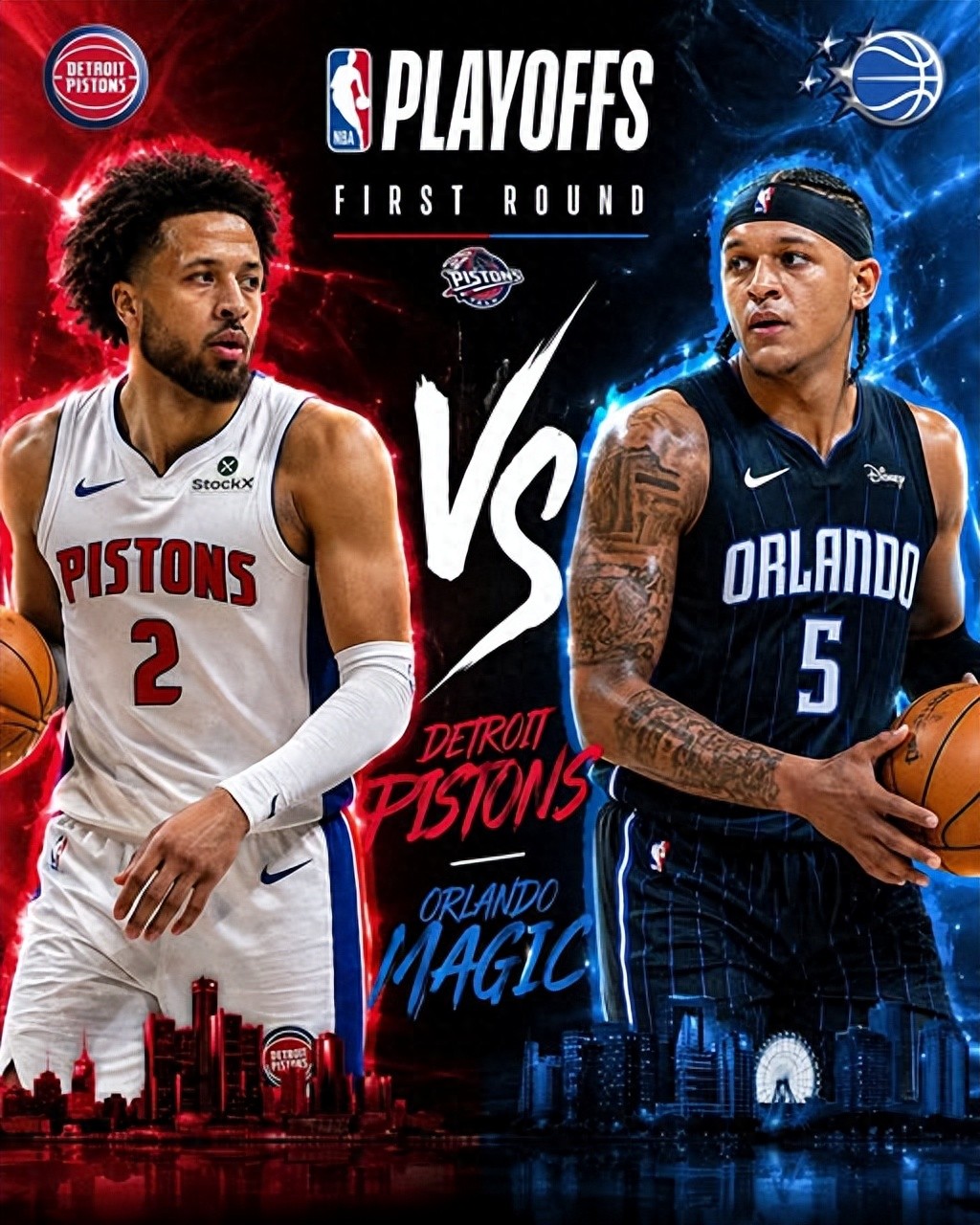
The Pistons have consistently held the top spot in the East this season, performing far beyond expectations; the Magic have been disappointing, barely locking up the eighth seed until the final play-in game. However, the two teams split their four regular-season meetings this season, each winning two games on the opponent's home court.
Both teams have not won a playoff series for over 15 years, and this year, the long curse for one of them will finally end.
Key matchup: High-pressure defense and ball-handling stability
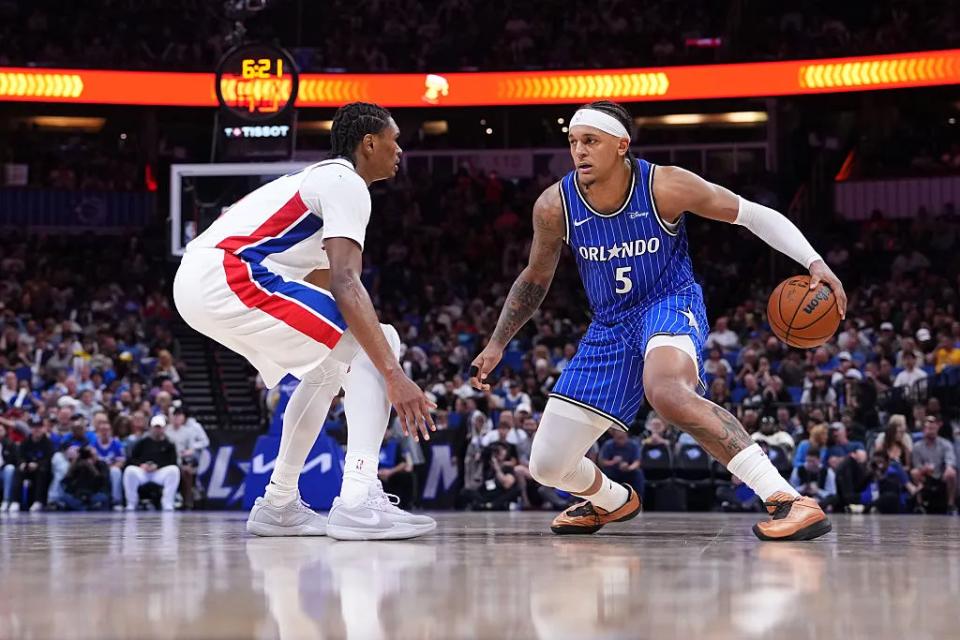
The Magic's offensive improvement this season ranks third in the league, but their defense has significantly declined—after ranking top three in defense for two consecutive years, their performance has plummeted this season.
The core reason for the defensive decline is a collapse in turnover control: the team's opponent turnover rate dropped from league second last season (16.8 per 100 possessions) to 14th this season (14.7 per 100 possessions), the largest decline in the league.
In the must-win play-in game today, the Magic regained their peak defensive form, successfully limiting the Hornets, who rank fifth in league offense. The team applied sustained high-pressure defense, forcing 20 turnovers from the Hornets and securing a crucial victory.
On the other hand, the Pistons' own ball-handling performance is not ideal: their regular-season turnover rate ranks 23rd in the league (15.1 per 100 possessions); in last season's first-round series loss to the Knicks, their turnover rate worsened to 16.9 per 100 possessions.
If the Magic can maintain the high-intensity defensive pressure from the play-in game into the playoffs, they can disrupt the Pistons' offensive rhythm, limit their easy scoring opportunities, and use transition offense to improve their own scoring efficiency.
Key focus: Rebounding battle
Pistons offensive rebound rate ranks third in the league, Magic defensive rebound rate ranks fifth.
Overall shooting percentages in playoffs are generally lower than in regular season, more missed shots mean rebounding becomes more critical.
In the four regular-season meetings, the Pistons dominated the rebounding battle, securing 36.5% of offensive rebounds, ranking second among all Magic opponents.
Ausar Thompson (13) and Jalen Duren (12) accounted for half of the Pistons' offensive rebounds against the Magic (total 50).
Additional key observation points for both teams
Detroit Pistons
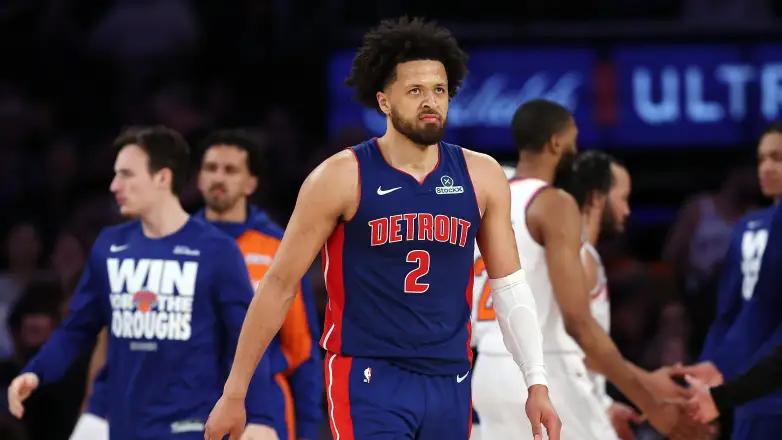
This season, the team set up 2260 pick-and-rolls for Cade Cunningham, ranking third in total pick-and-rolls among all ball handlers, with over 50 pick-and-rolls per 100 possessions. The Magic often employ drop coverage defense, deliberately leaving ball handlers open to lure them into pull-up jump shots.
Over his five career seasons, Cunningham's pull-up shooting has steadily improved, but this season his pull-up effective field goal percentage is only 49.3%, ranking 27th among 88 players with at least 200 attempts, leaning toward defensive advantage. Therefore, the Magic are likely to flexibly switch defensive strategies, trapping the core player, forcing other role players to handle the ball and finish.
Duren's finishing and passing ability on rolls have greatly evolved, with more diverse inside scoring methods; the Pistons will also rely on Tobias Harris's low-post isolation. However, Thompson's outside shooting is weak, hitting only 16 shots outside the paint this season, likely to be completely left open by opponents, shrinking the team's offensive space.
The Pistons can win games relying on rugged inside play, but in this series and future journeys, their offensive weaknesses will be magnified.
Orlando Magic
Paolo Banchero, as a former top draft pick, has never met external expectations and hasn't formed good chemistry with Wagner Jr. In the first round of playoffs over the past two years, the Magic offense centered on Banchero was inefficient (only 104.3 points per 100 possessions).
Facing the league's second-ranked defense (Pistons) this round, the challenge will be even tougher. But this is also an excellent opportunity for Banchero to prove himself: proving he can score independently, connect teammates, and become a top offensive core.
Although turnover issues have plagued him, in three games against the Pistons this season, he averaged 26.3 points with a 64.8% true shooting percentage, ranking fifth highest efficiency among all opponents he faced.
Key data analysis: Restricted area offense and defense
13.9
The Pistons average a net advantage of +13.9 points in the restricted area per game, the third-largest interior differential in the league over the past 15 years.
The Pistons do not rely heavily on outside three-pointers (three-point attempt rate ranks 29th in league), but their interior dominance is overwhelming. Offensively, 36% of Pistons shots are concentrated in the restricted area, ranking first in league; defensively, they limit opponent restricted area shooting to 62.4%, ranking second. Especially when Isaiah Stewart defends the rim, opponent shooting percentage at the rim is only 43.8%. Among players with at least 200 rim contests tracked over 12 seasons, he is the most effective rim protector.
The Magic's net efficiency in restricted area offense and defense is +3.0, ranking seventh in league. Despite rim defense shooting percentage (63.9%) ranking 28th, performance is poor. In two early-season visits to Detroit, the Magic actually outscored the Pistons by 4 points in the restricted area; but in two late-season games in Orlando, the Pistons dominated the interior by 30 points. The Magic's win on April 7 relied entirely on free-throw line advantage.
Official website prediction: Pistons 4–1 Magic
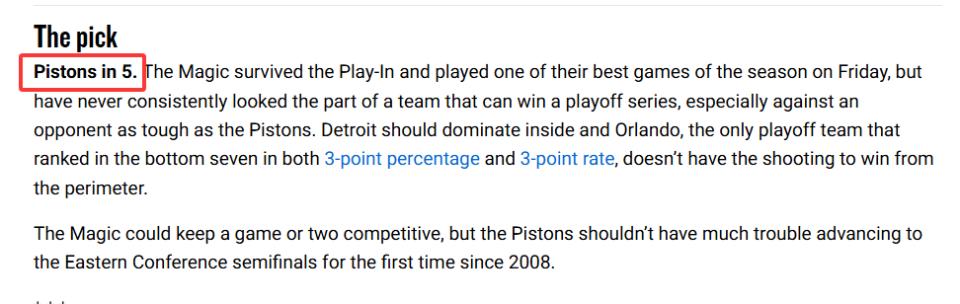
Although the Magic barely survived the play-in game and played at a season-best level today, this team has never shown consistent ability to win playoff series, especially against a resilient Pistons.
The Pistons will firmly control interior advantage; the Magic are the only playoff team ranking bottom seven in both three-point percentage and three-point attempt rate, lacking outside shooting to counter interior disadvantage.
The Magic might fight to win one close game, but the Pistons advancing to the Eastern Conference semifinals is essentially certain, which would also be the Pistons' first playoff second-round appearance since 2008.


Wonderfulshortvideo
When are these two not competing 😂


Replying to @NBA

Deuce wanted to ask his dad Jayson Tatum one question... And JT ended up teaching him how to conduct a proper interview 🎤🥲

@DylanHarper getting after it this off season 🏋️♂️

KD was high key vibing summer of 2024 🥳‼️ Makes you wonder what he was up to this summer…

Before they started their rookie season the 2025 Draft aclass broke down their signature moves… Did you see any of them pull out their moves during a game? 👀
User ceshi has posted a video.
 Links
Links
 Contact
 App
App


