



The case is nearing its conclusion! Leonard and Ballmer have been questioned, and the investigation into the Clippers' violations is in its final stage.



On June 6, Beijing time, according to several insiders with first-hand information about the investigation, Los Angeles Clippers star Kawhi Leonard and his uncle Dennis Robertson, who also acts as his agent and business consultant, have been questioned by NBA investigators. The league is looking into claims that the Clippers evaded the salary cap and secretly paid Leonard under the table.
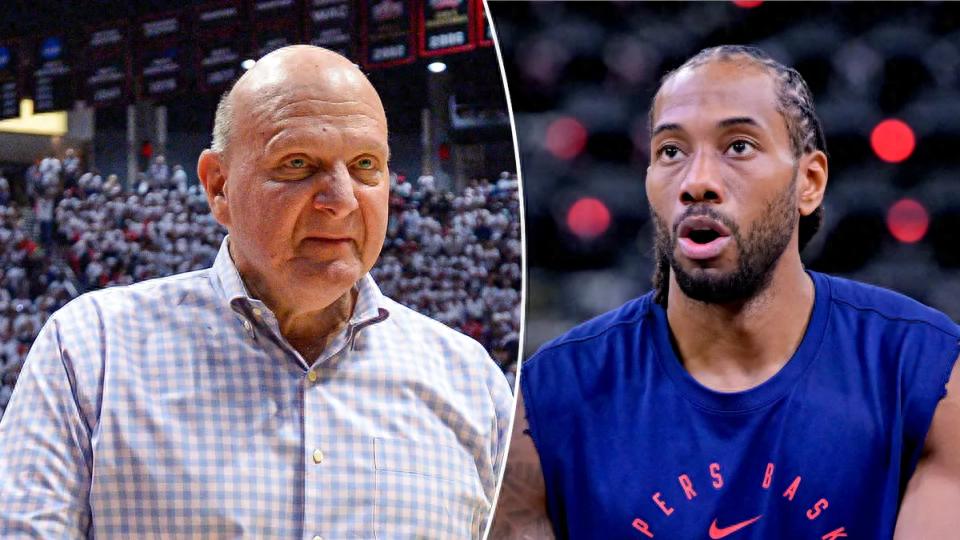

Sources indicate that Clippers owner Steve Ballmer and several team executives have also completed their interviews, and management personnel from the now-bankrupt green financial institution Aspiration Bank—the central entity in this controversy—have cooperated in the discussions.
Before Game 1 of the NBA Finals in San Antonio, NBA Commissioner Adam Silver stated that the investigation is "nearing its final stage" and that the league is "just one step away from closing the case."He did not set a specific deadline for the conclusion of the probe but emphasized that both the Clippers and the other 29 teams need to know as soon as possible the regulatory environment in which they will operate in the future.
Publicly, the Clippers organization and Ballmer have consistently denied the allegations, insisting there is no solid evidence to support claims of wrongdoing.
However, several sources familiar with the team's internal thinking reveal thatprivately, the Clippers' management feels frustrated: they believe they have done nothing wrong throughout the process, yet they are forced to expend energy proving their innocence.Although the team is confident they have not violated any rules, they remain uncertain about the final direction of this high-profile investigation and whether the league's wealthiest owner will face any penalties.
ESPN spoke with multiple league insiders to outline the various possible outcomes of the investigation. So far, the investigative team has not disclosed what evidence has been found regarding the salary cap circumvention allegations. Regardless of the final ruling, some penalty options will likely face opposition from the Clippers, the players' union, or other team owners.
In September 2025, former ESPN writer and podcaster Pablo Torre released several episodes citing internal documents, prompting the league to launch a formal investigation. The documents show that in September 2021, Ballmer invested $50 million in Aspiration Bank through a personal limited liability company. That same month, the Clippers signed a $300 million partnership deal with the bank, making Aspiration the lead founding partner of the Clippers' new arena, Intuit Dome.
Six months later, Aspiration reached a $28 million personal endorsement contract with Leonard. An anonymous individual claiming to be a former employee of the bank alleged on Torre's show that Leonard's sponsorship deal was essentially a backdoor operation to bypass the salary cap.
Ballmer himself said he facilitated the introduction between Leonard and Aspiration, but in a September 2025 interview with ESPN, he claimed he had no knowledge of the player's subsequent endorsement signing and never instructed the bank to finalize that contract.
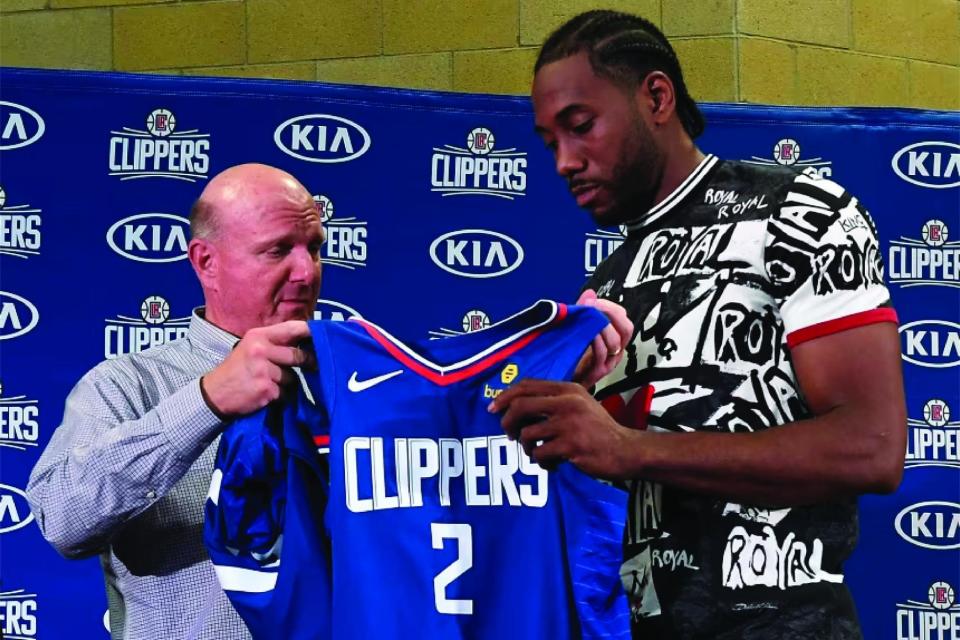
A source close to Leonard's camp refuted the allegations to ESPN: in 2021, the Clippers only made an introduction, and the team never intervened in Leonard's endorsement signing afterward. The contract negotiations never mentioned the salary cap, nor was there any deliberate plan to circumvent salary rules. Moreover, the terms of the Aspiration endorsement deal were similar to Leonard's other commercial endorsement agreements.
The source added that Leonard's team has been transparent and open with the league's investigation: "In the end, this endorsement is not a sham contract (a fake deal with no actual work performed)."
After the league's board of governors meeting in New York in September 2025, Silver publicly stated that the burden of proof and punishment lies with the league, and the investigative team will thoroughly review all evidence. Adhering to the principle of fairness, he will not issue fines lightly if there is only superficial suspicion of wrongdoing without substantive evidence.
According to the relevant terms of the 2023 NBA collective bargaining agreement, teams found to have deliberately circumvented the salary cap face penalties, including a maximum fine of $7.5 million, forfeiture of draft picks, voiding of the involved player's contract, and up to a one-year suspension for responsible individuals.
Aside from substantive penalties for salary cap circumvention, other avenues for disciplinary action are difficult to enforce. Multiple sources familiar with the investigative process and the players' union's stance say that lighter charges could easily lead to disputes.
One source gave an example: punishing a team for failing to have full knowledge of a player's external endorsements is simply not feasible. The league's operating manual clearly states that teams cannot interfere with or have the authority to inquire about players' private commercial deals with third-party brands. Two individuals aware of the players' union's position stated bluntly that if the league pursued the Clippers on this basis, the union would strongly protest. One of them said: "The players' union will—and rightly should—fiercely oppose such a ruling."
Penalizing the Clippers on conflict-of-interest grounds—where a team's corporate partner also signs a personal endorsement deal with a player on the team—faces similar resistance. Insiders describe this as "a gray area that can easily go sideways": across the league, many teams and their players have separately signed business contracts with the same brand, with countless similar cases.
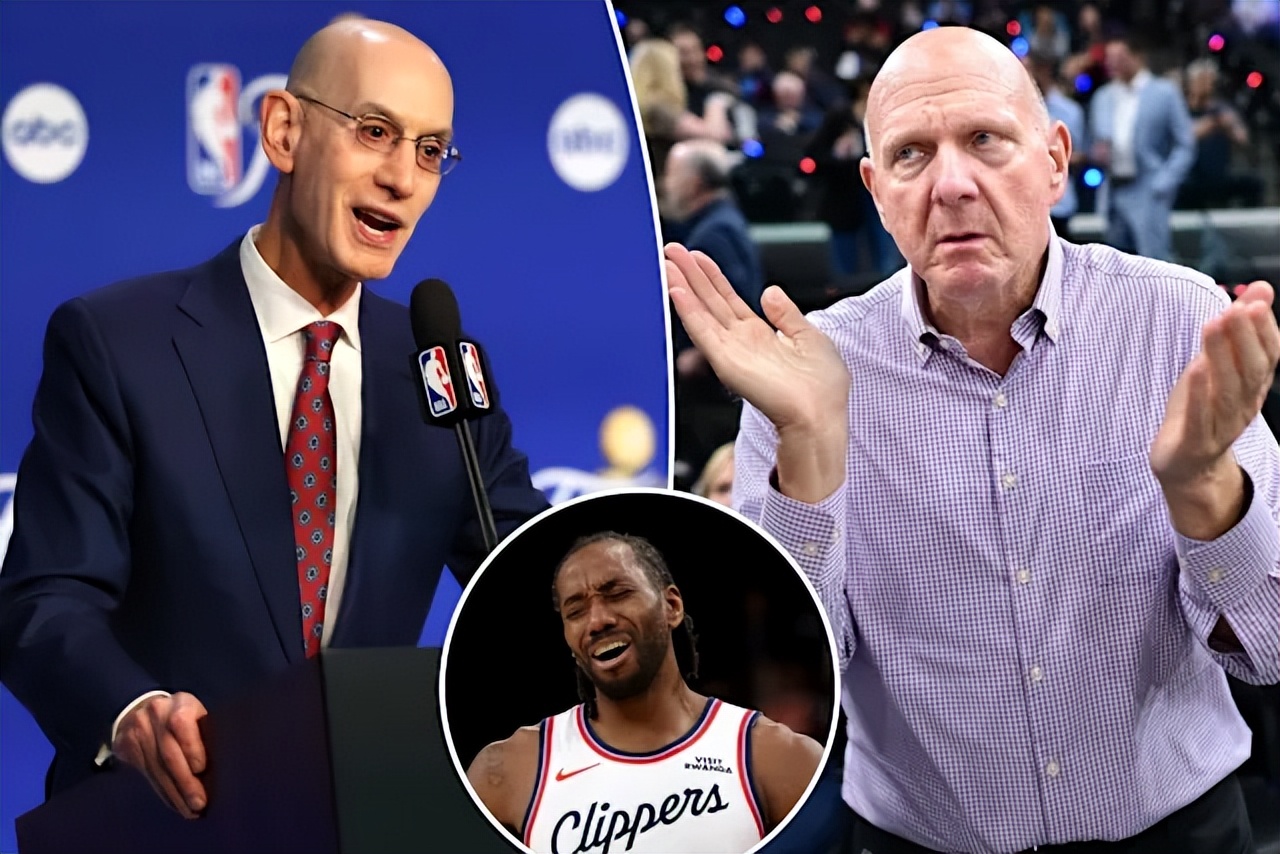
Silver acknowledged this reasoning in September 2025: "For example, if an arena is named Ball Arena, a player can independently sign an endorsement deal with Ball. If a team has an official partnership with a brand, depriving a player of the right to sign with that brand would be unfair to the player. Many brands deeply rooted in sports are willing to invest in athletes. As long as there is no evidence that the signing is meant to secretly subsidize the team, a blanket ban is unreasonable."
ESPN previously reported that if the Clippers disagree with a lighter penalty from the league, the team has the right to request a neutral arbitrator to mediate. The arbitrator, jointly appointed by the league and the players' union, would rule on the dispute, re-examine the evidence, and determine whether Silver's penalty decision takes effect.
Multiple insiders familiar with the investigation's progress say Silver will not be pressured by public opinion to arbitrarily impose harsh penalties on the Clippers.The commissioner's primary concern in making a decision is the sentiments of the other 29 team owners. Regardless of the final outcome, he must provide an explanation that all stakeholders can accept.
Two sources point out that prematurely punishing the Clippers without solid evidence of violations would set a dangerous precedent in the league, causing resentment among other teams and owners. One longtime colleague of Silver said: "I respect Adam. He is cautious. If the investigation report from the hired law firm, Wachtell, Lipton, Rosen & Katz, does not confirm any violations, he will never force through a penalty."
Silver previously responded to various speculations about the investigation. "I see all kinds of rumors every day about what really happened, but my job cannot be swayed by public opinion. My decision must be based on objective facts: the independent law firm will complete the fact-checking and investigation report and submit it to me. Based on the report's conclusions, I will decide whether to impose penalties and the severity."


Wonderfulshortvideo
LameLoooo 📌📌


Ballameloo📌🤍
layup With Mouth open📌🤣
Jalennn.G ART📌📌
User pandatv has posted a video.
User esportapi has posted a video.
10 years ago 🥵🥵❤️
 Links
Links
 Contact
 App
App


