



A place where miracles are born, the greatest Finals comeback in history


In Game 4 of the Finals, if you watched the entire broadcast without closing it when the Knicks were down by 27 at the half, congratulations—you saw the greatest Finals comeback in history.
The Knicks saw the Spurs extend their lead to 29 points in the third quarter, and I bet everyone watching believed the Finals would become 2-2, with the Knicks suffering a shameful loss.
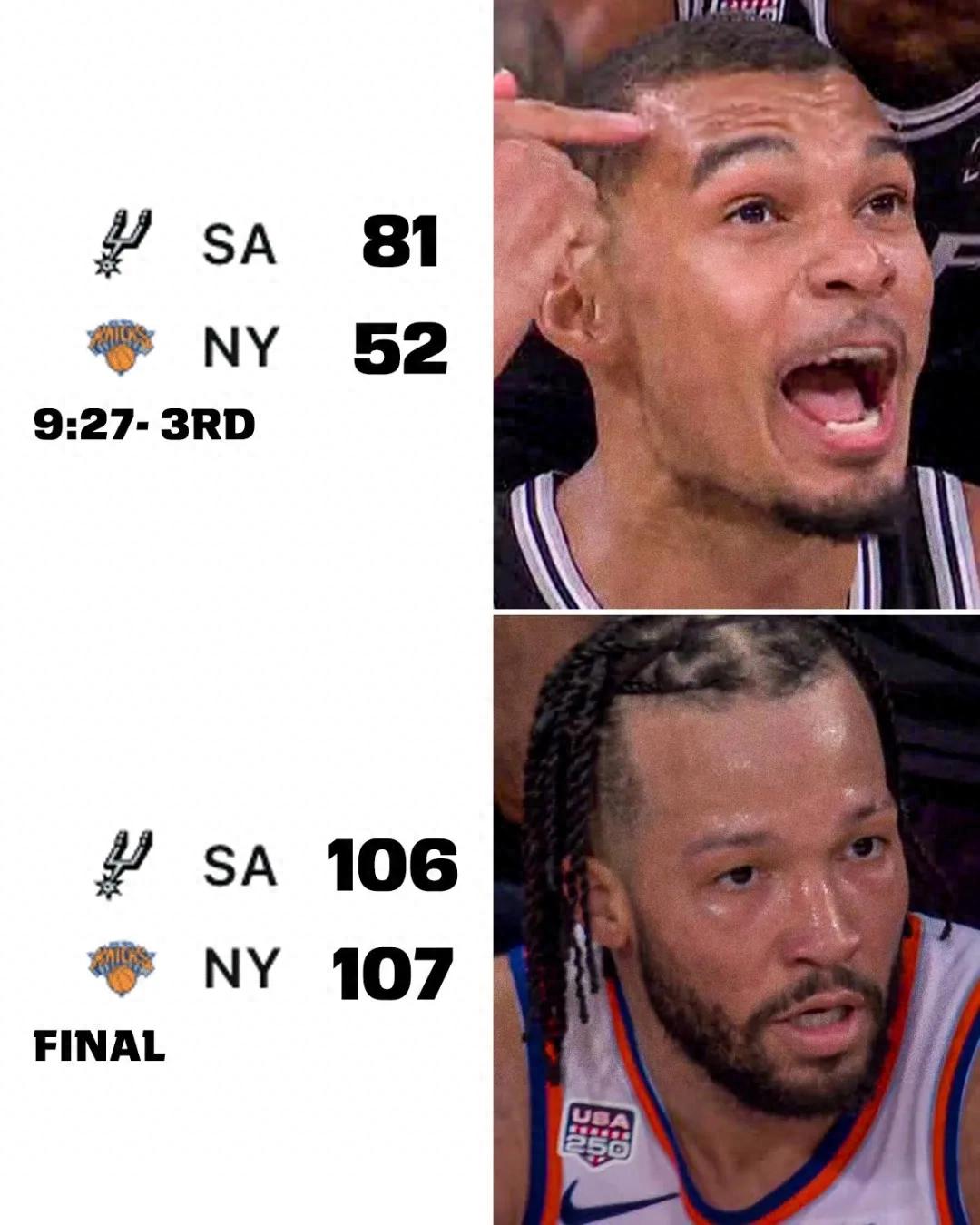
But from start to finish, the Knicks never gave up their determination to turn the game around. Early in the third quarter, they launched a counterattack. After the Spurs led by 29, they were hit with a 13-0 run, missing eight straight shots. The Knicks gradually figured out the referees' whistle tolerance—they adapted to the officiating scale incredibly well—and then delivered a tough defensive performance.
In the third and fourth quarters, the Knicks mounted two scoring runs to erase the 29-point deficit. Meanwhile, the Spurs' shooting fell into a deep slump, with countless reckless shots causing them to miss opportunities and lose their precious rhythm, a stark contrast to the first half.
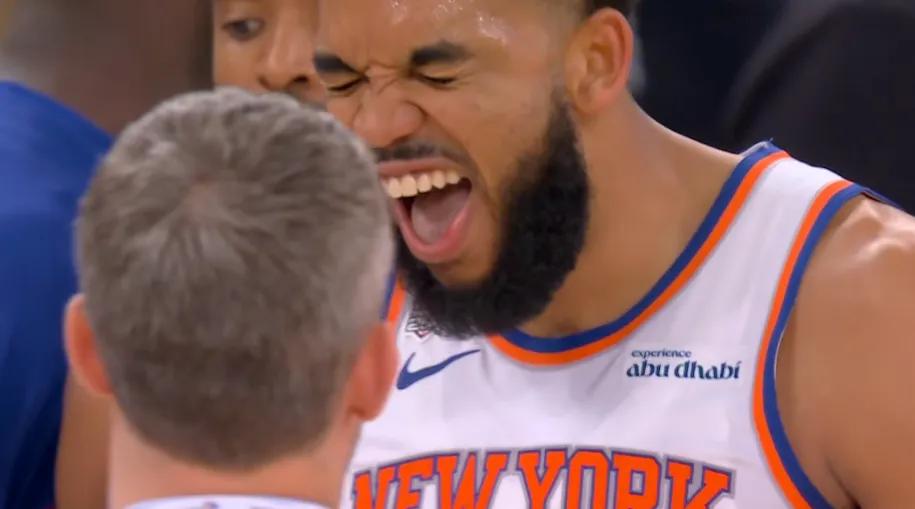
In today's game, the first turning point came very early—you might have missed it if you started watching a bit late. At 1:02 of the first quarter, Karl-Anthony Towns picked up two fouls and left the game prematurely, leading to a total collapse on both ends for the Knicks, who then spiraled downward.
The Spurs drew Towns' first foul on the opening possession: De'Aaron Fox drove, and Towns obstructed his path—the foul call was fine. But the key question was whether the referees would maintain that same whistle standard throughout the game, calling every bit of contact. Clearly, they did not.
Towns' second foul was an offensive foul for trapping Victor Wembanyama's arm. After a Spurs challenge, the offensive foul was definitely correct. Towns certainly didn't intend to grab the arm deliberately; it's been an ongoing issue with his offensive foul control, and it blew up today.
The Knicks had a plan today: they let Towns handle the ball on the first two possessions, at least giving Jalen Brunson some rest early. Even after Towns went out, they tried to have others handle it, but Towns' exit after just one minute forced them into numerous turnovers.
So they had to rely on Brunson, who would draw defenders and create opportunities for others. With Towns gone, the Spurs' defense became simple: just clamp down on Brunson. Even if others made threes, the Spurs wouldn't change their defensive approach.
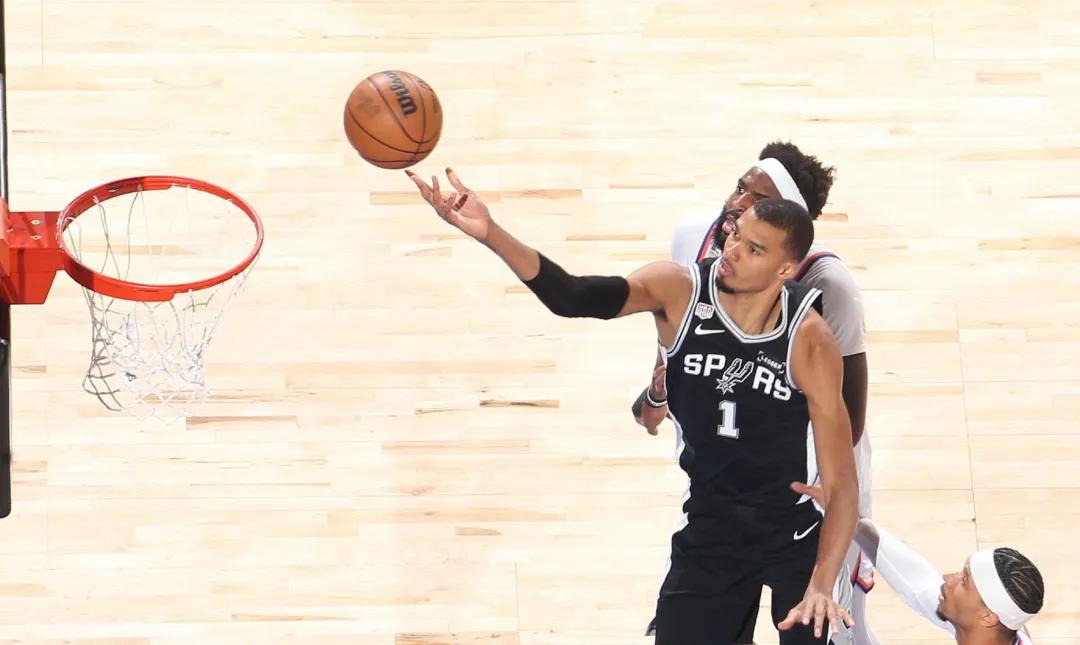
Of course, the main reason for the Knicks' first-half collapse was that the Spurs were just too hot from the field. They started 6-for-5 from three, with Devin Vassell missing none. The Spurs kept hitting threes until they were 11-for-16, and only later did their three-point percentage drop below 70%—a statement that also applied to the 2014 Spurs.
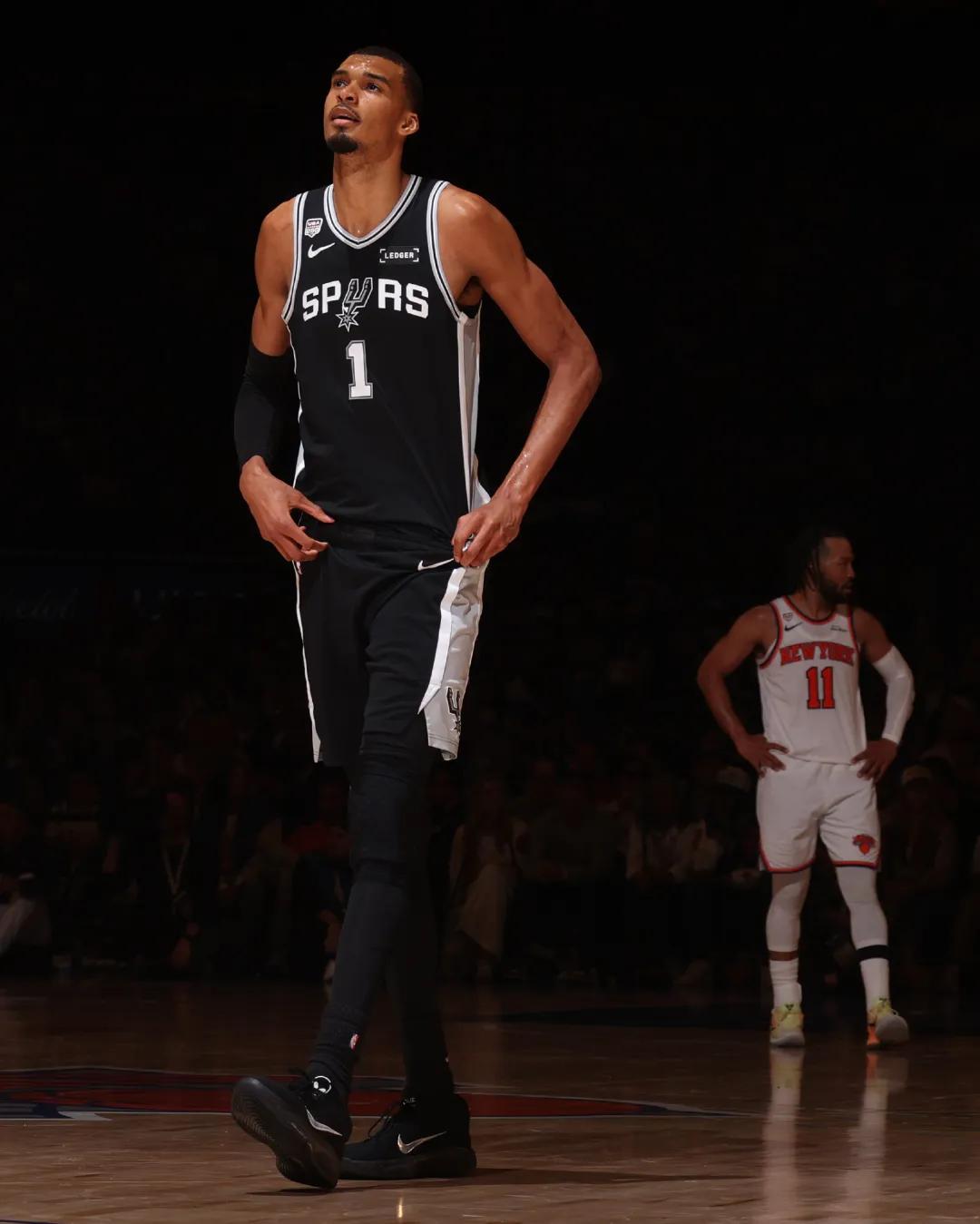
The Spurs exploded for 76 points in the first half, with every perimeter player on fire. They shot 14-for-26 from three in the first half, setting a new NBA Finals record for most threes in a first half. Their 76 points were the most ever scored by any team in a road half in history.
Then, over the next 24 minutes, the game completely flipped. The Spurs scored 14 in the third quarter and 16 in the fourth, totaling just 30 points in the second half—lower than either of their first-half quarter totals. The Knicks' tough defense paid off, and the Spurs' reckless shooting was severely punished.
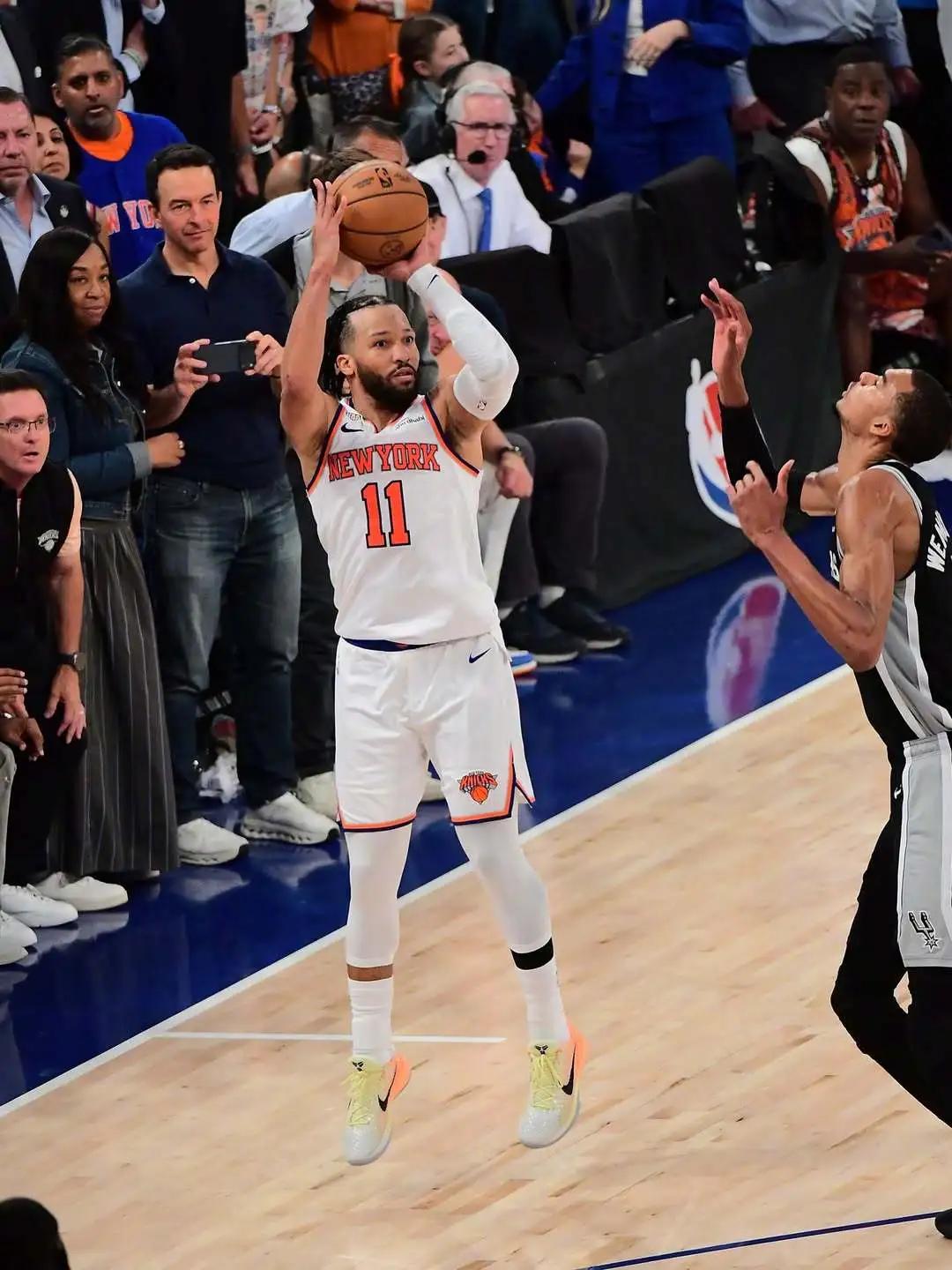
Brunson still scored 9 points in the fourth quarter, including 5 in the final 2:30. The Knicks went from trailing by 4 to leading by 1, with all 5 points coming from Brunson. He hit a step-back three over Wembanyama and then a floater over Stephon Castle, giving the Knicks their first lead of the entire game.
Even after coming back from 29 down to take the lead, the Spurs still had a chance—even a great chance—to win. De'Aaron Fox missed a mid-range jumper, Castle grabbed the offensive board and made two free throws, putting the Spurs back ahead. Josh Hart, arguably the best rebounding guard in the world, missed Castle on that critical play. Earlier, Hart had also missed an open layup, committing two costly errors down the stretch.
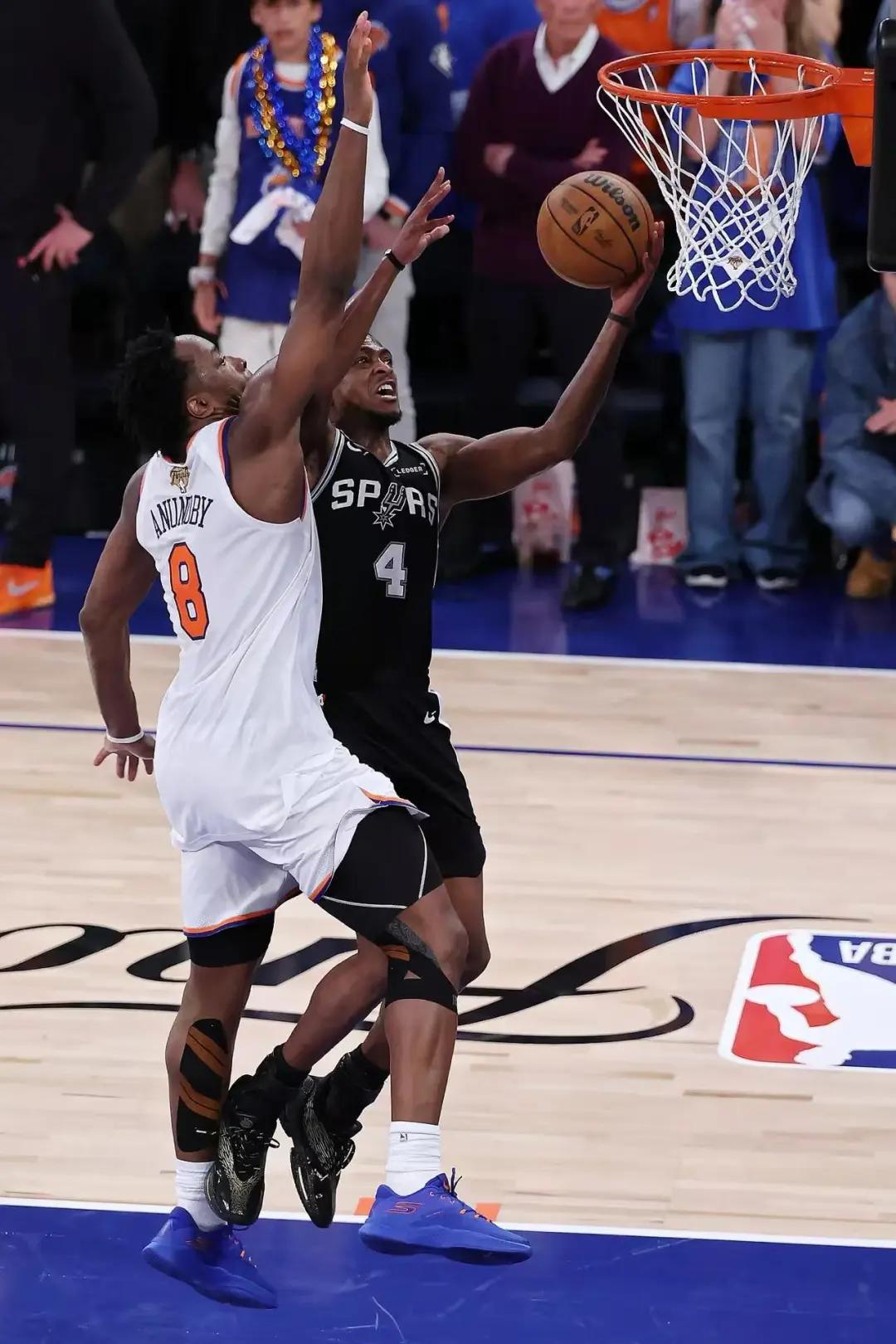
Brunson attacked again, driving inside only to have his shot blocked by Wembanyama. At that moment, I really thought the Knicks would fall short. Fox grabbed the rebound in the frontcourt and went up for a layup, but OG Anunoby came out of nowhere to block it—and that wasn't even his most crucial play of the game.
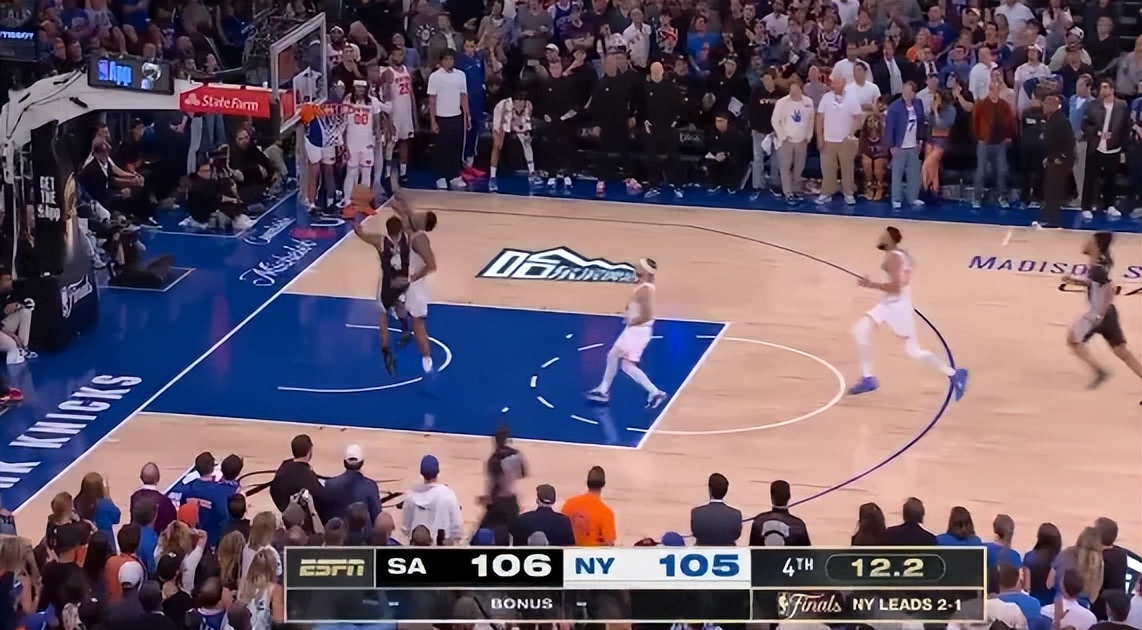
After the game, Fox faced a torrent of criticism for that decision. But in my view, his choice was understandable. His speed is among the best in the league, and on that fast-break layup, he thought he had beaten OG, but he didn't anticipate OG's speed and vertical leap even in the final moments of the game.
Even so, the Spurs still led by 1. On the final defensive possession, Wembanyama shadowed Brunson from the moment the ball was inbounded. As soon as Brunson caught the ball, Fox came over to double-team—whether that was Mitch's call or not is unclear. Brunson then took a quick shot, a deep three before Fox could fully close out, and it missed.
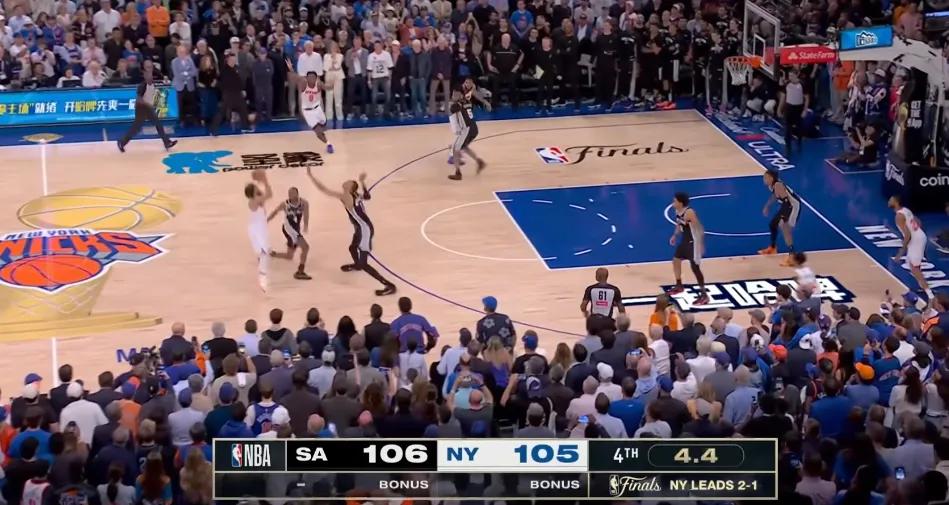
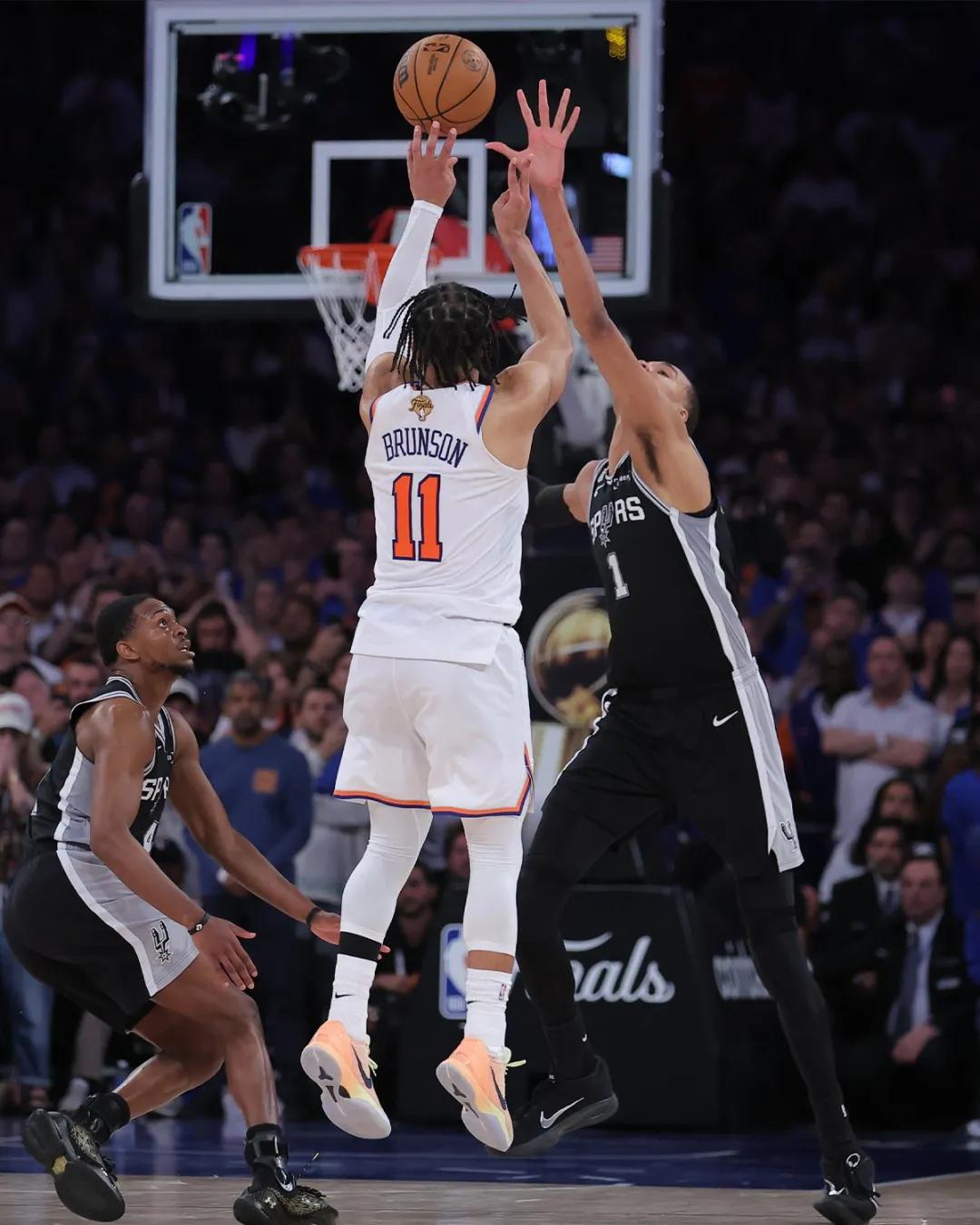
Looking at that single possession, Brunson's shot selection seemed reckless—there was still time on the clock. But OG Anunoby once again saved everything with his timely arrival. Fox completely ignored OG, giving him plenty of time to jump, while Wembanyama was drawn out by Brunson, leaving the Spurs' interior exposed.
OG's putback gave the Knicks their second lead of the game and the final lead change of the contest. Without a doubt, that was the greatest putback in Finals history, completing the greatest comeback in Finals history.
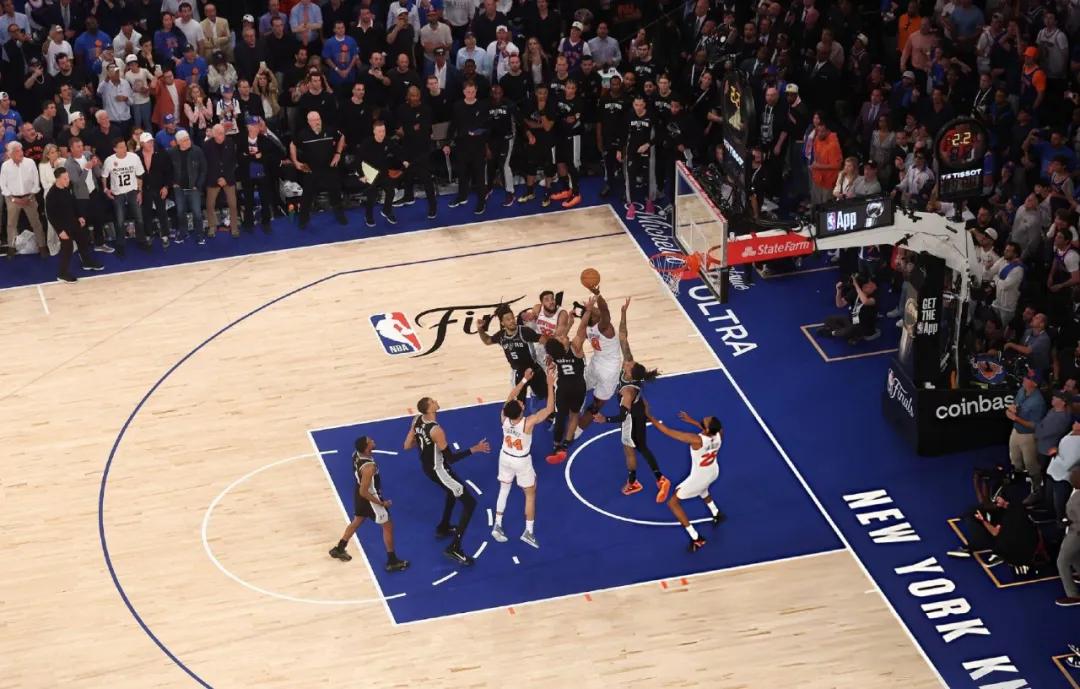
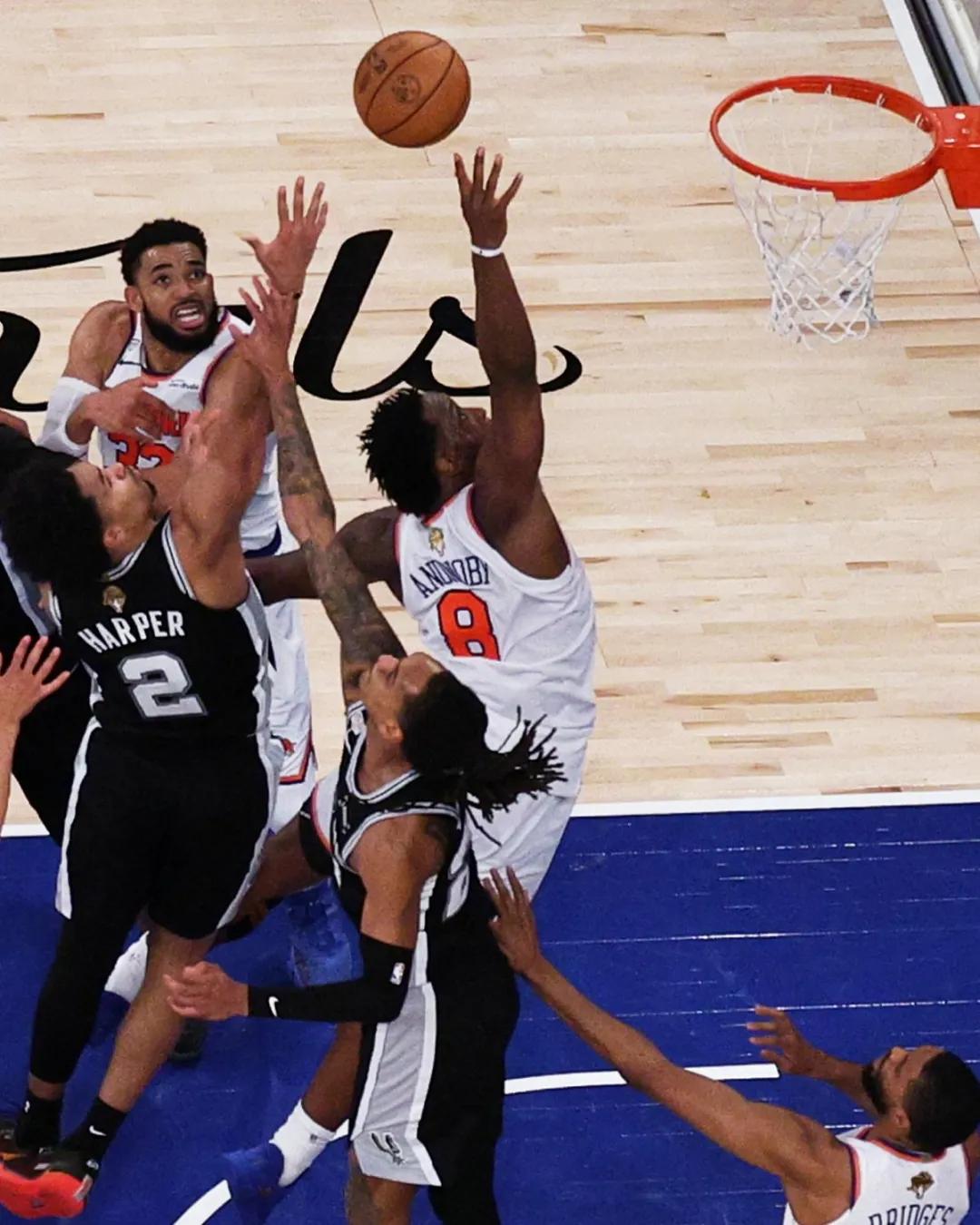
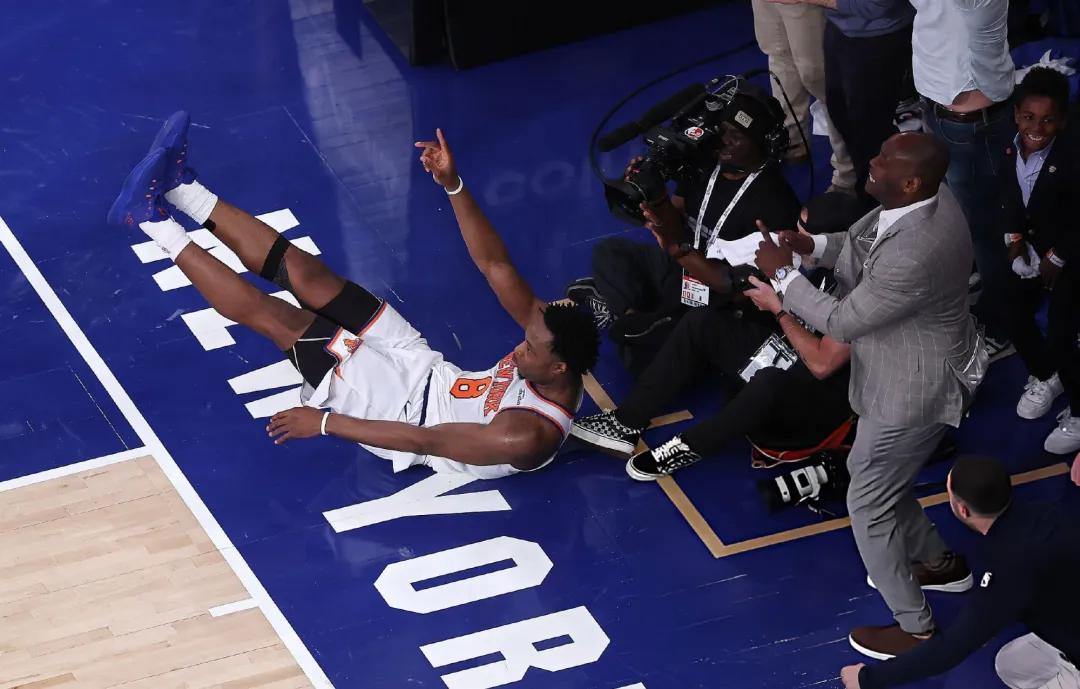
Fox absorbed the brunt of the criticism after the game, but I'd argue the collapse didn't happen in an instant. Wembanyama's two missed free throws were equally costly, Castle stepped on the sideline, and Harper also committed a turnover. The Spurs had only 2 turnovers in the first half but 9 in the second. In the second half, they shot 3-for-17 from three—a regression to the mean was normal, but repeatedly taking terrible three-point shots was a complete disrespect to the game.
Leading by 27 at halftime made the entire Spurs team relax, thinking the game was in the bag. The few minutes of stagnation early in the third quarter didn't wake them up. Even as the lead kept shrinking in the fourth quarter, Mitch stubbornly held onto his third timeout, and his timing for calling timeouts was also questionable.
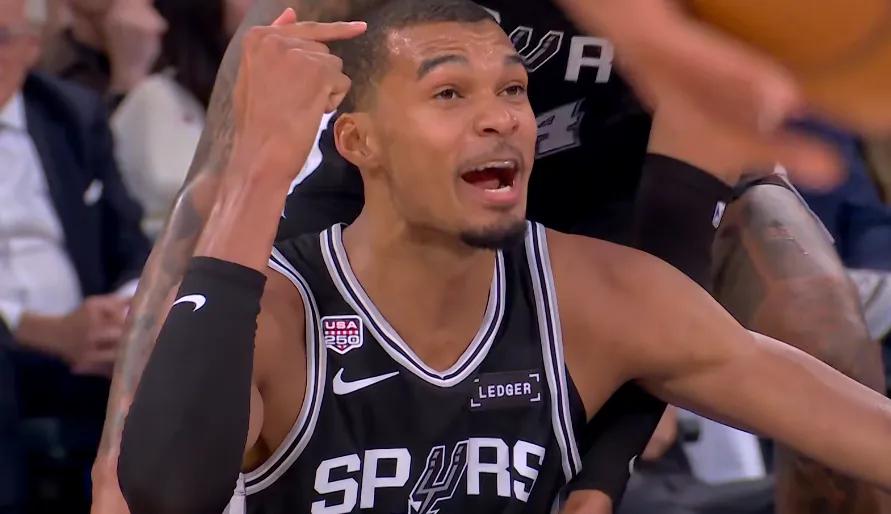
The Spurs played like they didn't know how to play basketball in the second half, completely losing their intensity. And once you lose that intensity, it's hard to get it back. Before the Finals, Wembanyama said that a lack of experience wasn't a problem: "Lack of experience is actually our advantage, because we can do things that seem impossible, since we don't know what's impossible."
But clearly, in a game like this, experience trumps everything. If someone had stepped up in the second half, yelled at the team during a timeout to stop chucking threes, the outcome could have been completely different.
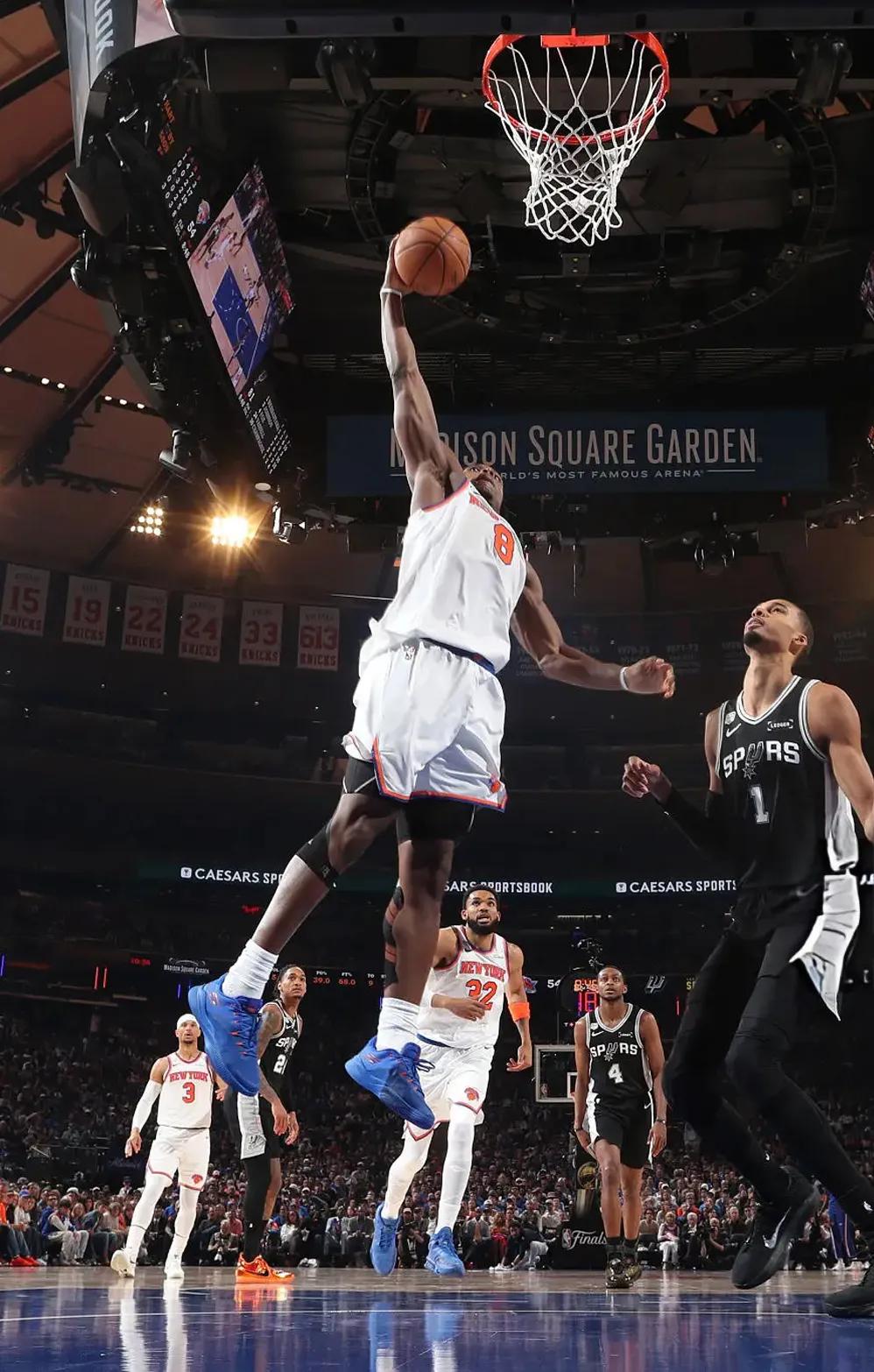
As for the Knicks, their experience lies in being the best comeback team over the past two seasons—bar none. Over the last two playoffs, there have been eight instances of 20+ point comebacks, and the Knicks accounted for four of them. Today was the fifth, and the largest deficit overcome.
Just in Game 1 of the Eastern Conference Finals, they completed a huge comeback after trailing by 22 with seven minutes left in the fourth quarter. The Spurs clearly learned nothing from the Cavaliers' experience—never let your guard down against a team like the Knicks. Anything is possible until the final buzzer sounds.
Brunson said after the game that it was all about belief. They didn't count on a miraculous one-run comeback; instead, they chose to chip away at the deficit possession by possession, trusting each other and trusting the process.
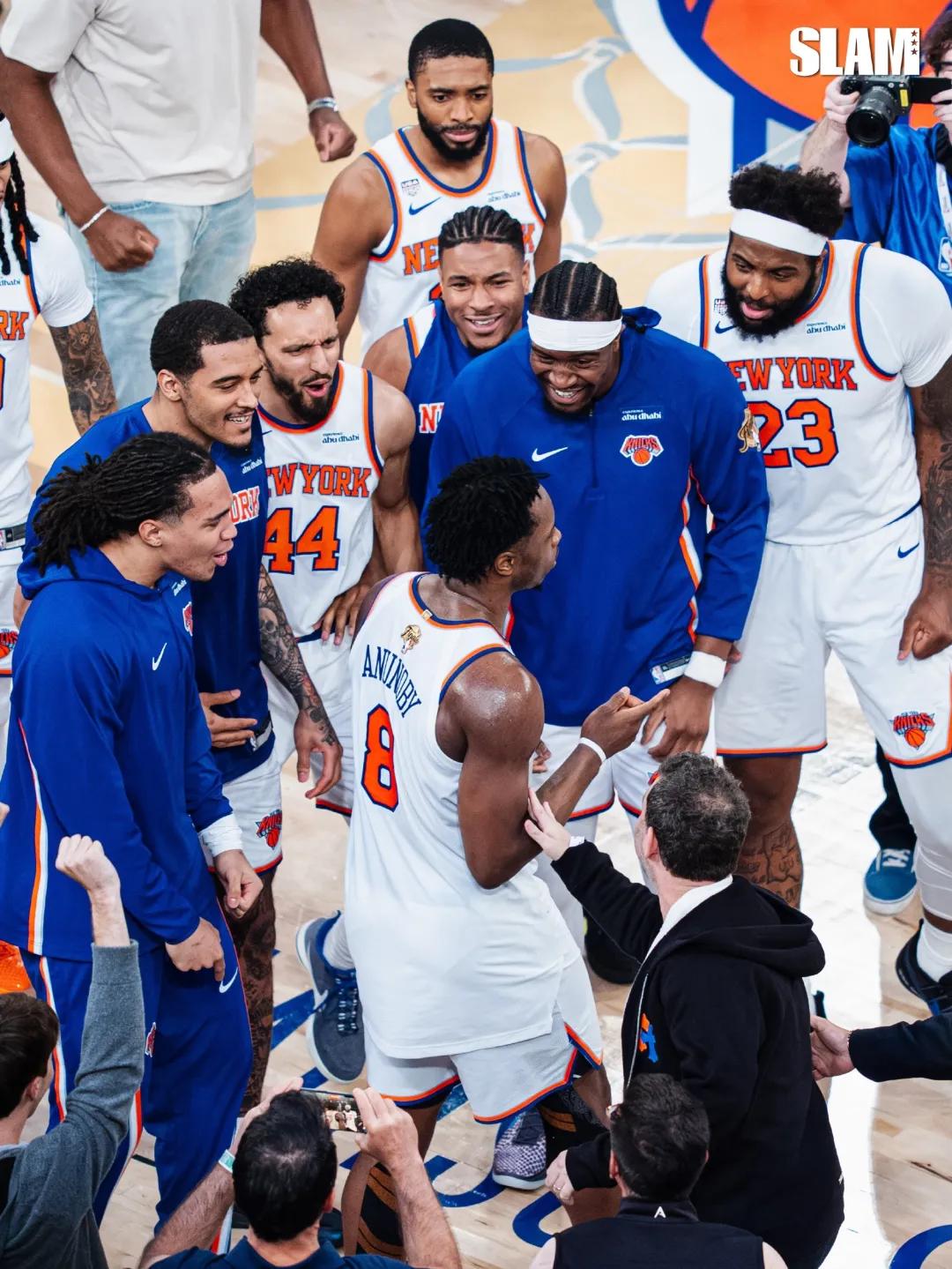
Mike Brown's lineup management was simply genius. After Towns picked up two fouls in the first quarter, he sent every big man on the roster onto the floor, giving the illusion that he had no idea what to do. Then, during the second-half comeback, he turned to Jose Alvarado, who worked wonders. In the final nine minutes, Alvarado scored 8 points himself and assisted on 9 more points for his teammates.
The game-winner in the In-Season Tournament, the Knicks' Colt (Jericho Sims?) saving the day in the fourth quarter; the 22-point comeback in Game 1 of the East Finals, with Landry Shamet hitting several critical threes; and now today, Alvarado stepping up once again. Once or twice might be luck, but having a different hero every time—that can't be attributed to luck alone.
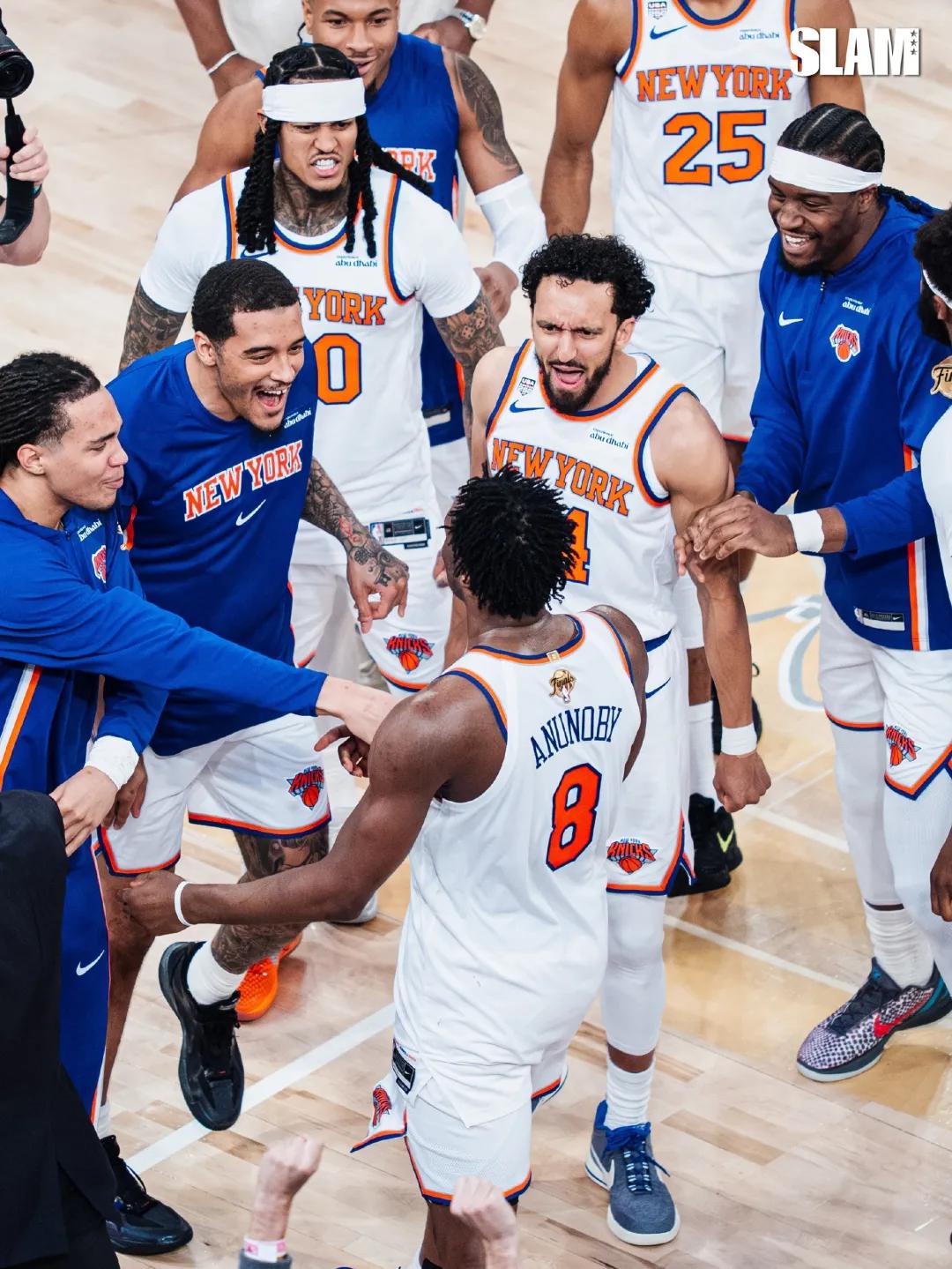
OG Anunoby's one possession on offense and one on defense have already etched his name into Finals history. Through four games, he has been the most outstanding and consistent player on both teams. Even in the extremely unfavorable first half, he was the only one who could reliably create tough shots and keep the team afloat.
In the third quarter, OG went 4-for-6 for 11 points, hitting all three of his threes. In the fourth, he made all three of his shots, including both threes. During the Knicks' second-half comeback, OG was the driving force, and in the clutch moments, he did everything on both ends of the floor.
A player like that, on a team like this, deserves the favor of the basketball gods. In four games, the Knicks have fallen behind by double digits in every single one, and they've come back in every single one—except Game 3, which the Spurs won. The Spurs always get off to a strong start, but the more resilient Knicks always find a way to turn it around.
Interestingly, OG's offensive rebound was not even the most painful one the Spurs franchise has ever lost. In Game 6 of the 2013 Finals, when Chris Bosh grabbed that offensive board and kicked it out to Ray Allen, the entire storyline changed.
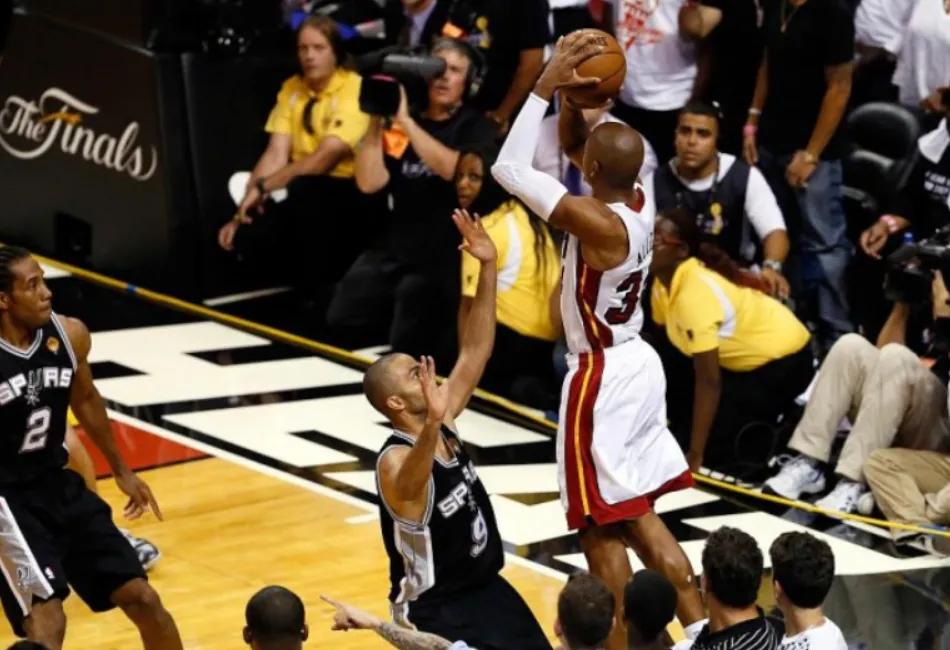
At the very least, the 2026 Spurs still have hope of completing a 3-1 comeback.


Wonderfulshortvideo
LameLoooo 📌📌


Ballameloo📌🤍
layup With Mouth open📌🤣
Jalennn.G ART📌📌
User pandatv has posted a video.
User esportapi has posted a video.
10 years ago 🥵🥵❤️
 Links
Links
 Contact
 App
App


