



Wizards Sign Trae Young to 4-Year, $212M Extension! ESPN Grades It a D: Decline Before Age 28


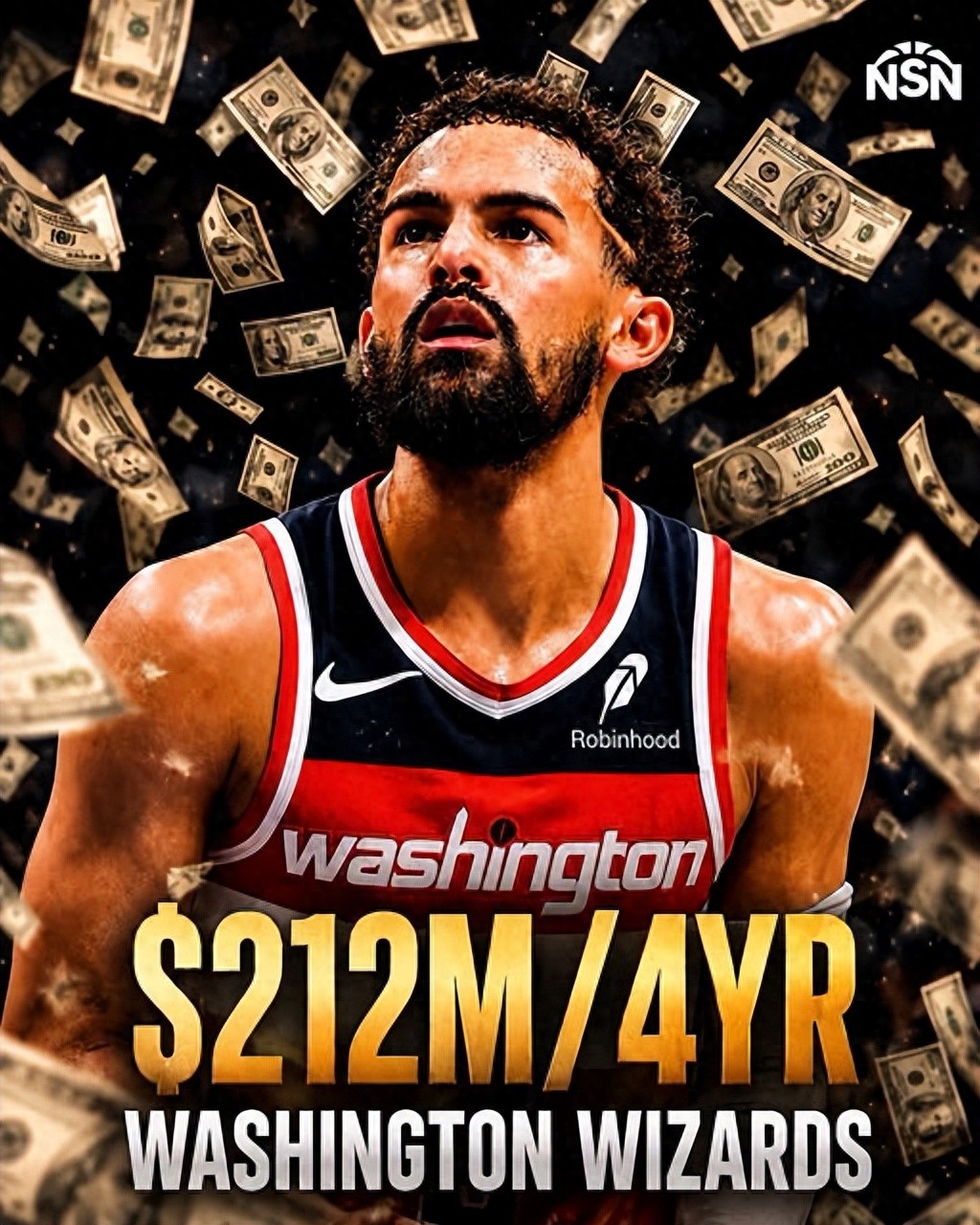
On June 23, Beijing time, Trae Young and the Wizards reached a four-year, $212 million extension deal, with the fourth year being a player option. Reporter Sidery provided the annual salary breakdown as follows—
2026-27 season: $47.3 million
2027-28 season: $51.1 million
2028-29 season: $54.9 million
2029-30 season: $58.7 million
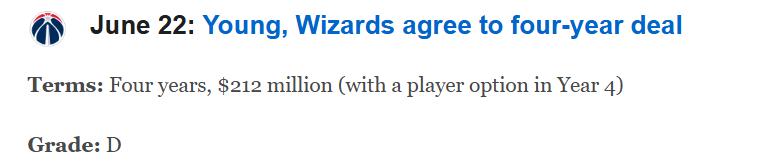
ESPN then graded this signing, giving it an overall D, considering it not a successful move for the Wizards. Here is the detailed analysis—
When the Wizards traded for Trae Young in January, it was widely seen as a bargain acquisition for a team lacking a franchise star—the Wizards gave up no draft picks in the deal to bring in this four-time All-Star.
But with this extension now revealed, the true cost of the trade becomes clear, and this acquisition can hardly be called a steal. This new contract is not the maximum the Wizards could offer using Bird rights (a four-year max could reach $222 million), but it still averages $53 million per season, placing Trae Young among the top 20 highest-paid players in the league.
Throughout his career, Trae Young has only been selected to the All-NBA Third Team once, which already shows he is not an elite superstar. Now approaching his age-28 season, his on-court performance has declined significantly, making him unworthy of the superstar-level price tag this massive contract demands.
Trae Young remains the team's offensive engine, averaging double-digit assists in each of his last three full seasons, but the unique offensive traits that made him special in his early twenties have largely faded away.
His occasional highlight-reel deep threes often mask a harsh reality: in three of the past four seasons, his three-point percentage has been below 34%. Over that span, among 56 players with at least 1,500 three-point attempts, he ranks 49th in three-point percentage. The only point guard behind him on that list is De'Aaron Fox, who is also set to start a four-year max contract next season, raising similar questions about his value.
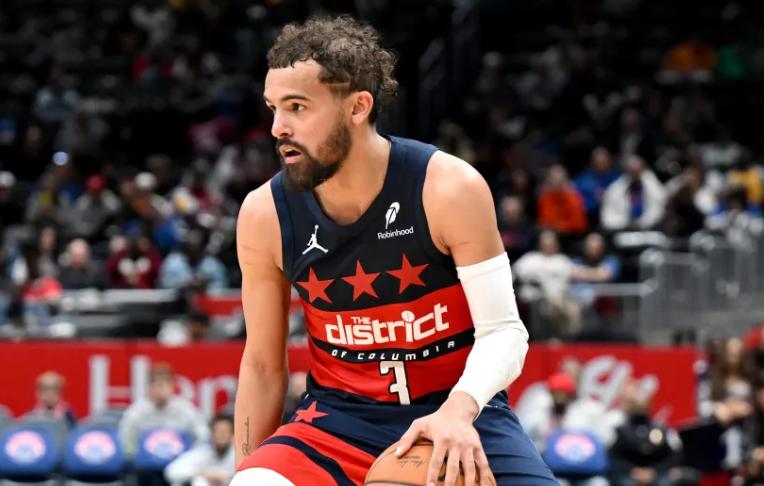
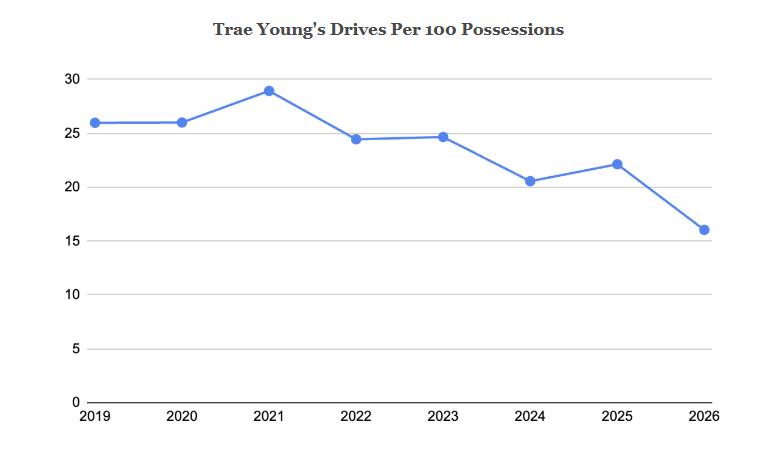
More concerning is the noticeable decline in Trae Young's first-step burst, fueling widespread worries about his diminishing athleticism year after year.According to data from GeniusIQ, during the 2020-21 season when the Hawks reached the Eastern Conference Finals, Trae Young averaged 29 drives per 100 possessions, ranking third in the league behind only Shai Gilgeous-Alexander and Luka Dončić.
But over the last three seasons, his drives per 100 possessions have dropped to 21, a decline of more than one-quarter. In the same period, his drive frequency (minimum 1,000 total drives) ranks 14th in the league—still above average but far from elite.
Trae Young's drives per 100 possessions (data comparison)
If Trae Young cannot maximize his offensive value, it will be hard for him to push a contending team further—because his defensive contributions are minimal.
Advanced stats like xRAPM show that Trae Young's offensive impact ranks in the top 3% of the league, while his defensive impact is in the bottom 3%. EPM data tells a nearly identical story: offense in the top 3%, defense in the bottom 4%.
On/off court data from Cleaning the Glass confirms that, except for this injury-shortened season, the team's offense has consistently improved when he is on the floor every year of his career, while the team's defense has noticeably worsened in almost every season.
A player with such extreme strengths and weaknesses can still hold value in the right system and team environment. The Wizards currently have some alignment: they lack a stable primary ball-handler, have plenty of cap space, and many young players are still on cheap rookie contracts. Over the past three seasons, the Wizards have won only 33, 38, and 37 games, consistently near the bottom of the league, and signing Trae Young at least raises the team's floor.
However, it won't be long before those young players start demanding extensions. At that point, the Wizards will be paying this undersized, defensively porous, declining guard $50 million-plus annually while also raising salaries for their youth, leading to a complete salary cap crisis.
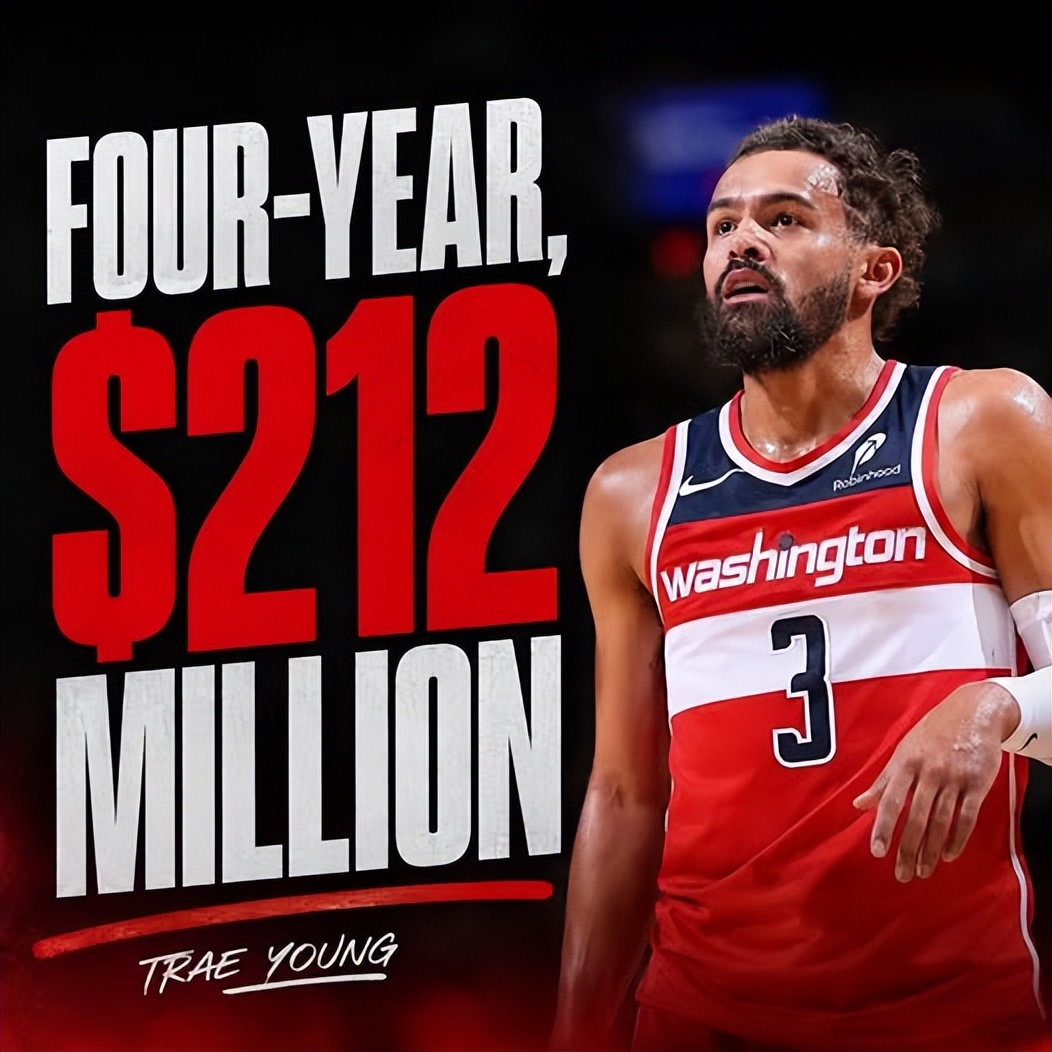
Under the current NBA salary cap rules, the most damaging move a team can make is to sign a player who is good but not a superstar—just a tier below elite—to a max-level, long-term contract.If the Wizards had given Trae Young a lower annual salary or a shorter contract term—ideally both—the deal would have been acceptable, but they chose to forgo both options.


Wonderfulshortvideo
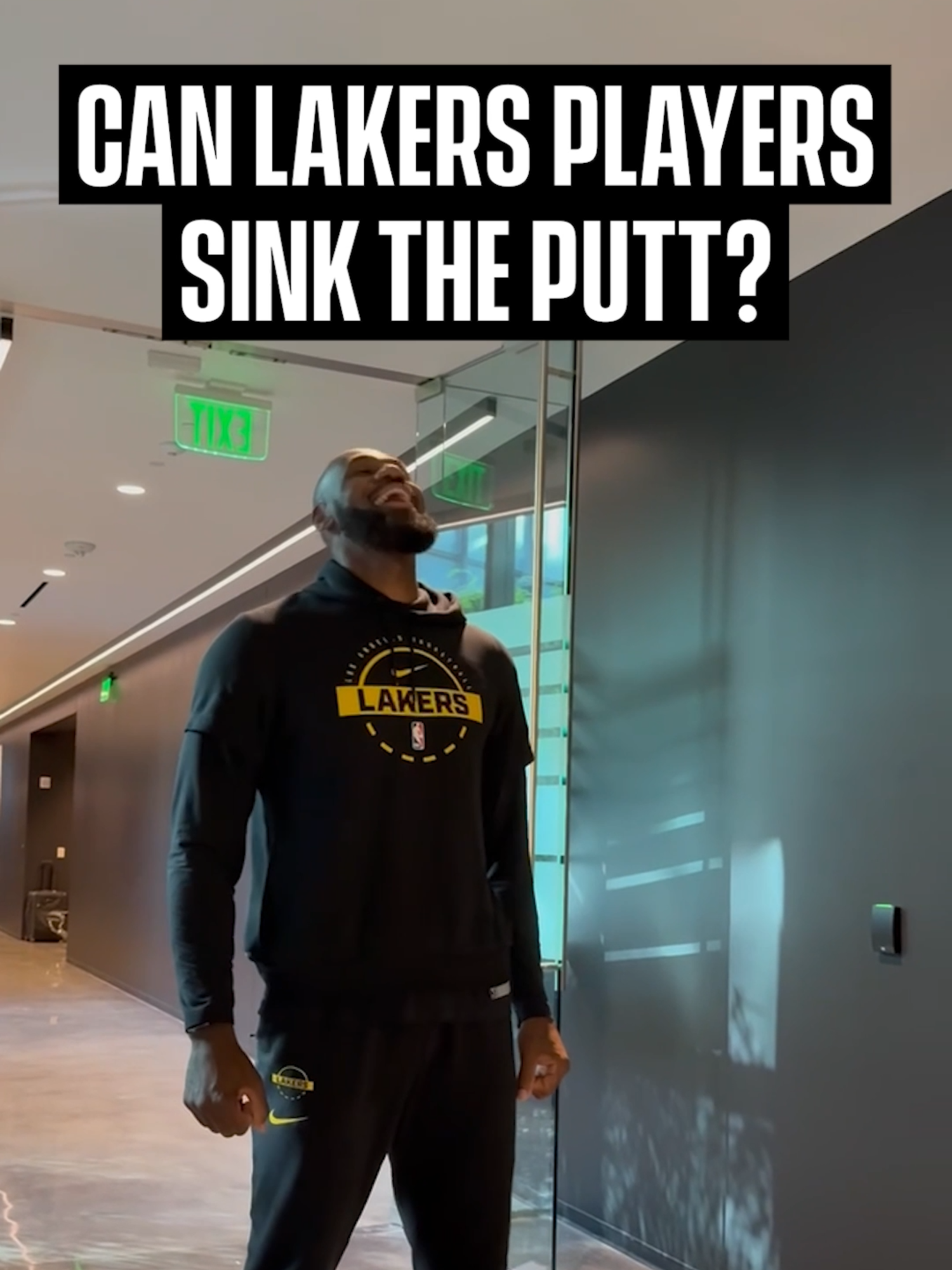
Heard the U.S. Open is today ⛳️


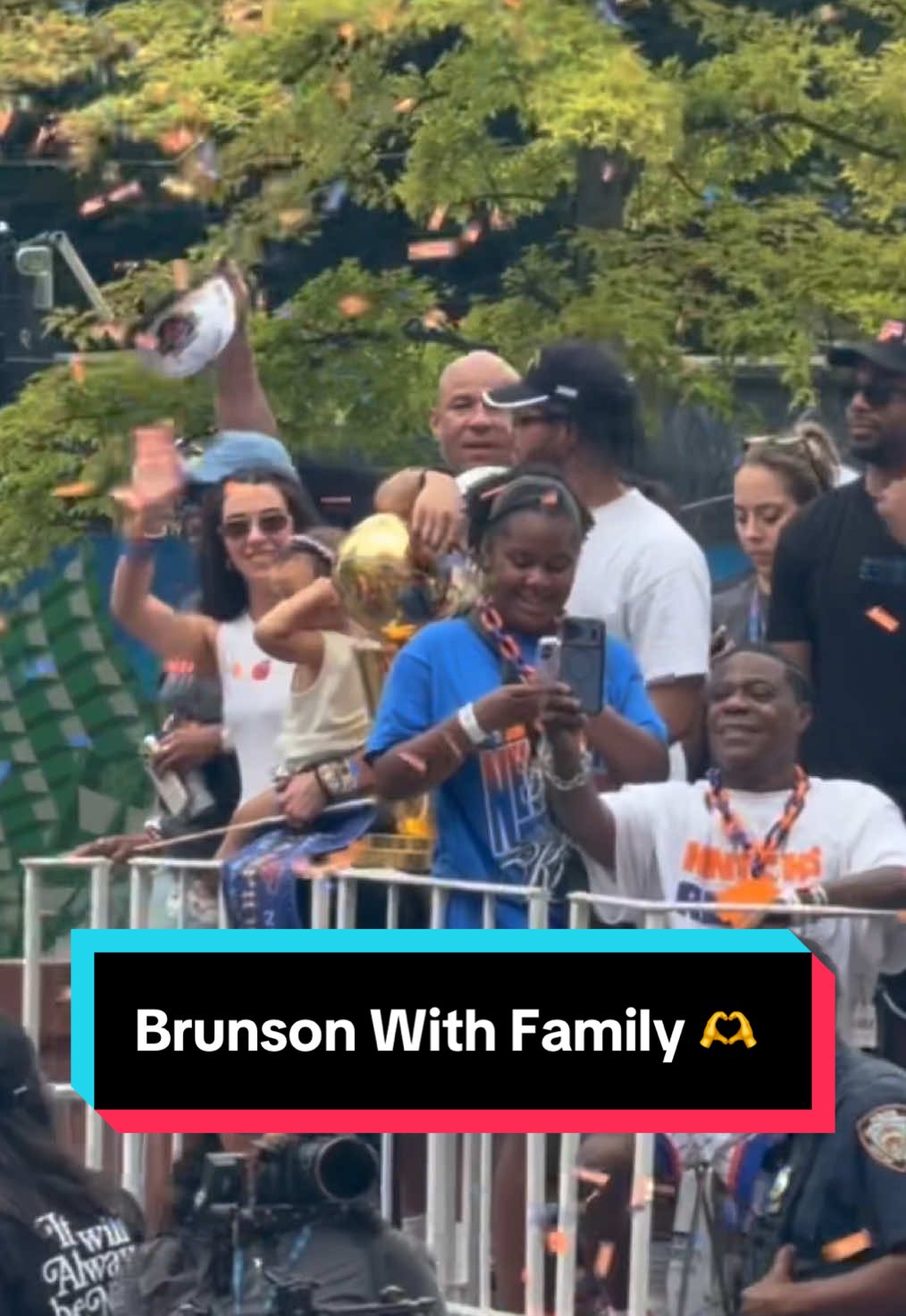
Jalen Brunson on the float with @The Larry O’Brien Trophy ‼️
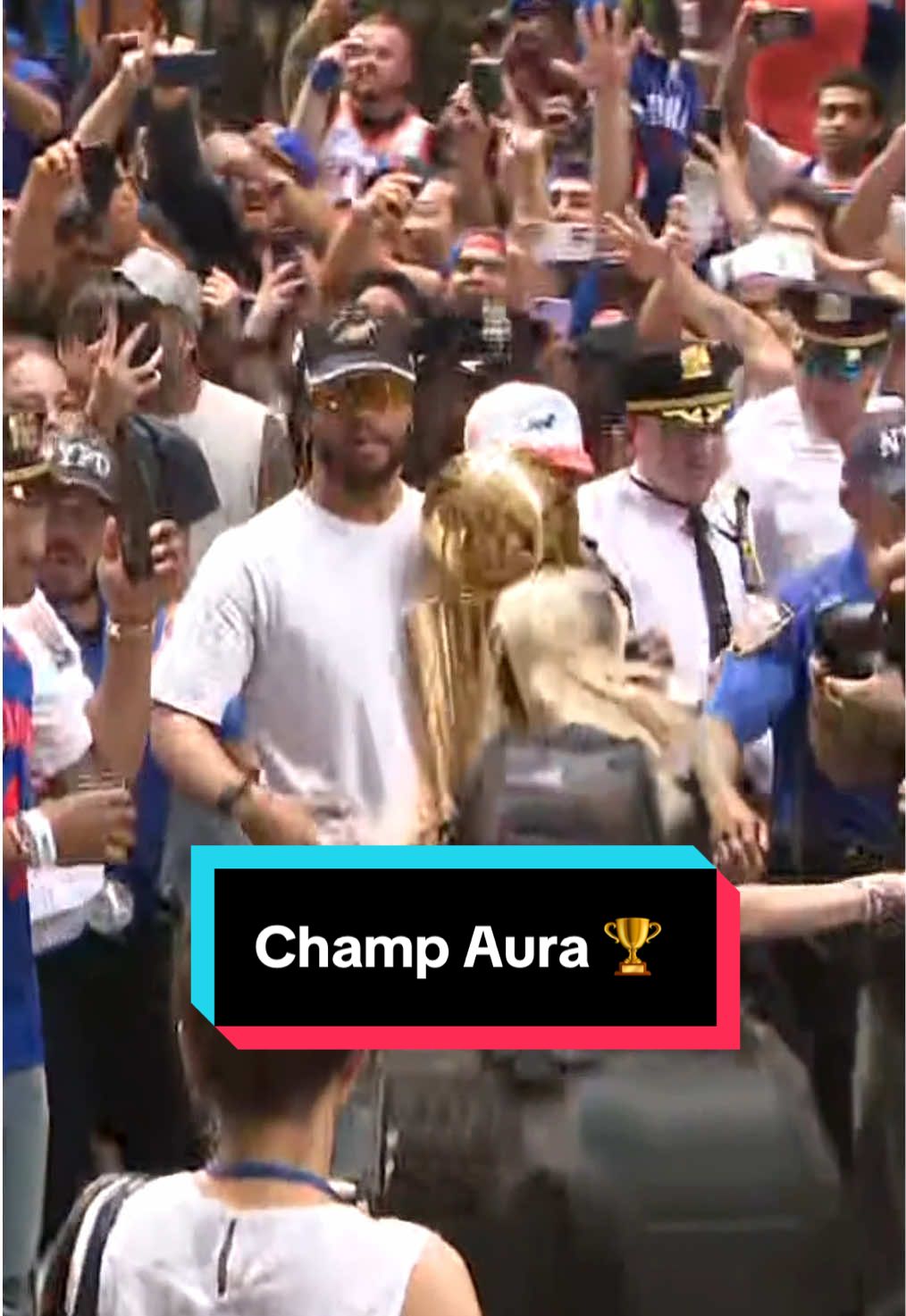
Jalen Brunson with @The Larry O’Brien Trophy at the Knicks Championship Parade 🫡🏆
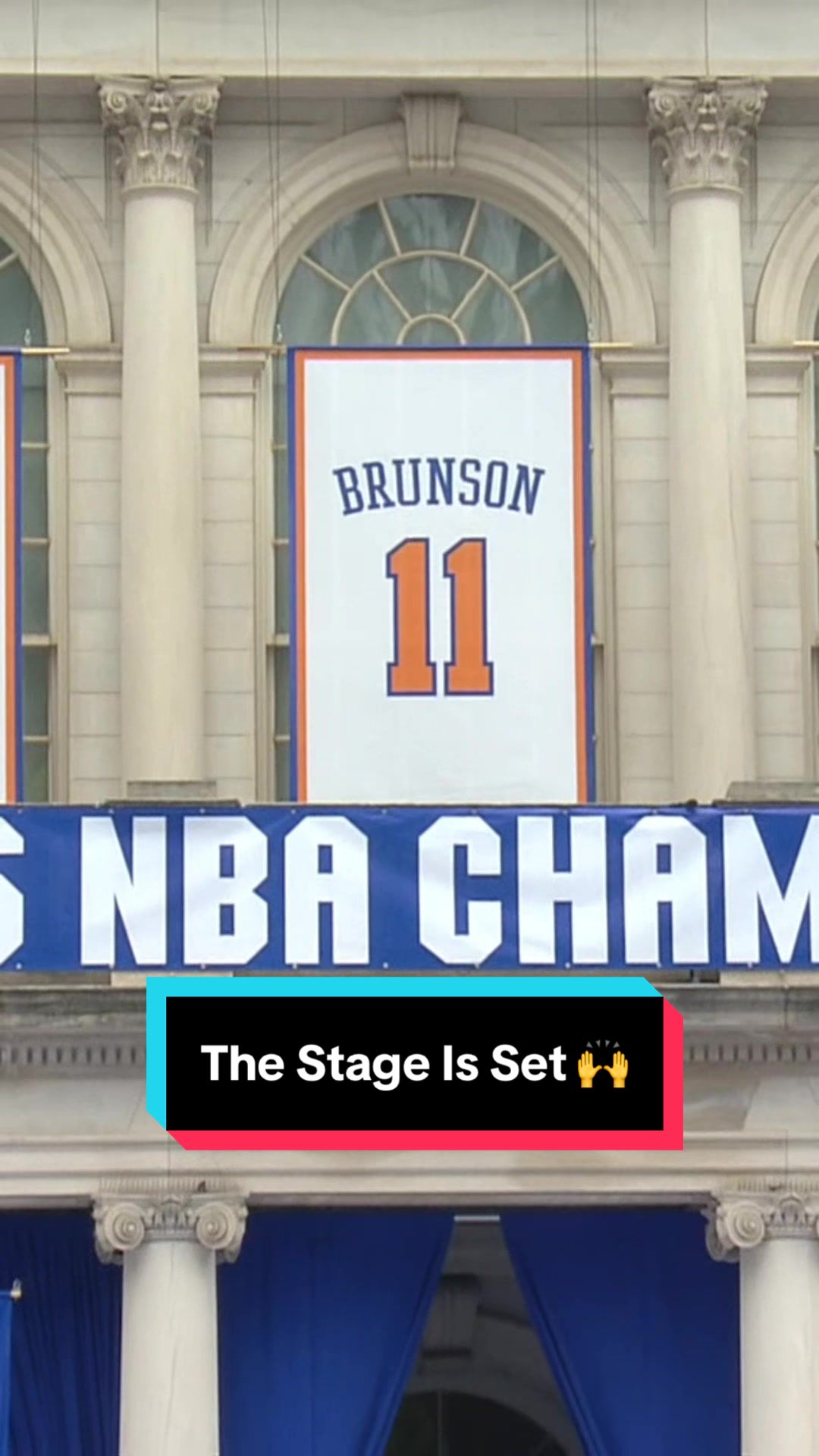
City Hall awaits the @New York Knicks arrival! 🏆
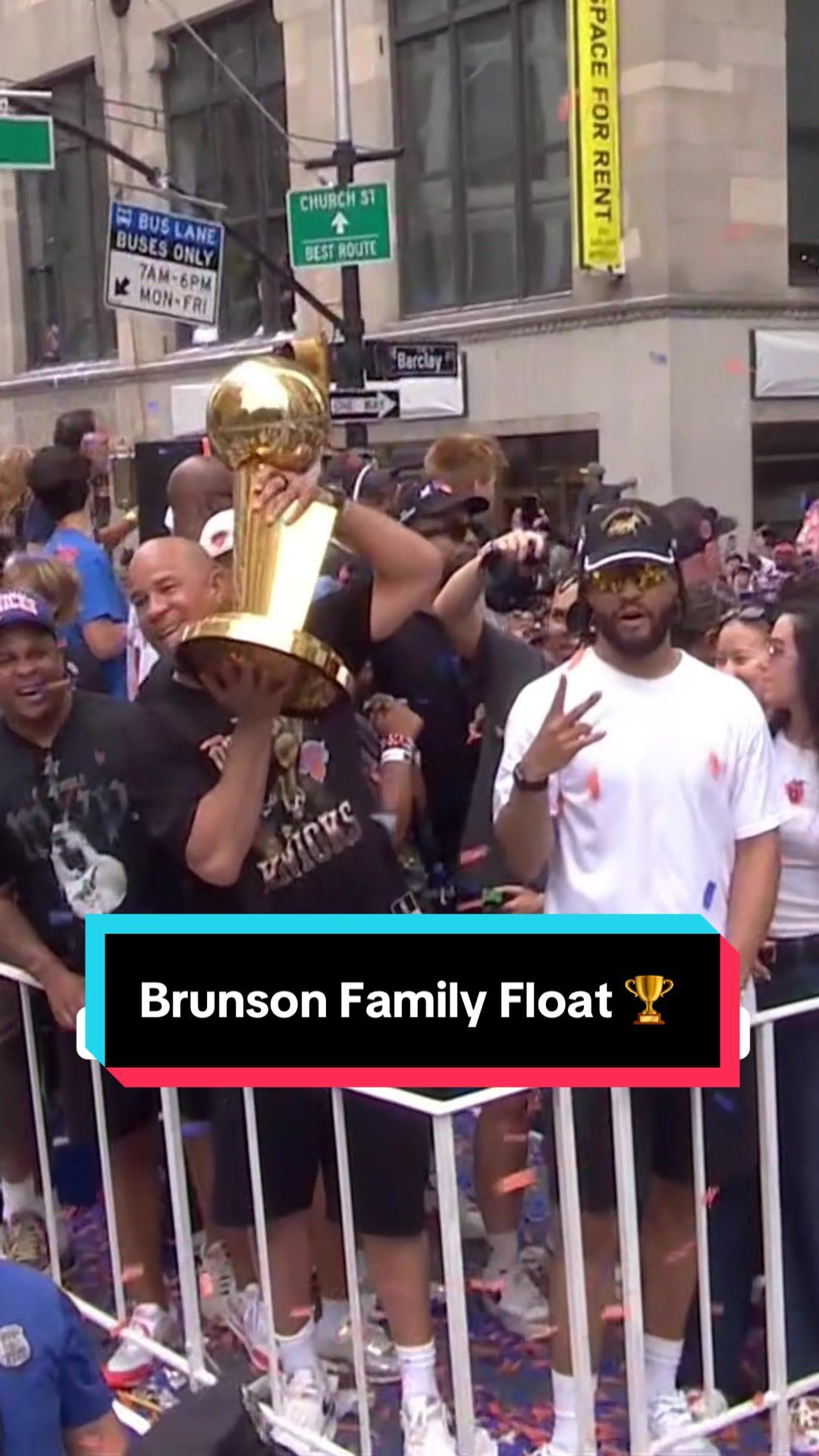
Rick Brunson seen holding the @The Larry O’Brien Trophy on the Brunson family float 🤩
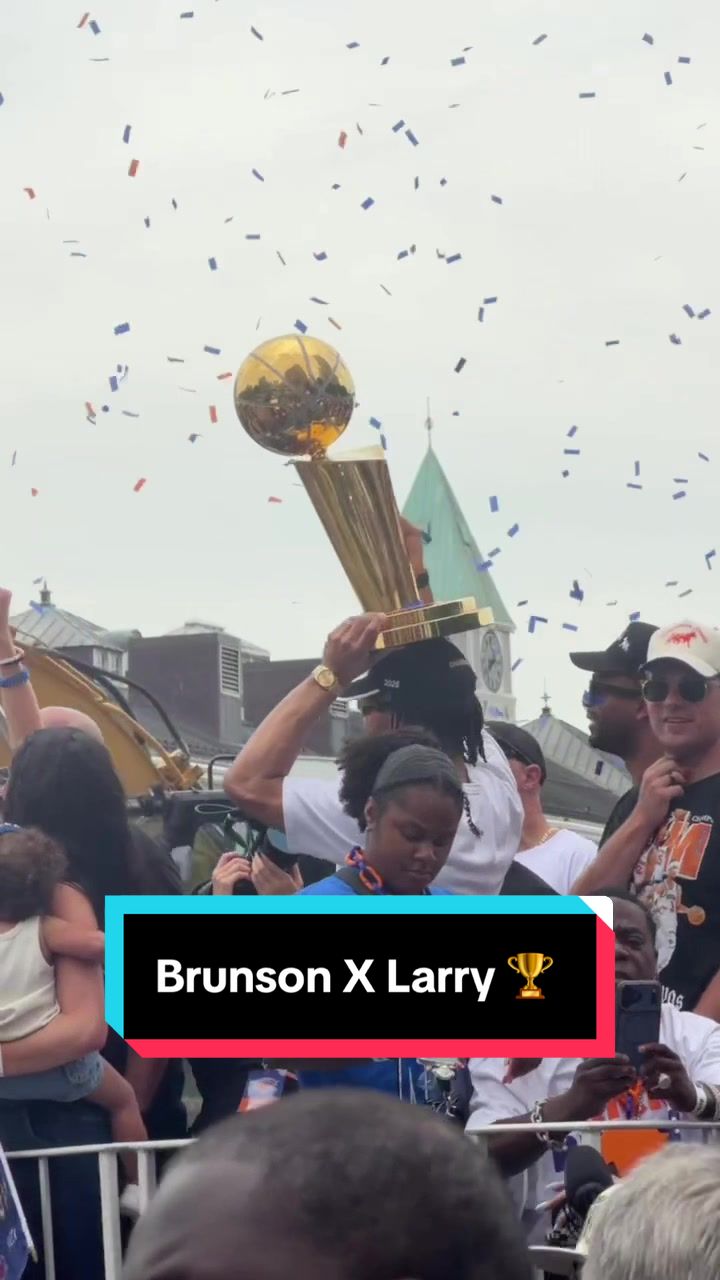
Brunson lifts @The Larry O’Brien Trophy high 🙌 🏆
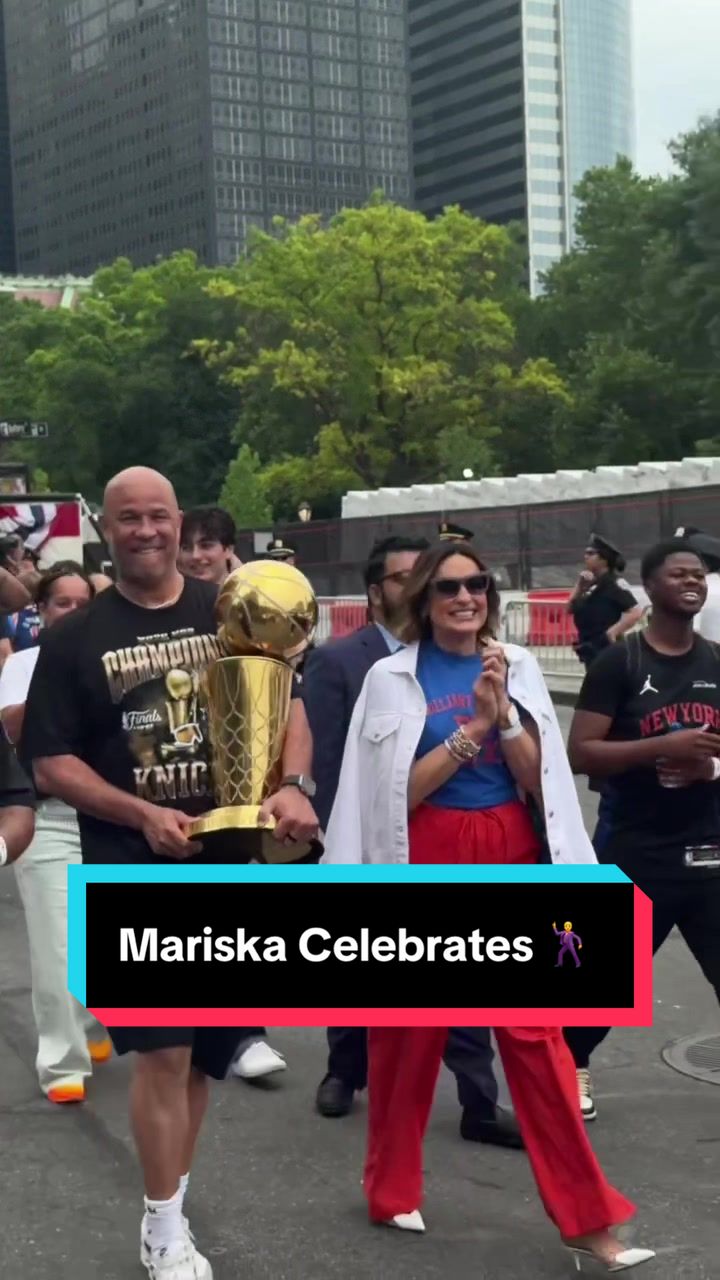
BIG Knicks fan Mariska Hargitay having a blast at the Knicks Championshup Parade 🤩 🙌
 Links
Links
 Contact
 App
App


