



Beijing Guoan's year—if it weren’t for the half-season championship as a kind of “illusory charm”...



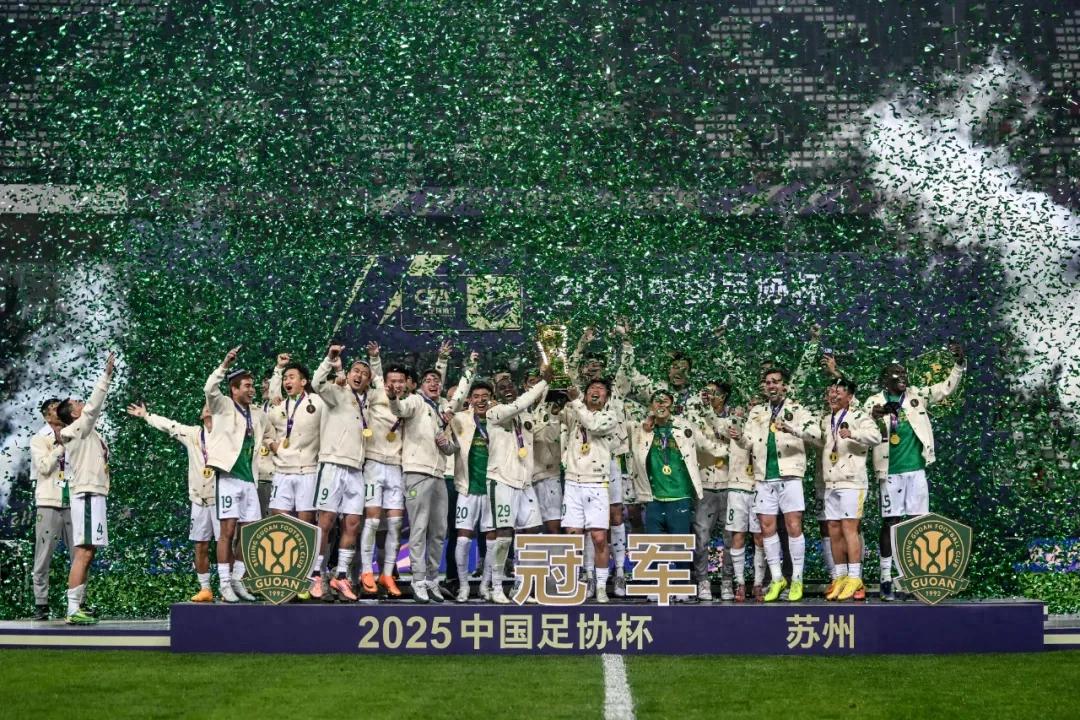
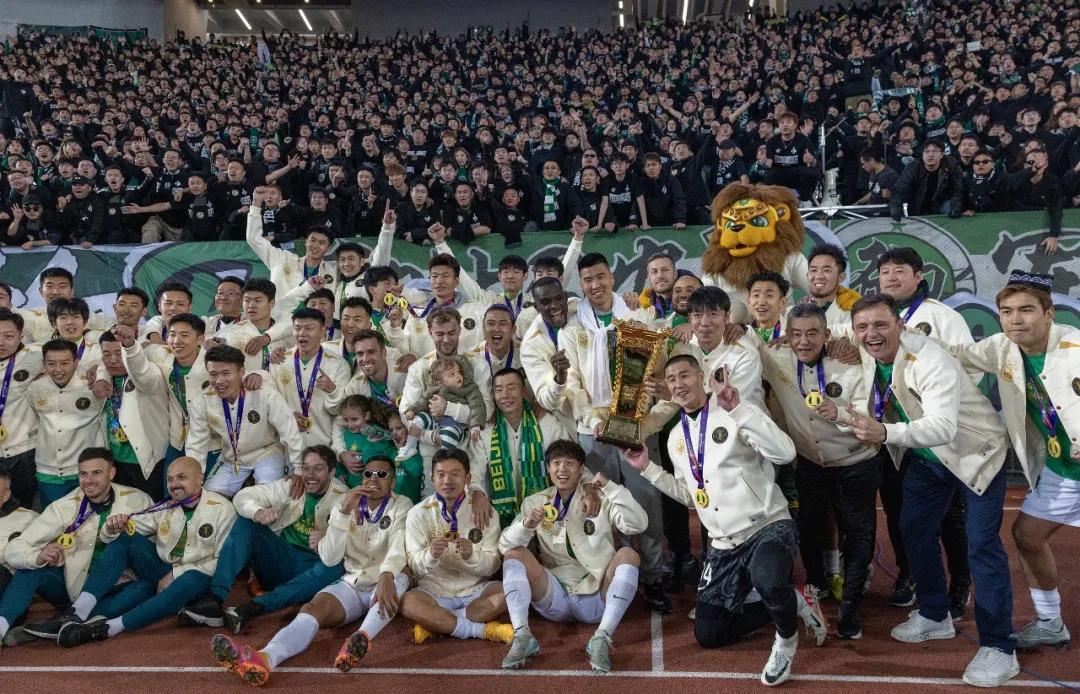
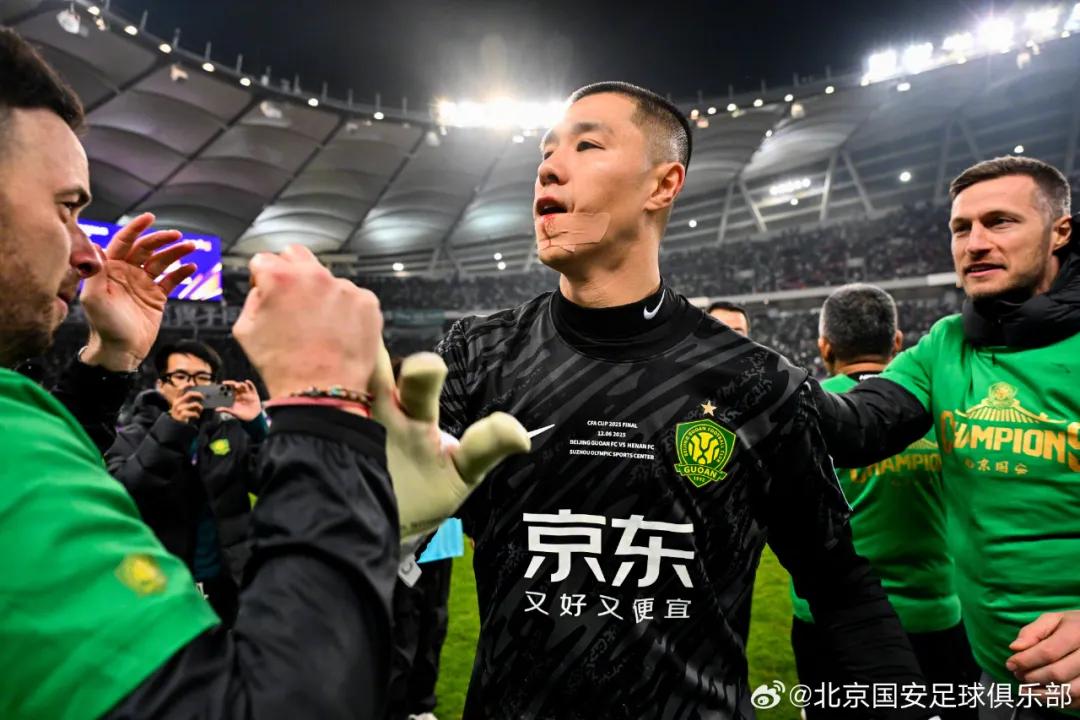
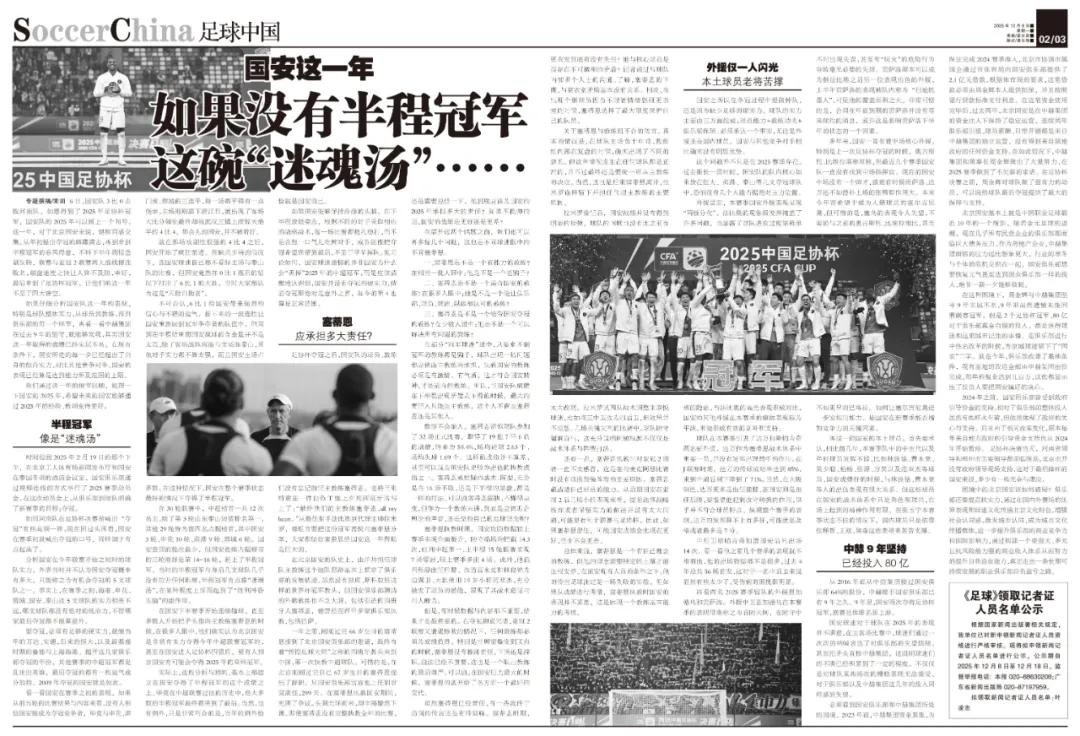
Written by Song Ci On December 6th, Guoan beat Henan 3-0, achieving their goal of winning the 2025 FA Cup, bringing closure to their 2025 campaign. For Beijing Guoan, this year was full of mixed feelings. From their confident championship ambitions at the start, to the pride of securing the half-season title, the second half of the year saw a sharp reversal. They suffered consecutive defeats in both the league and AFC Champions League 2, collapsing faster than expected. Fortunately, winning the FA Cup saved their year from being completely empty.
If we carefully analyze Guoan’s performance throughout the year, especially the team’s overall strength—from players to coaches, and every part of the club—and consider the steadfast support of Zhonghe Group over the past nine years, it becomes clear that Guoan’s achievements this year were already quite hard-earned. Under the current
circumstances, every step Guoan has taken has exceeded their overall capabilities. Compared to other competitors, Guoan’s performance has basically reached the upper limit of their potential.
By reviewing the details of this year, we summarize Guoan’s 2025 season, hoping that the club can learn from the experiences and lessons of 2025 to improve in the future.

Rewinding to the afternoon of February 19, 2025, at the press conference room in Beijing Workers’ Stadium and the hotel conference room where Guoan was training in Thailand, the club held a 2025 season kickoff meeting via video link. During this meeting, the club and team clearly set the goal for the new season: to win the championship.
Just like Henan’s somewhat bold claim of “winning the championship” before the FA Cup final, looking back now, Guoan’s early-season declaration of championship ambitions also seems a bit overconfident.
Analyzing Guoan’s team strength at the start of the league this year, outsiders did not see Guoan as a strong favorite to win, only one of five teams with a chance. In fact, at the beginning of the season, the strengths of Haigang, Shenhua, Rongcheng, Guoan, and Taishan were quite close, with no team showing absolute dominance. Any of them winning the title would not have been surprising.
To win the championship, solid strength is essential—like in the past with Wanda, Shide, later Evergrande, and at their peak, Luneng and Shanghai Haigang. Aside from those clubs’ championship years, most other CSL seasons saw champions emerge amid chaos, with luck playing a part. Guoan’s 2009 title was such a case.
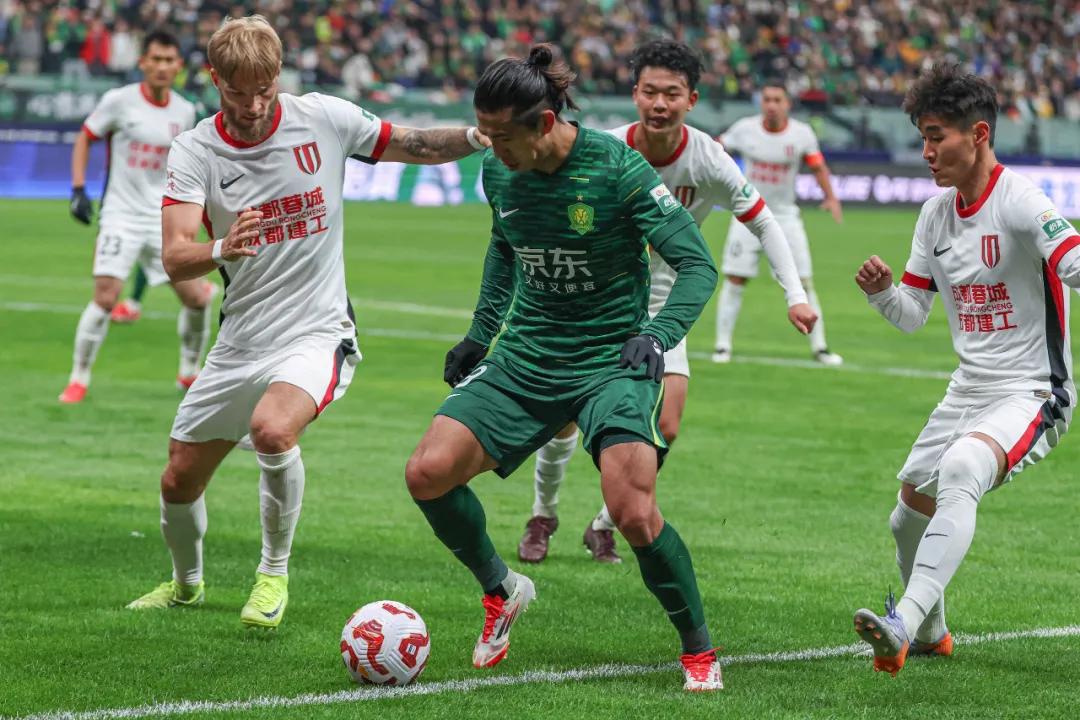
Looking at Guoan’s early-season performance, based on the first five rounds’ results and gameplay, no one believed they could contend for the title. The three consecutive draws against Shenhua, Jinmen Tiger, and Rongcheng were somewhat fortunate. After barely winning at home against Zhejiang, they suffered a dramatic 4-4 draw after leading big away against Wuhan Three Towns. At that time, Guoan was not favored.
After that dramatic 4-4 match, Guoan began an intense surge forward. Despite injuries and lacking key players, even Guoan fans doubted their home match against Taishan, yet Guoan overturned a 0-1 deficit to win 6-1. Many saw this as “heaven helps those who help themselves.”
Undeniably, the 6-1 victory gave Guoan strong confidence and good fortune. The subsequent winning streak brought them back into the championship race. However, until the half-season ended, the quality of Guoan’s wins wasn’t very high. Apart from away victories over Haigang and home wins against Taishan, other opponents were relatively weak, and most matches were at home. With this context, Guoan secured the half-season title at their best form.
Throughout the 30 rounds of the league, the CSL top spot changed hands 12 times. Except for a brief first-place by Shandong Taishan in round 3, the top four teams dominated the leaderboard: Guoan led for 3 rounds, Shenhua for 10, Haigang for 9, and Rongcheng for 6. Guoan had the fewest rounds at the top, but their three consecutive rounds at the summit (rounds 14-16) coincided with winning the half-season title. At that point, the half-season leader was not far ahead of the chasing teams, making the title feel like an “illusion,” which to some extent caused a “victory intoxication” effect.
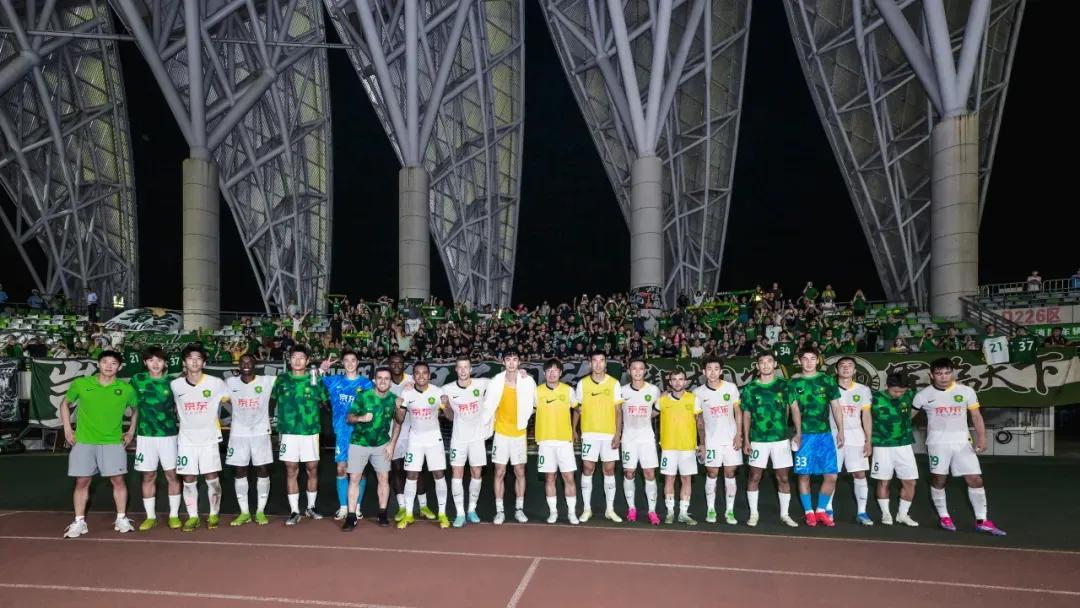
As Guoan started losing continuously in the second half, and many began blaming head coach Setién, many still believed Beijing Guoan had enough strength to win the CSL title this year. When Guoan reached the FA Cup semifinals, some even predicted a possible double championship in 2025.
In reality, these analyses and predictions were mostly based on Guoan’s half-season championship. Historically, most half-season leaders in the CSL have gone on to win the league. Of course, there are exceptions, and ironically, the main exception was Guoan themselves.
If Guoan had maintained a calm mindset, lowered their posture in the second half, and adopted appropriate strategies against different opponents, playing each game steadily rather than trying to overwhelm rivals all at once, they might have kept their championship hopes alive longer instead of falling behind early. However, the real regret for Guoan fans is not why Guoan “lost” the 2025 CSL title, but the clear realization that Guoan lacked the solid strength to win. Any championship would have been a surprise, so finishing fourth is within reasonable expectations.
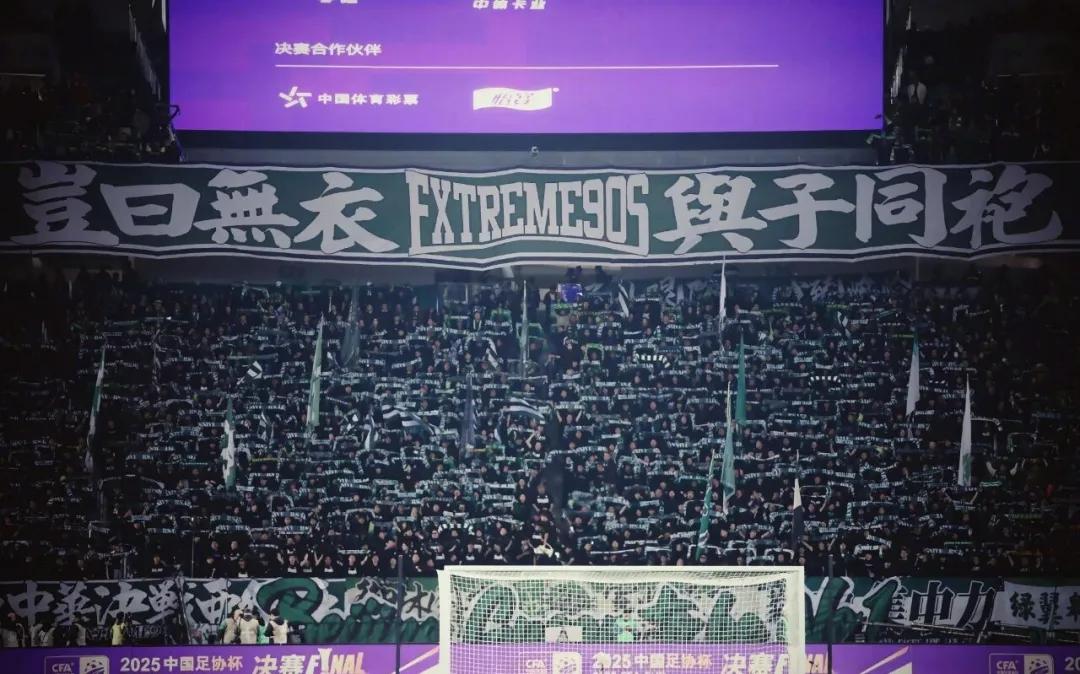

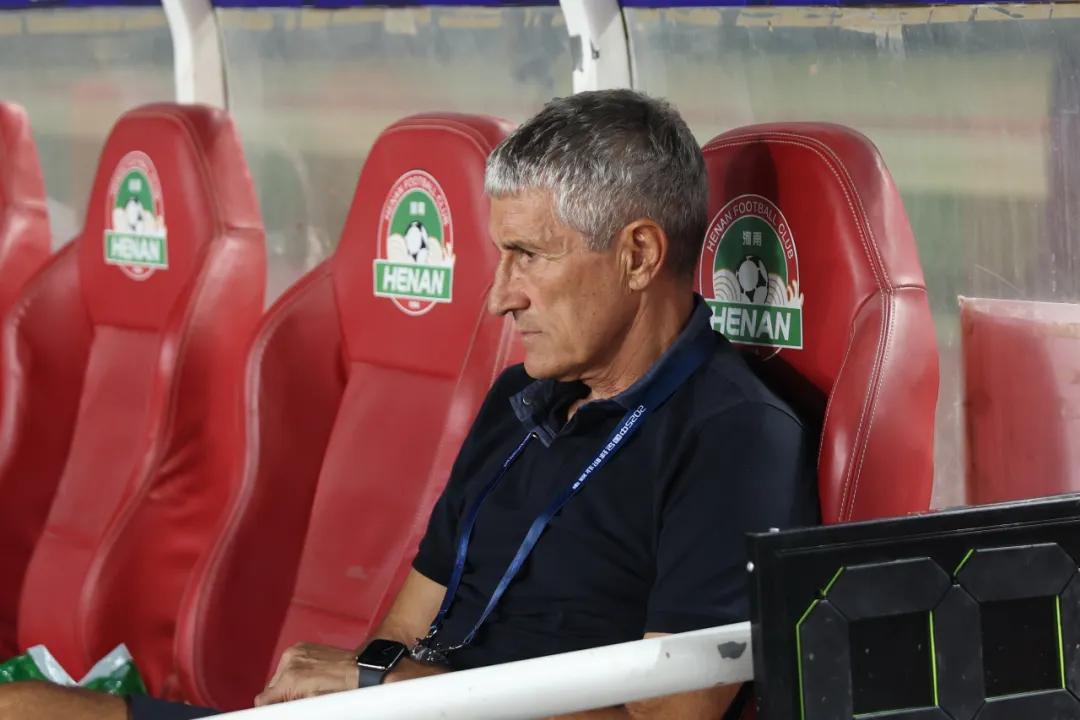
After winning the FA Cup, Guoan’s players and coaches did not forget former head coach Setién. Veteran Wang Gang specially wrote in Spanish on a white T-shirt: “Dedicated to our coach Setién, all my heart.” From top scorer Fabio to interim coach Ramiro, everyone expressed their wish to share this championship joy with Setién, believing he contributed greatly to Guoan’s year.
In Beijing Guoan’s history, appointing foreign head coaches has been a consistent approach. Although they haven’t had World Cup-winning coaches like Lippi or Scolari, Guoan has hired notable foreign coaches, including Spaniard Setién, who has managed several La Liga clubs including Barcelona.
One year ago, shortly after turning 66, Setién accepted Beijing Guoan’s invitation. Known as a “master of possession football,” the Spanish coach came to China to manage a CSL team for the first time. Unfortunately, just after his 67th birthday in Beijing, Setién resigned. From his appointment announcement to his departure, only 299 days passed. His tenure was full of controversy—arriving with high expectations but leaving quietly midway. Even though Setién didn’t coach a full season, it’s necessary to assess how much responsibility he bears for Guoan’s 2025 results. Would the team have performed better or worse without a coaching change?
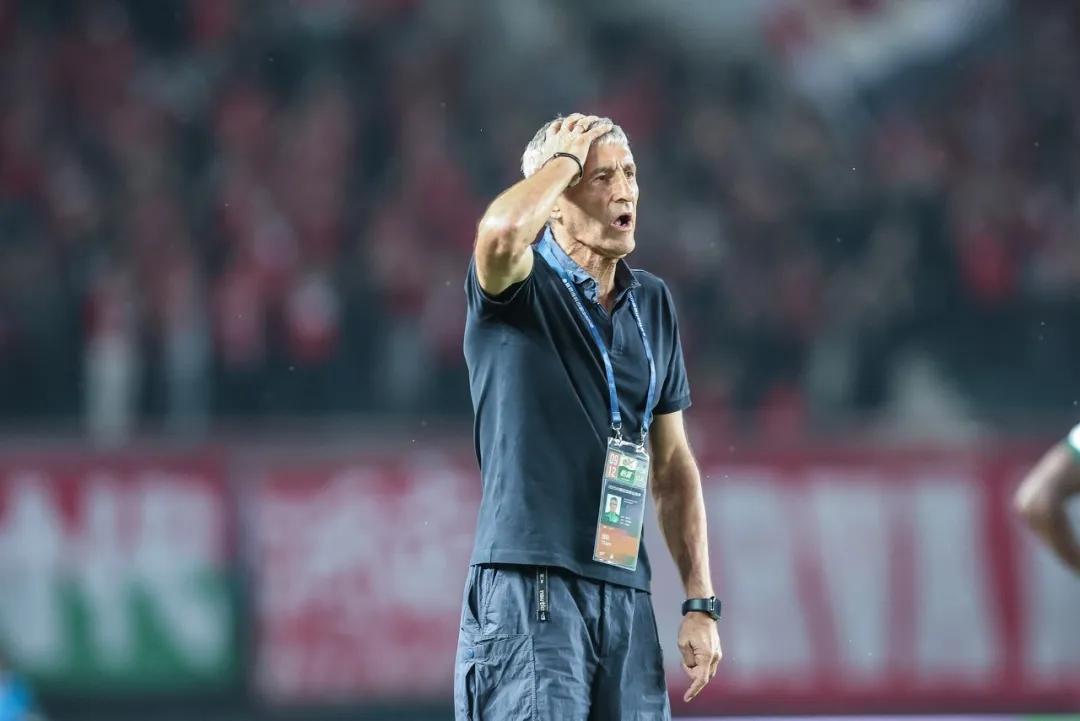
Before addressing those questions, we can raise a few more, reflecting different fans’ views of Setién.
First, is Setién a capable coach? To many, is he just an old fraud?
Second, is Setién a good fit for Guoan? Do many people see him as a coach who can earn the trust of the club, players, fans, and media?
Third, is Setién a coach who can lead Guoan to a championship? A minority believe he can solve all problems.
Among some “championship-minded” fans, any coach who fails to win is a fraud, and all team problems should be blamed on the head coach. The coach of Guoan must have passion and character, embodying Guoan’s spirit to be considered suitable. So when Guoan’s performance plummeted in the second half, the head coach—whether Setién or someone else—was seen as the main culprit.
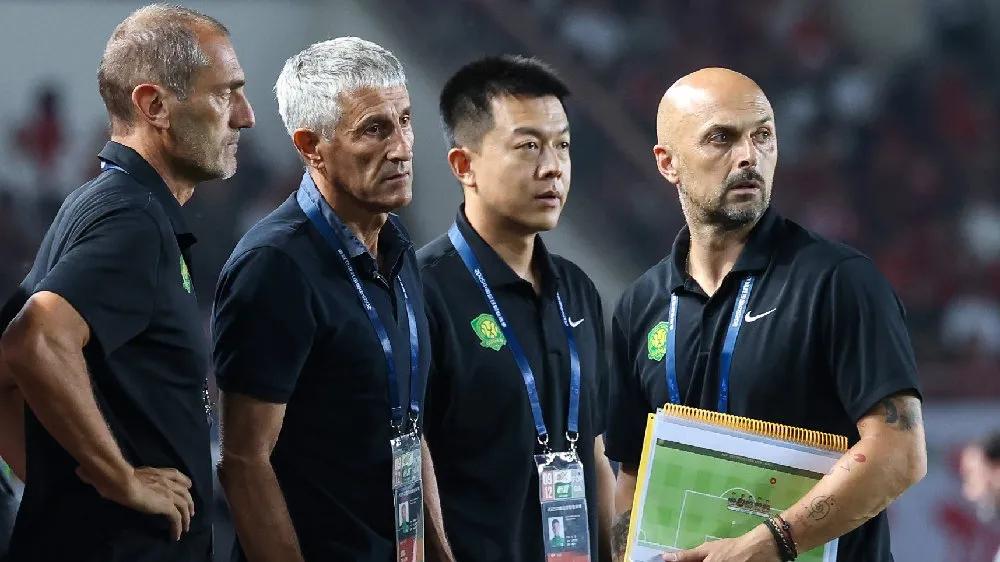
Data doesn’t lie. Setién led the team in 32 official matches with 19 wins, 7 draws, and 6 losses, a 59.4% win rate, averaging 2.63 goals scored and 1.69 conceded per game. This record is not bad and is among the better coaching performances in Guoan’s history. The tactical and formation criticisms, whether during the 16-match unbeaten run or the second-half collapse, involved the same style. Setién was stubborn and lacked adaptability, but as a coach, should he conform to public opinion or stick to his football philosophy?
During Setién’s tenure, Guoan improved both offensively and defensively compared to last season. Defensively, they averaged 14.3 interceptions per game, ranking first in the CSL, with 7 clean sheets in 15 matches—4 more than last season. He promoted Zhang Yuan to defensive midfield, transformed Cao Yongjing and Lin Liangming into wing-backs, and boldly used 19-year-old Fan Shuangjie, fully unleashing player potential and showing his tactical expertise and decisiveness.
However, sometimes data and details matter less than results. With the championship out of reach and a humiliating AFC Champions League 2 exit, any coach must be accountable. Especially when public opinion peaked, Setién did not shirk responsibility; whether he was dismissed or resigned is less important. This was a professional coach’s final dignity. In Guoan’s toughest moment, Setién’s departure provided a clear resolution for all parties.
Although Setién has left, some rumors remain unresolved. Was the dressing room out of control during his time? Were there irreconcilable conflicts with key players? After talking to multiple insiders, it appears his departure was not due to locker room disputes. On the contrary, when some players lost control and damaged the locker room in anger, Setién chose to protect his players to the greatest extent.
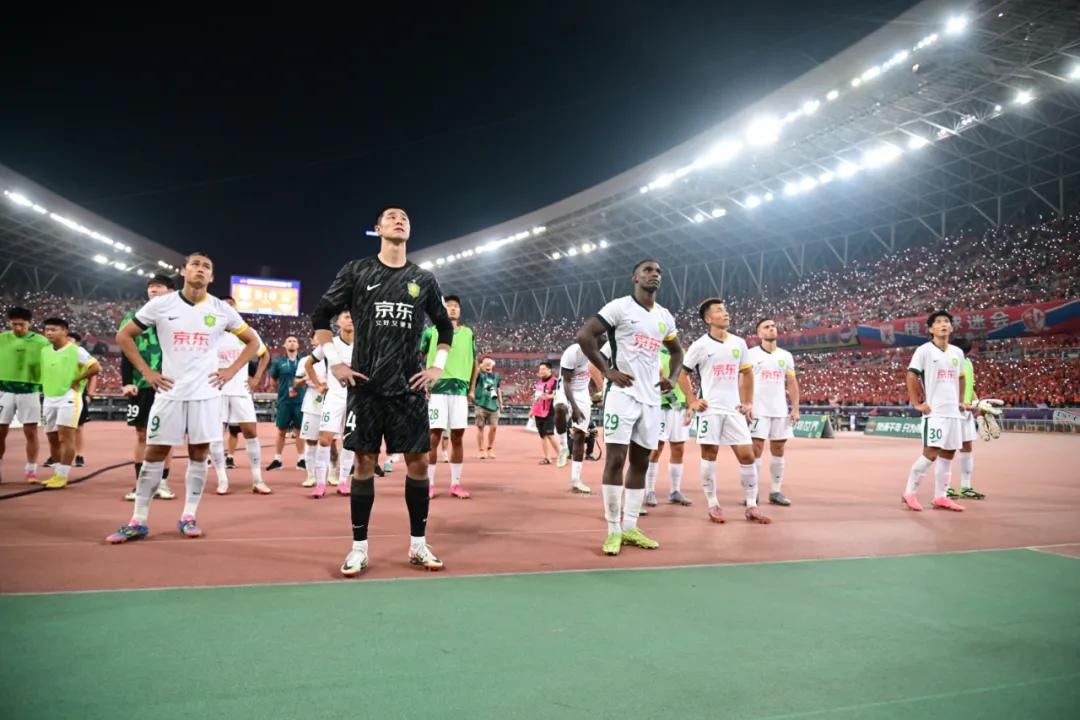
Regarding rumors of conflicts with the coaching staff, the truth is that after a home loss to Shenhua, disagreements arose during the team’s review sessions. Such situations happen in any team, but ultimately, the head coach’s decision prevails. This was also a key reason why Setién left and Ramiro stayed on as interim coach.
After Ramiro took over, Guoan’s results did not significantly improve, and the team’s problems persisted. Ramiro tried tactical changes to please fans, such as switching from three center-backs to four defenders, but results were unsatisfactory. Several crucial losses exposed defensive weaknesses, showing that the root problems were not just tactics or formations.
Also, Setién was never very interested in the AFC Champions League 2, which explains why he did not field his strongest lineup against Macarthur. He clearly understood his players’ abilities. From Guoan’s later group stage performances in ACL2, choosing to strategically sacrifice or conserve strength was not necessarily wrong and might have benefited league and FA Cup campaigns. Thus, if Setién had stayed, Guoan’s results might have been better or at least not worse.
Overall, Setién is a coach with his own philosophy, but it requires specific conditions to take root. Given Guoan’s current personnel, his possession-based football was destined to fail. Yet judging by results, Guoan’s performance under him was not poor, reflecting his basic coaching competence.

Guoan fell behind in the title race mainly due to insufficient solid strength. The team’s strength depends on three factors: player ability, coaching skills, and club support. It must be acknowledged that both foreign and domestic players lack obvious advantages compared to rivals.
This issue is not unique to the 2025 season. Over a long period, Guoan’s core players might not secure guaranteed starting spots if placed in top clubs like Evergrande, Haigang, or Taishan.
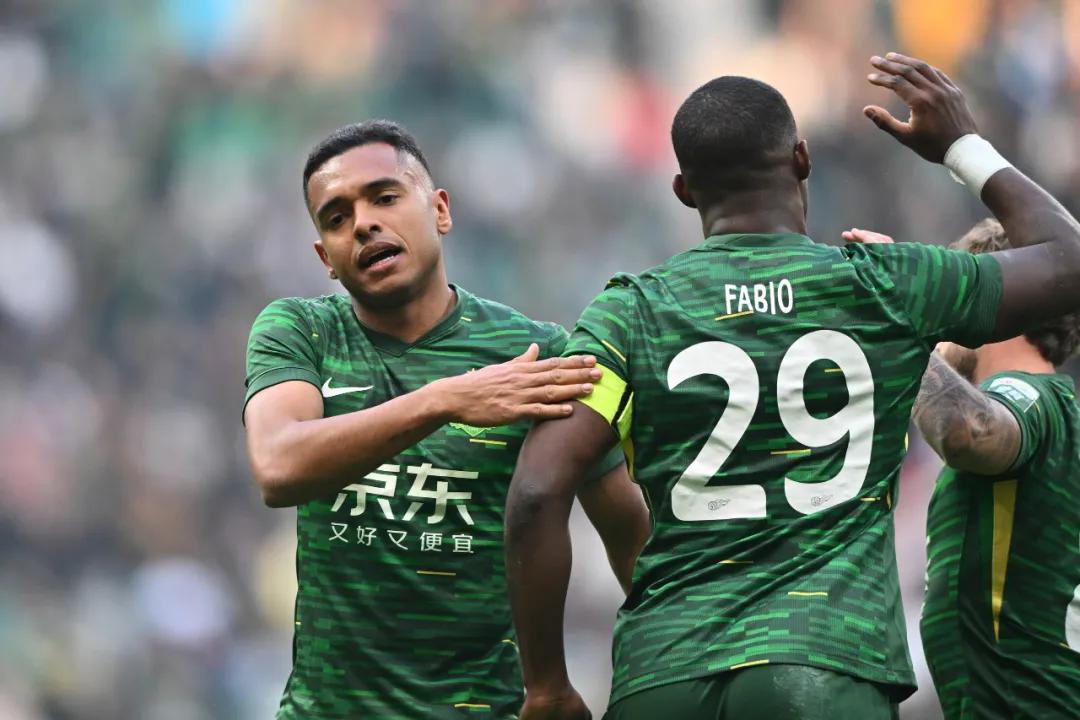
Regarding foreign players, Guoan’s squad showed a “polarized” performance this season. Fabio’s phenomenal play masked many issues and revealed the risk of over-reliance on a single attacking core. In contrast, other foreign players performed rather modestly, failing to provide effective support or complementarity.
Guoan introduced two new foreign players this season: Dawan and Spajic. Dawan, an important part of Setién’s system, did not meet expectations. In the J-League, his pass accuracy was 85%, dropping to 71% in the CSL. At Gamba Osaka, Dawan played mostly as an attacking midfielder, but at Guoan, he was a defensive midfielder, a role that doesn’t suit his strengths. Overall, his season performance was mediocre, roughly average or at best a 7 out of 10.
Central defender Spajic appeared only 14 times after joining Guoan. Looking at his past seasons, his appearances have always been limited: just 56 starts in four years, which is quite low for a center-back and clearly shows injury troubles.
Looking at two other foreign players who stayed in 2025, Ngadeu and Gonzalo: Ngadeu’s defensive performance was far from solid, with occasional mistakes and risky plays causing unnecessary goals. Gonzalo could have been another standout like Fabio. In the first half, he was nicknamed the “robot vacuum” for his wide coverage. Unfortunately, his contract expired at the end of the year without renewal news, which may have affected his second-half form.
For years, Guoan has relied on foreign midfield cores, especially during their last FA Cup win with Augusto and Viera as a double pivot. But in recent seasons, Guoan has lacked a commanding midfield leader. Currently, Guoan’s midfield lacks a true maestro; sometimes Gonzalo and Dawan seem less effective than substitute Zhang Xizhe. There were hopes for naturalized player Serginho this year, but his disappointing form fell short of Augusto, Viera, or even earlier Batalla. How to unlock Serginho’s potential will be key to Guoan’s competitiveness next season.
Now, about Guoan’s domestic players. First, it must be admitted that compared to previous years, the mid-career and younger players performed well this season—Lin Liangming, Cao Yongjing, Wu Shaocong, Bai Yang, Zhang Yuan, Fang Hao, and Fan Shuangjie all contributed. Guoan’s good results were largely linked to Lin Liangming and Cao Yongjing’s strong displays. But these players are role players in Guoan’s system, with limited leadership on the pitch. With Zhang Yuning’s poor form this season, the domestic squad has relied heavily on veterans like Zhang Xizhe, Wang Gang, and Hou Sen.

Since the end of 2016, when Zhonghe Group took a 64% stake from CITIC Group, they have managed Guoan for nine years. In this period, Guoan won the FA Cup twice and consistently ranked near the top in the league.
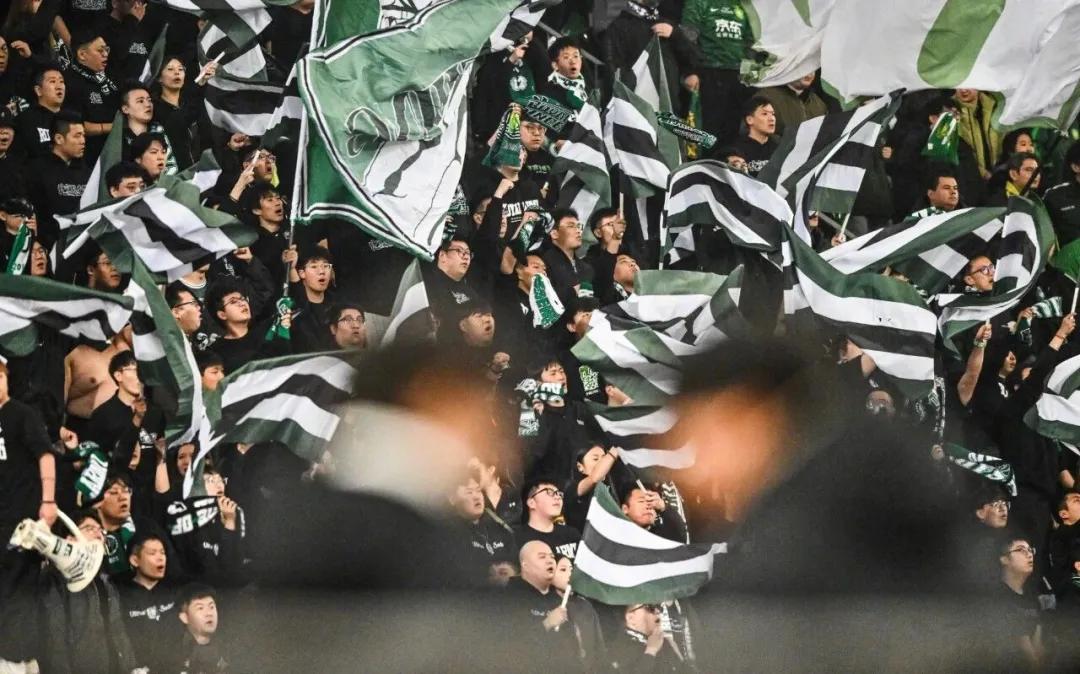
Guoan fans are dissatisfied with the team’s 2025 performance. Through their passionate chants at home and away matches, fans expressed disappointment with the club, even directing criticism at Zhonghe Group. This shows that fan dissatisfaction has accumulated beyond poor performances in certain games to include frustration with the club and Zhonghe’s investments over recent years.
We must recognize the difficulties faced by Guoan and Zhonghe Group. At the end of 2023, Zhonghe faced financial strain. To ensure 2024 season registration, Beijing coordinated municipal state-owned enterprises to provide Guoan with a 210 million yuan loan through the Sports Bureau. This loan required personal guarantee from Chairman Zhou Jinhui and interest payments at bank rates. After using this funding, Guoan’s stable operation over the past two years relied solely on Zhonghe’s capital injections, without any local government financial support. Under these conditions, Zhonghe and Chairman Zhou worked hard to fulfill the no-arrears promise in 2025. Before the FA Cup final, Zhou strongly motivated the team, providing the greatest support for their eventual victory.
Beijing Guoan essentially represents the story of Chinese professional football over the past decade. With the decline of cash-fueled football, almost all privately-owned clubs face heavy debt burdens. As a real estate company, Zhonghe Group faces pressures far beyond expectations, with industry downturn and individual crises intertwined. For Guoan to revive or match the investment levels of state-owned clubs is not achievable overnight.
Given these hardships, Zhonghe Group’s nine-year commitment is commendable. While they have yet to win a league title, two FA Cup championships and an 8 billion yuan investment in the club are achievements fans and the city should remember. During the club’s neutral name reform, they preserved the “Guoan” name for Beijing fans. This year, Zhonghe fully funded base facility renovations costing millions in annual rent, demonstrating the owner’s determination to strengthen Guoan.
Before 2024, Guoan received government-guided funds, which, while modest relative to overall investment, showed government care and support. However, due to policy changes, local government funding ceased starting in 2024. On FA Cup final day, Henan provincial and Zhengzhou city leaders attended, but no Beijing government officials showed up, leaving Guoan’s victory tinged with some helplessness and melancholy.
How can struggling Beijing Guoan break through? The club must enhance its soft power by excelling domestically and internationally, promoting Beijing culture through fan culture, strengthening social recognition, and fostering city identity. Becoming a carrier of city culture will boost commercial competitiveness and international influence. By building a stronger, more diversified, and resilient business revenue system, Guoan can improve its self-sustaining ability and truly embark on a long-term sustainable professional club path of self-reliance and profitability.



 Links
Links
 Contact
Address:UNIT 1804 SOUTH BANK TOWER, 55 UPPER GROUND,LONDON ENGLAND SE1 9E
Number:+85259695367
E-mali:[email protected]
 App
App


