



Is the Scottish Premiership aggressively targeting the Chinese Super League? A win-win approach is the future of Chinese football.



Reported by Chen Yong After half a year of heated exchanges in the media, the Scottish Premiership and Chinese Super League have begun to clash in commercial development as well, yet this is not a zero-sum competition; jointly growing the pie to achieve a win-win outcome is something to look forward to.
Recently, the Scottish Premiership’s vigorous sponsorship efforts have attracted significant media attention. Reports suggest its overall commercial development has exceeded 200 million RMB, though officials later clarified that sponsors for the 2026 season have not yet been announced, with an official press conference expected to reveal details soon.
Although the claim of “over 200 million RMB in sponsorship revenue” for the Scottish Premiership lacks official confirmation, the league’s strong momentum in attracting sponsors is undeniable, naturally drawing more attention to China’s three-tier football leagues led by the Chinese Super League and increasing pressure on them.
However, the Scottish Premiership and Chinese Super League are not in a zero-sum, mutually exclusive rivalry. While the Scottish Premiership is booming in 2025, the Chinese Super League is also thriving, with a 32.54% growth in fan attendance and over 6 million spectators for the first time. Against this backdrop, city leagues like the Scottish Premiership and China’s three-tier professional leagues should collaborate to grow the commercial market for football events, boosting the football economy together and achieving a win-win situation—this should be the goal for Chinese football.
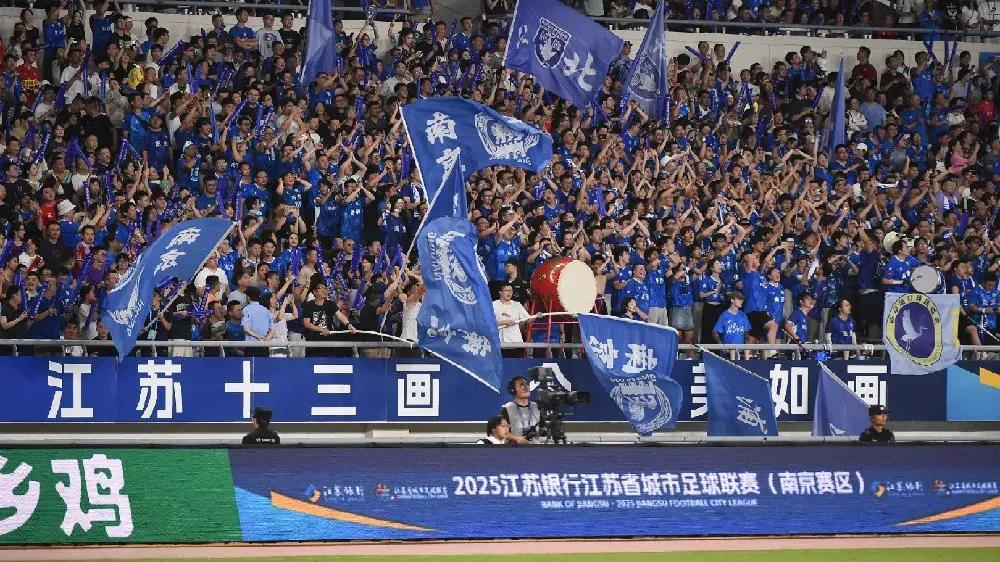

Even if the Scottish Premiership’s total commercial development surpasses 200 million RMB in 2025, sponsorship fees for the three-tier professional leagues, especially the Chinese Super League, remain significantly higher. Data from the Chinese Football Association Federation shows that in 2025, commercial development revenue for the three-tier professional leagues increased by 13% compared to 2024, with the Chinese Super League’s revenue up 10%. However, no precise figures were released.
Sponsorship revenue for professional leagues mainly comes from four sources: title sponsorship, broadcast rights, equipment sponsors, and other sponsors. Compared to city leagues, title sponsorship, equipment, and other sponsorships are similar, but broadcast rights represent a clear difference.

Regarding title sponsorship, previously Ping An Insurance paid about 200 million RMB annually. Later, China Resources Beverage became the Chinese Super League’s title sponsor. For the 2025 season, as the Chinese Super League, League One, and League Two launched unified commercial development, China Resources Beverage became the title sponsor for all three tiers. Data shows that the Chinese Super League’s commercial revenue growth was lower than the overall increase in the three-tier leagues, with most growth in League One and League Two attributed to China Resources Beverage’s sponsorship. Reports indicate that China Resources Beverage’s total sponsorship for the three-tier leagues exceeds 160 million RMB.
Regarding equipment sponsorship, excluding the value of equipment itself, reports show Nike provides cash sponsorship equivalent to about 3 to 4 million RMB per Chinese Super League club. The exact amounts from other sponsors remain unclear, but total cash sponsorship likely exceeds 100 million RMB.
Broadcast rights distinguish professional leagues from city leagues. City leagues rely on multiple platforms for broadcasting, making revenue from this source negligible. In contrast, broadcast rights are a major income stream for professional leagues, dominating in European leagues. Reports show Migu Video generates about 150 million RMB annually from Chinese Super League broadcast rights. Additionally, at the club level, ticket revenue is another major difference: city leagues use low ticket prices to boost the fan base and related cultural tourism, while for professional leagues, ticket sales are a core income source. In 2025, most Chinese Super League clubs earned net ticket revenues exceeding 10 million RMB, with several clubs surpassing 50 million RMB.
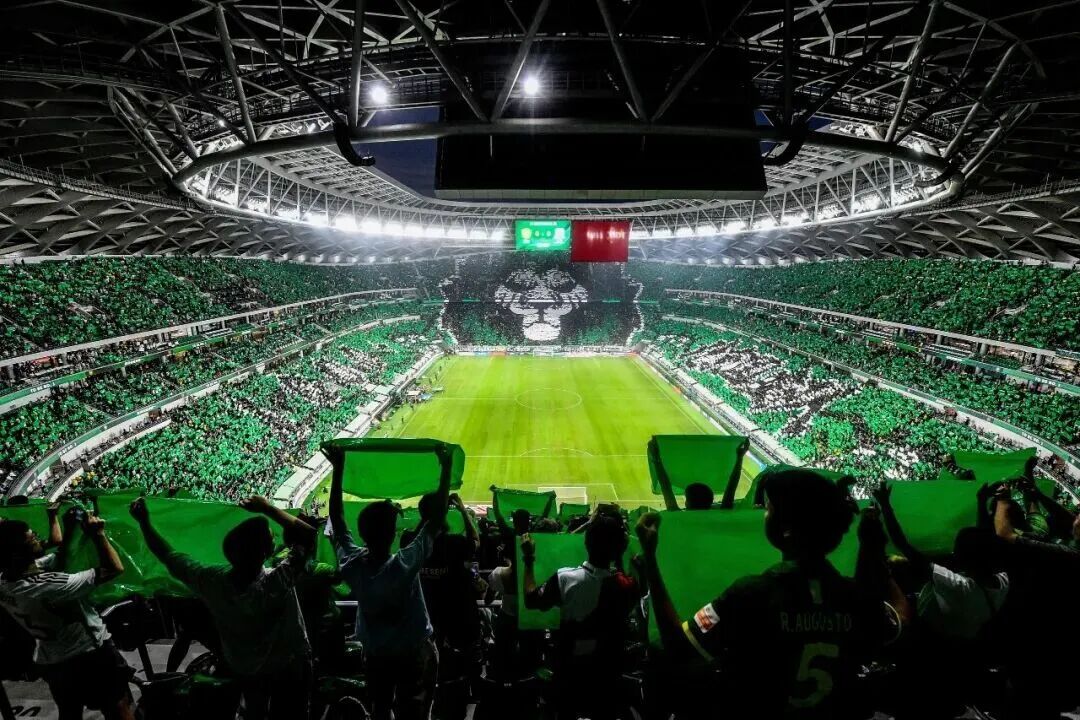
Our sources indicate that Chinese Super League clubs received dividends exceeding 15 million RMB in 2025, marking approximately a 25% increase compared to the previous year—a substantial growth.

Based on estimates comparing the Chinese Super League and Scottish Premiership, if the Scottish Premiership’s total commercial development is around 200 million RMB in 2025, the Chinese Super League likely generates about twice that amount. Nonetheless, the rapid growth in the Scottish Premiership’s commercial revenue prompts deeper reflection within the Chinese Super League.
In fact, the Chinese Super League also has strong potential for commercial revenue growth, especially reflected in its fan market: total attendance in 2025 surpassed 6 million for the first time, reaching 6,180,990, a 32.54% increase over 4,663,507 in 2024.
The increase in away fans is even more pronounced. This season, most Chinese Super League teams have seen large numbers of traveling supporters. For example, in matches where Shandong Taishan played away against Beijing Guoan, about 4,000 away fans were present, and in the away game against Qingdao Hainiu, over 10,000 Taishan supporters filled the away section.
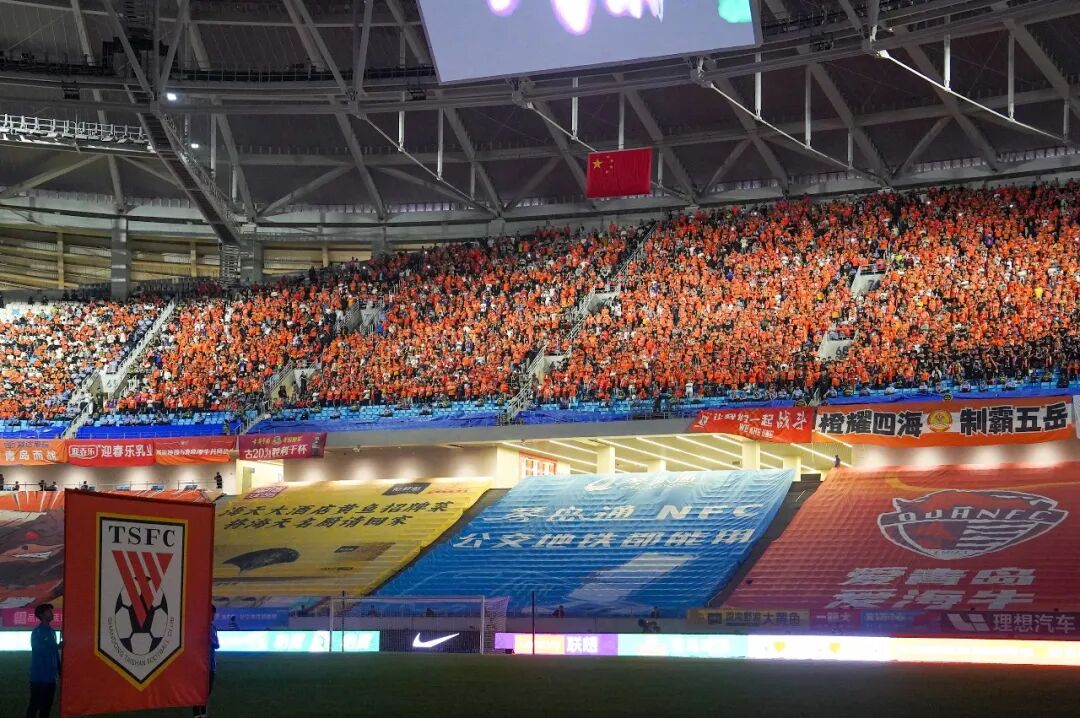
Such a booming fan market naturally delivers greater returns for existing professional league sponsors, especially those in the Chinese Super League, reinforcing their confidence to continue sponsorship. The more than 30% surge in attendance in 2025, combined with expectations for further growth in 2026, naturally attracts more sponsors to join the league.
Notably, this huge attendance increase in the Chinese Super League occurred alongside the popularity of city leagues like the Scottish Premiership, Ganzhou Super League, Xiang Super League, Chongqing Super League, Sichuan Super League, and Inner Mongolia Super League. The popularity of city leagues is partly driven by herd mentality. For example, in Shandong, the “Qilu Super League” (a level below League Two) is also very popular, whereas clubs that have reached League Two have relatively poor fan attendance. This reflects the herd effect. Yet, despite this, the Chinese Super League’s attendance surge indicates a very stable and core fan base. Even in social media battles, criticism often targets the national team and the Chinese Football Association rather than the Chinese Super League, largely due to the support and protection of the league’s core fans and the rise of football media, which mostly began with the Chinese Super League.
From these perspectives, China’s three-tier professional football leagues, especially the Chinese Super League, have significant potential for explosive growth.

Although a vibrant fan market brings promising commercial development prospects, converting this potential into actual sponsorship revenue and growth is not an easy task.
For the Chinese Football Association Federation, established at the start of 2025, the first year has produced quite positive results, including increased commercial development revenue. However, it must be clearly understood that so far, the Federation’s work has focused mainly on competition aspects, such as reviewing and adjusting competition rules, daily match operations, sportsmanship, discipline, and refereeing—key public opinion areas. Additionally, being newly formed, internal personnel and procedural adjustments have consumed considerable energy.
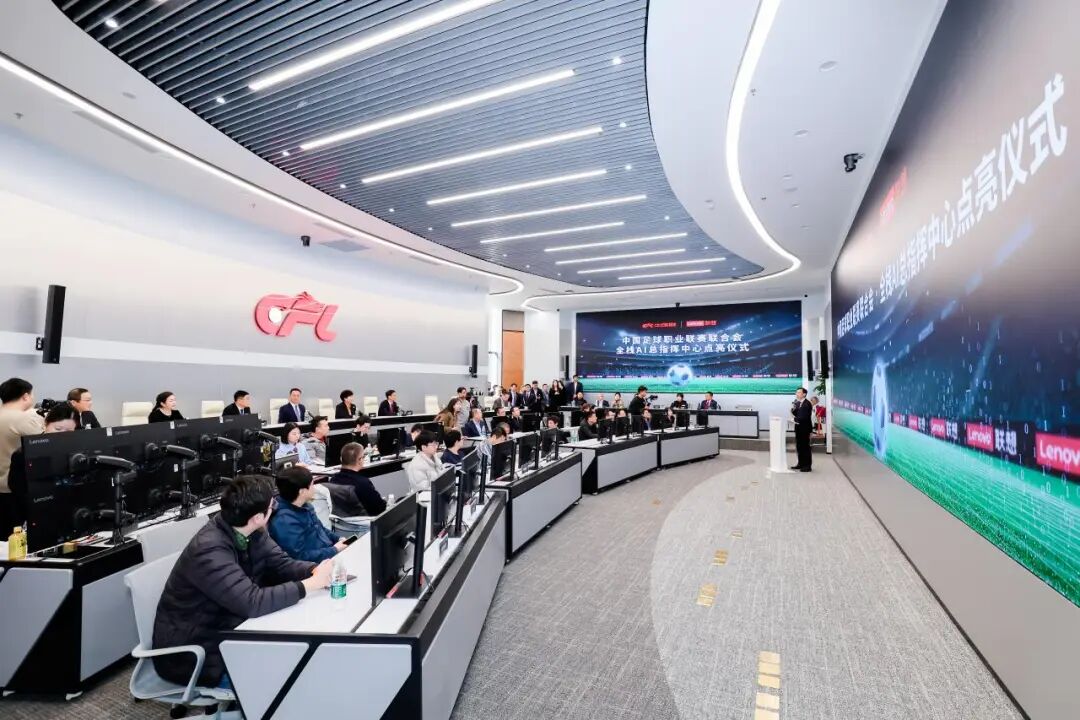
In other words, at least during the 2025 season, we have not seen the Federation shift its focus from competition management to commercial development, which inevitably affects the overall commercial income of China’s three-tier professional leagues.
In reality, prioritizing commercial development is not achieved simply by changing the Federation’s leadership; it requires a genuine shift from a competition-centered mindset to a commercial one and building a comprehensive commercial development system. This includes: first, the Federation’s main leaders dedicating more effort to commercial development; second, given the nation’s strong emphasis on football, enhancing communication between leagues and state-owned enterprises as well as industry leaders is essential; third, the Federation’s daily operations must fully consider commercial development, including but not limited to publicity and matchday economic growth. A positive sign is the relaxation of attendance restrictions, but other matchday constraints also need easing.

Within professional leagues, future commercial development efforts should focus on strengthening League One and League Two. In 2025, League One had a total attendance of 1,896,473 with an average of 7,902 per game, far below the Chinese Super League; League Two had 880,295 total attendance and an average of 2,445, much lower than League One.
In fact, League One’s attendance is supported mainly by a few key clubs. For example, in 2024, League One’s total attendance was 2.28 million, with Dalian Yingbo Haifa accounting for 630,000 (27.6%). This season, Liaoning Ironman attracted 396,107, or 20.9%. By contrast, in the Chinese Super League, although Dalian Yingbo Haifa’s total attendance reached 874,020 with over ten matches exceeding 60,000 spectators, their share of the league’s attendance was only 14.1%.
Several factors explain the struggles of League One and League Two: first, over recent seasons, clubs in these leagues have been very unstable, lacking a strong football culture, whereas the Chinese Super League, although once unstable, has several long-established professional clubs; second, the competition level in these leagues was very low for several seasons, with many clubs rapidly advancing from the fourth tier to the top league in just a few years—for example, Qingdao West Coast was in the fourth tier in 2019, then spent two years each in League Two and League One before promotion; Dalian Yingbo Haifa and Yunnan Yukun, promoted to the Chinese Super League in 2025, made a triple jump; third, before anti-match-fixing measures, match-fixing was widespread in League One and Two, severely undermining fan enthusiasm.
However, in the 2024 and 2025 seasons, signs of improvement have appeared in League One and Two: clubs have become more stable, and after anti-match-fixing efforts, the competition level has gradually improved.
Therefore, the direction for commercial development in the three-tier professional football leagues is clear: first, establish a business-centered operational logic; second, continue to strengthen and expand the Chinese Super League; third, fully address the weaknesses in League One and Two to achieve comprehensive improvement across the professional leagues. On this basis, as the leagues become more stable and healthy, expansion can be considered.


Wonderfulshortvideo
The footwork, the finish 🤌


The Wirtz x Sané link-up 🔗
Class personified.
yamal getting better raphinha goals today raphinha vs osasuna yamal barcelona highlights yamal pass today
Griezmann with the cool finish 🥶
“afcon funny moments”
🤤🤤
 Links
Links
 Contact
Address:UNIT 1804 SOUTH BANK TOWER, 55 UPPER GROUND,LONDON ENGLAND SE1 9E
Number:+85259695367
E-mali:[email protected]
 App
App


