



Milicic Rejects “Easy Draw,” Sets Clear Goal to Reach Asian Cup Final



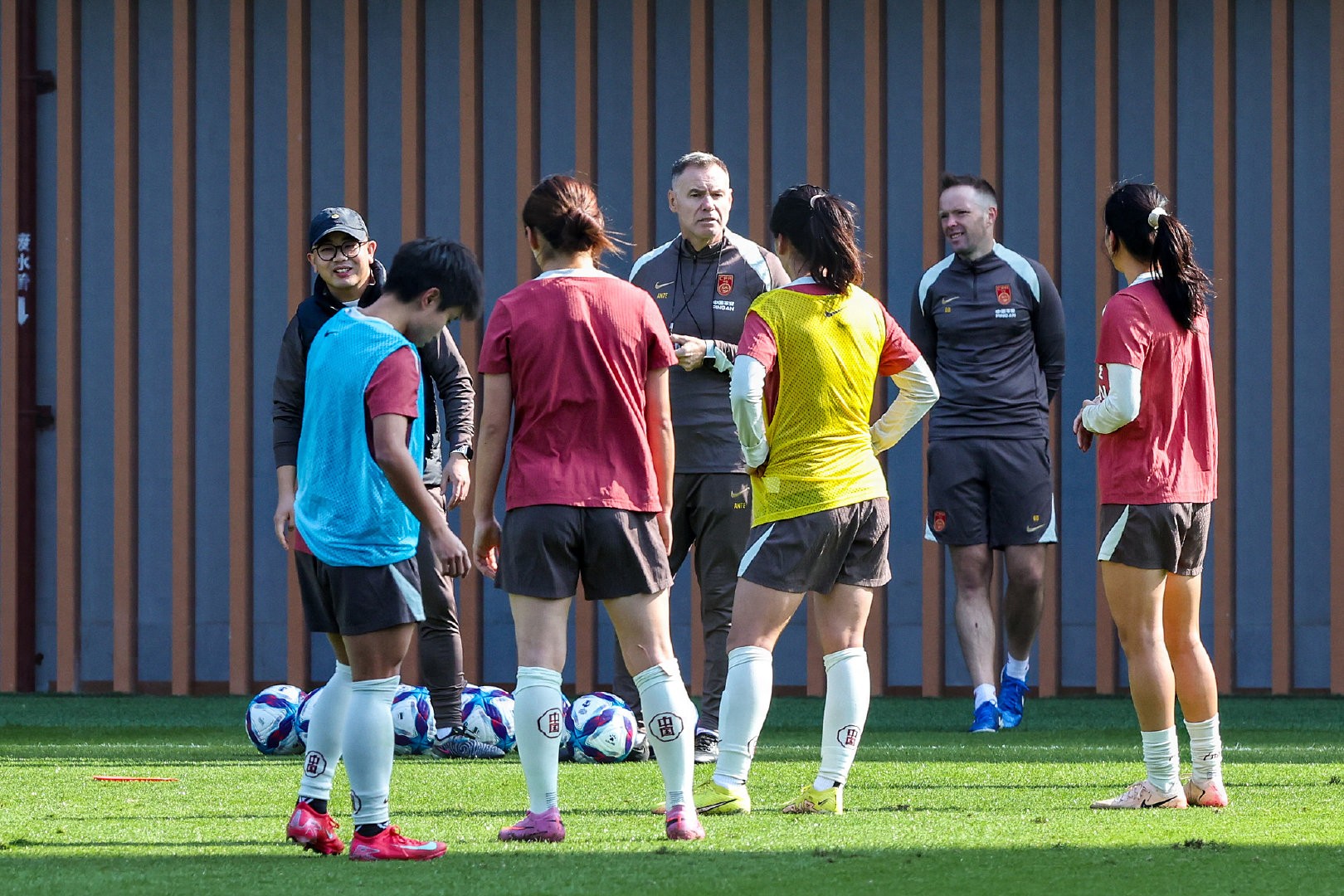
Reported by Wang Wei and intern Li Xin On January 6, the Chinese women's national team started their first training session of 2026 in Shenzhen, gearing up for the upcoming Women's Asian Cup in Australia this March. Facing tight schedules and heavy responsibilities, coach Milicic needs to help the team rebuild confidence, finalize the main squad framework, and polish tactical details.
Adjustments Made to Coaching Staff and Players
“This is our first time having nearly two months of continuous training together, which is a very valuable opportunity for the team,” said head coach Milicic. The main focus of this camp is to optimize the players' physical and mental conditions.
According to Milicic, the training camp will proceed in two phases. From January 4 to 22 is the first phase, during which no friendly matches will be scheduled, focusing mainly on players’ fitness reserves and physical status. The second phase, from late January to mid-February, will include friendly matches designed to simulate the characteristics of Asian Cup group opponents, using real games to test training results and tactical cohesion.
After the 0-8 defeat against England in London last November, rebuilding confidence is crucial for the Chinese women's team. Milicic admitted that both the scoreline and on-field performance in that match were disappointing and lessons must be learned. “We can’t dwell on past losses. I want the team to now focus on the Asian stage and apply the lessons we learned in Europe to the Asian Cup.”
The training roster shows more than half of the goalkeepers and defenders have been changed, drawing public attention. Making major adjustments at this critical moment before the Asian Cup is a deliberate choice by Milicic: “The national team door is open fairly to every player. The evaluation standards differ between clubs and the national team, so we need to comprehensively assess players’ abilities in the national team’s training and match environment.”
Milicic explained that the coaching staff evaluates players from multiple dimensions—not only based on league performances but also on training sessions, gym work, and daily life during the camp. He hopes new players can better showcase themselves after joining the national team environment. He emphasized that past international competitions only allowed 10 to 12 days of preparation, but this winter camp provides a full cycle, giving newcomers ample time to adapt to the team’s style. “I give every player a chance. They need to prove whether they can fit into this team and our tactics. I hope they seize this opportunity.”
There have also been changes in the coaching team during this camp. Wang Hongliang has been appointed assistant coach, and Qu Chuliang is the goalkeeper coach. Milicic believes that the addition of local coaches brings complementary advantages and fresh energy to the team. “Local coaches observe training from a perspective closer to the players, spotting potential issues and providing targeted feedback, which broadens our evaluation angles.” Mutual learning among the coaching staff is equally important: “I can learn new things from the local coaches, and they can learn from me. We grow together and help the team improve.”
Four goalkeepers have been called up for this camp, with Qu Chuliang’s presence adding more professional experience to goalkeeper training. Wang Hongliang, who recently led the U17 women's team in the World Cup, will leverage his familiarity with young players to bridge the gap between youth and senior team members. “Coach Wang understands the changes young players face transitioning from youth to senior levels. His experience helps newcomers integrate faster,” Milicic said. The new coaching team has already held multiple internal meetings and is fully engaged in their work.
Regarding the Asian Cup goal, Milicic clearly stated that the team aims to reach the final. “The Chinese women’s team is the pride of the entire nation, and we will fight for the final at all costs.” He also stressed that at this stage, it is important not to overemphasize grand ambitions to avoid putting extra pressure on players. “We are in a period of transition between generations. Many young players lack experience in major international competitions and need to gradually build it up.”
In this Asian Cup, China is grouped with North Korea, Bangladesh, and Uzbekistan in Group B. Although the group stage advancement pressure is not heavy, Milicic refuses to label it an “easy draw.” “To reach the final, we must respect every opponent. Right now, we should focus on the first group match against Bangladesh and take it step by step to complete our ultimate goal.”
Veterans Guide, Newcomers Strive to Grow
Captain Wu Haiyan, soon to turn 33, is entering her third Asian Cup with the national team. Having missed the 2022 Asian Cup championship due to injury, she places even greater importance on this tournament. “Mentally, I remain calm but believe more in myself and the team. This is likely my last Asian Cup in my career. I will give my all, seize the opportunity, and hope to help the team win the championship.”
In 2025, Wu Haiyan faced a demanding schedule with over fifty matches between club and national duties, a huge test for her physically and mentally. “I am truly grateful for so many playing opportunities. Every match counts for me, so I cherish each one.” She choked up briefly but then joked with reporters, “Can you skip writing this? I always end up crying when talking about it.”
As the team captain and a senior player, Wu Haiyan is keenly aware of her responsibilities. “Chinese football, including the women’s team, is going through a difficult period, but I believe we can withstand the pressure.” Regarding the team’s generational transition, she said she will set an example as a veteran and lead young players by actions. “The value of senior players lies not in age but experience. We will motivate young players through training and matches and do our best to help them grow tactically and technically.”
Reflecting on the 0-8 loss to England, Wu Haiyan said, “After the defeat, coaches and leaders gave us a lot of confidence. We recognized the gap with our opponents and saw both our weaknesses and strengths. With two months until the Asian Cup, we clearly know what to improve. I believe after two months of preparation, the team will perform better on the Asian Cup stage.”
For young players, this camp is a great chance for development. Wang Aifang, who has been with the national team for a year, has grown into a key contender for a starting spot. “At first, I thought I just needed to focus on learning, but now I also need to actively communicate with the senior players and contribute on the field.”
Her experience training in Europe has given Wang Aifang clearer self-awareness. “The intensity and pace of offense and defense differ greatly between Asian and European teams. Training in Europe made me realize my shortcomings, and I will work hard to catch up.” She plans to focus on improving strength, fitness, and individual skills over the next two months. “Confidence comes from ability. Only by constantly improving can I stay calm under pressure and perform boldly.”
During this camp, the addition of club teammate Xie Zongmei has brought Wang Aifang a sense of familiarity. “New blood helps everyone improve together since everyone wants to make the final Asian Cup squad,” Wang said. She intends to help Xie integrate quickly. “When I first joined, the seniors helped me, and now I hope to play that role for others.”
Looking ahead to the Asian Cup, Wang Aifang is full of anticipation: “I really want to participate in this tournament. I will prepare wholeheartedly and hope to achieve good results with the team.”


Wonderfulshortvideo
The footwork, the finish 🤌


The Wirtz x Sané link-up 🔗
Class personified.
yamal getting better raphinha goals today raphinha vs osasuna yamal barcelona highlights yamal pass today
Griezmann with the cool finish 🥶
“afcon funny moments”
🤤🤤
 Links
Links
 Contact
Address:UNIT 1804 SOUTH BANK TOWER, 55 UPPER GROUND,LONDON ENGLAND SE1 9E
Number:+85259695367
E-mali:[email protected]
 App
App


