



Despite Incheon United U15's seven consecutive wins in the China-Korea youth competition, only one or two players seem likely to pursue professional careers.



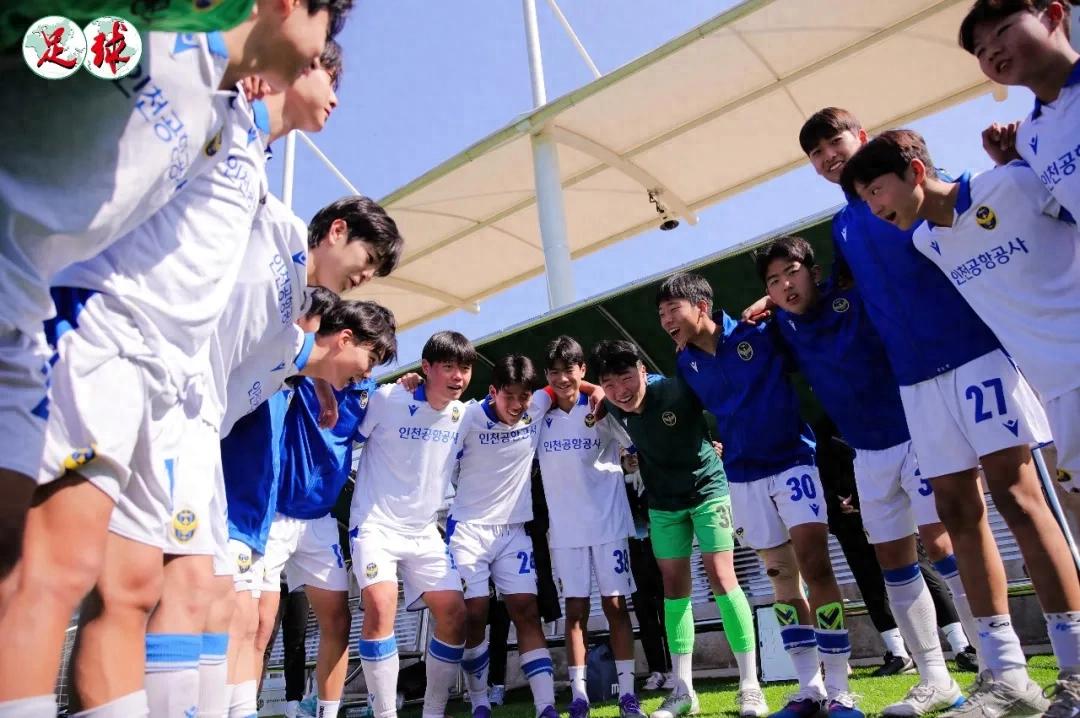
Zuo Ruifa from Dingnan, Jiangxi. Founded in 2003, Incheon United is a frequent competitor in South Korea's K1 League and took part in the 2023 AFC Champions League. From the very beginning, the club prioritized youth development.

The journey from Incheon International Airport to Guangzhou Baiyun Airport, followed by a bus ride to Dingnan, is relatively straightforward compared to three other Korean teams, though it still takes a long time—a lengthy trip overall. For the team’s head coach, Mirdal Park, the path to becoming a head coach was even longer, taking 22 years.
Forty-year-old Mirdal Park was only temporarily appointed as the U15 head coach before heading to Dingnan, after having spent four years at Incheon United. Among the hundreds of Korean visitors participating in the inaugural "462 Cup" China-Korea Youth Football Elite Competition, he was the only one without a Chinese name. Because his father was a scholar with a more Western mindset, he was named "Mirdal Park" at birth. Later, he learned that in ancient Korean, his name meant "Park Yong-nam."
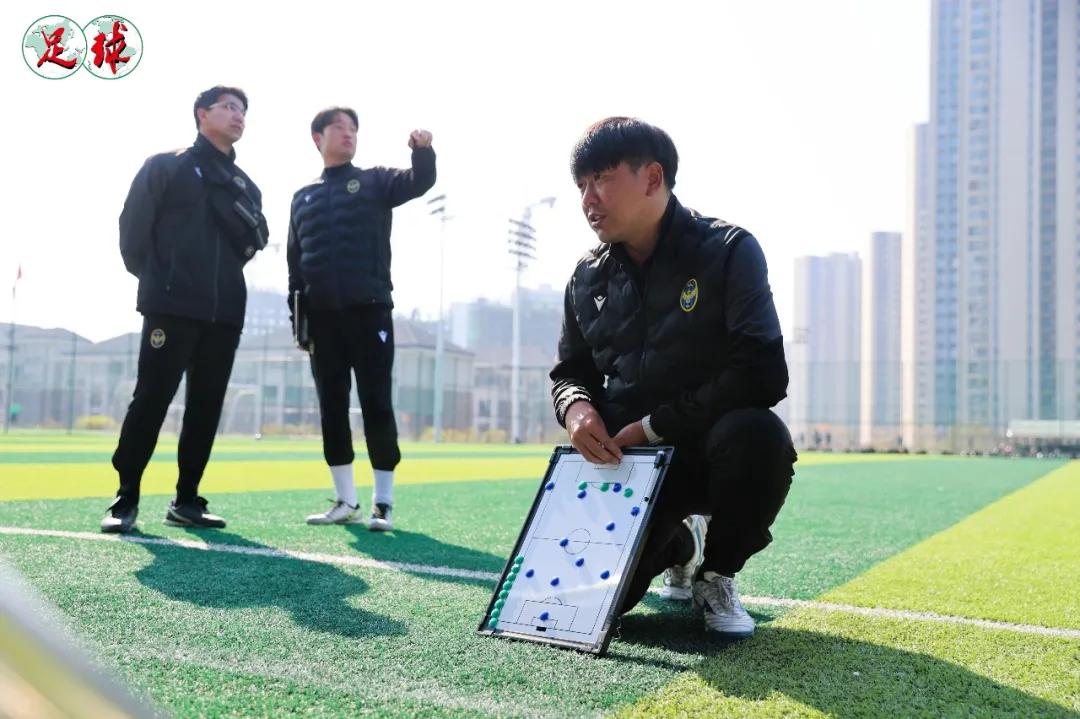
Mirdal Park attended university in London. He went to the UK in 2002 primarily to experience football firsthand. Before embarking on his five-year overseas journey, he had no formal football training and had never made a school team; he simply loved playing. Unexpectedly, after graduating high school, he got the chance to participate in university leagues. Disliking the seniority culture prevalent in Korean college football and drawn to English football, he chose to study economics at Queen Mary University in London, focusing on football in his spare time and quickly joining an eighth-tier league team. Unlike Vardy, who rose from the seventh tier to the Premier League, Mirdal caught the attention of a fifth-tier club during a trial at West Ham United and was recruited. After graduation, he worked as a bank teller in the UK for a year while continuing to play at the fifth-tier level.
Upon returning to Korea, he played in the then-amateur K3 League while advancing his coaching certifications. During his nine years as an amateur player, a serious injury in one match caused blindness in his left eye, forcing him to step away from football for a time. In 2011, he returned to the sport as a coach, reigniting his passion.
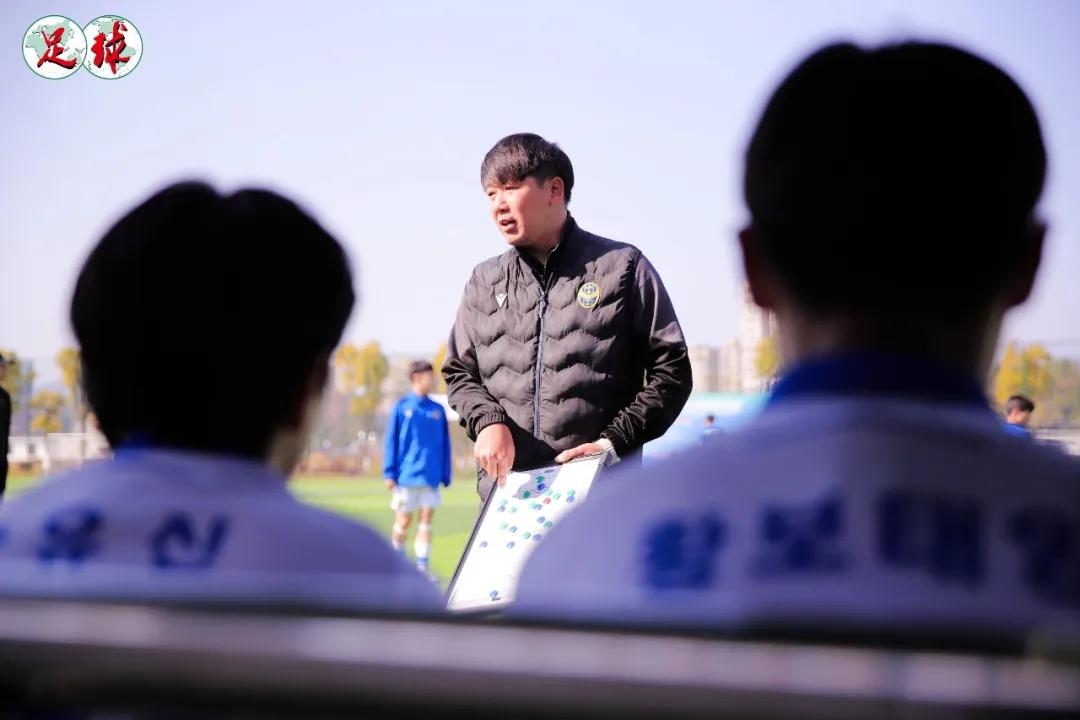
Thanks to his language skills and European experience, Mirdal Park was recruited by Valencia’s Korean youth academy and worked in Spain for eight months. After returning home, he coached at various places until four years ago, when leading an elementary-age team to a championship in Incheon earned him the opportunity to coach youth at a professional club. At Incheon United, he trains players aged 13 to 15. His genuine passion and extraordinary dedication helped his team win a national championship.
Influenced by his personal journey, Mirdal Park values whether children truly love football when selecting players. During the Dingnan competition, he encouraged players from the sidelines every time he called out, saying, “Even if I spot problems on the spot, I won’t criticize them immediately; instead, I address them during later training.” He says his approach aligns well with Incheon United’s youth training philosophy.
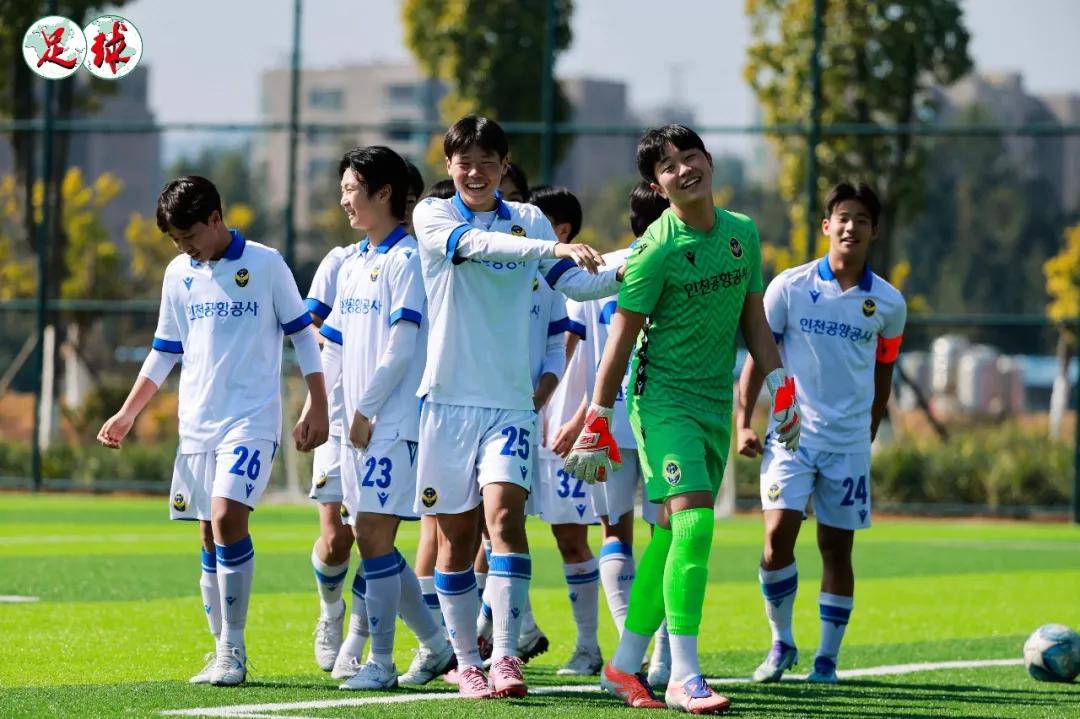

The Incheon United U15 squad brought 24 players to the competition. When dining, shopping, or strolling around the Dingnan base, they look similar aside from height and build. They share the same childishness and show respect to elders. But once on the field, No. 24 Kim Ha-ram and No. 14 Liu Can-yong each demonstrate outstanding skills.
To tackle the global issue of children addicted to mobile games, Mirdal Park’s coaching staff collects players’ phones at 10 PM every night and otherwise does not interfere. “Respect is mutual; as long as training and matches aren’t distracted or affected, you keep your freedom,” he explains.
Some kids are exceptions and very disciplined. Behind closed dormitory doors, Kim Ha-ram and Liu Can-yong stand out by barely touching their phones. They listen to music, watch TV, sit quietly, or rest lying down.
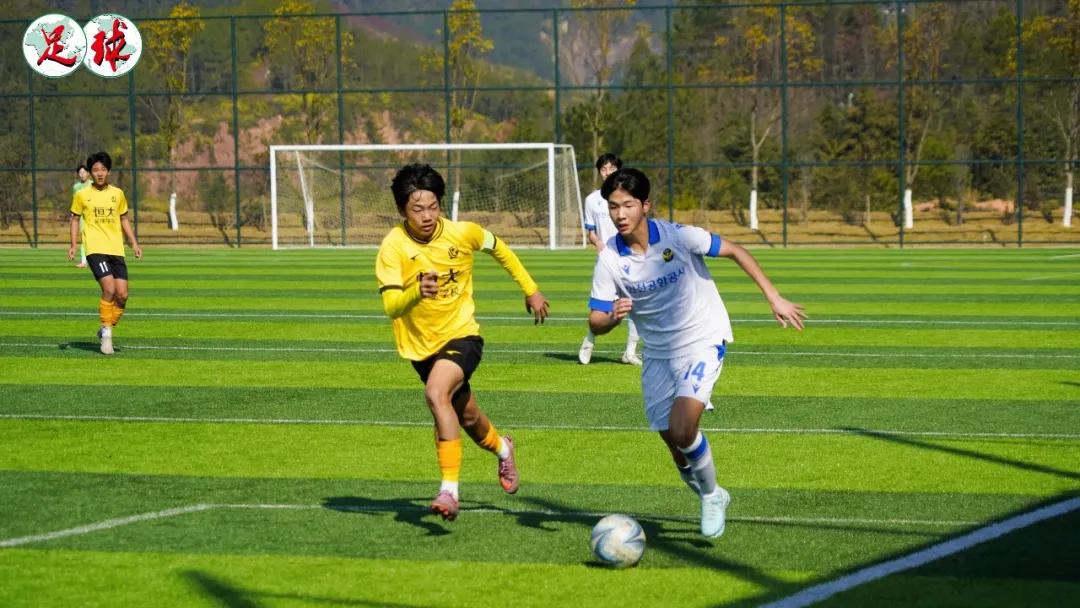
Kim Ha-ram and Liu Can-yong are the only two U15 players on the Korean national youth team. Their biggest difference from teammates is their ability to control themselves during training and matches, showing “very stable performances without fluctuations.”
Observation shows they are not always the top performers on the team. No. 25 Hwang Bo-tae and No. 20 Guo Yuxin also have standout moments but lack consistency; they may look good one day but are unpredictable the next. Having been both player and coach in Europe, Mirdal Park feels Kim Ha-ram and Liu Can-yong “resemble European professional youth academy players.”
Why do their on-field performance and habits differ? Mirdal has pondered this for a long time and concluded the key factor is positive parental guidance and influence. Take Kim Ha-ram as an example: on the pitch, he appears carefree and unrestrained; in life, he obeys his mother’s every request. “His mom really controls him. Even after training, she arranges cultural lessons until 2 AM, and he absolutely complies and completes them seriously.”
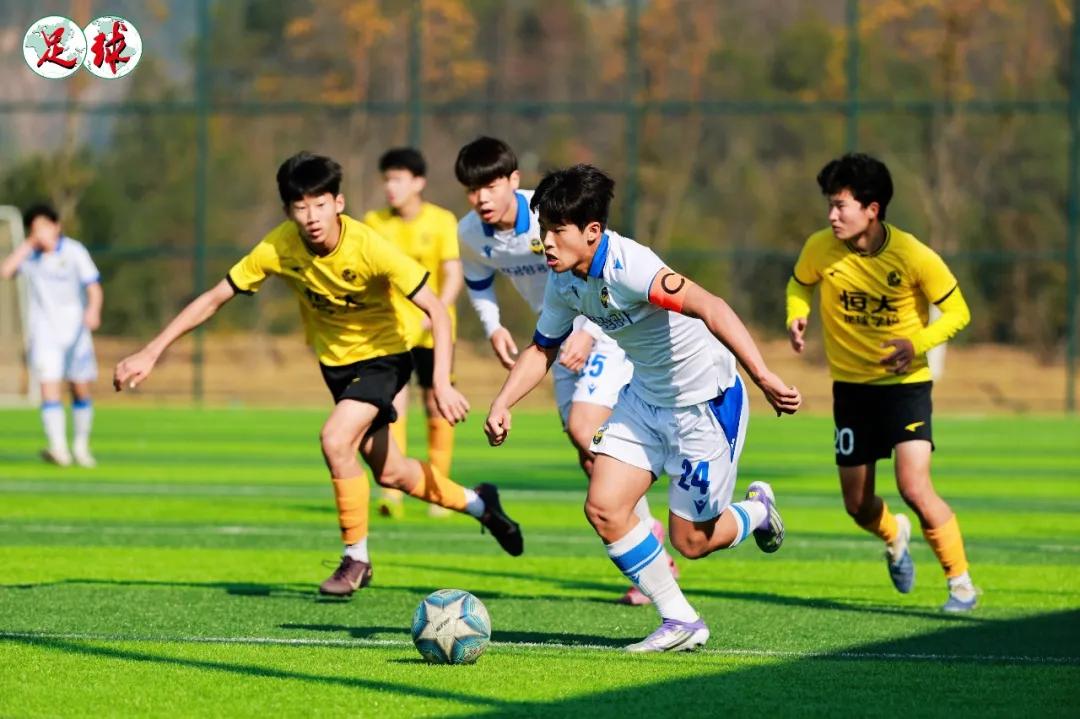
Regardless of starting or substitute status in recent matches, or playing the full game or not, they both fully commit to training and maintain steady form. Their avoidance of phones is often explained as “self-discipline,” but the head coach believes the real reason is “parents manage well, and the kids are willing to listen.”
Due to their consistent performances and exceptional skills, Kim Ha-ram and Liu Can-yong receive some “special treatment.” Besides serving as first and second team captains, the coaching staff uses them in more positions to develop their versatility and adaptability. For example, Liu Can-yong played as an attacking midfielder, winger, and center-back in his first round appearance. “Excellent players need this kind of training,” he says.
The coaching staff frequently assigns written homework for players to analyze and summarize their individual performances based on training or match videos. Kim Ha-ram and Liu Can-yong consistently submit the highest quality work and often apply insights broadly, identifying more issues and reflecting deeply.
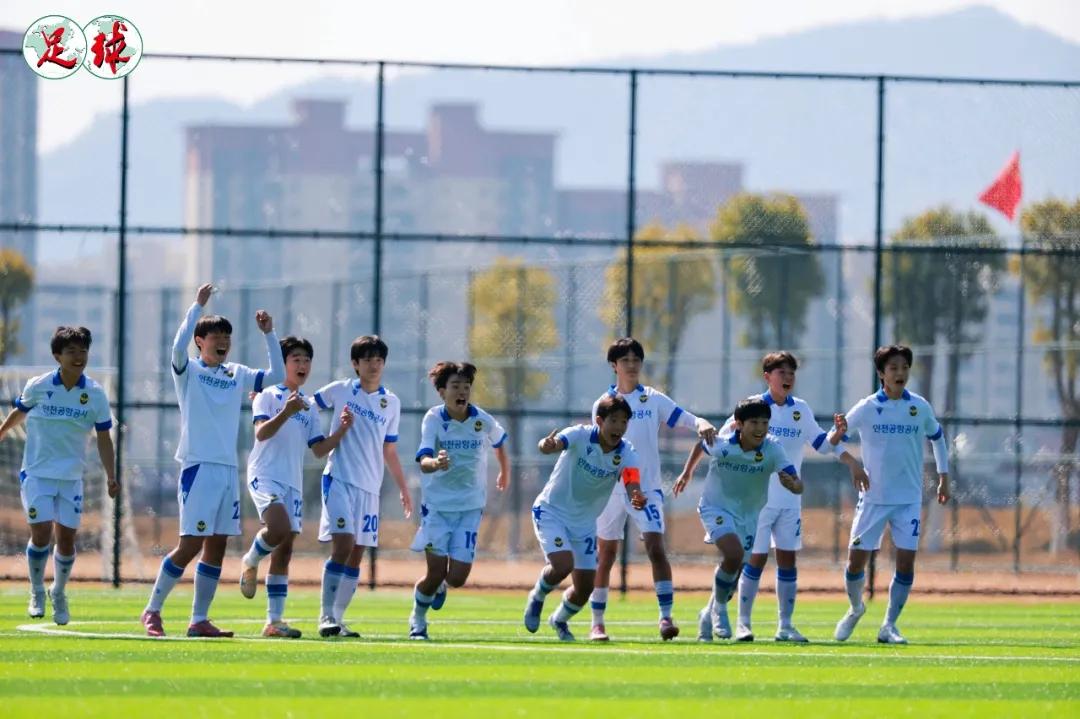

Trying different positions and writing assignments from video analysis are part of Incheon United FC’s youth training curriculum aimed at “training and developing the brain.” Due to intellectual property concerns, coaches cannot reveal much. However, the idea that mindset drives action is widely accepted in modern football, and the coaches’ instructions clearly reflect the intent to train players’ cognitive abilities.
After conceding goals in each of the first three rounds, especially losing three goals against Evergrande Football School, Incheon United’s coaching staff set a “no goals conceded” target before the fourth round but did not provide solutions, instead encouraging players to think and find answers together. If they fail on the field or even adopt counterproductive tactics, “there is still time to correct during training.” The coaching staff is strict, as rigorous training was what Mirdal Park lacked most in his youth.
In Dingnan, Incheon United repeats a cycle of one match and two training sessions daily—usually a morning match, afternoon training, and evening strength workouts—clearly a “demanding, strict, and practical high-volume” regimen. He explains the training load is based on years of research and domestic and international standards, with coaches using wearable device data to assess if players meet training targets. “We supplement training as needed but never add extra sessions.”
Compared to the Korean Football Association’s cautious stance on youth strength training in forums, Mirdal Park admits Incheon United’s approach somewhat conflicts with this. “We have our own strength training methods internally. For instance, first graders only do two exercises: hanging from a bar with both hands and pushing against a wall with both hands, holding for a set time,” he says. “Different ages have different methods to help players develop proper strength training habits.”
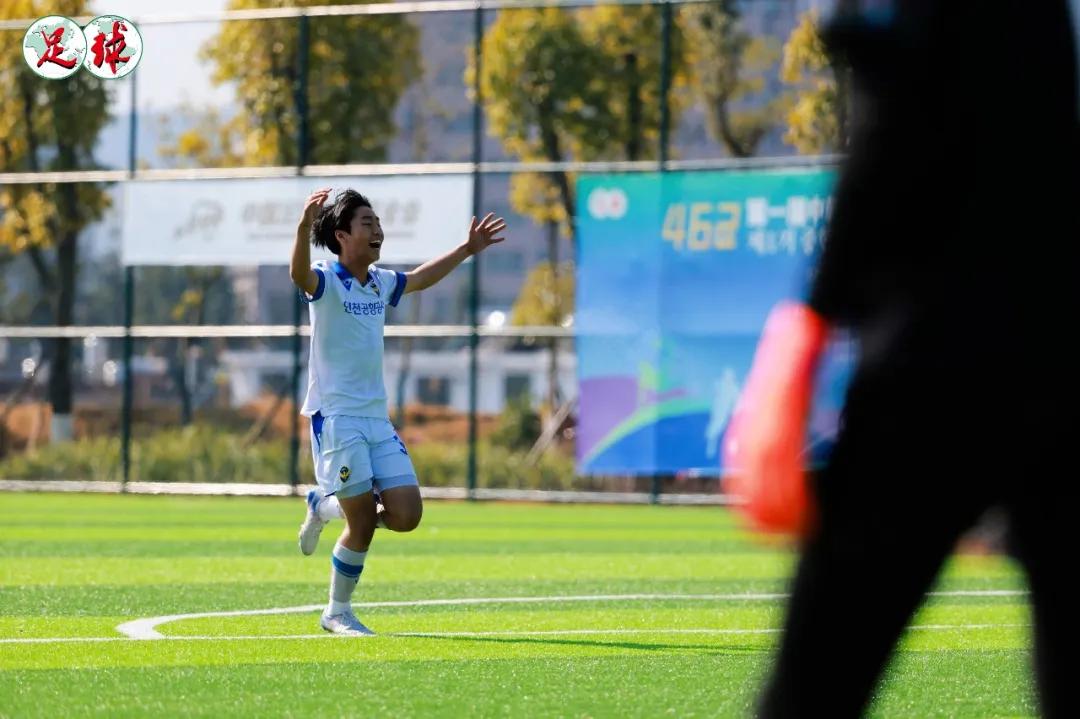
Lacking a fixed tactical system is also a feature of Incheon United’s youth teams. On the Dingnan field, Chinese opponents gave mixed reviews of the Korean team: some praised their fitness and speed, others said their pace was slow but passing and possession strong; some likened their defense to Arsenal’s system, while others said their attack relied on set pieces. Mirdal Park explains that adapting tactics to different opponents benefits player growth and challenges their technical skills and tactical execution.
Starting in 2023, Incheon United added a rule requiring teams for ages 13-15 to reserve one spot annually for a newcomer who has never trained with a professional club before. Growing up entirely within the youth system can cause some players to feel bored or want to quit, while “outsiders” often adapt well and bring enthusiasm, helping uplift the whole team’s atmosphere.
Incheon United is one of the few teams openly expressing a desire to win the championship in this tournament. However, Mirdal Park reveals they have no specific goal regarding results, nor any motivation to surpass domestic teams. The coaching staff believes declaring championship ambitions helps strengthen team cohesion and spirit. “As youth coaches at the club, developing good players is our greatest goal.”
Despite the emphasis on player development, whether rising stars like Kim Ha-ram will join the first team or national squad remains uncertain. “The club is still observing him, and normally only one or two players from this U15 squad will become professionals,” the coach said.


Wonderfulshortvideo
The footwork, the finish 🤌


Did you get it? 🤔😅
The Wirtz x Sané link-up 🔗
Haaland’s movement 🥵
Which counterattack is
Griezmann with the cool finish 🥶
“afcon funny moments”
 Links
Links
 Contact
Address:UNIT 1804 SOUTH BANK TOWER, 55 UPPER GROUND,LONDON ENGLAND SE1 9E
Number:+85259695367
E-mali:[email protected]
 App
App


