



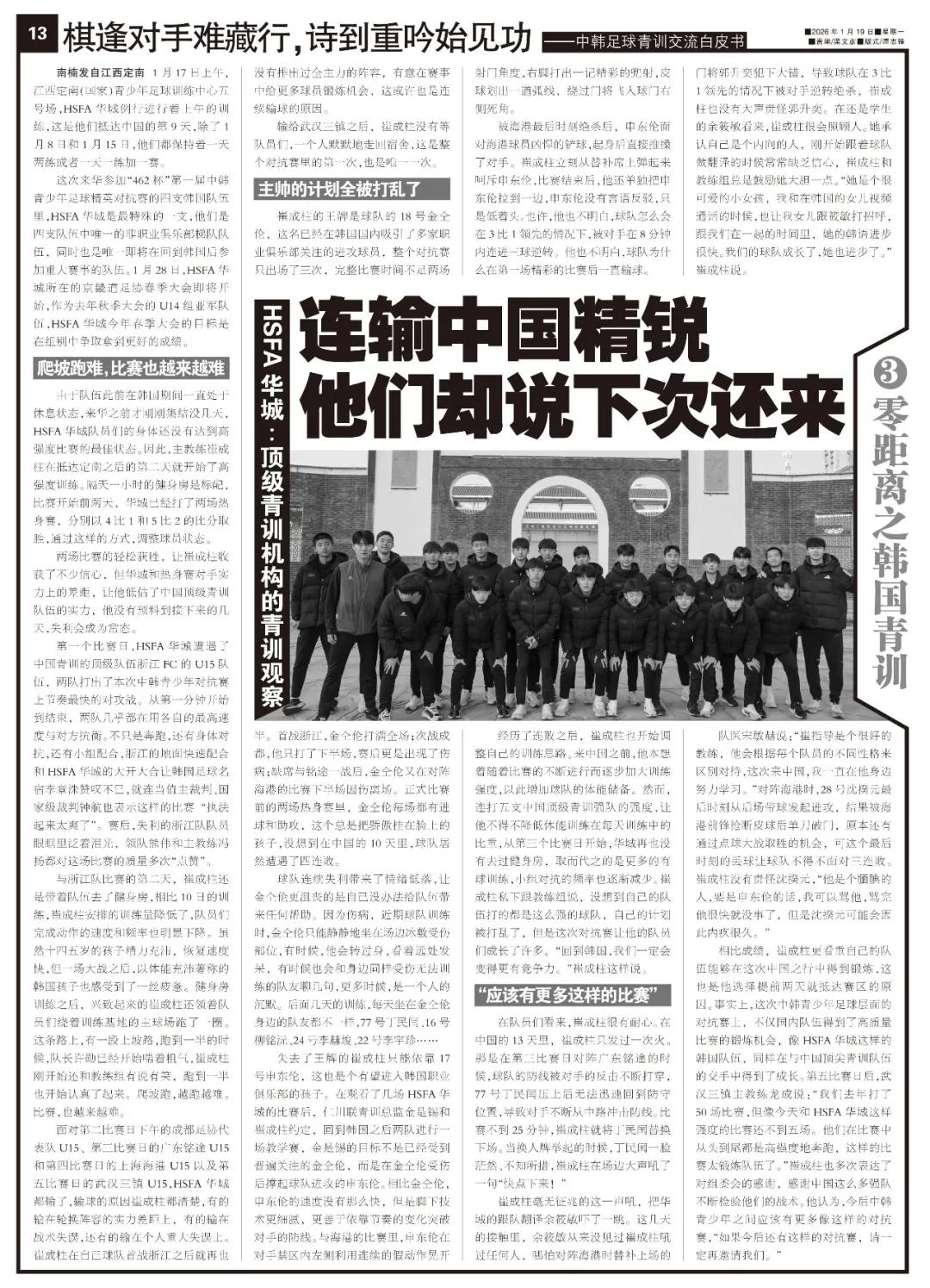
The China-Korea youth competition saw consecutive defeats for the Korean elite teams against China's top squads, yet the Korean coach said: We will definitely ask to be invited again next time.



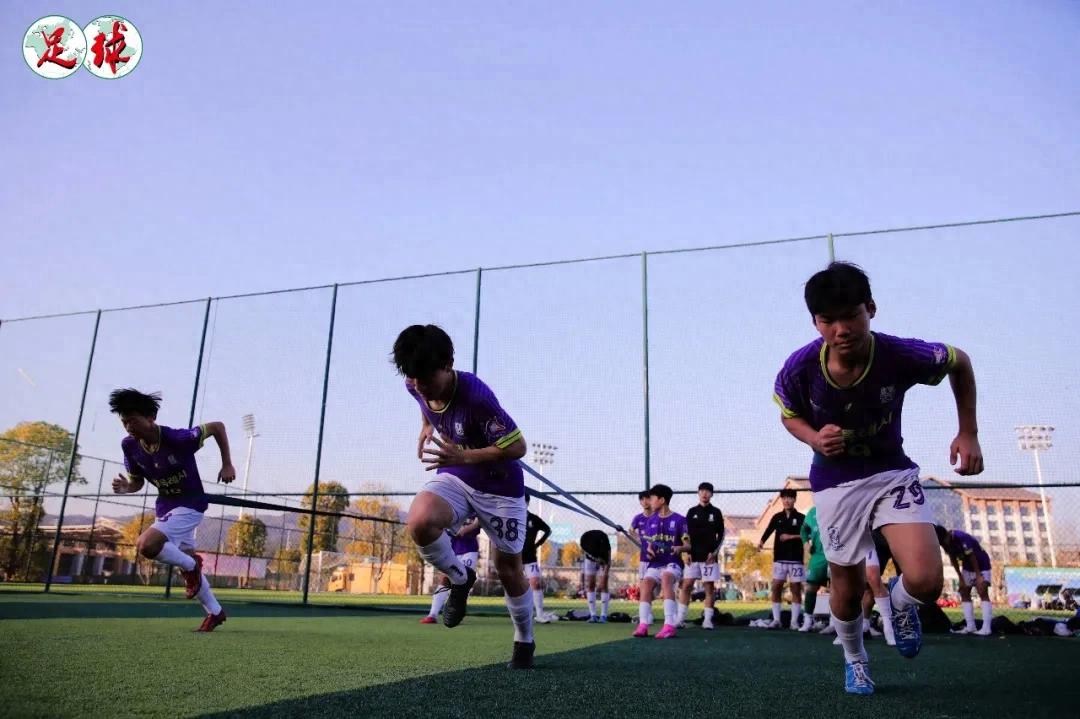
Nan Nan reporting from Dingnan, Jiangxi. On the morning of January 17th, at Field No. 5 of the Jiangxi Dingnan (National) Youth Football Training Center, HSFA Hwaseong was carrying out their routine morning training. This was their ninth day in China. Except for January 8th and 15th, they consistently kept a regimen of either two training sessions per day or one training session plus one match.
Among the four Korean teams participating in the inaugural “462 Cup” China-Korea Youth Football Elite Challenge, HSFA Hwaseong stood out as the most unique. They were the only non-professional club youth team among the four and the only team scheduled to compete in a major event upon returning to Korea. On January 28th, the Gyeonggi Football Association Spring Tournament, where HSFA Hwaseong competes, will commence. Having finished as runners-up in the U14 category last autumn, their goal for this spring tournament is to achieve an even better result in their group.
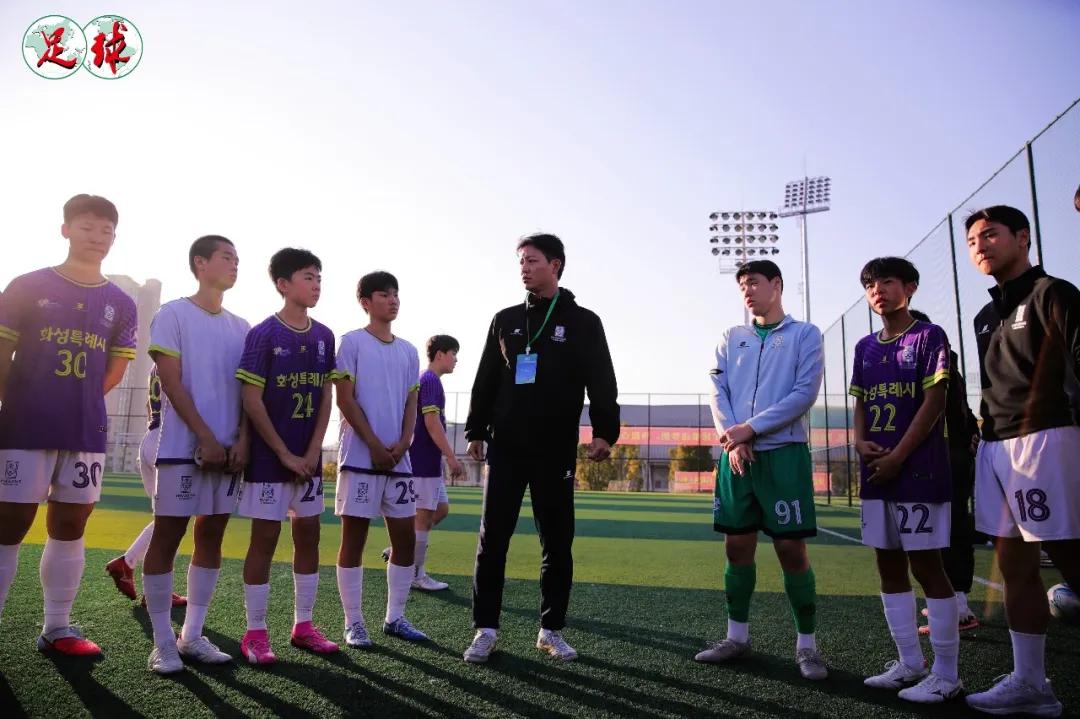

Since the team had been resting while in Korea and only regrouped a few days before coming to China, the HSFA Hwaseong players had not yet reached peak physical condition for high-intensity matches. Therefore, head coach Choi Seongju started high-intensity training the day after arriving in Dingnan. Hour-long gym sessions became routine, and two days before the competition began, Hwaseong played two warm-up matches, winning 4-1 and 5-2 respectively, using these games to adjust the players’ form.
The comfortable victories in the two warm-up matches boosted Choi Seongju’s confidence, but the skill gap between Hwaseong and their warm-up opponents led him to underestimate the strength of China's top youth training teams. He did not anticipate that losses would become a regular occurrence in the following days.
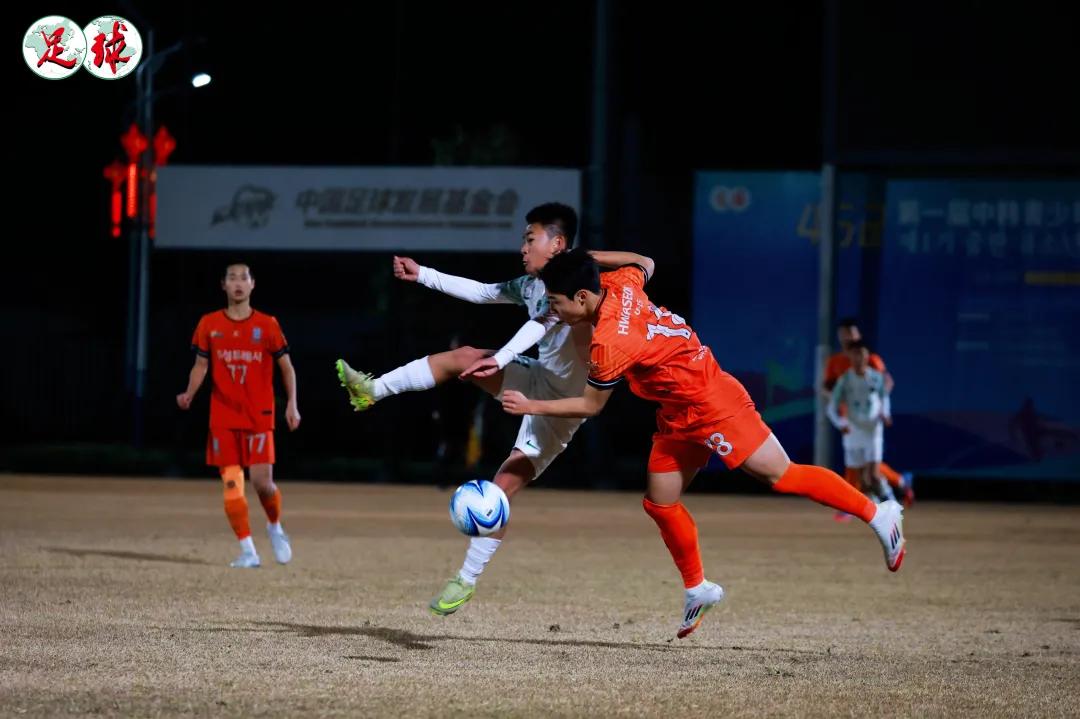
On the first match day, HSFA Hwaseong faced Zhejiang FC’s U15 team, one of China’s elite youth squads. The two teams played the fastest-paced attacking game of the China-Korea youth challenge. From the opening whistle to the final minute, both sides matched each other’s top speed. The contest featured not only fast running but also physical duels and team coordination. Zhejiang’s quick ground passes and Hwaseong’s expansive play impressed Korean football legend Lee Jang-su. Even the referee, national-level official Zhong Hang, remarked that officiating such a match was “extremely enjoyable.” After the loss, Zhejiang’s players had tears in their eyes, and team leader Xiong Wei along with coach Feng Yang repeatedly praised the quality of the game.
The day after playing Zhejiang, Choi Seongju still took the team to the gym, but compared to the training on the 10th, the intensity was reduced. The players’ speed and frequency of movements noticeably dropped. Although teenagers aged 14 to 15 are energetic and recover quickly, even these typically vigorous Korean players felt some fatigue after such a tough match. Following gym training, an enthusiastic Choi led the players on a lap around the main stadium at the training base. There was a hill along the route; halfway up, captain Heo Hun was already gasping for breath. At first, Choi joked with the coaching staff, but halfway through the run, he got serious. Running uphill became harder and harder. The matches were becoming tougher as well.
HSFA Hwaseong lost to the Chengdu Football Association U15 team on the second match afternoon, Guangdong Mingtou U15 on the third day, Shanghai Port U15 on the fourth day, and Wuhan Three Towns U15 on the fifth day. Coach Choi understood the reasons behind these defeats: some were due to the strength gap in rotated lineups, others because of tactical mistakes, and some due to critical individual errors. After the opening match against Zhejiang, Choi never fielded his strongest lineup again, deliberately giving more players match experience, which might have contributed to the string of losses.
After losing to Wuhan Three Towns, Choi Seongju quietly walked back to the dorm alone without waiting for his players. This was the first and only time he did so during the entire challenge.
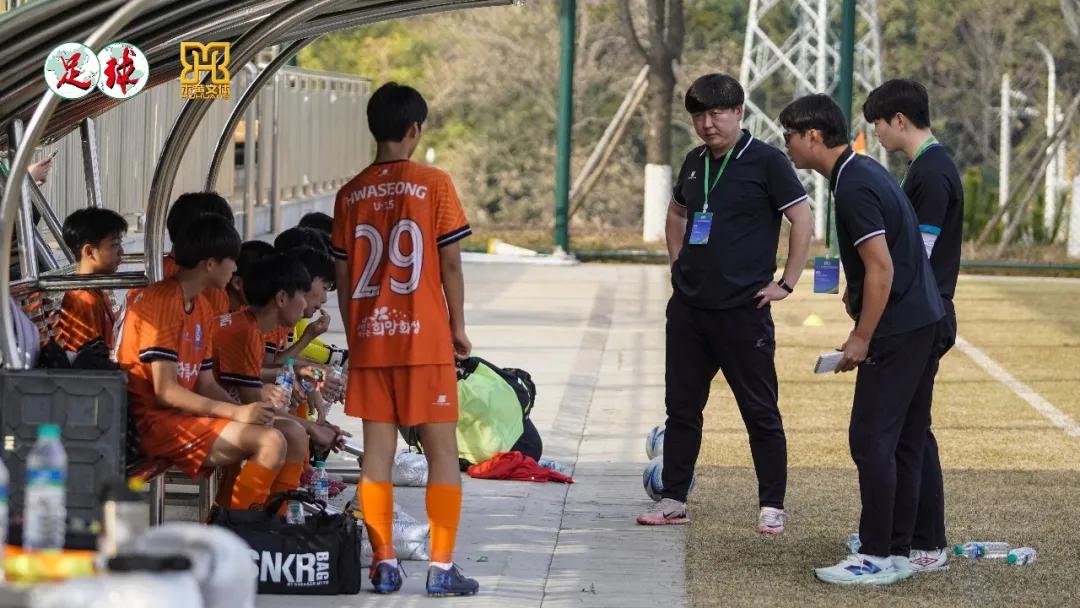

Choi’s ace player is number 18, Kim Donglun, an attacker who has attracted attention from several professional clubs in Korea. He appeared only three times in the challenge, playing less than two and a half full matches. He played the entire first match against Zhejiang; in the second against Chengdu, he only played the second half and suffered an injury afterward; he missed the match against Mingtou and left the field injured in the second half against Shanghai Port. In the two warm-up matches before the official games, Kim scored goals and made assists each time. This proud young player never expected the team to suffer four straight defeats during their 10 days in China.
The team’s continuous losses caused low morale, and Kim Donglun was even more frustrated by his inability to contribute due to injury. Recently, during training, he could only sit quietly on the sidelines icing his injury. Sometimes he would stare into the distance, lost in thought; other times he chatted briefly with teammates also sidelined by injury. Most of the time, he remained silent. Different teammates sat beside him each day—number 77 Ding Minyun, 16 Ryu Myungwon, 24 Lee Hyeokjun, 22 Lee Woojin, among others.
Without his star player, Choi had to rely on number 17, Shin Donglun, another promising talent likely to join a Korean professional club. After watching several Hwaseong matches, Incheon United’s youth training director Kim Seok and Choi agreed to hold a training match between the two teams upon returning to Korea. Kim’s focus was not on the widely recognized Kim Donglun but on Shin Donglun, who had taken over offensive duties after Kim’s injury. Compared to Kim, Shin is slower but technically more refined and better at breaking defenses by varying his rhythm. In the match against Shanghai Port, Shin used a series of feints on the left side inside the opponent’s penalty area to create a shooting angle and curled a beautiful right-footed shot that arced past the goalkeeper into the bottom right corner.
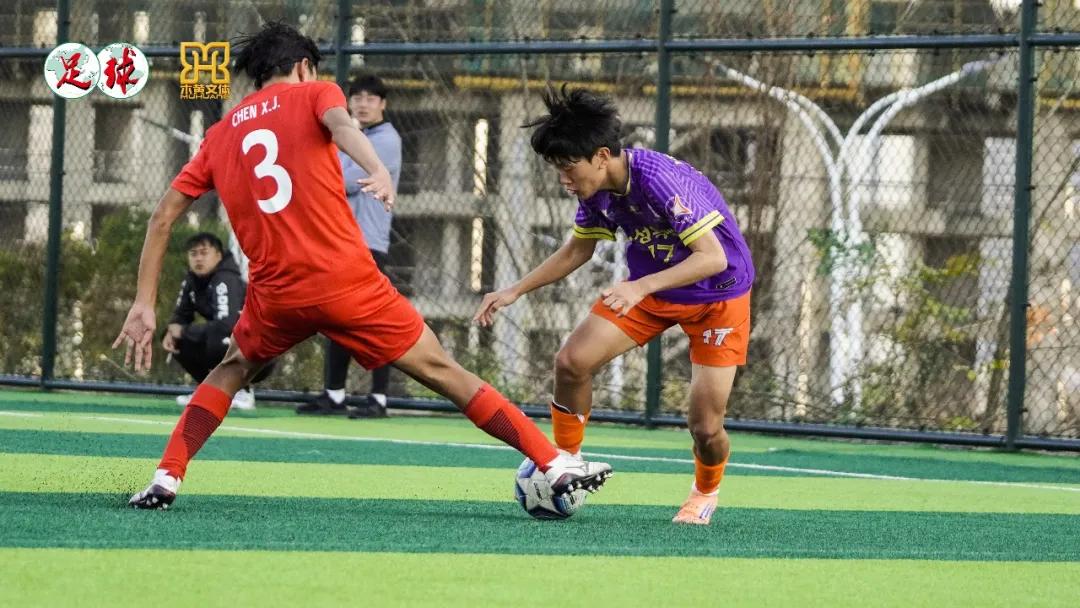
After Shanghai Port scored a last-minute winning goal, Shin Donglun pushed an opposing player aggressively following a rough tackle. Choi immediately jumped up from the bench to scold him. After the match, Choi pulled Shin aside for a private talk. Shin said nothing in reply, keeping his head down. Perhaps he himself did not understand how the team could lose after leading 3-1, conceding three goals in eight minutes. Nor could he grasp why the team kept losing after such an exciting first match.
Following the losing streak, Choi began adjusting his training approach. Before coming to China, he planned to gradually increase training intensity with each match to build the team’s stamina. However, facing five consecutive top Chinese youth teams forced him to reduce the share of physical training in daily sessions. Starting from the third match day, Hwaseong stopped going to the gym and replaced that time with more ball work, while the frequency of small-group scrimmages gradually declined. Choi confided to his coaching staff that he didn’t expect to face such strong teams, which disrupted his plans, but the challenge helped his players grow a lot. “When we return to Korea, we will definitely be more competitive,” he said.
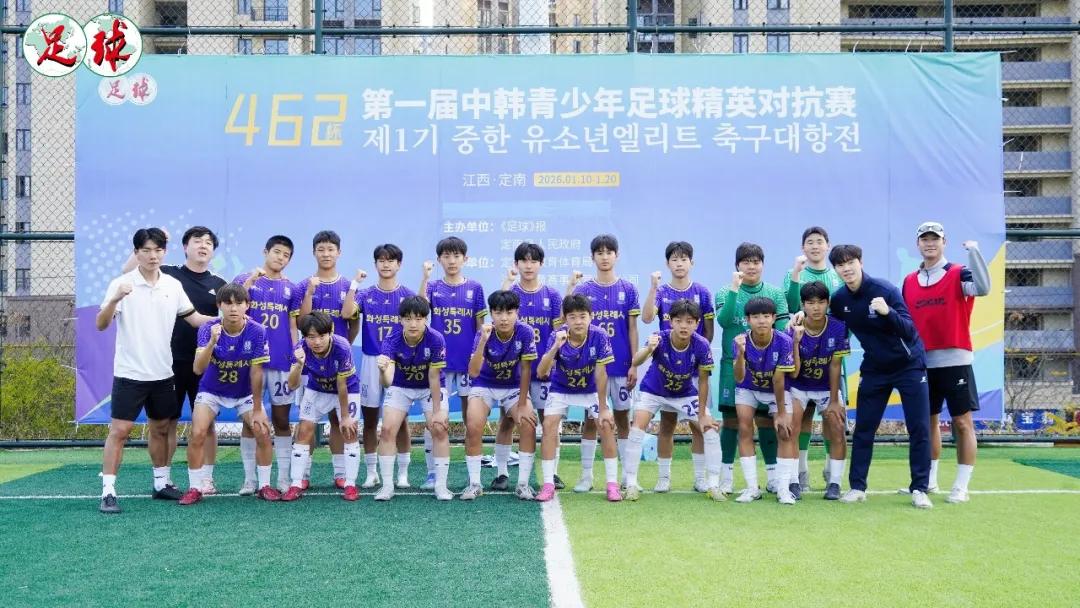

From the players’ perspective, Choi Seongju was very patient. During the 13 days in China, he lost his temper only once. That was on the third match day against Guangdong Mingtou, when the team’s defense was repeatedly broken by counterattacks. Number 77 Ding Minyun pushed forward but failed to recover quickly, allowing the opponent to penetrate through the middle. Before 25 minutes had passed, Choi substituted Ding. When the substitution board went up, Ding looked confused and helpless, and Choi shouted loudly from the sideline, “Come down quickly!”
Choi’s sudden shout startled the team’s translator, Yu Xiaomin. In the days they spent together, Yu had never seen Choi yell at anyone, even when substitute goalkeeper Guo Shengyi made a costly mistake against Shanghai Port, leading to a last-minute reversal from a 3-1 lead. Choi did not raise his voice at Guo.
From the perspective of the still-student Yu Xiaomin, Choi was very caring. She admitted to being introverted and initially lacking confidence when she started as the team’s translator. Choi and the coaching staff always encouraged her to be bolder. “She is a very lovely girl. When I video call my daughter in Korea, I ask her to say hello to Xiaomin. During her time with us, her Korean improved rapidly. Our team grew, and so did she,” Choi said.
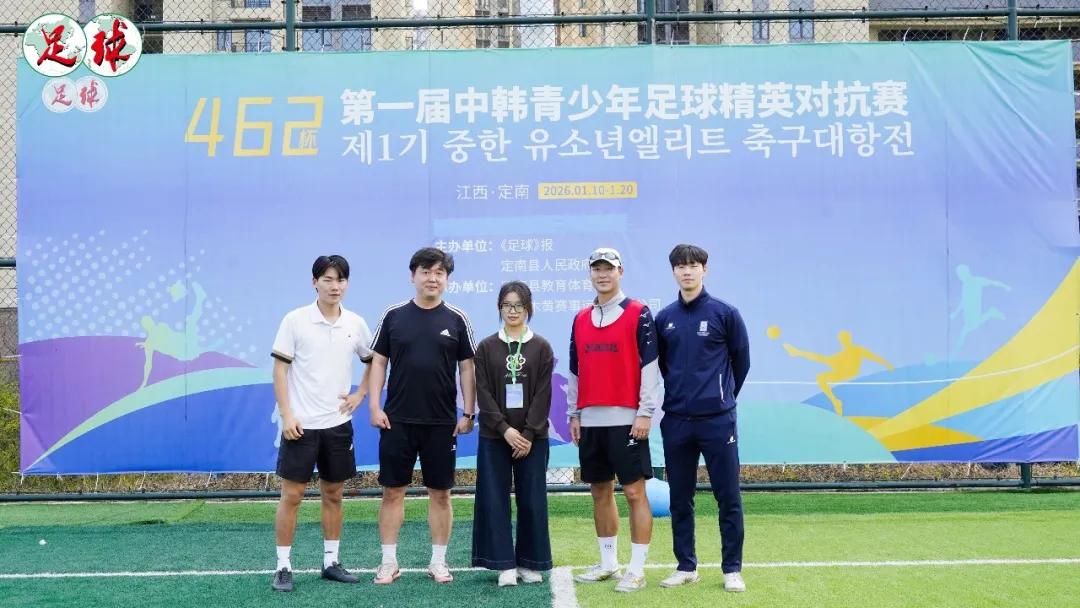
Team doctor Song Minhe said, “Coach Choi is an excellent coach who treats each player according to their personality. I have been learning a lot by staying close to him during this trip to China.” In the match against Shanghai Port, number 28 Shin Gyuwon lost the ball in the final moments while bringing it out from the back, leading to a solo goal by the opponent’s forward. This goal dashed the team’s chance to win via penalty shootout, resulting in a third consecutive loss. Choi did not blame Shin. “He is a shy person. If it were Shin Donglun, I could scold him, and he would get over it quickly, but Shin Gyuwon might feel guilty for a long time.”
More than the results, Choi valued the opportunity for his team to gain experience during this trip to China, which is why he arrived at the competition area two days early. In fact, this China-Korea youth football challenge provided high-quality match experience not only for domestic teams but also for Korean teams like HSFA Hwaseong, who grew by competing against China’s top youth squads. After the fifth match day, Wuhan Three Towns’ head coach Long Cheng said, “We played 50 matches last year, but fewer than five were as intense as today’s game against HSFA Hwaseong. They ran at high intensity from start to finish. Matches like this really develop a team.”
Choi Seongju repeatedly expressed his gratitude to the organizers for allowing so many strong Chinese teams to test their tactics. He believes there should be more such China-Korea youth challenges in the future. “If there are more of these matches, please be sure to invite us again,” he said.


Wonderfulshortvideo
The footwork, the finish 🤌


Did you get it? 🤔😅
The Wirtz x Sané link-up 🔗
Haaland’s movement 🥵
Which counterattack is
Griezmann with the cool finish 🥶
“afcon funny moments”
 Links
Links
 Contact
Address:UNIT 1804 SOUTH BANK TOWER, 55 UPPER GROUND,LONDON ENGLAND SE1 9E
Number:+85259695367
E-mali:[email protected]
 App
App


