



U23 Vietnam vs U23 China: When the Sharpest Spear Meets the Thickest Shield


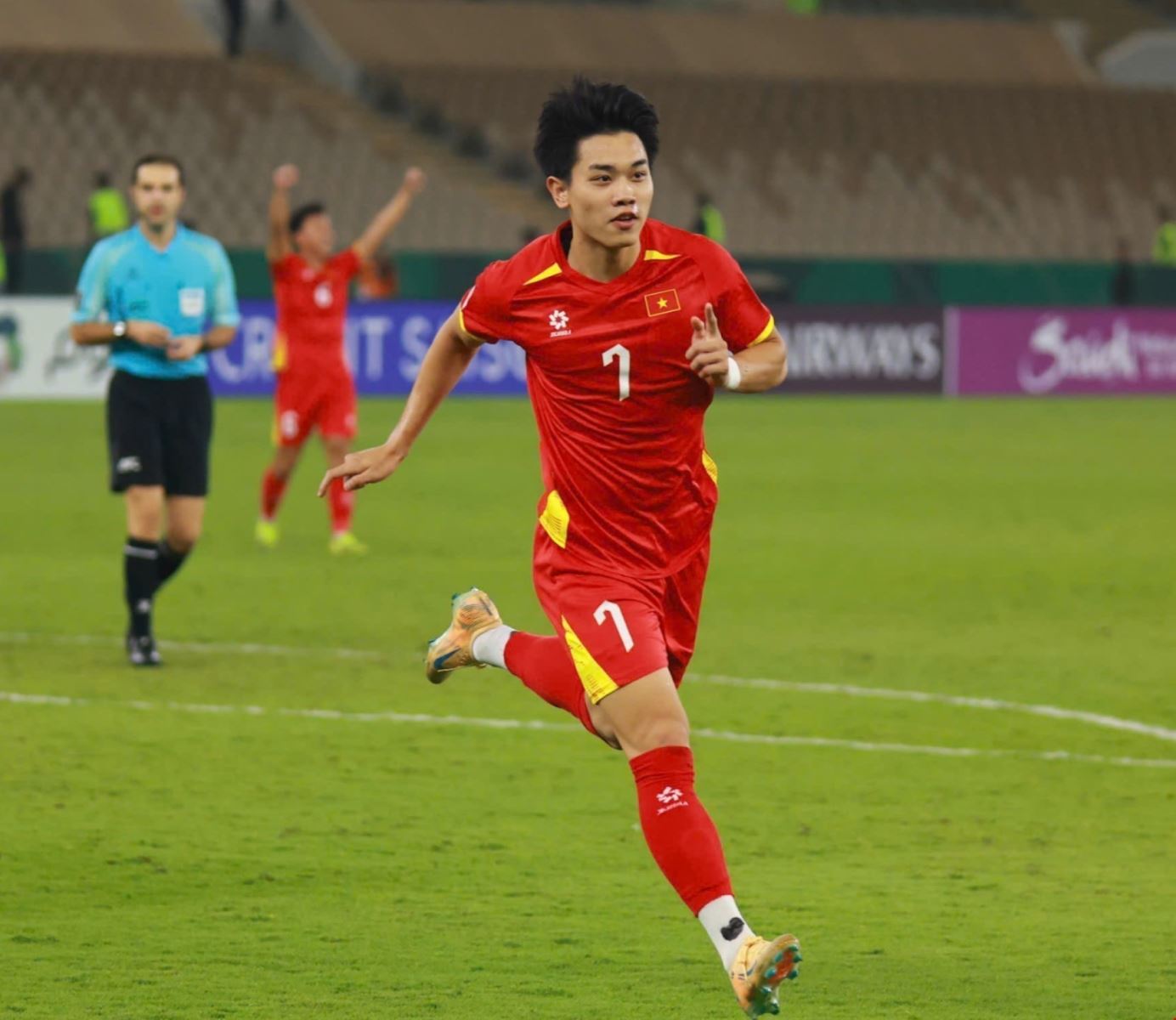
At 22:30 on January 20, a “spear vs shield” confrontation will occur in Jeddah (Saudi Arabia) as U23 Vietnam faces U23 China in the 2026 AFC U23 Asian Cup semifinals. The paths to the semifinals for these two teams are completely opposite. U23 China relies on a steel-like defense, having kept a clean sheet in all 4 regular-time matches, with a rock-solid backline driving the team forward. Meanwhile, U23 Vietnam emphasizes offense, winning all 4 games and scoring 8 goals with a dazzling style that amazes spectators. In this “spear vs shield” duel, who will be the last to smile?
Extreme Counterattack Defense and Technical Ball Control
At the pre-match press conference, U23 China’s head coach Antonio expressed great humility, saying: “Reaching the semifinals shows that we have trained very well. Regarding Vietnam, we hold them in the highest respect because they never give up and are very patient, so we expect a tough challenge. We will prepare for all difficulties, and maintaining focus is extremely important.”
Tactically, according to the Shanghai Observer on January 20, this is indeed a “spear vs shield” showdown. U23 Vietnam boasts a powerful attacking force and is one of the most aesthetically pleasing attacking teams in this U23 Asian Cup. In 4 matches played, Vietnam has not only won all 4 consecutively but also scored 8 goals, including victories over Jordan 2–0, Kyrgyzstan 2–1, Saudi Arabia 1–0, and UAE 3–2 (after extra time). Additionally, Vietnam’s attacking options are quite balanced, with player Nguyen Dinh Bac standing out as the attacking core with 3 goals and 1 assist.
Conversely, U23 China’s steel defense leaves a strong impression. Although they have scored only 1 goal in 4 matches, coach Antonio’s team relies on tight defensive organization to maintain a record of 4 matches without conceding, a proud achievement that propelled U23 China into the semifinals. Statistics show that including the senior Chinese men’s team, U23, and U19 teams, the last time a Chinese men’s team reached the top 4 in a continental tournament was in 2004.
Regarding formations, U23 Vietnam mainly uses an attack-oriented 4-3-3 system, emphasizing high pressing, short passing, and penetrating the inside channels, maximizing the advantages of their players’ compact build, speed, and skillful technique. Meanwhile, U23 China sticks to a 5-3-2 defensive counterattack formation, often retreating deep to protect their penalty area, seeking counterattack chances after winning the ball, and using set pieces as an important attacking weapon. Compared to Vietnam’s average height of about 1.76 m, China has a clear physical advantage, especially with striker Behram Abduweli (nearly 1.9m tall) and defenders Peng Xiao and He Yiran, who can effectively use aerial plays to create opportunities.
Dual Responsibility and a Metaphor for the Future
At the pre-match press conference, U23 Vietnam’s Korean coach Kim Sang-sik stated: “Competing for a spot in the final against Asia’s top teams like Korea, Japan, and China is a great honor and happiness. Looking back at the matches, our players have shown resilient fighting spirit against strong opponents, even under difficult circumstances. Tomorrow, we face a completely new challenge against China. It will be a tough match. I will fight alongside the players with faith and courage to strive for our goal.”
When asked as a Korean how he views the other semifinal between Korea and Japan, Kim Sang-sik frankly said: “U23 Vietnam has reached the semifinals, and the Korean media are praising us. I hope both Korea and Vietnam win to meet in the final. I also hope to lead our players to victory tomorrow and that Korea wins so we can face each other in the final.”
It should be noted that coach Kim Sang-sik’s tactical approach is very flexible and adaptive, posing a serious challenge to U23 China. In the group stage opener against U23 Jordan, Vietnam used a balanced 4-4-2 formation; in the next two group matches, Kim quickly switched to a 3-4-3 to boost attack; in the quarterfinal against technically skilled U23 UAE, he shifted to a 5-4-1 focusing on defense and waiting for counterattack opportunities.
As head coach of both the Vietnam national team and U23 Vietnam, Kim Sang-sik has led the teams to consecutive titles: the 2024 Southeast Asian Championship, the 2025 U23 Southeast Asian Championship, and the 2025 SEA Games football gold medal. Meanwhile, U23 China’s coach Antonio is also reaching the peak of his coaching career with impressive achievements. Besides leading U23 China, he is a candidate to coach the Chinese men’s team at the 2026 Nagoya Asian Games and possibly the Olympic team aiming for the 2028 Los Angeles Olympics. Under Antonio’s leadership, U23 China has played 22 international matches, achieving 11 wins, 8 draws, and 3 losses, with an unbeaten rate of 86.4%.
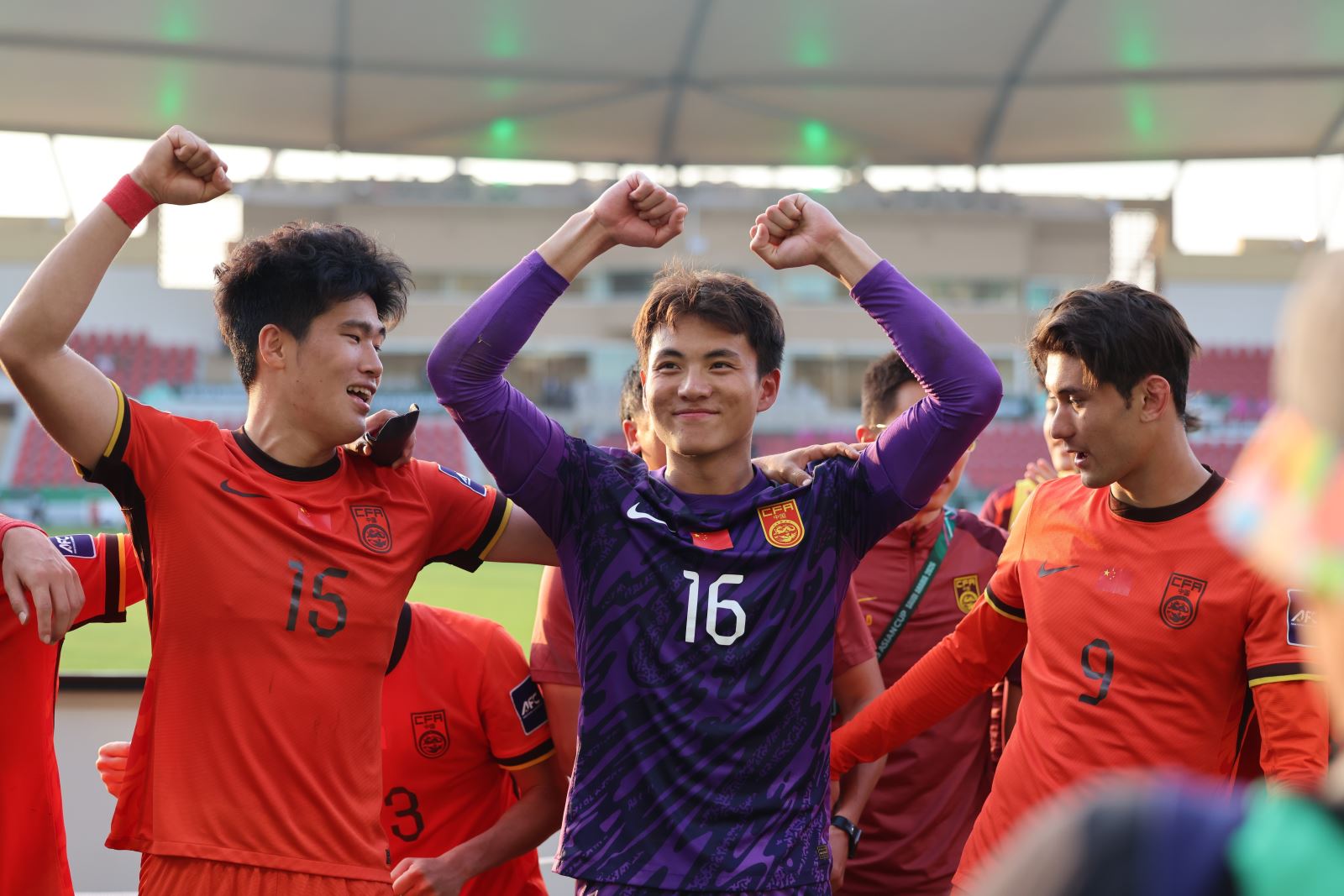
Overall, coach Antonio’s football philosophy is pragmatic and humble, prioritizing players with strong physicality and endurance, giving opportunities to young key players like Wang Yudong and Behram Abduweli, and skillfully adjusting defensive intensity through substitutions. Antonio “does not care about controlling the game, only about winning,” emphasizing team discipline and fitness, helping young players build confidence, earning him the nickname “Pragmatic Antonio.” It is no exaggeration to say that this U23 Asian Cup semifinal and even future clashes between the Chinese and Vietnamese national teams are like early rehearsals. Southeast Asian media continuously praise U23 Vietnam’s overall strength and consistency, even surpassing the 2018 squad coached by Park Hang-seo that finished as runners-up, potentially significantly elevating Vietnam’s national team strength in the future.
The impressive performance of U23 China has also raised hopes among many netizens that, given the current lack of successors in the Chinese men’s national team, the new generation of players, notably goalkeeper Li Hao, can reinforce the squad. On Lunar New Year’s Day 2022, the Chinese men’s team coached by Li Xiaopeng suffered a shocking 1-3 defeat to Vietnam, triggering a football anti-corruption campaign domestically. As the new generations of Chinese and Vietnamese footballers meet again, the outcome of this match naturally attracts great attention.


Wonderfulshortvideo
The footwork, the finish 🤌


Did you get it? 🤔😅
The Wirtz x Sané link-up 🔗
Haaland’s movement 🥵
Which counterattack is
“afcon funny moments”
🤤🤤
 Links
Links
 Contact
Address:UNIT 1804 SOUTH BANK TOWER, 55 UPPER GROUND,LONDON ENGLAND SE1 9E
Number:+85259695367
E-mali:[email protected]
 App
App


