



Advancing to the U23 Asian Cup final! Antonio’s small surprise, a huge shock for Chinese football



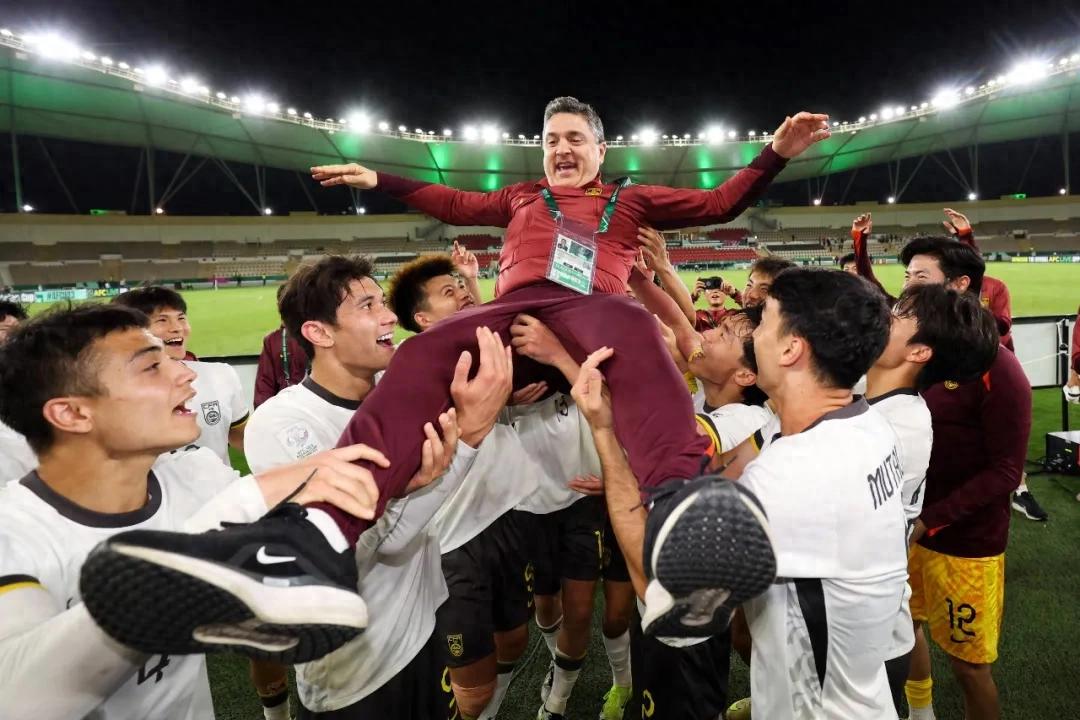
Reporter Lu Mi reports “Chinese football is showing clear progress, and they deserve to reach the final. Our opponent made significant changes to their starting lineup, and we failed to adapt in time — that’s on me.” After a 0-3 semifinal defeat, Vietnam’s head coach Kim Sang-jip acknowledged that all his preparations for China fell apart.
But the surprise was not limited to this Korean coach. When the U23 Chinese squad was announced before the match, fans and media alike were stunned by Antonio’s boldness. While the public hoped Li Hao would once again perform miracles to save the U23 team, the young Chinese players under Antonio’s leadership delivered a massive shock to everyone.
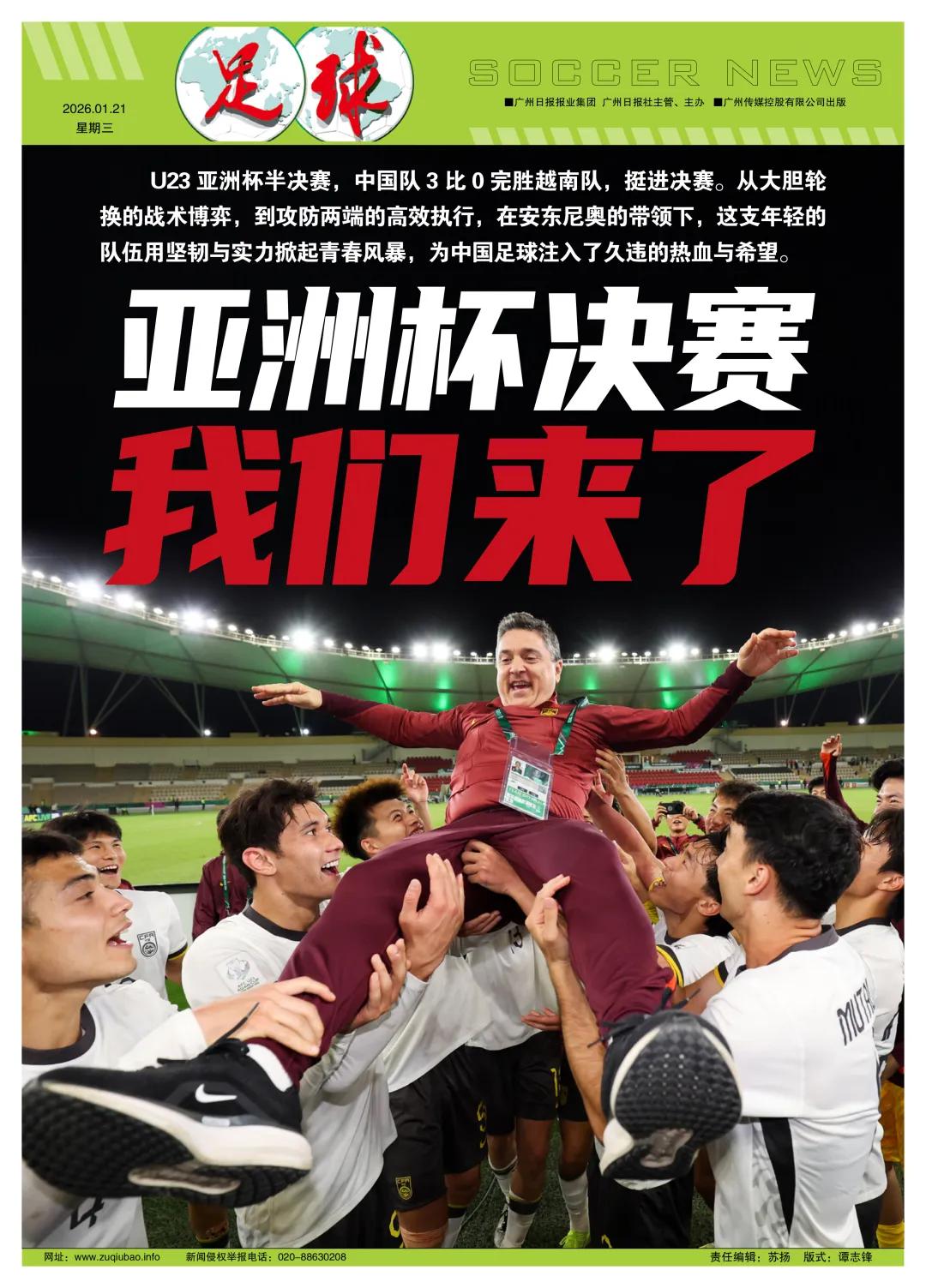
A 3-0 victory, five consecutive clean sheets, the team’s first-ever qualification for the U23 Asian Cup final, and China’s return to an Asian final after 22 years... A series of numbers and records ignited Chinese football that night — from daring tactical rotations to efficient execution on both offense and defense, this young squad under Antonio stirred a youthful storm, injecting long-awaited passion and hope into Chinese football.


The outcome of this semifinal was foreshadowed when the starting lineup was revealed. Facing a Vietnam U23 team undefeated in four matches and tested by strong West Asian teams, coach Antonio surprised everyone with his lineup choices: Wang Yudong, Bai Helamu, Xu Bin, and He Yiran, who had started all previous matches without injury, were all benched. Six starters were changed — Wang Bohao and Kuai Jiwen, who had only started once before, took on key roles, while Xiang Yuwang, Bao Shengxin, Chen Zeshi, and recently recovered captain Liu Haofan made their first starts.
While the public was amazed, they could only hope that the emergency starters like Xiang Yuwang would withstand the pressure, hold the midfield, and wear down the opponent as much as possible to create opportunities for the main players to come off the bench and turn the game around.
Keeping only the core defensive line that had kept four consecutive clean sheets, Antonio’s decision faced skepticism before the match but demonstrated the Spanish coach’s strategic boldness.
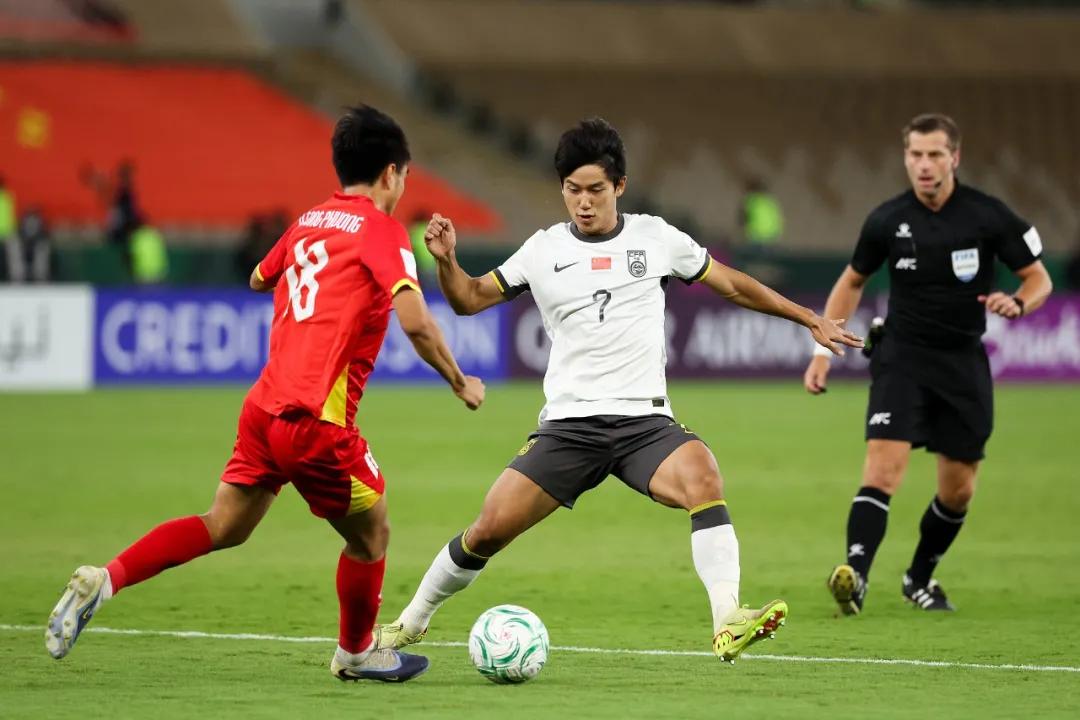
Behind the rotation was the fact that after three grueling group matches and a 120-minute quarterfinal penalty shootout, the main players’ stamina was at its limit, while Vietnam had an extra day of rest and a clear fitness advantage. It was also a precise adjustment by Antonio against different opponents: facing a physically weaker Vietnam, the new midfield triangle of Bao Shengxin, Chen Zeshi, and Wang Bohao ensured defensive solidity, while Kuai Jiwen and Xiang Yuwang’s dynamic attacks improved midfield and forward mobility and passing flexibility. More importantly, the previously nearly identical tactical template used in the first four matches had been thoroughly analyzed by opponents. The change, though surprising, was necessary.
But all tactical plans require players’ execution. Otherwise, Antonio’s risky strategy could have been criticized as unwise after the match. The U23 Chinese team did not disappoint Antonio’s trust; just as they had firmly executed strict defense in the previous four games, the young players perfectly fulfilled the pre-match plan to “control possession as long as possible.”
In the first half, China’s U23 team dominated with 65% possession and an 85.8% pass accuracy, repeatedly creating threats through wing breakthroughs and set pieces — data unimaginable against strong teams like Australia and Uzbekistan. The U23 team limited the opponent’s short passing buildup in the first half, and just two minutes into the second half, first-time starter Bao Shengxin assisted Peng Xiao’s header to break the deadlock. Vietnam’s quarterfinal mistake of conceding from a header against the UAE was repeated, highlighting Antonio’s targeted pre-match tactics.
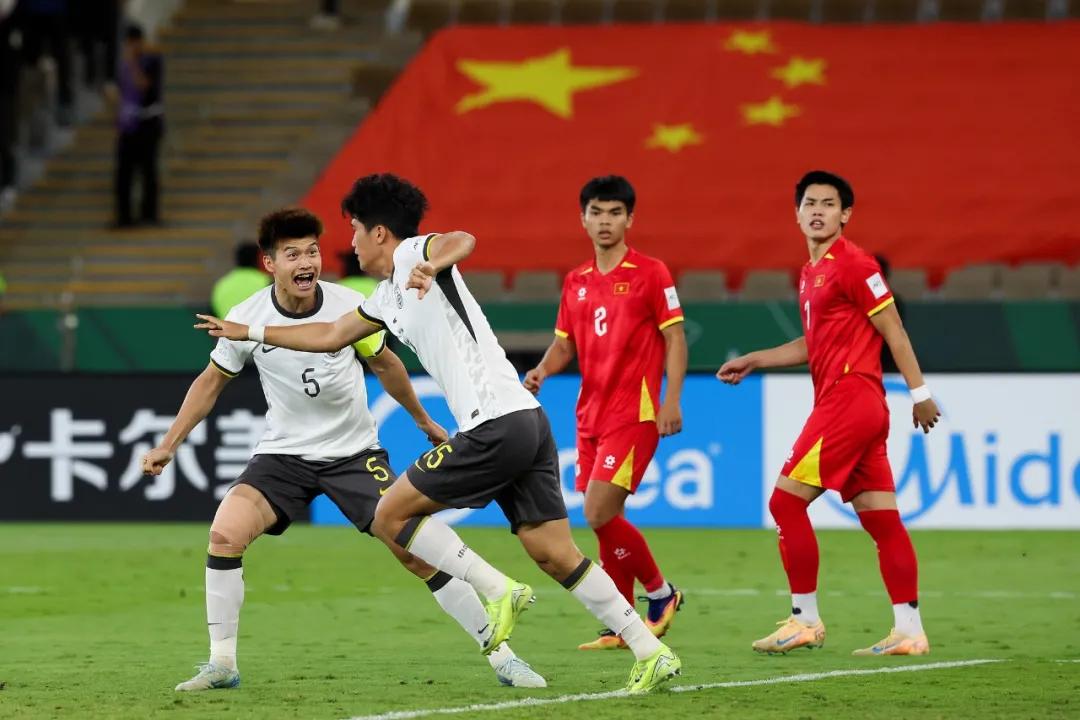
Just five minutes after that goal, Xiang Yuwang maneuvered at the edge of the box and scored a precise shot into a tight corner — China’s first open-play goal of the tournament — extending the lead to 2-0. Both goals came from the impact of rotated players, completely breaking down the opponent’s confidence.
Antonio’s rotation proved far more effective than expected. It not only caught the undefeated Vietnam team off guard but also boosted his players’ confidence as the match progressed, pushing forward actively and even pressing continuously inside the opponent’s box. Peng Xiao had a chance to score a second goal, but it was disallowed due to an offside call involving Li Zhenquan; otherwise, he would have tied for third place on the top scorer list with three goals.
The disappointment was short-lived. Substitute Bai Helamu and Wang Yudong’s energetic impact led to the former causing an opponent’s red card and then assisting the Zhejiang team’s leading striker to seal the game. With a 3-0 victory, China confidently secured their spot in the Asian Cup final stage.


From never reaching the knockout stages in five tournaments to proudly advancing to the final, the U23 Chinese team achieved a historic breakthrough with a thrilling win. This previously underestimated team displayed comprehensive strengths, breaking the curse of never defeating Vietnam U23, and revitalizing the image of China’s youth football.
Spanish coach Antonio’s tactical mastery shattered the stereotype that he was a non-Spanish, simplistic, and rough coach. Within 60 minutes, Antonio and his “substitutes” delivered a performance far beyond expectations, from bold tactical rotations to efficient execution on both ends. When making the first substitution, they had already established a 2-goal lead.
However, the defensive solidity of the 5-3-2 formation remained the foundation for victory. Goalkeeper Li Hao continued his excellent form; although tested less in this match, he still made four crucial saves, and along with defenders Peng Xiao and Wumitijiang, maintained the team’s clean sheet streak since the tournament began.
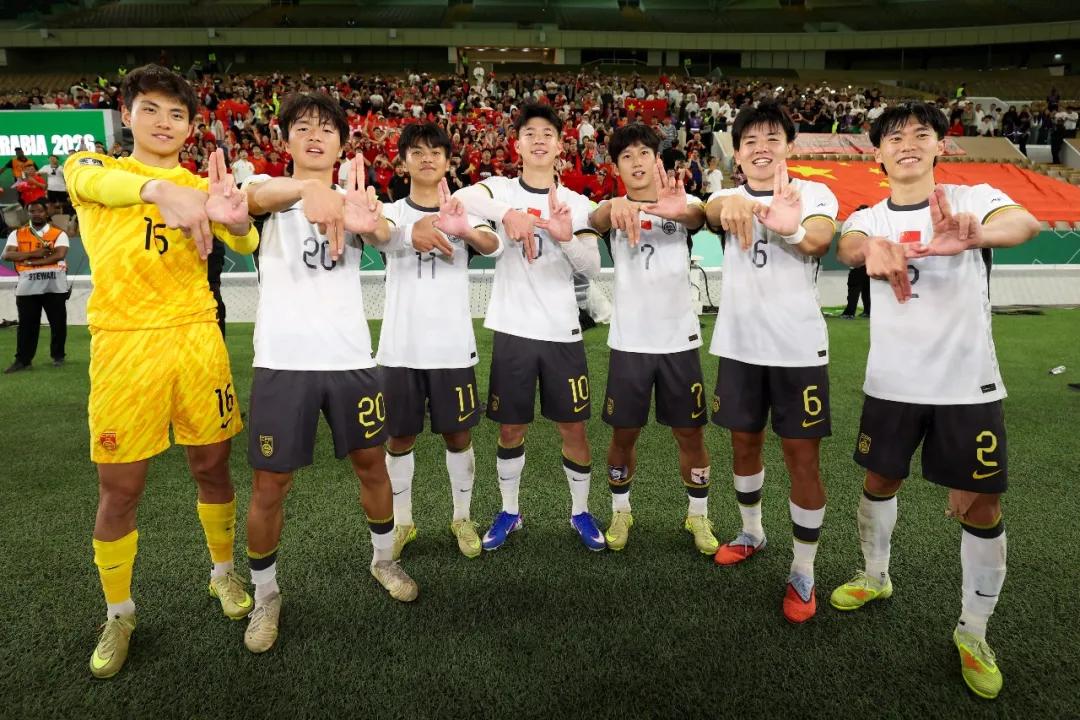
Against Vietnam’s strength in short passes and flank runs, the Chinese team stayed composed and solid, winning over 60% of aerial duels, effectively neutralizing the opponent’s technical advantage. In the 74th minute, Vietnam defender Pham Li De was sent off for an elbow, and the ten-man Vietnam team completely lost momentum to counterattack, further highlighting the effectiveness of China’s tactical pressure.
Throughout the match, efficient finishing and bench depth were key to victory. Whether it was the starting duo Xiang Yuwang and Kuai Jiwen or the substitutes Bai Helamu and Wang Yudong, both attacking pairs performed well. From set-piece goals to open-play breakthroughs and counterattack winners, China’s scoring methods were diverse, proving Antonio’s tactics were rich and not just about defensive endurance.
After the match, when asked about the bold decision to change six starters, the Spanish coach simply said, “Because we have many excellent players, it’s that simple.” Behind this confidence lay nearly 50 days of full dedication from players, coaches, and staff. “Almost fifty days without rest, not a single day off. Work, work, and more work. The players are willing to work hard, going through training camps, warm-ups, video analysis... I don’t know how many videos we watched.” Antonio emphasized, “We need to do well every day, day after day.”
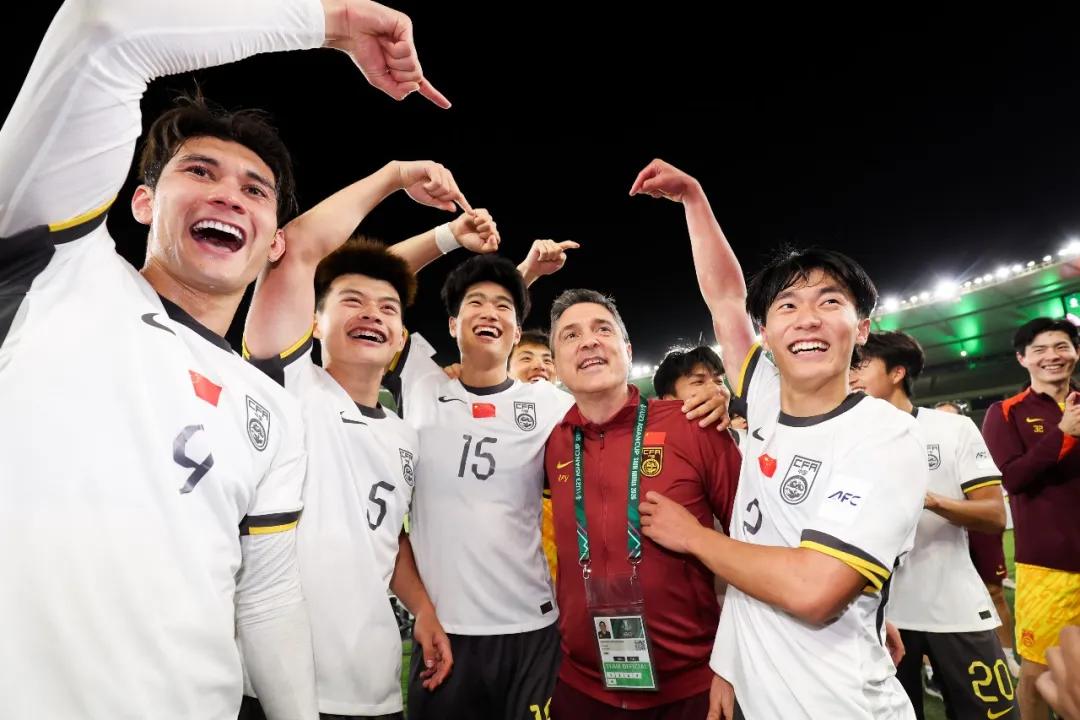
This 3-0 win was not only a ticket to the final but also a milestone in the U23 team’s growth and an important victory responding to Antonio’s call for “Chinese football’s desire to improve.” From advancing out of the group for the first time, to penalty elimination of Uzbekistan, to the semifinal thrashing of Vietnam, this marked the first time since 2004 that a Chinese men’s national team reached an Asian final — whether the Asian Cup (lost 1-3 to Japan), the AFC U19 Championship (lost 0-2 to Korea), or the AFC U16 Championship (won 1-0 against North Korea). This boost in confidence for Chinese football is immeasurable.
The long night will end, and the youthful storm is gaining strength. Facing a stronger Japanese team in the final, the miracle we hope for will indeed require some luck, but as Peng Xiao said after the match, “The key to success is to move luck with hard work.”


Wonderfulshortvideo
The footwork, the finish 🤌


Did you get it? 🤔😅
The Wirtz x Sané link-up 🔗
Haaland’s movement 🥵
Which counterattack is
“afcon funny moments”
🤤🤤
 Links
Links
 Contact
Address:UNIT 1804 SOUTH BANK TOWER, 55 UPPER GROUND,LONDON ENGLAND SE1 9E
Number:+85259695367
E-mali:[email protected]
 App
App


