



MU is not the richest club in the Premier League



Manchester United is experiencing one of the most disappointing phases in recent times, both in sporting and financial aspects.
According to the latest Deloitte Money League report, the Old Trafford club has dropped to 8th place in the ranking of football clubs with the highest revenue worldwide, marking their lowest position since this ranking was first published 29 years ago.
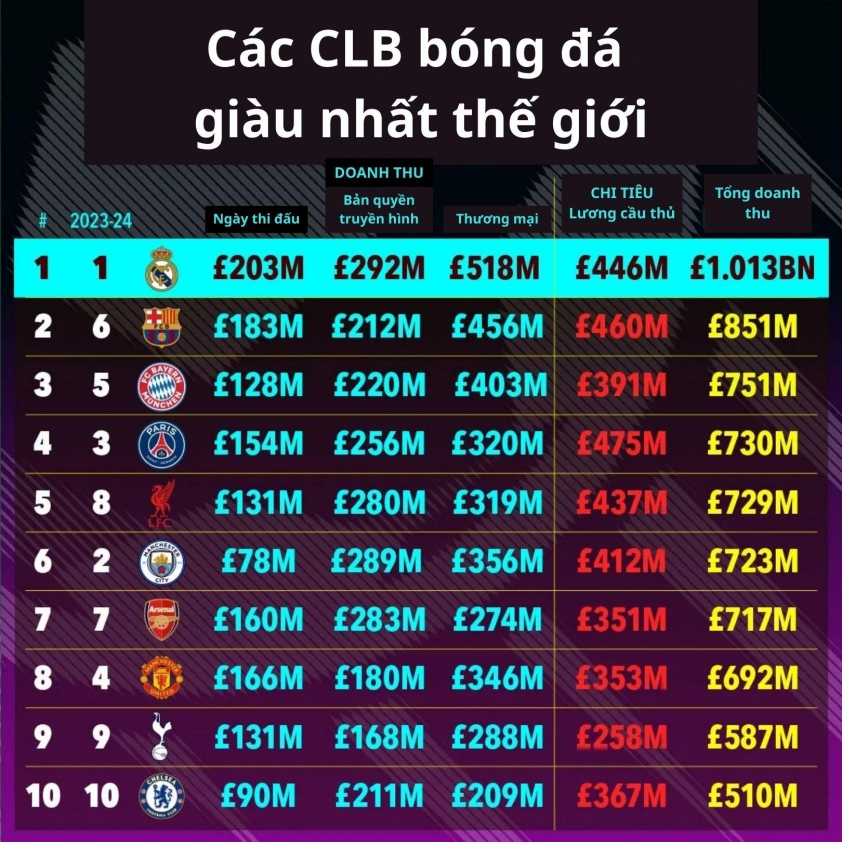
Notably, this decline happened even though MU's revenue continued to grow. Specifically, total income from ticket sales, broadcasting rights, and commercial deals increased from £653 million in the 2023/24 season to £692 million in the most recent season, a rise of about £40 million. However, this increase was not sufficient for MU to maintain its standing against the strong advances of domestic and European rivals.
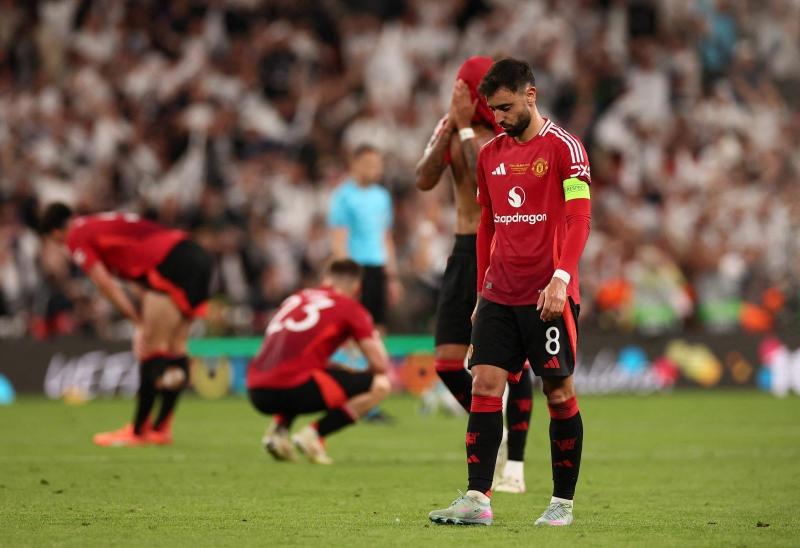
One of the main reasons for MU's setback is poor sporting performance. Finishing only 15th in the Premier League caused the club’s broadcasting revenue to fall by £45 million. Additionally, missing out on the Champions League severely impacted income, although MU somewhat compensated by reaching the Europa League final.
Meanwhile, their long-time rivals are accelerating strongly. Liverpool has surpassed MU to become the club with the highest revenue in England, reaching £729 million after winning the league under coach Arne Slot. Arsenal also impressed by increasing revenue nearly 15%, climbing from 10th to 7th place thanks to their Champions League semi-final run. Manchester City, despite a slight revenue drop, still ranks above MU, leaving the Red Devils in fourth place among Premier League clubs financially.
More worryingly, MU’s financial outlook for the current season is predicted to be even bleaker. Due to early exits from both domestic cups and absence from European competitions, the Red Devils have only 20 home matches. This could cause MU to lose about £85 million in matchday revenue, which was once a source of pride and a benchmark across Europe for over a decade.
Experts believe MU’s decline is not only due to on-field results but also reflects that the club’s commercial model is no longer leading the trend. Nevertheless, Manchester United remains one of the world’s biggest football brands. The issue lies in the new leadership under Sir Jim Ratcliffe and INEOS needing to quickly invest in infrastructure, upgrade Old Trafford, and reshape how the club connects with its global fanbase.


Wonderfulshortvideo
The footwork, the finish 🤌


Did you get it? 🤔😅
The Wirtz x Sané link-up 🔗
Haaland’s movement 🥵
Which counterattack is
“afcon funny moments”
🤤🤤
 Links
Links
 Contact
Address:UNIT 1804 SOUTH BANK TOWER, 55 UPPER GROUND,LONDON ENGLAND SE1 9E
Number:+85259695367
E-mali:[email protected]
 App
App


