



If Antonio were to take charge of the 05 Olympic team, would he adjust the tactics?



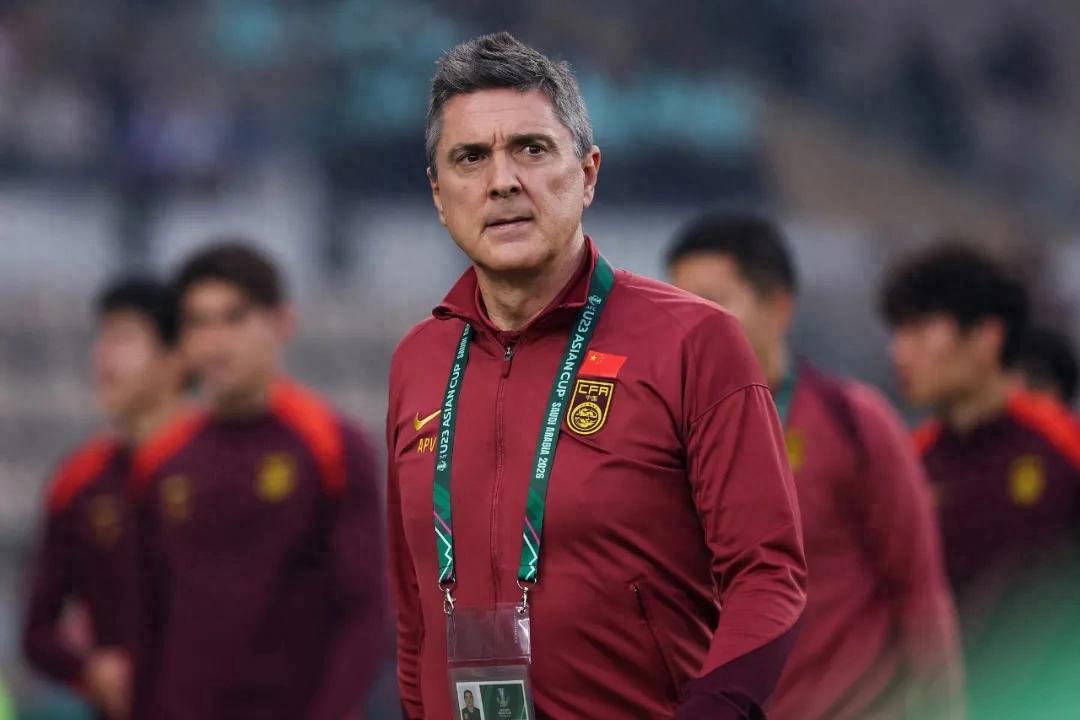
Reported by journalist Chen Yong. In October 2018, when Antonio came to China to coach, nobody anticipated that this ex-forward and former Segunda División top scorer from Spain would, over the following eight years, push pragmatic football to its limits in China and become a landmark figure in Chinese football, particularly within the youth national teams.
On the tactical side, Antonio found a practical path for Chinese football, which previously had unclear and often conflicting philosophies. In rebuilding confidence across all national team levels, he made significant contributions by breaking records and rewriting history repeatedly, even changing media and fan perceptions, offering more thoughtful insights into Chinese football.
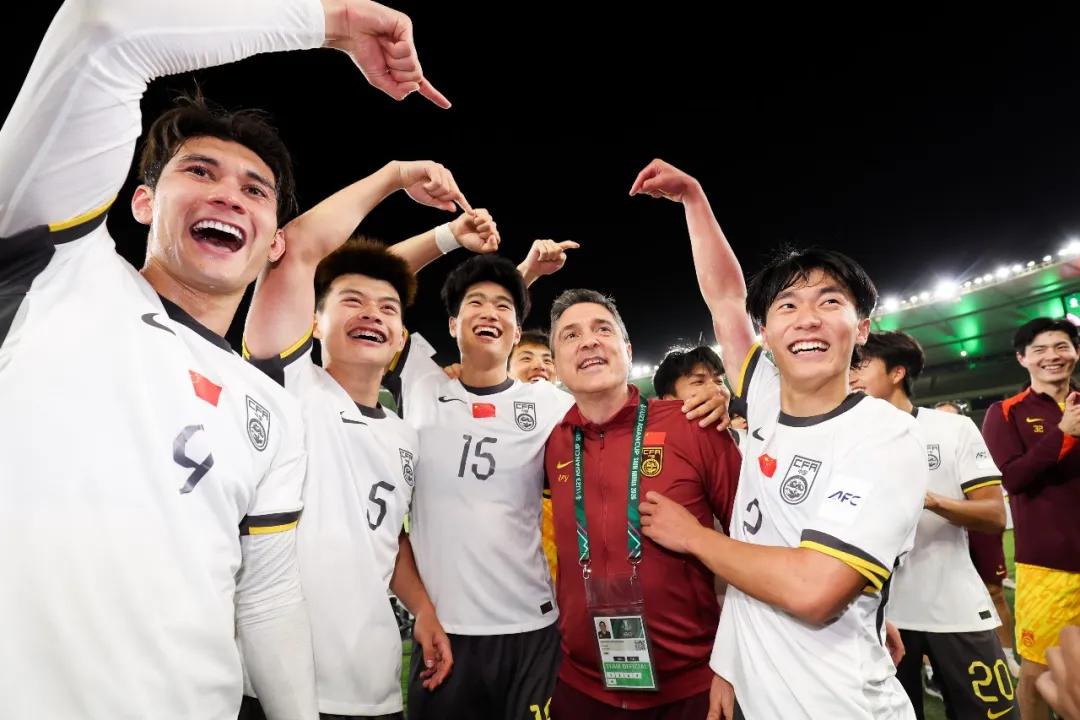

For many fans, Antonio’s deepest impression was leading the 03 youth team to the quarterfinals of the 2023 U20 Asian Cup—the first time in nine years that China’s youth team reached this stage. At that time, Antonio employed an extremely defensive counterattack strategy, commonly referred to as the 703 tactic. Under this system, the entire midfield and defense focused on defense, with only Bai Helamu, Fan Chao, and Aifieldin participating in counterattacks, and these three often dropping back to the penalty area.
In fact, as early as 2019, when he led the 04 youth team in the U17 Asian Cup qualifiers, his tactical system was relatively balanced, including the use of an attacking midfielder. During that qualifier, Antonio’s team returned to the main tournament after a six-year absence.
In 2024, Antonio resumed his role as head coach of the 2003 age group national team, with the task of competing in the U23 Asian Cup and the upcoming Asian Games. Upon returning, Antonio made some tactical adjustments—for example, during training in Hainan, the team increased midfield transitions. However, this was only about midfield passing and receiving, not full midfield organization—after simple exchanges in midfield, the ball was quickly shifted to the wings for attack. Essentially, this remained a pragmatic tactic.
This tactic was vividly demonstrated at the current U23 Asian Cup: against Uzbekistan, the U23 team reverted to the 703 tactic; against a defensively compact Vietnam, the team showed some variation, daring to maintain possession in the midfield and defense. Yet, due to the lack of systematic midfield organization training, the U23 team’s ability to organize play was clearly insufficient.
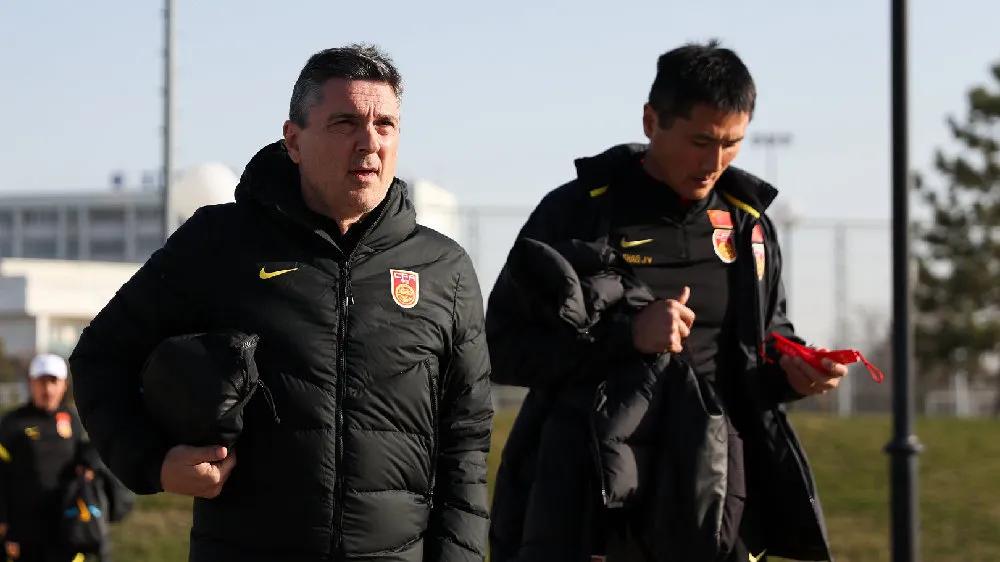
Antonio excels in building defensive systems. Throughout his coaching career, based on defensive foundations, he has often sidelined attacking players: in the 2022 U20 Asian Cup qualifiers, he dropped the main striker He Xiaoke from the 04 youth team; in the 2023 U20 Asian Cup, he left out Liu Guobao, a key player from the qualifiers who scored two penalty assists in injury time to help the 03 youth team win 3-1 against Myanmar and qualify as one of the best second-placed teams. Without Liu Guobao, Antonio’s coaching journey might have ended as early as September 2022.
In this U23 Asian Cup, Antonio also chose not to include Yimulan. It is worth noting that during the 05 youth team’s participation in the U20 Asian Cup, Yimulan’s midfield control helped the team play a rare attacking style of football.
Focusing on overall defense, whether midfielders or forwards must adhere to a simple tactical system and strict tactical discipline. This was exemplified in Antonio’s classic match at the U23 Asian Cup against Uzbekistan: immediate counter-pressing plus relentless pursuit.
Antonio aims to build a “steel-willed army.” For this goal, no matter how famous the player is or if they are considered his “benefactor,” anyone who doesn’t meet the requirements is either dropped or relegated to a substitute role. Perhaps success demands this kind of firm belief; positively it is determination, neutrally it is persistence.
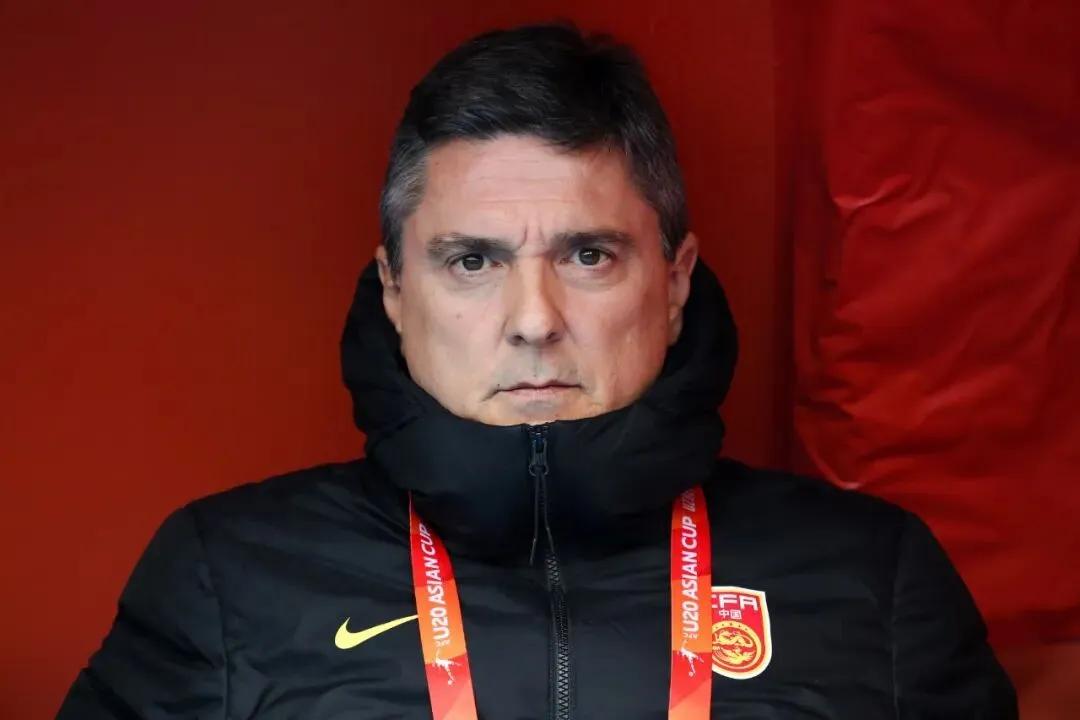

Antonio is the preferred coach candidate for the 05 age group Olympic team. Besides his consistently excellent results, more importantly, he has great work habits and communication skills, maintaining good relationships with the Football Association and the working team. Though persistent on the field, he is actually very intelligent in life.
However, there is a big difference between the 2005 and 2003 age groups: from 1999 to 2003, the defensive midfield problem has troubled the national team. Even in this U23 Asian Cup, Xu Bin was the only one bearing the burden. But for the 2005 group, the midfield duo Chen Zeshi and Yimulan is very impressive. Previously, under Jurjevic, this team played a rare attacking style at the U20 Asian Cup, coming close to qualifying for the U20 World Cup.
When selecting the squad for the U23 Asian Cup, Antonio did not include Yimulan, although Yimulan had been part of his lineup in several prior training sessions. This sends two signals: first, Yimulan is not part of Antonio’s tactical plan for this U23 Asian Cup; second, Antonio values Yimulan’s abilities, as shown by his continuous inclusion in training. If Antonio coaches the 05 Olympic team, it is foreseeable that he will not easily give up on Yimulan.
Based on the 05 youth team’s excellent performance in the U20 Asian Cup, fans naturally expect Antonio to further optimize his tactical system beyond the solid defensive foundation, choosing either a defense-counterattack style or increasing midfield control depending on the opponent.
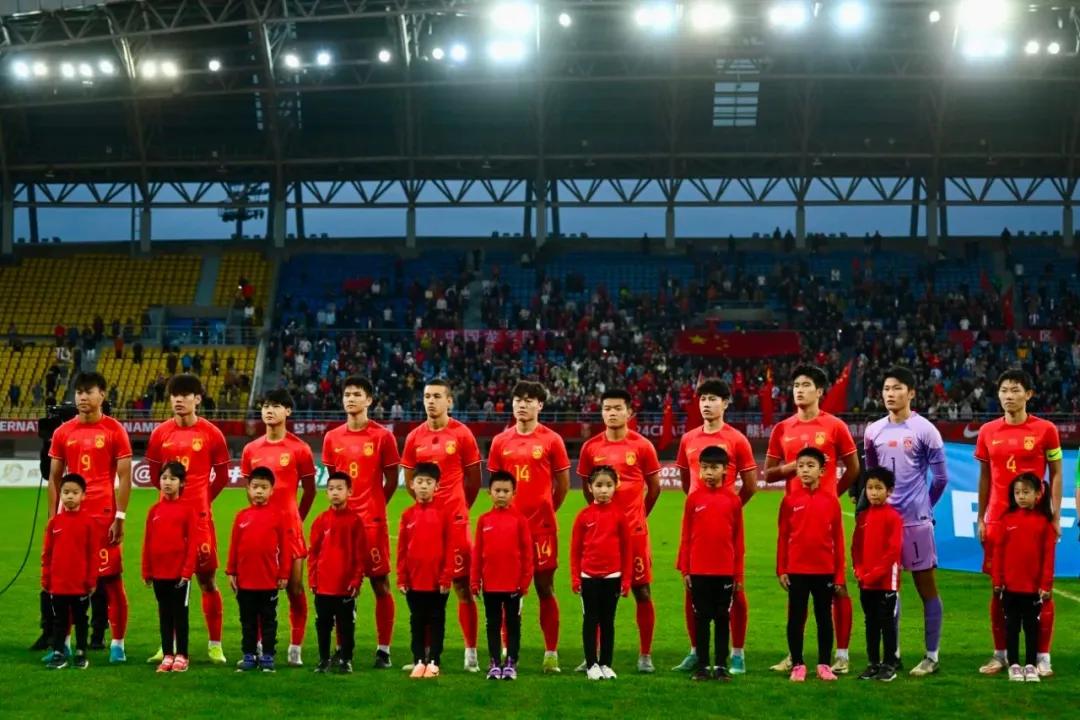
Such hopes are certainly admirable, but it is not easy for a team to adapt to two very different tactical systems, as this can cause slight confusion in players’ decision-making, potentially weakening tactical execution. Generally, coaches prefer to perfect a single tactical style.
At the Yancheng Four-Nation Tournament in early 2025, when the 05 and 03 age group players were combined for the first time, after Yimulan received the ball repeatedly in the backfield, teammates often opted for long passes rather than passing to him. This was not due to distrust but because the overall tactical setup dictated it: when the defensive midfielder has the ball, the wingers sprint forward. Even if Yimulan is comfortably positioned, teammates have already shifted; there are fewer supporting players, making midfield passing less meaningful, and too much passing would waste teammates’ forward runs.
However, time is on their side. The next U23 Asian Cup for the 05 Olympic team is two years away, giving Yimulan time to further strengthen his physique and gain more experience in professional leagues. Yimulan suffered injuries in 2025 that significantly affected his physical condition. The public hopes that over the next two years, he can steadily improve his physical fitness, secure more playing time in the Chinese Super League, and ultimately solve the midfield creativity issue.
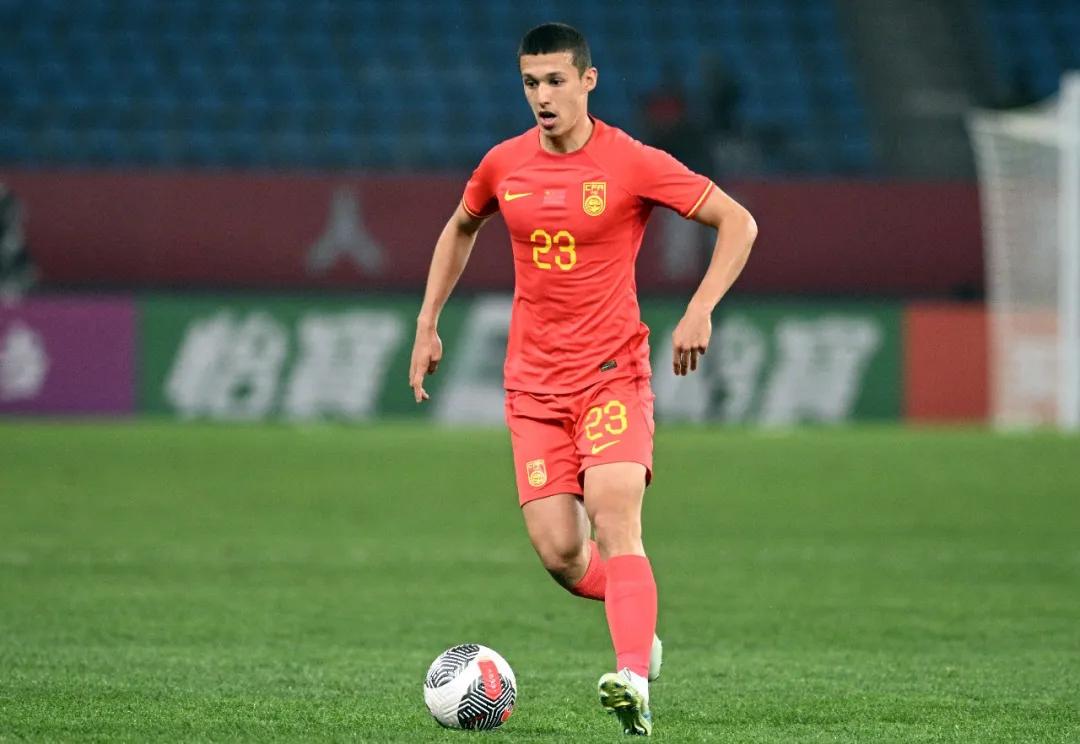

Antonio is considered a milestone figure in China’s youth national teams largely because he truly rewrote their history.
The bleakest period for China’s youth national teams was when the 2000 and 2002 age groups both failed to qualify for the AFC U-16 Championship finals, and the 2001 age group missed the AFC U-19 Championship finals. After Antonio took over, in 2019 he led the 04 youth team to qualify for the finals after six years; in 2022, he led the 03 youth team back to the U20 Asian Cup finals after four years; in 2023, he led the 03 youth team to the U20 Asian Cup quarterfinals for the first time in nine years. Additionally, under his leadership, the U23 team reached the knockout stage of the U23 Asian Cup for the first time, advanced to the semifinals, reached the final, and finished as runners-up—breaking history three times in a row.
Each historical breakthrough has greatly boosted confidence in Chinese football, especially the youth teams, and profoundly impacted the mindset of fans and media alike. We had become accustomed to failing to advance from group stages; even if we qualified, it was believed that passing the first knockout round was unlikely. Antonio showed that the team can advance from groups, win knockout matches, and even create miracles by reaching the final.
After Antonio’s repeated efforts and breakthroughs, people may now reconsider their views on the various national teams:
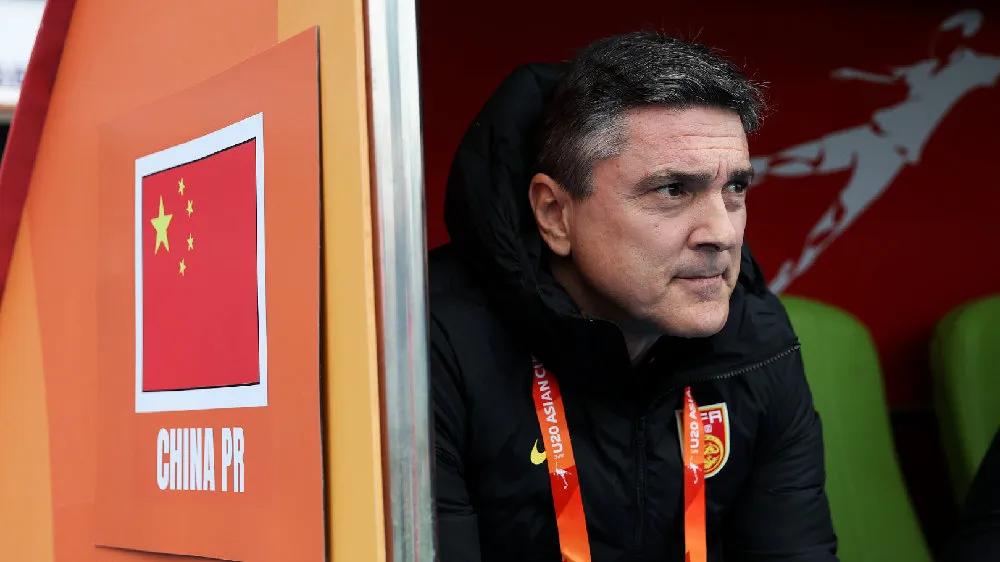
(1) For future youth and junior teams, we have a solid chance to advance from group stages; the youth team advancing from groups means qualifying for the U17 World Cup; similarly, the junior team winning knockout matches can reach the U20 World Cup.
(2) Within Asia, aside from the clearly superior Japanese team, we have a real chance to beat other teams. Even if we have not yet matched the overall strength of South Korea or Australia, with the right tactics and full execution, desired results are achievable. Indeed, the confidence gained from repeated victories and strong performances contributed to the good results at the U23 Asian Cup: in March 2025’s Yancheng Four-Nation Tournament, the U22 team beat South Korea U22 1-0 and drew 0-0 with Uzbekistan U22; in November’s Panda Cup, the U22 team again defeated South Korea U22 2-0 and drew 0-0 with Uzbekistan U22.
(3) Absolute strength still determines final results, especially for the senior national team where fluctuations are smaller and miracles harder to create. However, an excellent coach can push a team to its maximum potential, so choosing the right coach is very important.
(4) For the national team, tactical systems and discipline are fully replicable. Although Jankovic’s strict management once failed, to make breakthroughs before improving overall strength, the Chinese national team must at least advance tactically and disciplinarily.
(5) The U23 Asian Cup final, with subtle differences in mentality, tactics, and personnel, resulted in a heavy defeat and reminded us that even more effort is needed.


Wonderfulshortvideo
The footwork, the finish 🤌


Did you get it? 🤔😅
The Wirtz x Sané link-up 🔗
Haaland’s movement 🥵
Which counterattack is
“afcon funny moments”
🤤🤤
 Links
Links
 Contact
Address:UNIT 1804 SOUTH BANK TOWER, 55 UPPER GROUND,LONDON ENGLAND SE1 9E
Number:+85259695367
E-mali:[email protected]
 App
App


