



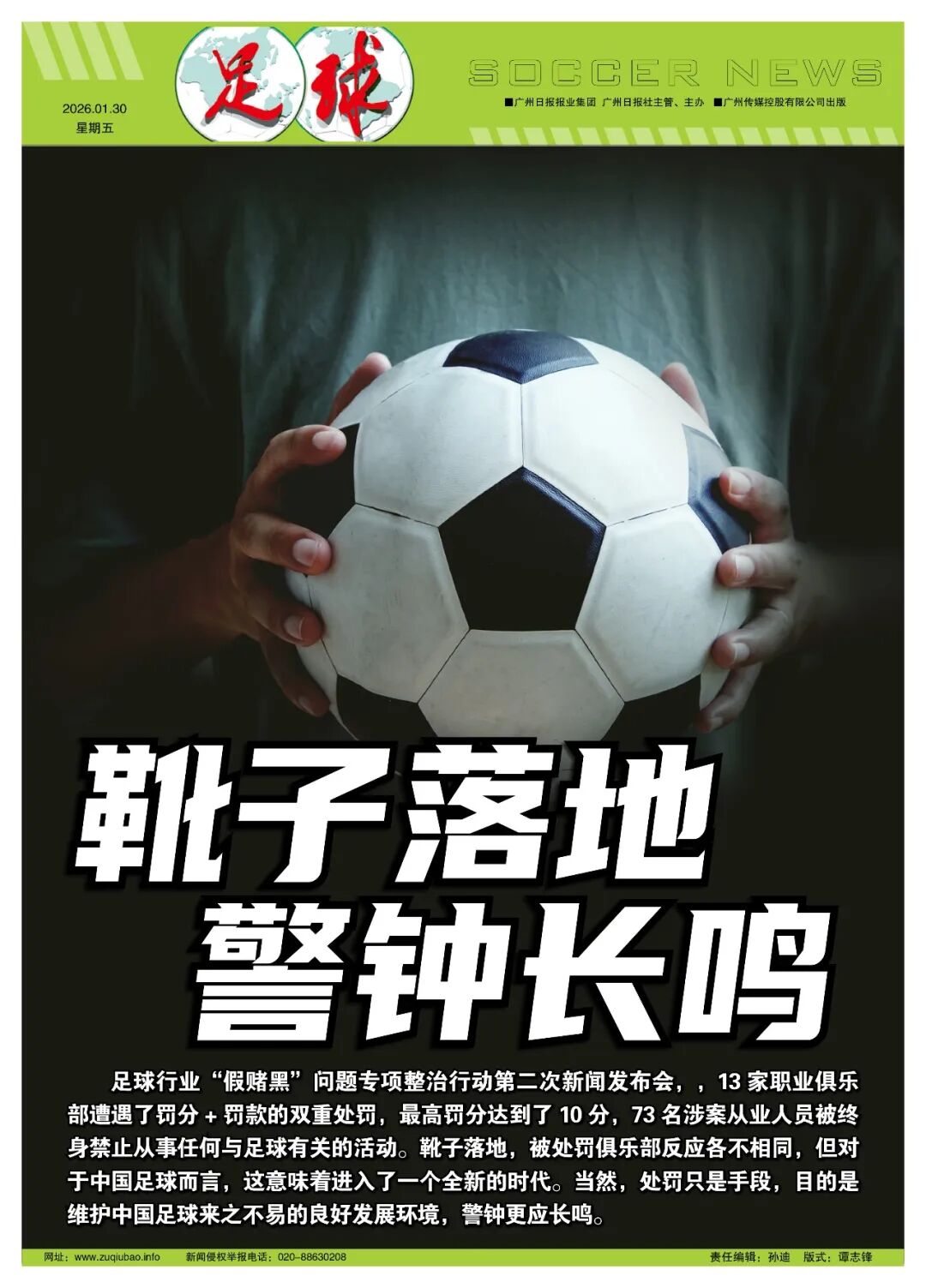
"Crackdown on Match-Fixing, Gambling, and Corruption": The Moment Has Arrived, the Alarm Must Keep Ringing



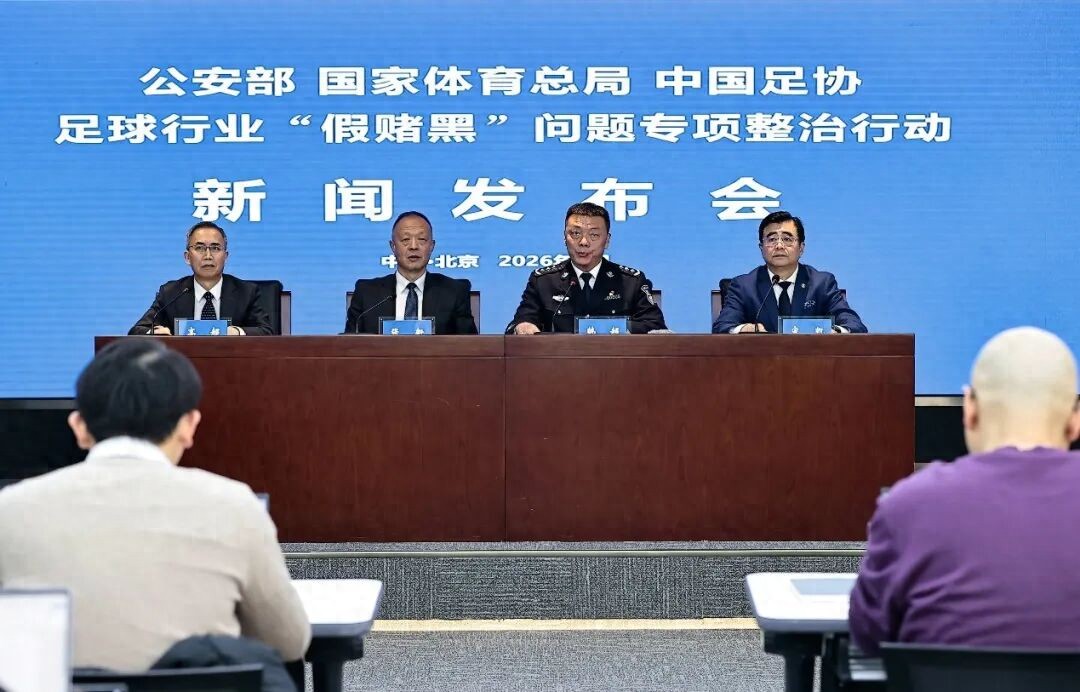
Reported by Chen Yong At 10 a.m. on January 29, the press conference for the special crackdown on match-fixing, gambling, and corruption in the football industry took place on the 15th floor of Shidong International, the Chinese Football Association’s headquarters. Thirteen professional clubs were subjected to both point deductions and fines, with the most severe penalty being a deduction of 10 points. Seventy-three involved personnel received lifetime bans from all football-related activities, while three individuals were banned for five years (the ban period runs from January 29, 2026, to January 28, 2031).
Although 73 people received lifetime bans and 3 were banned for five years, this actually represents the second batch of bans, which drew less attention than the punishments imposed on the clubs. The penalties were finally enforced, and the clubs’ reactions varied. However, for Chinese football, this marks the beginning of a completely new era. Of course, these punishments are only a means to an end—the goal is to protect the hard-won healthy development environment of Chinese football, and the alarm must continue to sound.

Since the launch of this special crackdown on match-fixing, gambling, and corruption, the focus has been on the punishments for clubs—compared to individual penalties, clubs have larger fan bases and naturally attract more attention. On September 10, 2024, the first batch of bans was announced, but no club penalties were included at that time.
Over the following year or so, clubs, media, and fans occasionally discussed the potential punishments for clubs. Although many believed the association might avoid penalizing clubs to maintain league stability, it was clear from the rules that no punishment was inappropriate. Ultimately, the penalties were enforced: this press conference announced punishments for 13 professional clubs, each receiving both point deductions and fines.
The penalties considered league stability, so point deductions were the main form of punishment, and no club was relegated as a result. Naturally, the impact of point deductions varied among clubs: those competing for the championship were undoubtedly affected significantly, while clubs fighting to avoid relegation felt an even greater impact.
Among the banned individuals, 73 received lifetime bans and 3 were banned for five years. Their offenses primarily involved direct bribery to manipulate matches; organizing and participating in online gambling; colluding to fix matches; and accepting bribes to influence refereeing decisions.

The 13 punished clubs include 9 from the Chinese Super League and 4 from China League One. The Super League clubs faced point deductions of 10, 7, 6, and 5 points, with fines of 1 million, 800,000, 600,000, and 400,000 yuan respectively; League One clubs had point deductions of 4 or 3 points, with fines of 200,000 yuan.
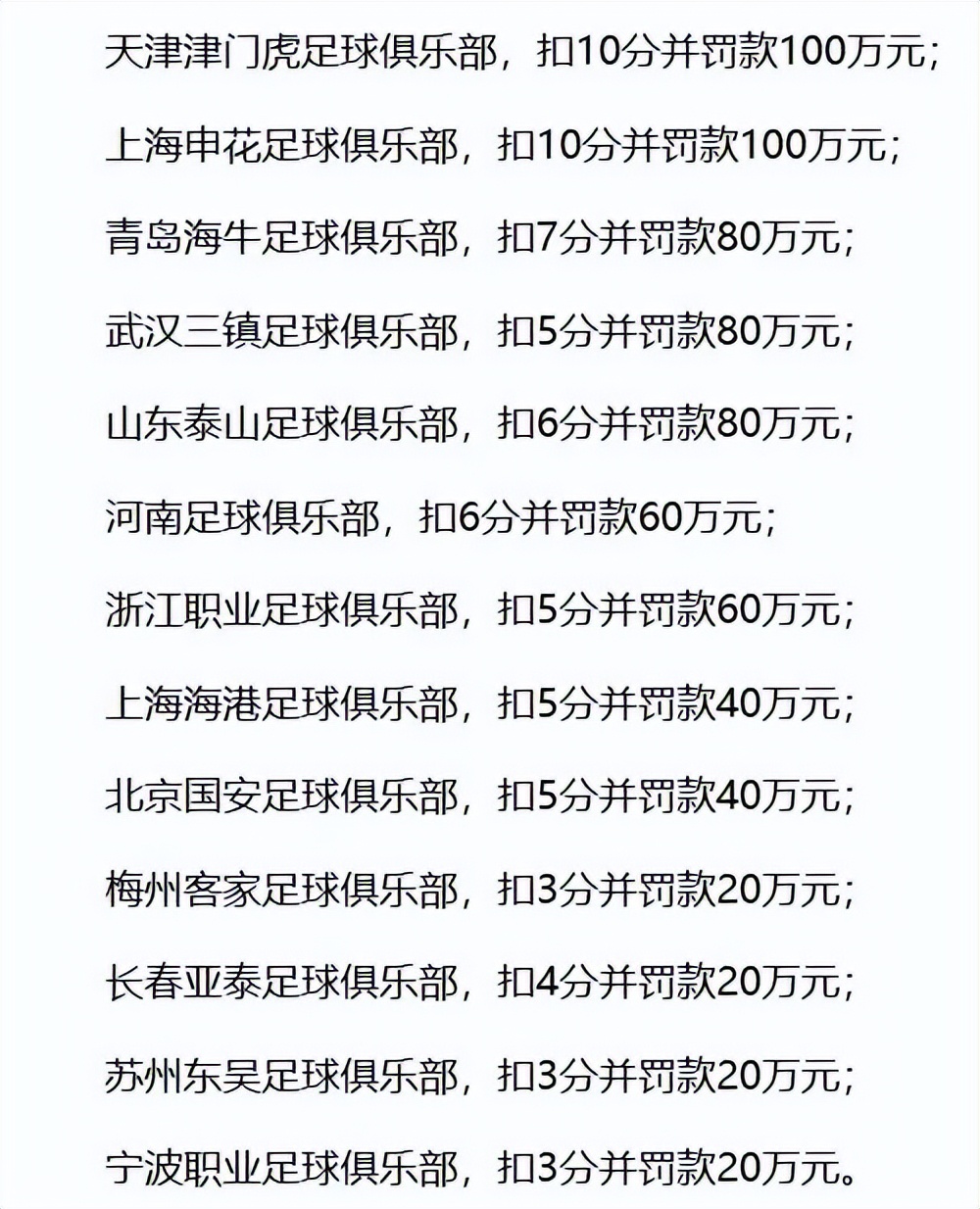
Tianjin Jinmen Tiger and Shanghai Shenhua were penalized with 10-point deductions and 1 million yuan fines; Hainan FC received a 7-point deduction and an 800,000 yuan fine; Shandong Taishan and Henan were docked 6 points, with Henan fined 600,000 yuan and Taishan fined 800,000 yuan; Wuhan Three Towns, Zhejiang, Shanghai Port, and Beijing Guoan were docked 5 points with fines ranging from 400,000 to 800,000 yuan. Notably, although some clubs received the same point deductions, their fines varied. Compared to these, the four League One clubs’ penalties of 3 or 4 points had relatively less impact.
During the Q&A session, the Chinese Football Association explained that the punishments were based on the "Chinese Football Association Disciplinary Code" and judicial findings, considering the amount involved in illicit transactions, the severity, nature, social impact, and whether the club was a repeat offender.

The sanctions on the 13 clubs will affect their 2026 season in various ways, including championship contention, relegation battles, reputation, commercial development, and ticket sales. However, with the penalties now in place, clubs can work more steadily without carrying burdens, moving forward without “hidden weights.”
Yet the alarm must keep ringing. The Public Security Bureau’s head of security management stated that they will continue cooperating closely with sports authorities to maintain strict legal enforcement and high-pressure crackdowns, ensuring related work progresses thoroughly. The General Administration of Sport and the Chinese Football Association also pledged to strengthen systemic governance and enhance supervision effectiveness, maintaining a “zero tolerance” stance against all violations and misconduct in football.


Wonderfulshortvideo
The footwork, the finish 🤌


Did you get it? 🤔😅
The Wirtz x Sané link-up 🔗
Haaland’s movement 🥵
Which counterattack is
When you use your girlfriends shower 🚿 @Emily Bourne @LUSH
🤤🤤
 Links
Links
 Contact
Address:UNIT 1804 SOUTH BANK TOWER, 55 UPPER GROUND,LONDON ENGLAND SE1 9E
Number:+85259695367
E-mali:[email protected]
 App
App


