



10-Second Substitution Limit + Off-Field Treatment: FIFA's New Rules Target Time-Wasting




Author/Han Bing On February 28, the International Football Association Board (IFAB) held its 140th Annual General Meeting in Wales, approving new rules successfully trialed in Major League Soccer. These include time limits for players leaving the pitch due to injury and substitutions, as well as a "5-second countdown" penalty for throw-ins and goal kicks. The aim is to speed up the game and reduce opportunities for players to waste time. These newly approved rules will be implemented starting with this summer's World Cup.
Previously, IFAB's introduction of the goalkeeper's "6-second rule" for holding the ball was highly successful in combating time-wasting. This meeting prioritized further new rules to accelerate the pace of play. Two rules trialed in Major League Soccer four years ago were consequently passed and will be adopted globally.
Rule 1, the "Timed Substitution" rule, states: A substituted player has 10 seconds to leave the field after the substitution board is shown or the referee signals. If the player exceeds 10 seconds, they must leave immediately, and the incoming player can only enter at the next stoppage after one minute, during which the offending team plays with only 10 players as a penalty. Rule 2, the "Off-Field Treatment" rule, states: A player who goes down injured must leave the field for treatment as soon as possible and cannot re-enter until at least one minute after play has resumed. Both rules include exceptions: Injured players and goalkeepers are exempt from the "10-second substitution" rule, and players involved in serious fouls, receiving yellow cards, or with head injuries are exempt from the "15-second limit for going down" rule.
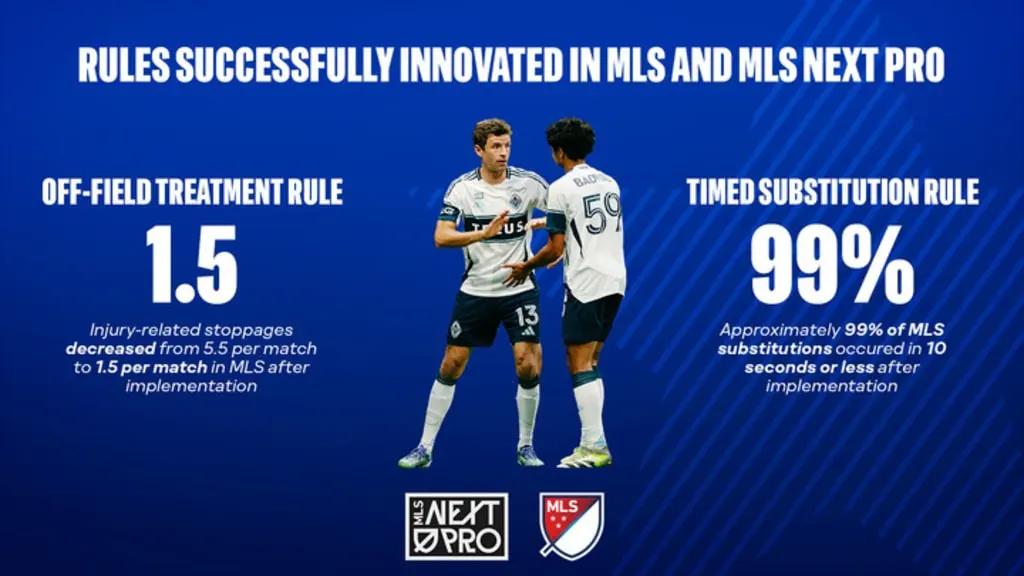
These two rules were trialed in Major League Soccer in 2024 and entered the Leagues Cup involving Mexican clubs in 2025. The new rules had an immediate effect on reducing time-wasting. In MLS, stoppages due to player injuries decreased by 72%, from an average of 5-6 per game to 1.5. During the 2025 MLS season, across 510 matches with 4346 substitutions, only 12 violations of the "10-second substitution" rule occurred, effectively speeding up the game's rhythm.
Uruguayan star Luis Suárez has become the unofficial "poster player" for the "10-second substitution" rule. He was once substituted near the end of a match and delayed his exit, causing Inter Miami to violate the rule and play with 10 men for the following minute. In a match four days later, Suárez was seen sprinting off the pitch when substituted, showing the rule's impact. In 2024, when Lionel Messi was struck on the knee against CF Montréal and went down, he remained on the pitch for an extended period. After treatment, he had to wait two minutes before being allowed back on. Broadcast footage showed Messi arguing with the fourth official, apparently having just learned of this new rule not yet implemented in Europe.
North American leagues have a long history of rule experimentation. As early as the 1920s, the American Soccer League had substitution rules, three decades before substitutions were adopted internationally and half a century before the 1970 World Cup. The back-pass rule also originated in North America, trialed in the North American Soccer League (NASL) before its dissolution in 1984. The NASL was issuing red cards for denying obvious goal-scoring opportunities by 1982, a practice not adopted globally until 1990. North American leagues also pioneered names on the back and numbers on the front of jerseys, long before it became an international standard.
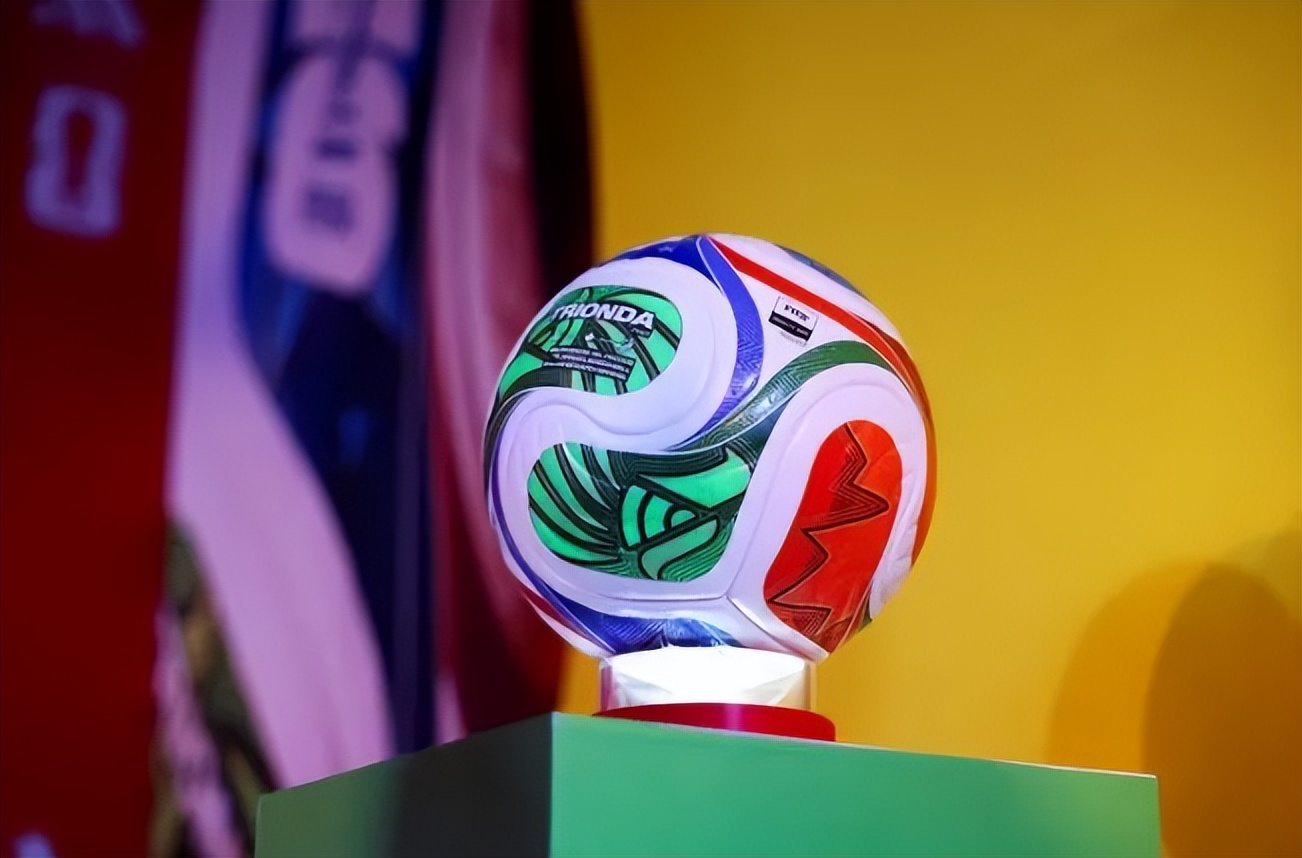
In 1995, IFAB and FIFA designated North American leagues as a primary testing ground for new rules, trialing various innovations that seem unusual today. Examples include taking throw-ins with the feet, escalating penalties for persistent infringement, and a rule allowing a player to dribble from the center circle to take a penalty kick. North America even experimented with larger goals (widened by 1.2 meters) and countdown clocks during stoppages. While many ideas were rejected, several were eventually approved.
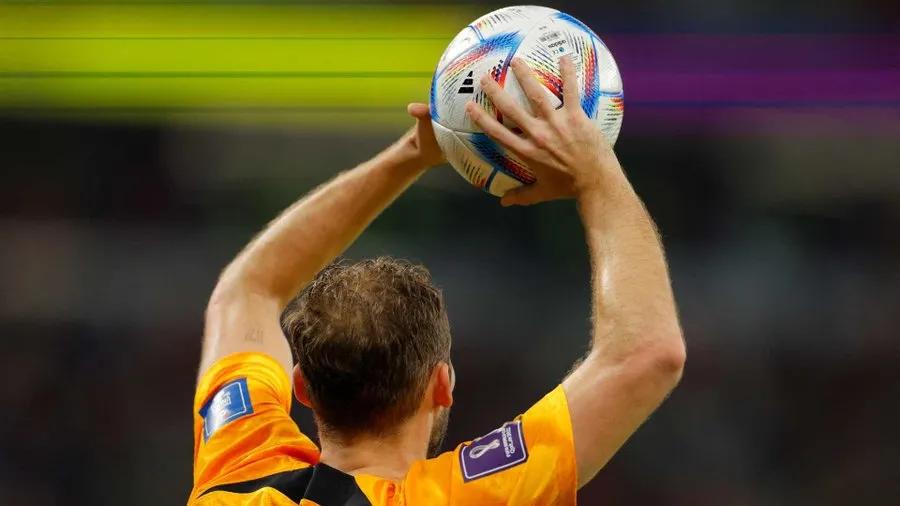
In addition to the timed substitution and off-field treatment rules, new "5-second countdown" rules for throw-ins and goal kicks were passed. If the referee deems a player is taking too long or deliberately delaying a throw-in or goal kick, they can initiate a 5-second visual countdown. If play has not restarted after the countdown, the throw-in is awarded to the opposing team, and a delayed goal kick results in a corner kick. These new rules will take effect after July 1 this year but will be implemented first at this summer's World Cup.
With these new rules, slow walks to the sideline during substitutions or feigning injuries to waste time will likely become less frequent. Fewer game interruptions will enhance spectator enjoyment and increase scoring opportunities. While some rules trialed by IFAB may seem far-fetched, measures like timed substitutions, off-field treatment limits, and time limits for restarts represent reasonable changes that preserve football's traditional essence.



 Links
Links
 Contact
Address:UNIT 1804 SOUTH BANK TOWER, 55 UPPER GROUND,LONDON ENGLAND SE1 9E
Number:+85259695367
E-mali:[email protected]
 App
App


