



Should the league make way for the Champions League? The French League's choice deserves careful consideration by the Chinese Super League.


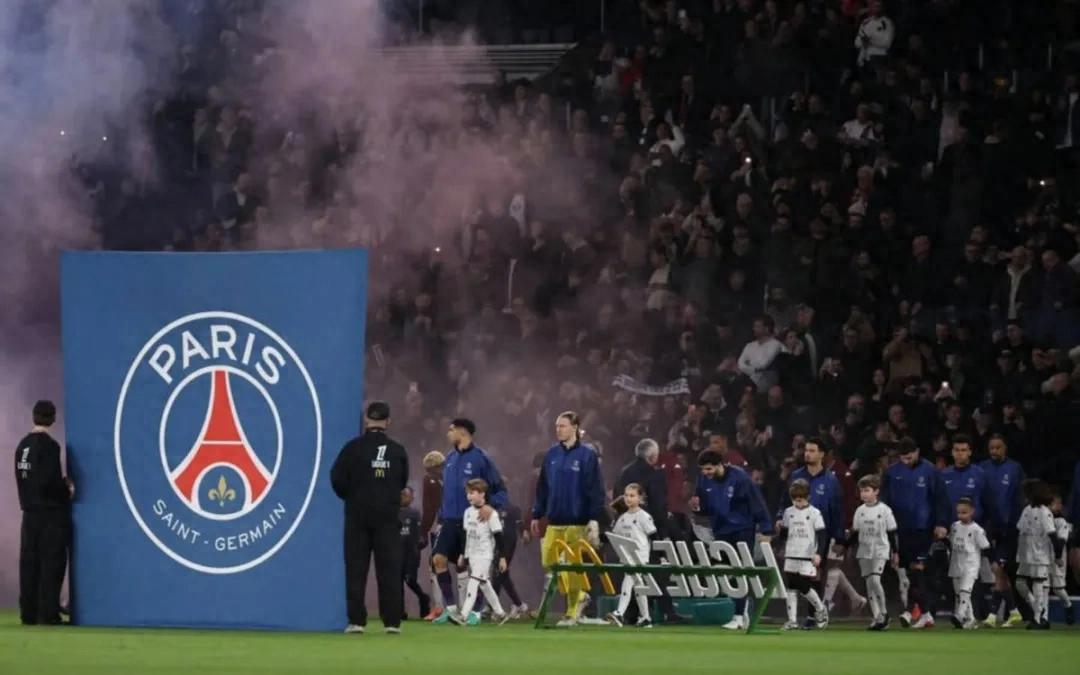
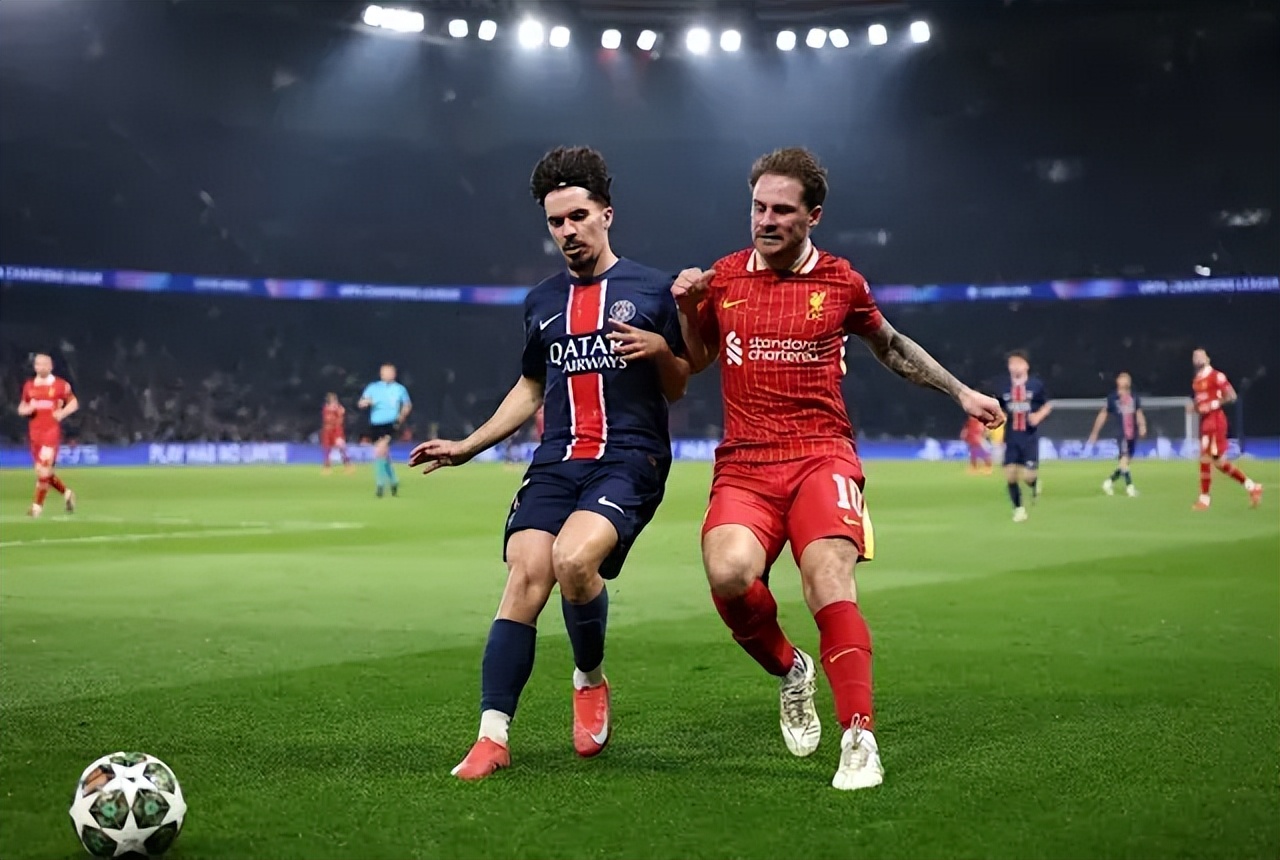
Written by Han Bing. After the last international match day before the World Cup ended, football's focus shifted back to clubs. Our attention turns to Paris Saint-Germain, the sole Ligue 1 team still vying for a Champions League semi-final berth. This weekend, they face Toulouse at home in Ligue 1, followed by a Champions League home fixture against Liverpool. After that, they have a week's break before traveling to Liverpool for the second leg of the Champions League quarter-final tie.
Wait, why can PSG rest between the two Champions League matches?
Originally scheduled for April 11th between the Liverpool clashes, PSG's Ligue 1 Round 29 away match against Lens was postponed upon their request, approved by the French League. Thus, the Lens-PSG league game is temporarily rescheduled to May 13th. Meanwhile, Liverpool have a Premier League away match against Fulham in London between those two Champions League fixtures.
As the reigning Champions League champions, PSG leveraged Ligue 1 regulations to gain a physical advantage over Liverpool, which we'll leave aside for now. The postponed Paris away match against Lens sparked significant controversy. Why? Because Lens is the only team this season potentially threatening PSG's Ligue 1 title – currently, Lens, having played one more game, trail PSG by one point. Lens, focusing solely on domestic competition and playing at home, could capitalize on PSG's Champions League distractions, potentially winning this crucial "six-point battle" and aiming for their first Ligue 1 title in nearly 30 years.
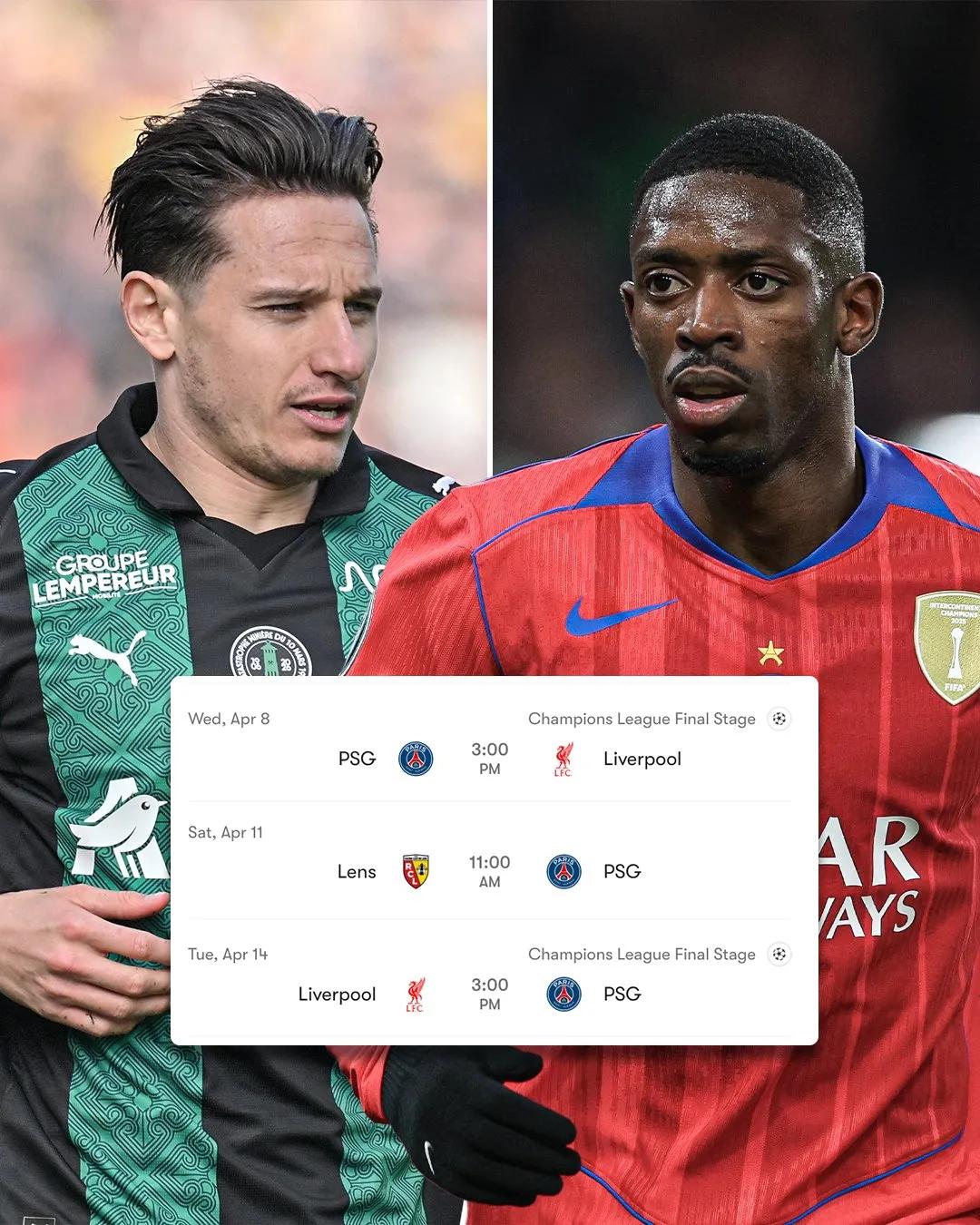
Therefore, the French League approved PSG's rescheduling request citing protection of Champions League teams, but clearly harmed Lens's interests. Moreover, under the rules, Lens could not oppose this postponement.
So, why did the French League so blatantly "protect" PSG while "ignoring" Lens's legitimate rights? The real reason is that Ligue 1, as one of Europe's top five leagues, must "safeguard" its clubs in European competitions. Indeed, the French League's schedule adjustments for European teams extend beyond PSG, including Strasbourg participating in the Europa Conference League.
The current importance of European competitions for league competitiveness and economic gains has escalated to a "survival" level for Ligue 1 to maintain its "top five league" status. PSG's sporting advisor Campos addressed this, stating it benefits not just PSG but French football's survival. Besides securing Ligue 1's Champions League spots and top-five league standing, it also aids French national team selection. The Champions League is a primary criterion for French team selection; in March, 18 of the 25-man squad had Champions League experience, with five from PSG and Monaco, Ligue 1's Champions League teams. Champions League players, with higher competitive levels, have greater competitiveness for national team spots than Ligue 1 players.
More importantly, each advancement by PSG in the Champions League is crucial for preserving Ligue 1's top-five league status, Champions League spots, and Champions League revenue.
Ligue 1 has recently lost broadcasters like Canal+, Mediapro, Amazon, and DAZN. The French League launched its own paid platform Ligue 1+, with domestic broadcast revenue this season only €142 million and overseas revenue €150 million, totaling under €300 million. Meanwhile, Premier League broadcast revenue is €44 billion, La Liga €19 billion, Bundesliga €13.6 billion, Serie A €11.5 billion. Ligue 1 is far behind the other four major leagues. Its domestic broadcast revenue (€142 million) even trails Portugal's Primeira Liga (€182 million) and Turkey's Süper Lig (€158 million), comparable to the Dutch Eredivisie (€135 million).
Ligue 1 urgently needs continuous European success to attract new broadcasters and save the league. It also must earn more European points to maintain its "top five league" status.
So far this season, Ligue 1's total European points are 81.569, leading Portugal's sixth place by 10.003 points. Starting next season, European points over five consecutive seasons will determine European spots for the 2028/29 season. Ligue 1's current "starting" total points are 63.153, with its lead over Portugal (58.65 points) shrinking to 4.503 points. If Ligue 1 teams perform poorly in Europe this season, they could lose their "top five league" status as early as 2028/29, reducing Champions League spots from four to three. For Ligue 1, facing a cliff-like drop in domestic broadcast revenue and needing European prize money and broadcast income to cover deficits, this would be a severe blow.

Thus, from the French League's perspective, even if Lens unexpectedly win the title, it would be a surprise for the league or French professional football, but not a tangible gift. A more harsh view is that even if Lens win, their core squad would soon be dismantled, unable to earn European points for Ligue 1 next season. If PSG, distracted by the Ligue 1 title race with Lens, falters in the two matches against Liverpool, Ligue 1's European points would truly suffer. Hence, the French League's decision to postpone such a critical match date.
The French League's move clearly favors European teams, but external criticism hasn't stopped them from making this choice. Beyond fairness debates, this emphasis on European competitions deserves our careful reflection.
Compared to Ligue 1's European "survival crisis," the Chinese Super League's "AFC Champions League crisis" is more urgent and severe. Note that Ligue 1 might only lose one Champions League spot, while the CSL faces the risk of not even qualifying for the AFC Champions League Elite. Unfortunately, neither league management nor clubs seem to have a real sense of crisis regarding the CSL's diminishing AFC Champions League spots.
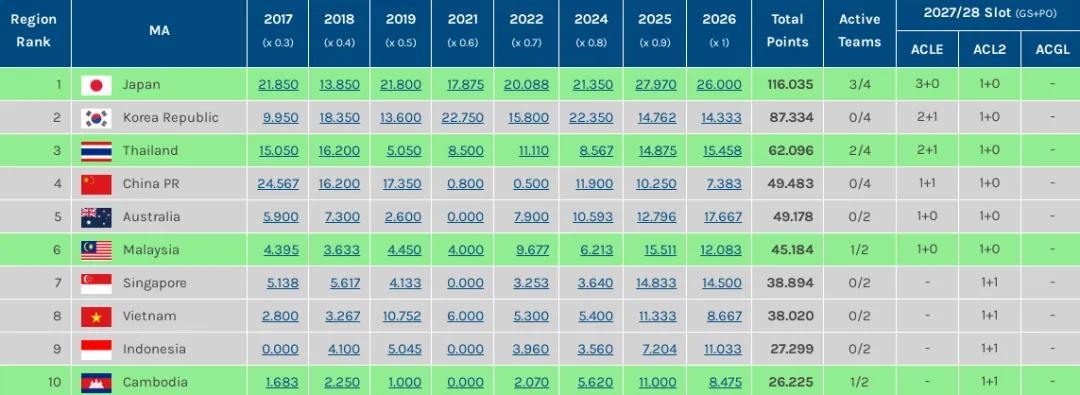
Once East Asia's "third league" capable of competing with Japan and South Korea, the CSL's status has repeatedly declined due to plummeting "Asian competition" results. By 2028, Ligue 1 might only lose its "top five league" status and one Champions League spot, but the CSL could completely miss the AFC Champions League Elite, falling out of East Asia's top six rankings.
The decline in league status may not directly affect CSL's commercial recruitment short-term, but Chinese teams and most national team players would realistically lose training opportunities in the AFC Champions League.
Shao Jiayi's national team recorded one win and one loss recently. Upon disbanding, he explicitly stated CSL matches need higher intensity and faster pace. However, similar to high-quality national team friendlies, the AFC Champions League is another top-tier competition where national team players face high-level Asian opponents, accumulating major tournament experience and enhancing personal abilities. With active participation in FIFA Series matches and various age-group national teams engaging in high-quality friendlies, the quality of national team matches is gradually assured. But neglecting the importance of AFC Champions League Elite opportunities, national team players might again face insufficient high-quality matches.
As the quality and intensity of national team competitions gradually improve, will the warning from Ligue 1 make the CSL realize: high-level AFC Champions League Elite spots must also be pursued and preserved?


Wonderfulshortvideo
Mbappe injury mbappe surgery real madrid 0-1 getafe mbappe return date mbappe edit


tottenham relegation tottenham relegated
Rodrygo ACL tear acl injury rodrygo injury real madrid 0-1 getafe
Great defending from Rüdiger 👏
Ganglion cyst removed
max dowman highlights today max downman vs mansfield town arsenal 2-1 mansfield town
User SportScoop has posted a video.
 Links
Links
 Contact
Address:UNIT 1804 SOUTH BANK TOWER, 55 UPPER GROUND,LONDON ENGLAND SE1 9E
Number:+85259695367
E-mali:[email protected]
 App
App


