



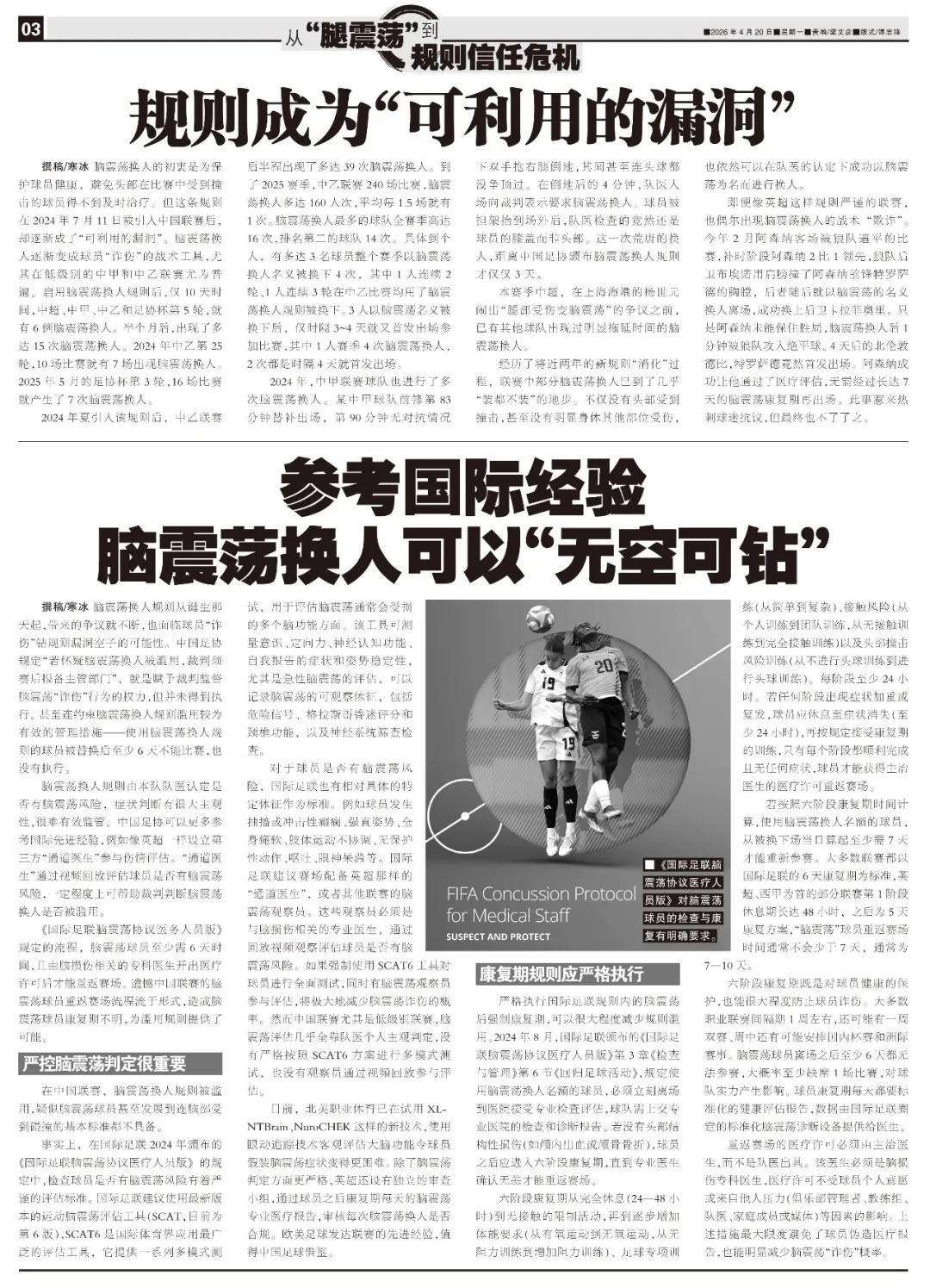
How to prevent abuse of the "concussion substitution" rule? These international experiences can serve as references.



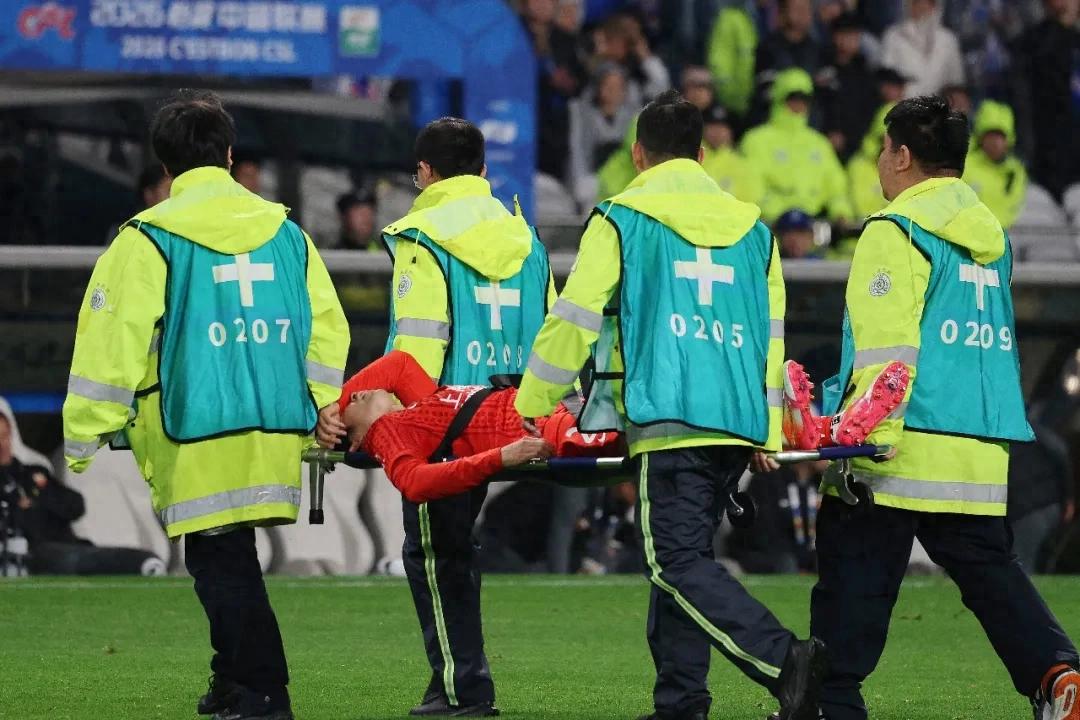
Written by Han Bing Since its inception, the concussion substitution rule has been fraught with controversy and faces the possibility of players exploiting loopholes by feigning injuries. The Chinese Football Association stipulates that "if suspected abuse of concussion substitutions occurs, referees must report to the governing department post-match," granting referees the authority to monitor potential "fake injury" behavior, yet this has not been enforced. Even the relatively effective management measure to curb abuse—requiring players substituted under the concussion rule to be sidelined for at least six days—has not been implemented.
The concussion substitution rule relies on team doctors to assess concussion risk, with symptom judgment being highly subjective and difficult to effectively supervise. The Chinese Football Association could draw more from international best practices, such as adopting the Premier League's model of involving third-party "tunnel doctors" in injury assessment. "Tunnel doctors" evaluate players' concussion risk via video replay, aiding referees in determining potential abuse of the rule.
According to the procedures outlined in the FIFA Concussion Protocol Medical Personnel Edition, concussed players require at least six days and must obtain medical clearance from a specialist doctor in brain injury before returning to play. Unfortunately, in Chinese leagues, the return-to-play process for concussed players is often superficial, leading to unclear recovery periods and creating opportunities for rule abuse.

In Chinese leagues, the concussion substitution rule is abused, with suspected concussed players sometimes lacking even the basic criterion of head impact.
In fact, the FIFA Concussion Protocol Medical Personnel Edition issued in 2024 provides rigorous assessment standards for evaluating concussion risk. FIFA recommends using the latest version of the Sport Concussion Assessment Tool (SCAT, currently version 6). SCAT6 is the most widely used assessment tool internationally, offering a series of multimodal tests to evaluate various brain functions typically impaired by concussion. It measures consciousness, orientation, neurocognitive function, self-reported symptoms, and postural stability, particularly for acute concussion assessment, recording observable signs including danger signals, Glasgow Coma Scale scores, cervical function, and neurological screening.
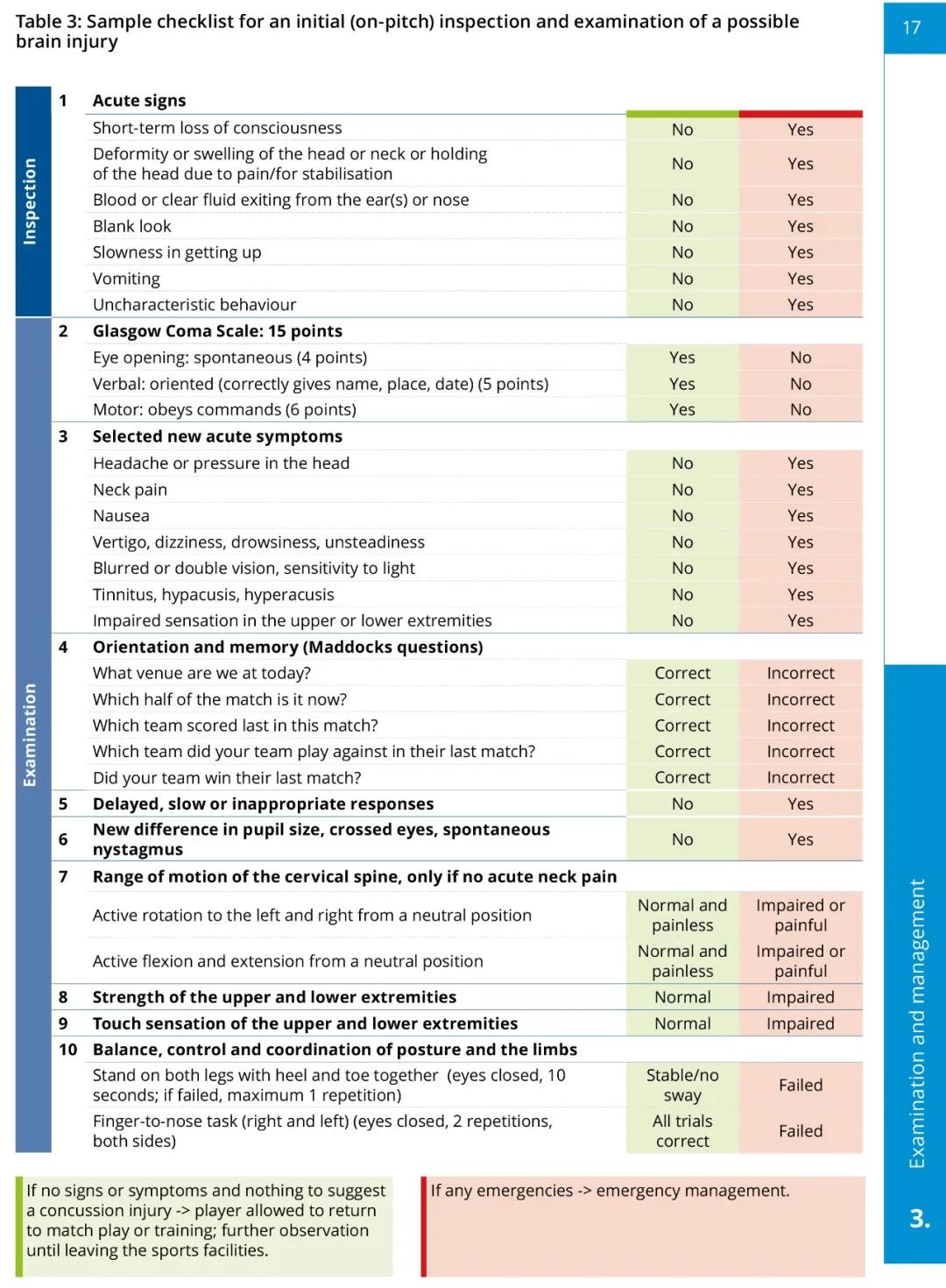
FIFA also specifies relatively concrete signs as criteria for concussion risk, such as seizures or impact epilepsy, tonic posturing, generalized limpness, incoordination of limb movements, lack of protective actions, vomiting, or vacant stare. FIFA recommends having "tunnel doctors" like in the Premier League or concussion observers in other leagues. These observers must be specialist doctors in brain injury, assessing players via video replay. Mandating comprehensive testing with SCAT6 alongside concussion observers would greatly reduce the likelihood of feigned injuries. However, in Chinese leagues, especially lower tiers, concussion assessment relies heavily on team doctors' subjective judgment, without strict multimodal testing per SCAT6 or observer involvement via video replay.
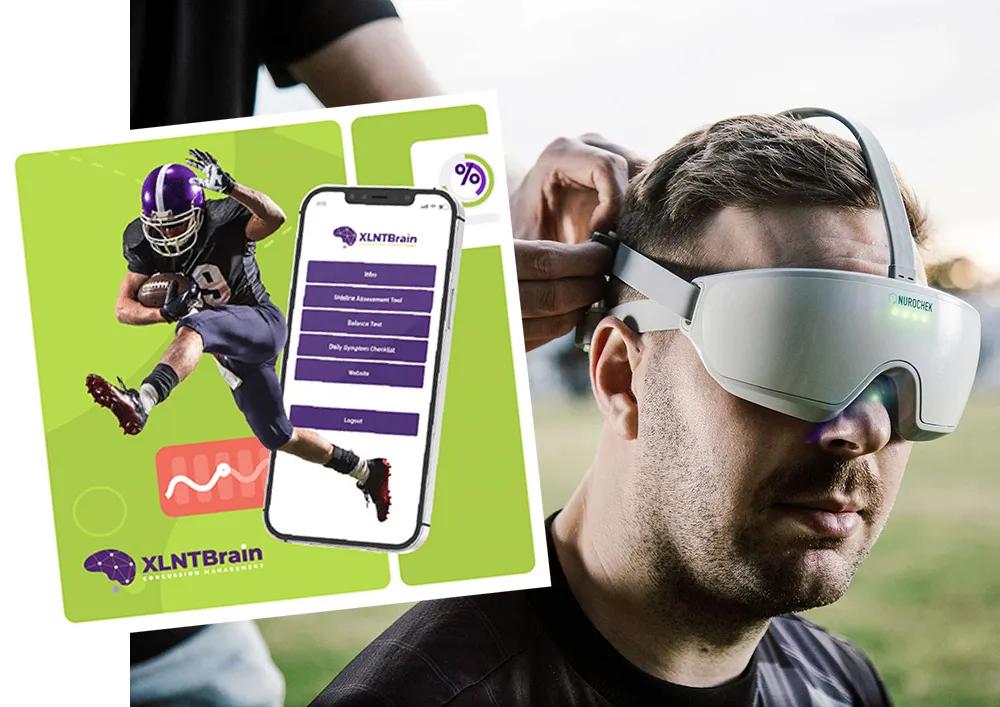
Currently, North American professional sports are trialing new technologies like XLNTBrain and NuroCHEK, using eye-tracking to objectively assess brain function, making it harder for players to fake concussion symptoms. Beyond stricter concussion determination, the Premier League also has an independent review panel examining daily specialized medical reports during recovery to verify compliance of each concussion substitution. Advanced experiences from developed football leagues in Europe and America are worth learning from for Chinese football.

Strictly enforcing the mandatory recovery period post-concussion within FIFA rules can significantly reduce abuse. In August 2024, FIFA's Concussion Protocol Medical Personnel Edition Chapter 3 "Examination and Management" Section 6 "Return to Football Activities" stipulates that players using concussion substitutions must immediately leave for hospital assessment, with teams submitting professional examination and diagnostic reports. If no structural head injury (e.g., intracranial hemorrhage or skull fracture) exists, players enter a six-stage recovery period until cleared by a specialist doctor.
The six-stage recovery period ranges from complete rest (24–48 hours) to restricted non-contact activity, then gradually increasing physical demands (from aerobic to anaerobic exercise, from no-resistance to resistance training), football-specific training (simple to complex), contact risk (individual to team training, non-contact to full-contact), and head impact risk training (no heading to heading). Each stage lasts at least 24 hours. If symptoms worsen or recur at any stage, players rest until symptoms disappear (minimum 24 hours) before resuming the recovery training. Only after completing each stage symptom-free can players obtain medical clearance from the attending doctor to return.
Calculating based on the six-stage recovery period, players substituted under concussion rules require at least seven days from substitution to return. Most leagues adopt FIFA's six-day recovery standard; leagues like the Premier League and La Liga have a 48-hour initial rest period followed by a five-day recovery plan, typically resulting in a return time of 7–10 days.
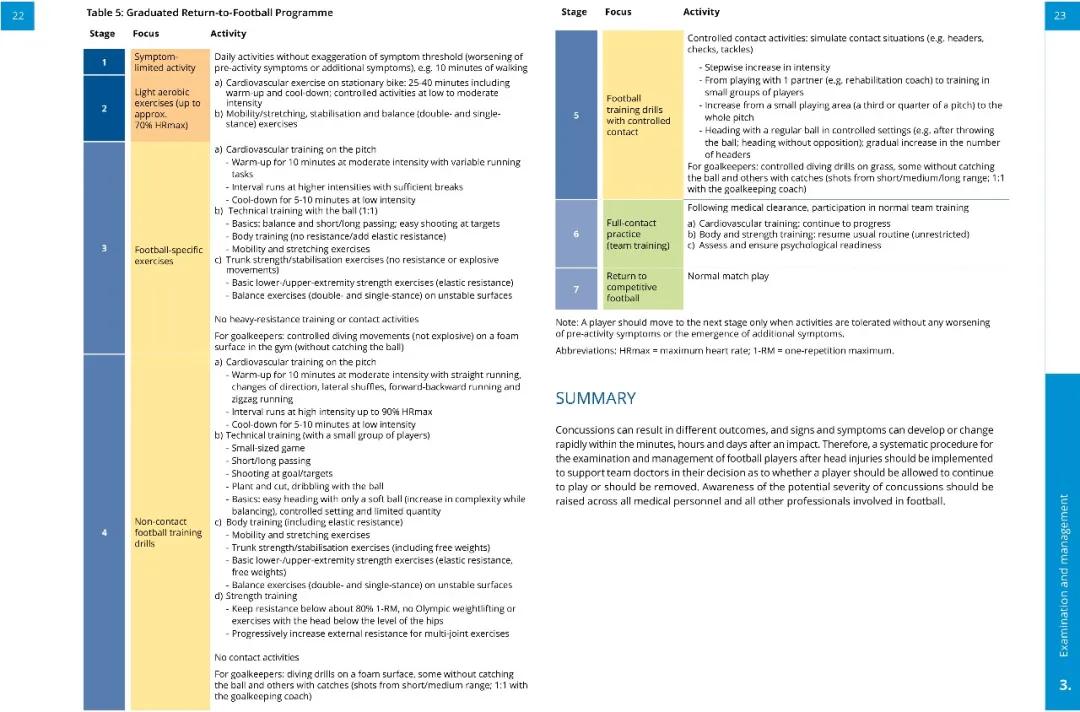
The six-stage recovery period protects player health and largely prevents feigned injuries. Most professional leagues have intervals around one week, possibly with double-week matches and midweek domestic cup or continental fixtures. Concussed players sidelined for at least six days likely miss at least one match, affecting team strength. Daily standardized health assessment reports during recovery are provided by FIFA-approved standardized concussion diagnostic devices to doctors.
Medical clearance for return must be issued by the attending doctor, not the team doctor. This doctor must be a brain injury specialist, and the clearance must be unaffected by player preference or external pressures (club management, coaching staff, team doctors, family, or media). These measures minimize forged medical reports and significantly reduce the probability of "fake injury" concussions.


Wonderfulshortvideo

Struggling to stay under my salary cap on @CLUB


User PANDATV has posted a video.
“Whistles are sick!”
This was absolute carnage 🤣

Who does Roy Keane think should win the Ballon d'Or tonight? 🔊🏆
carrick sacked today carrick sacked carrick interview buno fernandes interview manchester united 0-3 bournemouth

2️⃣0️⃣0️⃣
 Links
Links
 Contact
 App
App