



World Cup 2026: A multitude of concerns ahead of the opening day



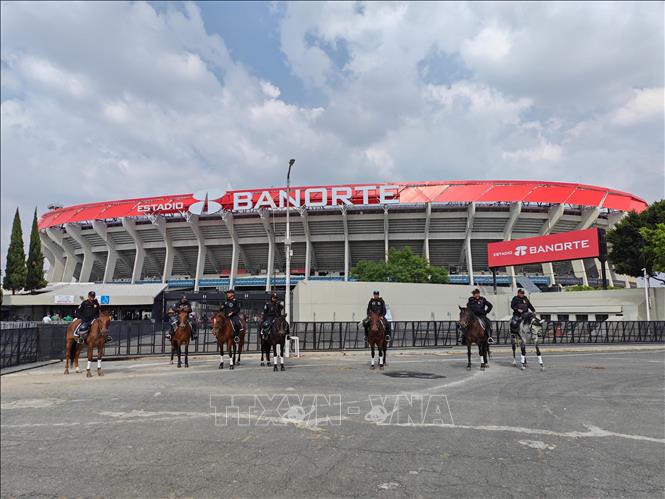
This marks the first time since 2002 that the World Cup has multiple host countries. Mexico will host the opening match on June 11 between Mexico and South Africa at the Azteca stadium in Mexico City, while the final is scheduled for July 19 at MetLife Stadium in East Rutherford, New Jersey, USA.
Argentina is the reigning world champion after defeating France in the dramatic 2022 final and aims to become the first team to successfully defend the title since Brazil's achievement in 1958 and 1962.
This Summer World Cup has been prepared for a decade. However, as the opening day approaches, the unexpected convergence of numerous threats—from labor disputes, high ticket prices, geopolitical instability to cultural-political issues promoted by President Donald Trump—is turning this event into a nationwide test for the organizing authorities.
For cities and states that competed for years to win hosting rights, the economic equation—costs and organizational efficiency—is now entirely different from 2018, when FIFA awarded hosting rights to the U.S., Canada, and Mexico. Instead of becoming a moment of glory on the international stage, the World Cup has become a test of local risks in hosting a major event amid global uncertainty.
The World Football Federation (FIFA) predicts that the expanded tournament from 32 to 48 teams will be an "economic engine" generating over $11 billion in revenue, compared to approximately $3.75 billion in costs. However, local authorities worry that FIFA's restrictions on independent fundraising leave American citizens bearing the costs.
Some cities are seeking new revenue through special taxes and fees, as well as raising train ticket prices. Politicians also criticize the high ticket prices set by FIFA, arguing that this has led to lower-than-expected hotel bookings across North America.
Issues such as stadium progress, security, ticket distribution, and the risk of fan violence often arise before major sporting events. But this time, the success of the World Cup is directly tied to daily political developments before the tournament begins.
In Inglewood, California, where the U.S. team will play two matches, SoFi stadium workers threaten to strike due to concerns about the presence of U.S. Immigration and Customs Enforcement (ICE). In Texas, Governor Greg Abbott's office warns it will cut public security funding for Houston due to disputes over ICE-related policies. In Mexico, gang violence in Guadalajara following the death of a drug lord increases instability.
Growing concerns ahead of the tournament
The situation could worsen before the opening match on June 11. President Donald Trump's immigration policies heighten concerns about travel and fan attendance. The conflict with Iran also raises questions about whether the Iranian team will participate, despite their early qualification.
FIFA asserts the tournament will be successful, forecasting a total global economic impact exceeding $80 billion and attracting around 6 billion interactions. According to FIFA spokesperson Bryan Swanson, "this will be the planet's biggest showcase."
Los Angeles and the New York area may face the greatest impact as they host key matches and serve as international air gateways. New York Mayor Zohran Mamdani stated the city aims to ensure the tournament runs smoothly, avoiding overcrowding.
In Los Angeles, labor disputes continue to escalate at SoFi stadium, while unions demand guarantees that ICE personnel will not be involved in World Cup security.
Financial and ticket instability
The U.S. federal government has committed over $625 million for security support, plus more than $100 million for public transportation. However, total costs for each host city could reach $100–200 million.
Some concerns also arise about lower-than-expected tourist numbers. FIFA had to cancel thousands of pre-booked hotel rooms due to lower demand than forecasted in some cities.
Nevertheless, some experts argue that major events often have an initial quiet phase and will surge as the tournament nears. Many U.S. politicians criticize high ticket prices, with some matches reaching $1,000 and over $10,000 for the final. FIFA states that cheaper options remain available and revenue is reinvested in global football.


Wonderfulshortvideo
harry kane ballon d’or speech harry kane interview harry kane acceptance harry kane instagram



Struggling to stay under my salary cap on @CLUB

User PANDATV has posted a video.

“Whistles are sick!”

This was absolute carnage 🤣

Who does Roy Keane think should win the Ballon d'Or tonight? 🔊🏆
carrick sacked today carrick sacked carrick interview buno fernandes interview manchester united 0-3 bournemouth
 Links
Links
 Contact
 App
App