



After Carrick took over, one Manchester United player has regressed rather than progressed! Fighting for the future, signing a new striker could lead to losing favor.


Even though fans stress that goals and assists alone don't define a player, Amad Diallo's last goal for Manchester United has indeed been far too long. It was on December 15th in the 4-4 tie with Bournemouth, almost five months back.
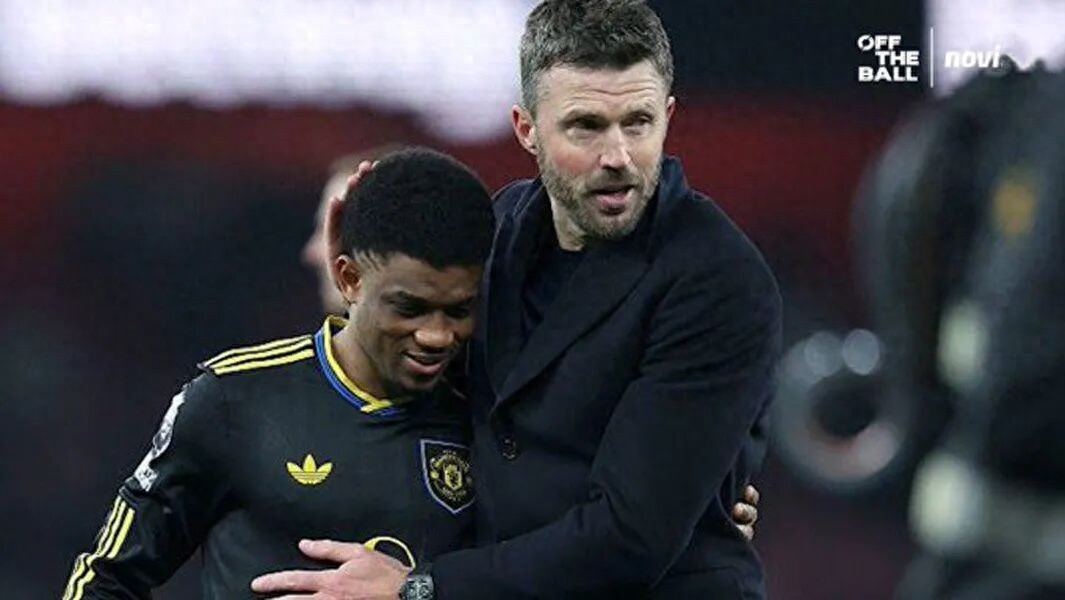
The next day after the game, he departed for the Africa Cup of Nations to play for Ivory Coast. When he returned, Manchester United's manager had changed: Ruben Amorim was dismissed, Carrick took over, and the formation shifted from 343 back to 4231.
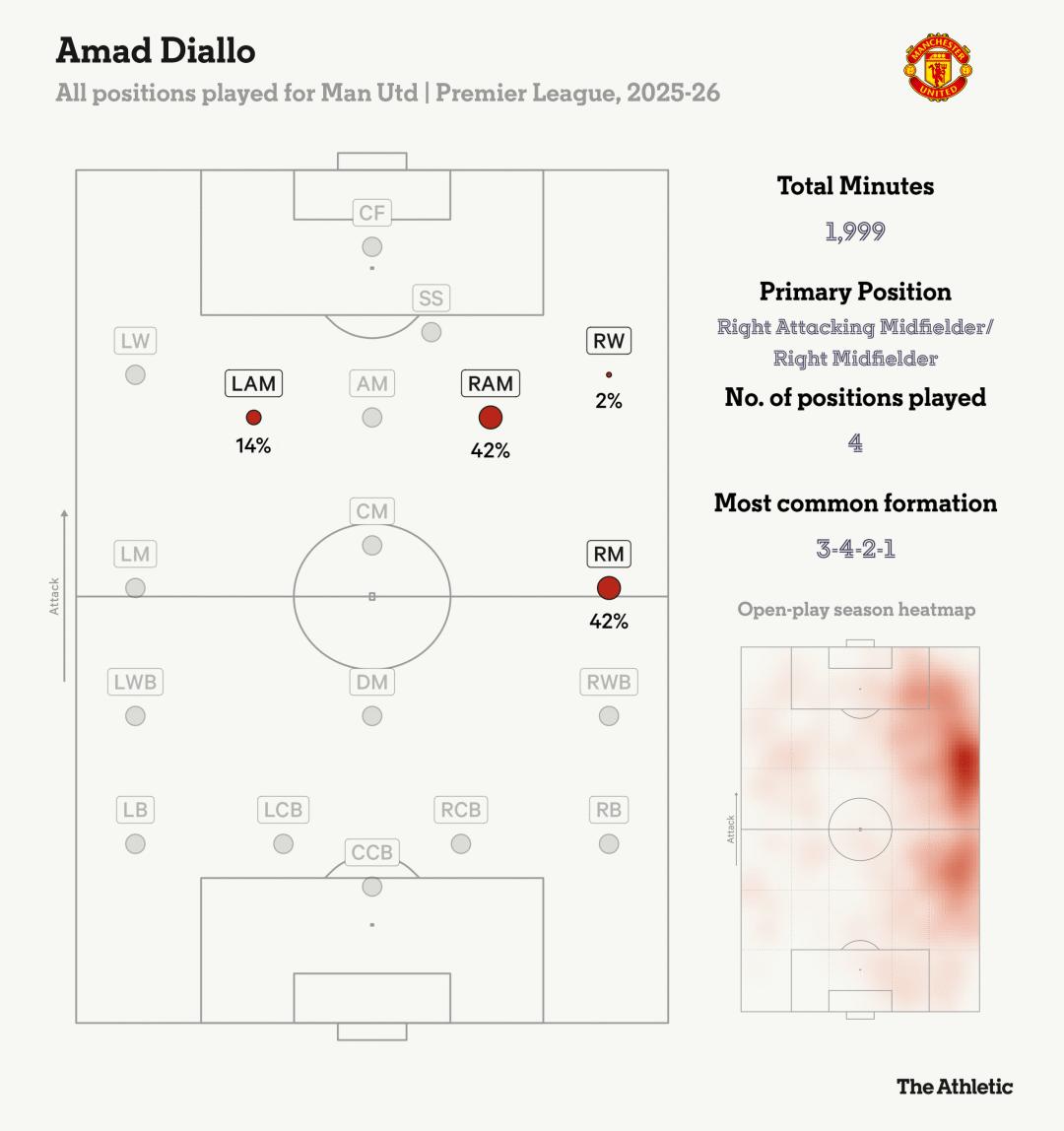
During Amorim's tenure, Amad had adapted to playing more as a wing-back. Carrick pushed his position forward; theoretically, he should contribute more goals and assists, but at least so far, that hasn't happened.
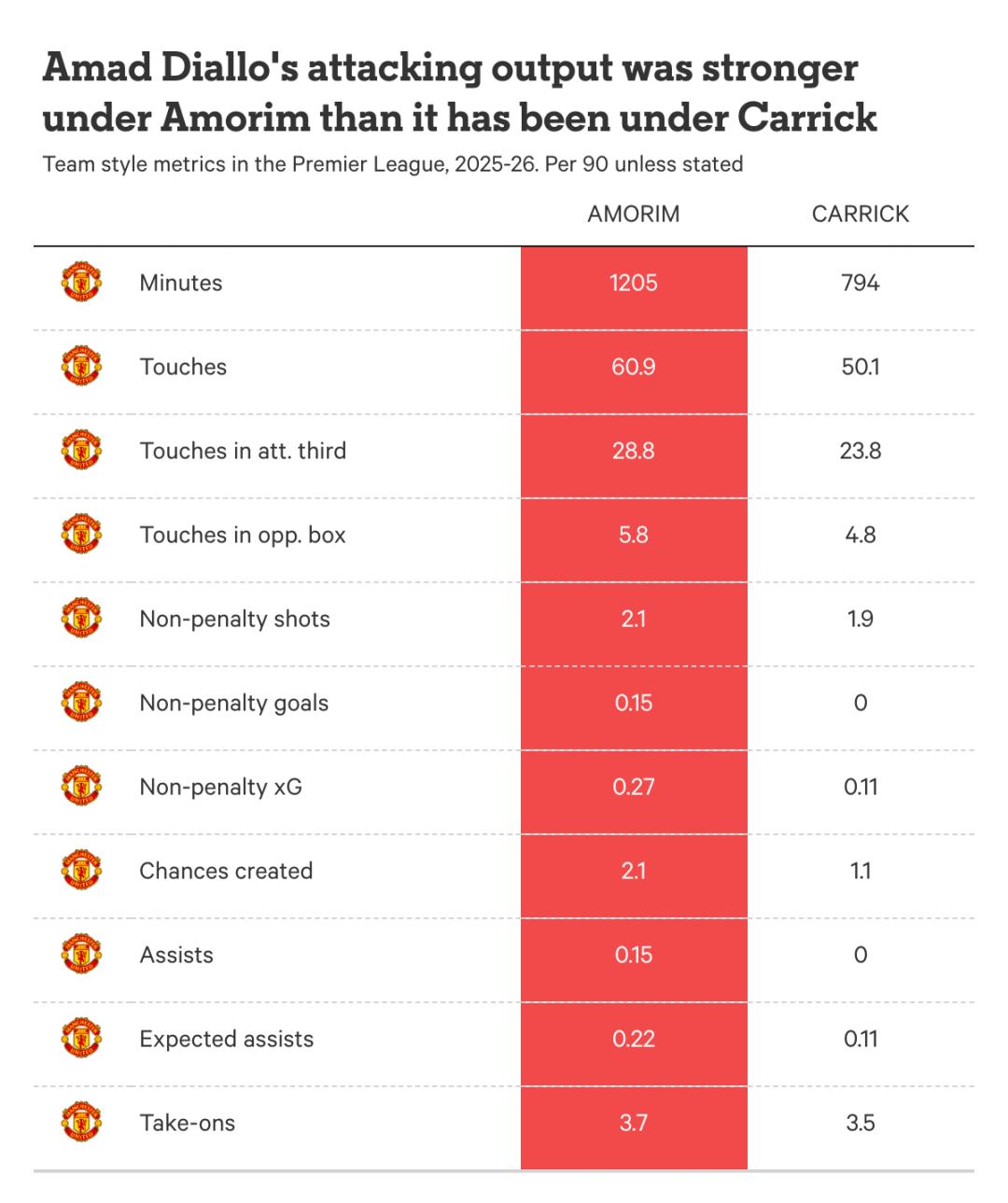
Amad started 9 out of 12 matches under Carrick, playing 794 minutes, yet still has zero goals and zero assists. His last assist for Manchester United is even more distant, dating back to last November's away match against Tottenham.
This season, Amad's statistics have been unimpressive overall: two goals and two assists. For a player who scored 8 goals and provided 6 assists in the Premier League last season, this marks a clear decline.
Since Carrick replaced Amorim, he is one of the few Manchester United players whose numbers haven't improved. Within the squad, his goal tally is lower than Patrick Doku, who switched from full-back to winger, and his assists are fewer than right-back Diogo Dalot.
Now, Amad's starting position is no longer secure. Last weekend against Chelsea, Carrick opted to bring Mbeumo back to the right flank, with Sesko as center forward, leaving Amad on the bench for 80 minutes.
Monday night's home game against Brentford will pose a question over Manchester United's forward selection, but judging by the stats, it wouldn't be surprising if Amad remains a substitute. He is among the attackers with the fewest goals, even fewer than Mason Mount.
Amad's future at Manchester United is not in doubt, especially if the club returns to the Champions League, as rotation forwards will be needed next season. However, Amad clearly won't be content with a backup role; he needs to produce more to secure his place.
Particularly if Carrick is confirmed as permanent manager and if Manchester United buys a new striker, given the current situation, Amad would certainly be just a substitute. His strength is high pressing in attack, but without greater involvement in goals, he doesn't merit a starting spot.
Reports indicate Amad hasn't become discouraged by his form; he has remained proactive at Carrington in recent weeks. Carrick and the coaching staff value his work rate, as effort is one of Manchester United's traditional virtues.
Amad's defensive contributions could be a tactical asset in some matches, especially against strong teams; he has made 15 interceptions this season, up from 11 last season. But the data clearly shows that despite his more advanced position, his offensive threat has diminished.
Comparing Amad under Amorim and under Carrick, by every metric, his performance was better under the former manager's system. Yet, perhaps this isn't surprising.
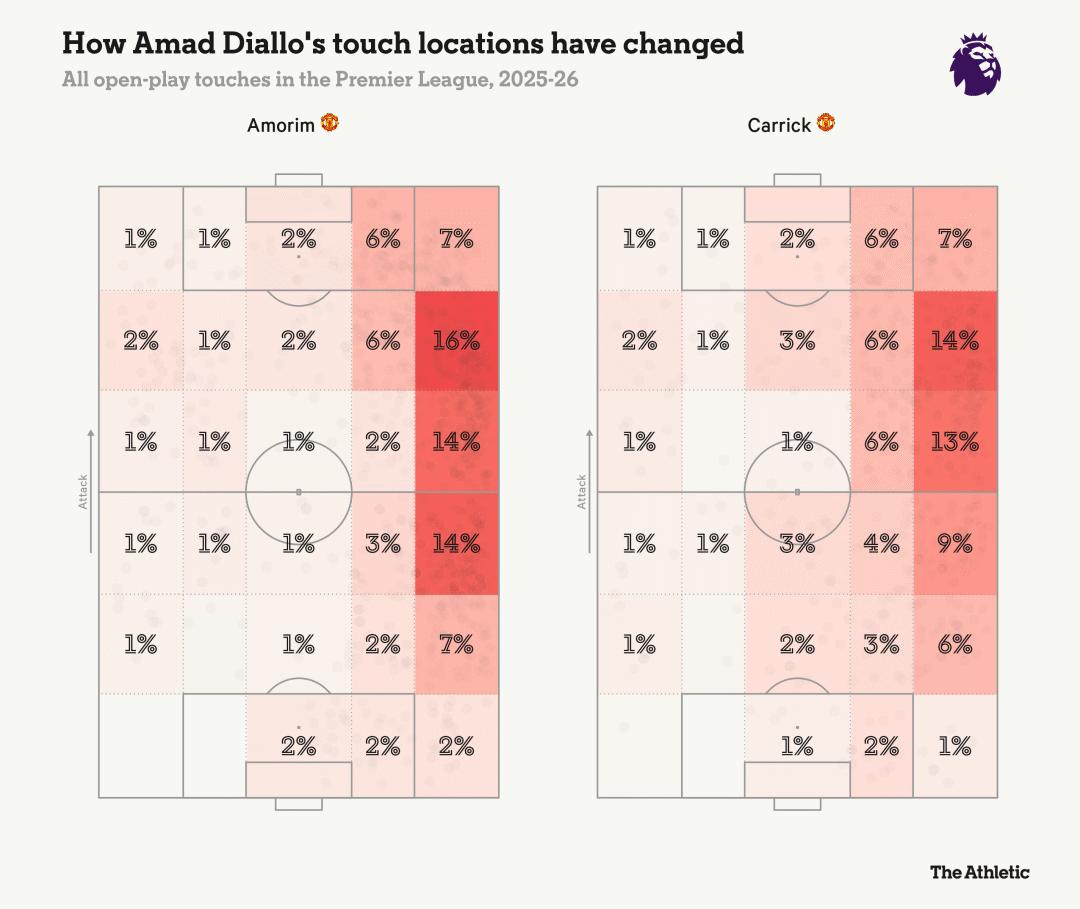
Amorim's system relied on wing-backs to initiate attacks, allowing Amad to receive the ball more, have space to accelerate, making him hard to defend against, thus creating more passing opportunities. Additionally, there were more attacking players ahead of him.
At that time, Amad and Mbeimo on the right flank were considered to have good synergy. In fact, both his assists were passes to Mbeimo, the first assist coming in the 2-1 win against Liverpool at Anfield.
When Mbeimo played as right winger and Amad as wing-back, opponents naturally focused more on the winger, giving Amad more room to operate. Now, Amad's position is more advanced, but he also has to face defenders directly.
Even Amad's supporters must acknowledge that his passing, shooting, and decision-making aren't as strong as his dribbling and ball control. Especially in crowded areas near the box, he must make quicker and better choices.
Now, Bruno Fernandes has returned to the number 10 role, leading the team's organization; Manchester United更需要 attackers with excellent movement and efficient chance conversion. Amad must improve and adapt again.

Manchester United have 5 matches left this season; Amad's 1999 minutes of playtime already exceed last season's 1903 minutes. But his presence in the box has dropped: 119 touches inside the penalty area, a significant decrease from 152 last season.
Being versatile is a trait coaches appreciate, but it doesn't help a player become an undisputed starter. Manchester United's coaches seem unconcerned about Amad's declining goal involvement stats, but that's not good for him—it suggests he isn't relied upon heavily.
The arrivals of Mbeimo, Cunha, and Sesko will certainly claim more attacking opportunities. Amad still has chances because other Manchester United forwards aren't top-tier in efficiency either. Mbeimo hasn't contributed to a goal since February 23rd; Sesko hasn't scored since March 15th; Cunha's goal against Chelsea was only his second since February.
Casemiro, who is set to leave this summer, has filled the gap in goal tally; he has 8 goals in the Premier League, equal with Cunha and B. Fernandes, just one behind Sesko and Mbeimo.
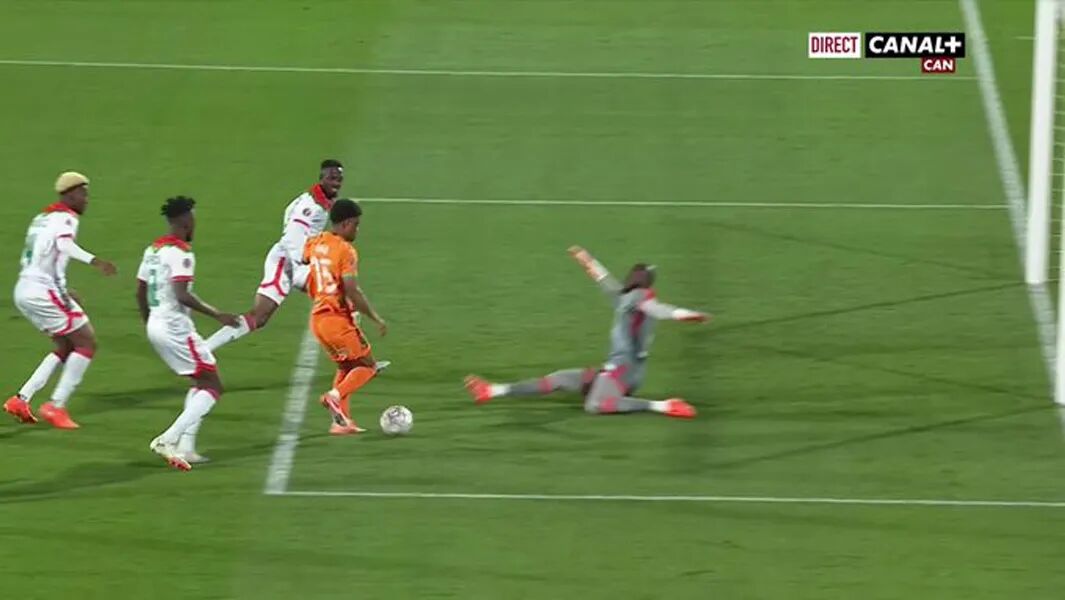
In recent weeks, Manchester United's attack has almost evolved into relying solely on B. Fernandes's assists. If Amad steps up, he has an opportunity to change his fate once again.


Wonderfulshortvideo
So hard to defend against 👏


No better way to start your day 🥶🥶
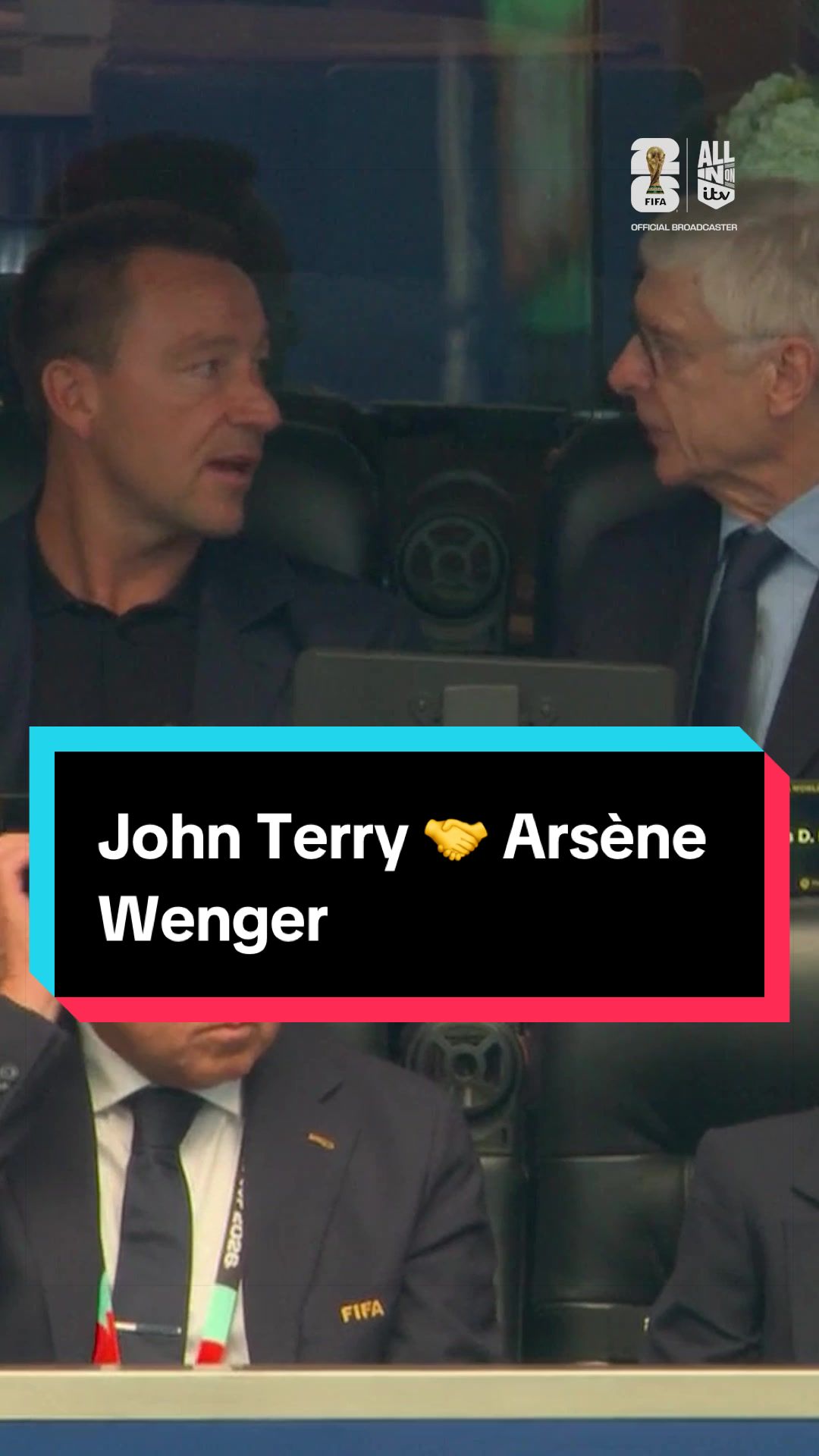
What are John Terry and Arsène Wenger chatting about here? 💭
"It's magic - it's magic, football, sometimes" ✨
"He is without doubt ELITE!" 🙌

america world cup usmnt pulisic goal today america goal usa world cup highlights balogun goal today

messi hat trick messi goal today messi highlights vs algeria argentina vs algeria highlights messi ig story ig post messi interview
 Links
Links
 Contact
 App
App


