



Shaanxi United: Feeling the VAR Urgency Due to Personal Pain



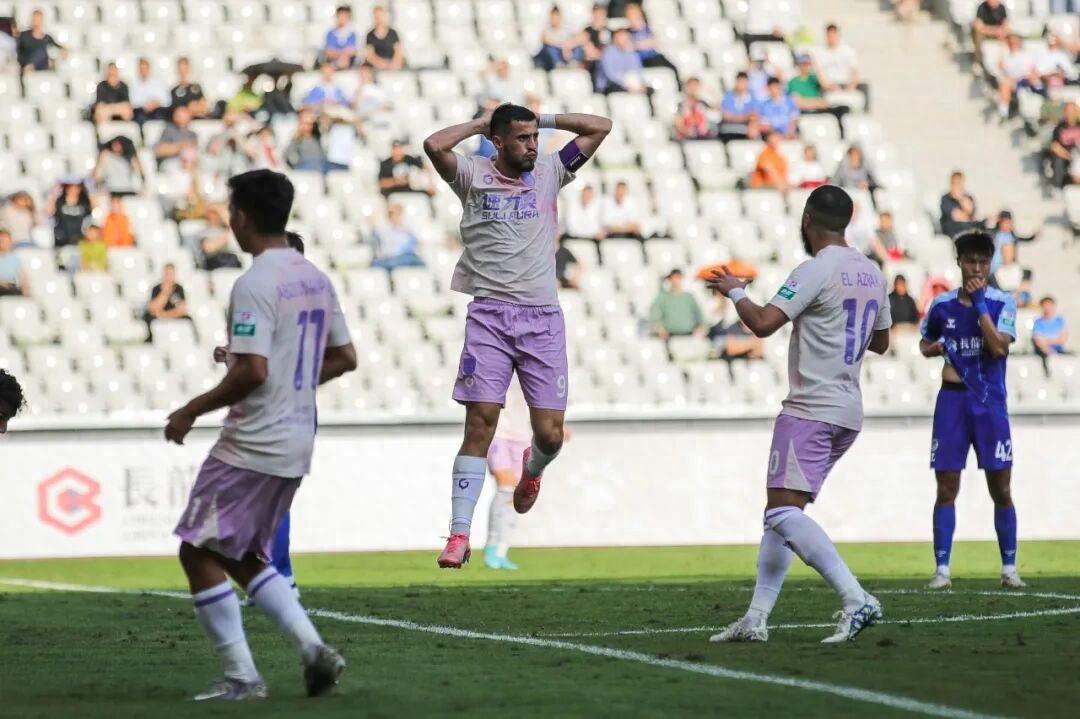
Journalist Lu Mi reports In professional football, the accuracy of refereeing decisions directly impacts competition fairness and team fate. The China League One, as China's second-tier professional football league, has seen multiple critical misjudgments and missed calls in recent years, affecting league credibility and club development. Taking Shaanxi United as an example, the team encountered two major confirmed misjudgments by the Chinese Football Association in the first five rounds of this season, resulting in two missed penalty calls and two losses. At the start of the league season, their seasonal planning was disrupted and their league ranking dragged down, making the club feel the necessity of fully implementing VAR in League One.

Early in the League One season, Shaanxi United faced controversial refereeing decisions consecutively, all officially confirmed as clear and obvious misjudgments, causing the team to lose crucial points and severely hindering their season's promotion goal.
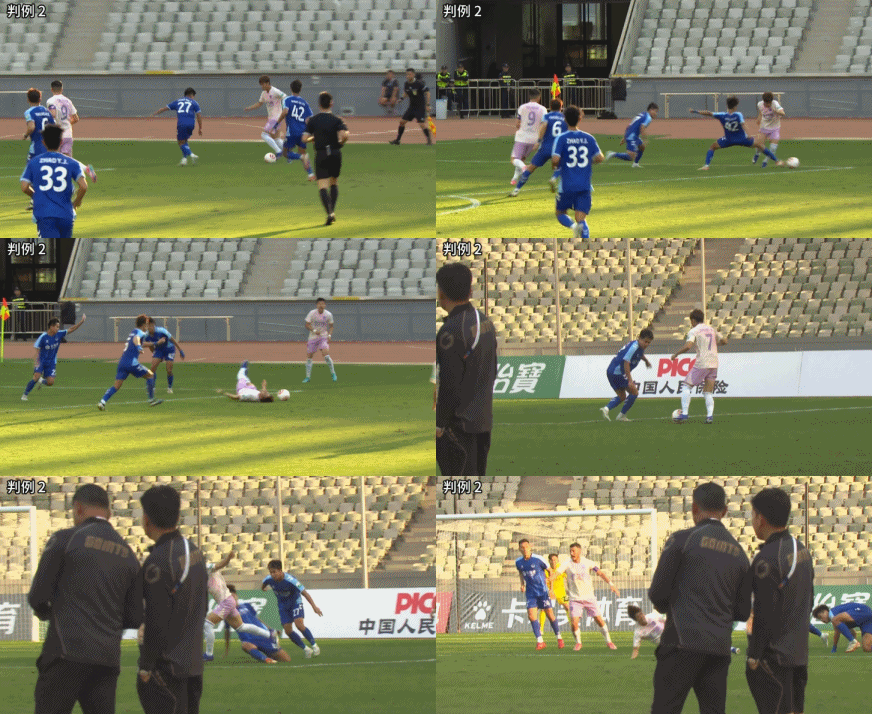
In the first round match between Shenzhen Youth and Shaanxi United, in the 69th minute, Shaanxi United's No.7 player dribbled in the opponent's penalty area, Shenzhen Youth's No.42 player tackled defensively, and Shaanxi United's No.7 fell. The referee judged Shaanxi United's No.7 as simulating (diving) and issued a yellow card. Shaanxi United club appealed, stating: our No.7 dribbled past, the opponent's No.42 tackled foully, we should have been awarded a penalty. For this case, the review panel unanimously agreed: Shenzhen Youth's No.42 player recklessly tripped Shaanxi United's No.7 during the tackle, the contact was clear, Shenzhen Youth's No.42 should have been penalized for foul and a penalty awarded. The referee's decision to call Shaanxi United's No.7 simulating and issue a yellow card was wrong, and missed Shenzhen Youth's No.42 foul and the penalty.
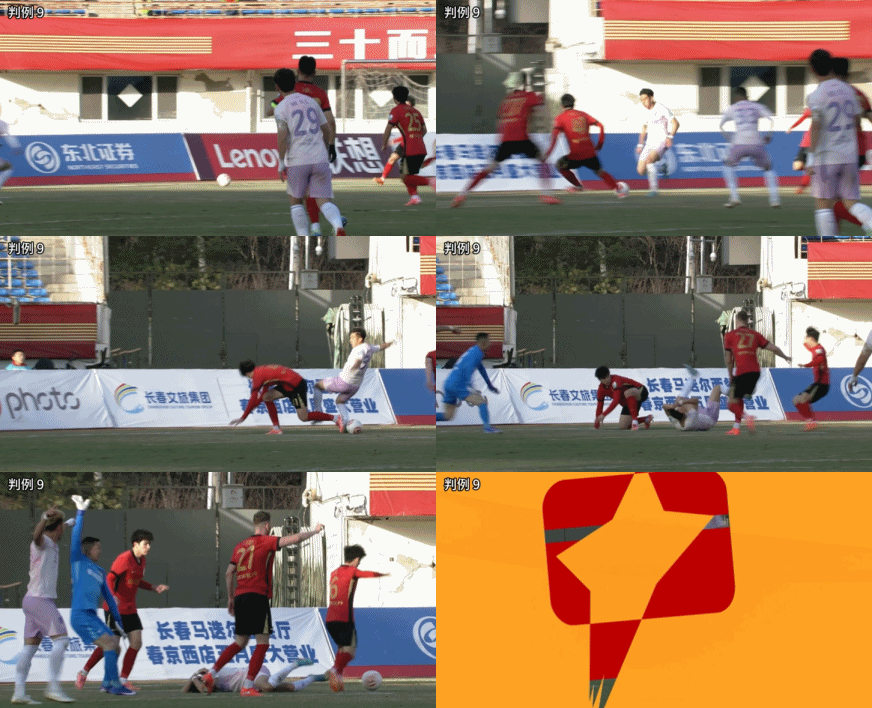
In the 4th round league match, Shaanxi United away against Changchun Yatai, in the 66th minute, a Shaanxi United player fell after contact with an opponent player in the opponent's penalty area during an attack, the referee did not call a foul. Shaanxi United club appealed, stating: the opponent player fouled our player in the penalty area, we should have been awarded a penalty. For this case, the review panel unanimously agreed: Changchun Yatai player recklessly fouled while defending in their own penalty area, tripping the opponent player, a penalty should have been awarded. The referee's decision was wrong, missing Changchun Yatai player's foul and the penalty.
Within just five rounds, Shaanxi United missed two penalties due to two clear misjudgments. These two misjudgments not only cost the team crucial points but also led to the team currently ranking only 11th in League One, far from their season's promotion goal.

Facing consecutive misjudgments, Shaanxi United club did not simply blame but expressed demands rationally and pragmatically, addressing fairness concerns while understanding league operational realities.
The club stated that the team repeatedly encountered fouls in the penalty area but missed penalty calls, key match trajectories were completely altered by controversial decisions, players' hard work was not fairly protected, and fans' enthusiasm was dampened. The core of competitive sports is strength contest, not refereeing games; only by reducing ambiguous controversies can diligent teams have a fair environment. Therefore, the club strongly hopes League One fully implements VAR.
Meanwhile, the club fully understands the practical challenges of fully deploying VAR in League One, such as limited overall league operational costs, insufficient hardware at some home venues, shortage of professional technical personnel, etc., all unavoidable objective constraints, expressing understanding and respect for the difficulties faced by event organizers. The club emphasized that match outcomes can be accepted calmly, the team will focus on improving its own strength, but sincerely hopes relevant departments gradually advance VAR implementation, prioritizing its use in key matches like promotion and relegation clashes, focal events, step by step achieving full coverage, using technology to safeguard fairness.
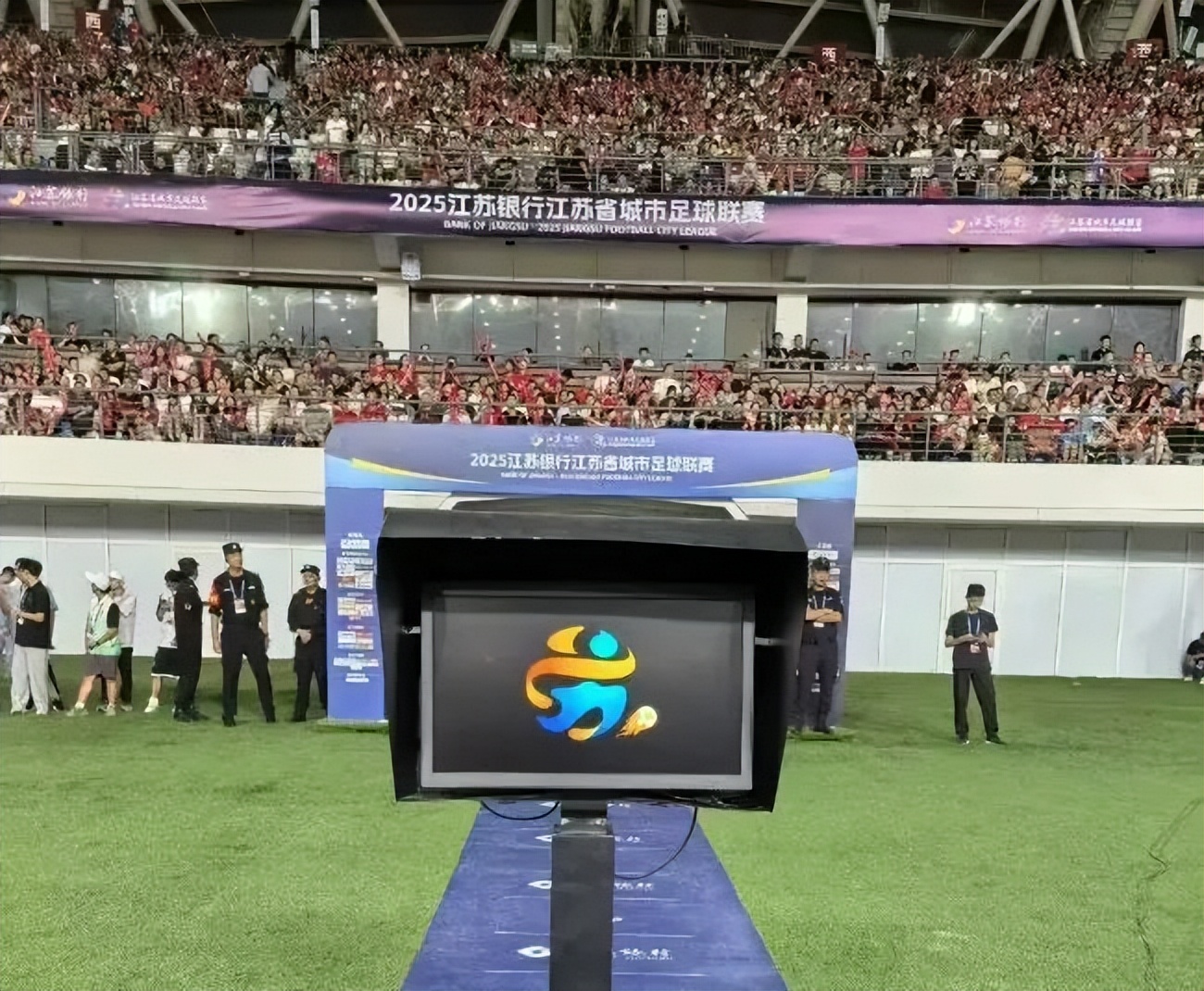
It is noteworthy that Shaanxi United has moved into a professional football stadium this season, with hardware fully meeting VAR installation and operation requirements, possessing basic conditions to host the video assistant referee system, with no venue-level implementation barriers.
Shaanxi United's experience is not isolated but a concentrated reflection of refereeing issues in lower-tier leagues. Fairness is the lifeline of professional leagues; VAR is not a luxury but a safeguard for fairness. Many industry insiders believe implementing VAR is no longer a "whether to" choice but a necessary measure to ensure fairness and promote league upgrading. Currently, the Scottish Premier League, as a major provincial event IP, has fully implemented VAR, proving that secondary leagues even amateur events fully have conditions for VAR full implementation; League One as the second-tier professional league has more necessity and full capability to advance VAR application.


Wonderfulshortvideo
So hard to defend against 👏



No better way to start your day 🥶🥶
What are John Terry and Arsène Wenger chatting about here? 💭

"It's magic - it's magic, football, sometimes" ✨

"He is without doubt ELITE!" 🙌

america world cup usmnt pulisic goal today america goal usa world cup highlights balogun goal today

messi hat trick messi goal today messi highlights vs algeria argentina vs algeria highlights messi ig story ig post messi interview
 Links
Links
 Contact
 App
App


