



The "Crime and Punishment" in the Chinese Super League: Strict and Severe Penalties Lead to an Improved Match Environment



Written by Han Bing At the halfway point of the CSL's first half, the referee evaluations and disciplinary actions, which are widely followed by the public, have improved significantly under the CFA and CFL compared to before. The CFA's referee reviews serve as an important tool to resolve controversial calls, reducing the effect of mistakes as much as possible, and their commitment to fair competition is clear for everyone to see.
Regarding the punishment of serious violations, the CFL has also adopted a strict and severe approach, aiming to clean up the industry's atmosphere and maintain a good match order. They have taken appropriate measures against verbal abuse among players, which was previously difficult to penalize due to evidence challenges. From promptly issuing detailed rules to prevent loopholes like "leg concussion" exploitation, their unprecedented proactive actions deserve recognition.

In the first half of the season, the CFA released nine rounds of referee evaluations, covering a total of 47 controversial calls in the CSL. Among these, 19 incorrect decisions were identified across 17 evaluations, along with one disputed call that was upheld due to unclear VAR and official video evidence. The 19 errors included 7 missed penalty calls, 2 cases where a handball foul was wrongly called before a goal, 2 incorrect decisions on defensive fouls and penalties, and 2 other mistakes involving potential goals. Additionally, there were 5 missed yellow cards and 1 missed red card.
Out of the 16 CSL teams, 10 suffered from incorrect calls. Beijing Guoan was the most affected (5 errors), plus one call upheld due to insufficient video evidence. Tianjin Jinmen Tiger ranked second (4 errors), while Shandong Taishan and Dalian Yingbo each had 2. Henan, Shenzhen Peng City, and Qingdao Hainiu each had one missed penalty call. Zhejiang had one goal wrongly disallowed, and Qingdao West Coast had one incorrect penalty awarded against them for a defensive foul. Among the teams affected, Chengdu Rongcheng had only one error, which was a missed yellow card for an opponent.
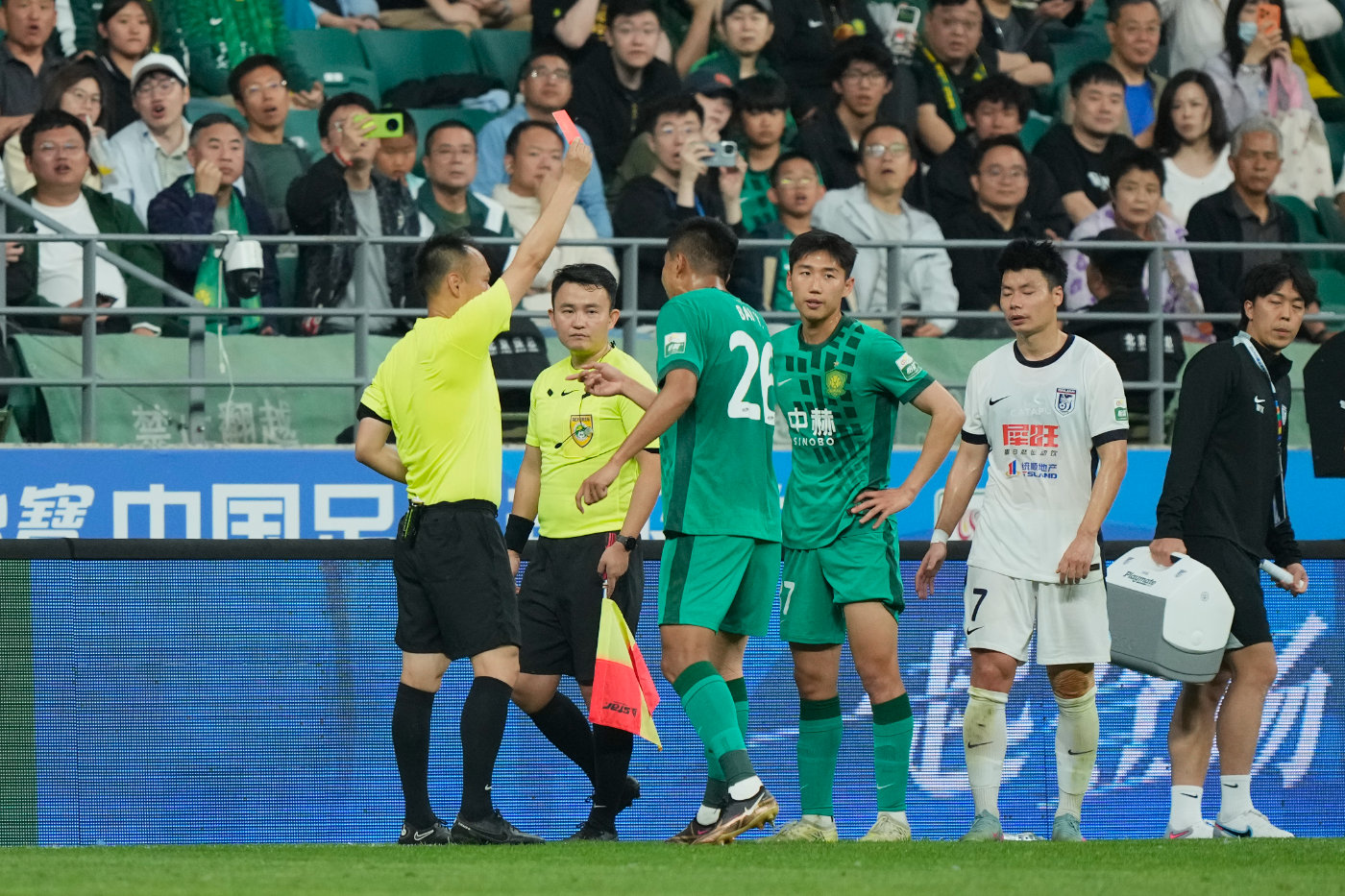
Guoan's five incorrect calls include: in Round 2 away to Taishan, Taishan midfielder Madruga handled the ball in the box, which went unpunished; in Round 4 away to Tieren, in the 58th minute, referee Zhen Wei blew his whistle before the ball crossed the goal line during Guoan's shot, ruling out a goal due to an alleged foul by Cao Yongjing on the opposing goalkeeper. The evaluation concluded that the referee incorrectly judged Cao Yongjing's foul, but because the whistle was blown before the ball crossed the line, VAR could not intervene and the goal could not be confirmed as valid.
In Round 5, Guoan hosted Rongcheng. In the 84th minute, when Guoan conceded a goal, Rongcheng's Liao Lisheng appeared to handle the ball beforehand. The refereeing committee's evaluation group stated that the VAR and official video evidence for the handball were unclear, and unofficial videos from social media and Guoan could not be verified for source and reliability. Ultimately, the goal was upheld. This means Guoan suffered at least one goal, one penalty opportunity, and one potential goal conceded due to incorrect calls.
Additionally, in Round 7, Guoan away to Peng City, Kartsev was not shown a red card when he should have been. Guoan also had two matches where opposing players were not given yellow cards that should have been issued.
Among the incorrect decisions directly related to goals, penalties, and red cards, Tianjin Jinmen Tiger suffered the most with three missed penalties. These three confirmed missed penalties occurred in Round 9 (home against Three Towns), Round 13 (home against Henan), and Round 14 (away to Port). In those three matches, Jinmen Tiger had two draws and one loss; had they received those penalties, the outcomes could have been very different.
The team that "benefited" most from incorrect calls was Three Towns. They escaped two missed penalties that should have been awarded against them, and also gained two penalties from incorrect calls. Additionally, they avoided one yellow card that should have been shown. Other teams that escaped penalties they deserved include Yunnan Yukun, Qingdao West Coast, Henan, Shanghai Port, and Tianjin Jinmen Tiger. However, Beijing Guoan, which suffered the most incorrect calls, did not benefit from any of the evaluated mistakes.

During the first half of the CSL, the CFL issued a total of 14 disciplinary sanctions. These covered various aspects of the game, ranging from the most common on-field violence and verbal abuse to drone interference, spectators throwing objects onto the pitch, and teams being late for matches.
The most frequent penalties were for on-field violent behavior. Five players—Mitritsery (Zhejiang), Ding Haifeng (West Coast), Ampen (Port), Manafa (Shenhua), and Yeboah (Hainiu)—received additional sanctions for violent conduct. Among them, Mitritsery and Yeboah received the heaviest penalties, each suspended for four matches, while Ampen and Manafa were each suspended for three. The CFL's continuous heavy sanctions demonstrate a strict and severe approach intended to deter others.
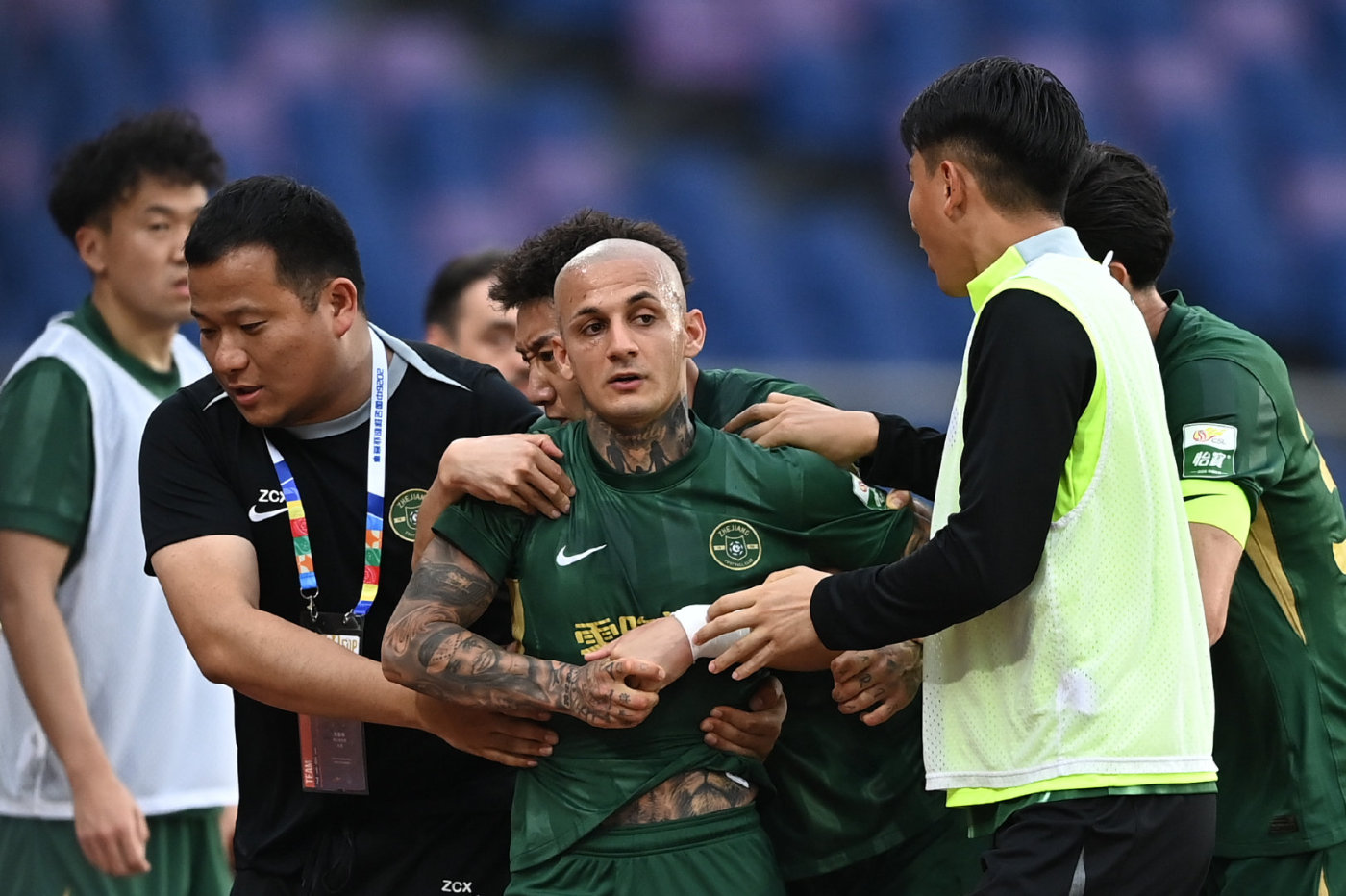
Compared to physical violence, the CFL imposed even heavier penalties for abusing referees and challenging their authority. Du Yu, a club official of Tongliang Long, Xu Ruixuan, a player from Port, and Zheng Zhi, head coach of West Coast, were all punished for insulting referees. Du Yu and Zheng Zhi, being substitutes, received the maximum penalty according to regulations, each banned from entering the stadium for six matches and fined 60,000 yuan. Xu Ruixuan was suspended for five matches, which is the minimum punishment for unsporting behavior toward match officials.
With 14 disciplinary actions, the number is almost equal to the total for the entire previous year, and the severity is also greater. Last year's heaviest penalty was against Guoan's team leader Sui Dongliang, who was banned for five matches after throwing a water bottle toward the referee and continuing to abuse the official after being sent off. West Coast's Zhang Chengdong and Tianjin's Chen Zhexuan were also suspended for five matches for insulting referees.
Compared to last season, the CFL has unified its standards and significantly raised the upper limits of penalties, emphasizing zero tolerance for unsporting behavior on the pitch. The number of sanctions, suspension matches, and fine amounts have all increased substantially. Under the CFL's crackdown, the number of yellow and red cards in the first half has dropped noticeably compared to the same period last year. Malicious fouls, retaliatory actions, and provocative behavior have clearly decreased. Coaches and club officials have shown better emotional control and have become more mindful of their words and actions.
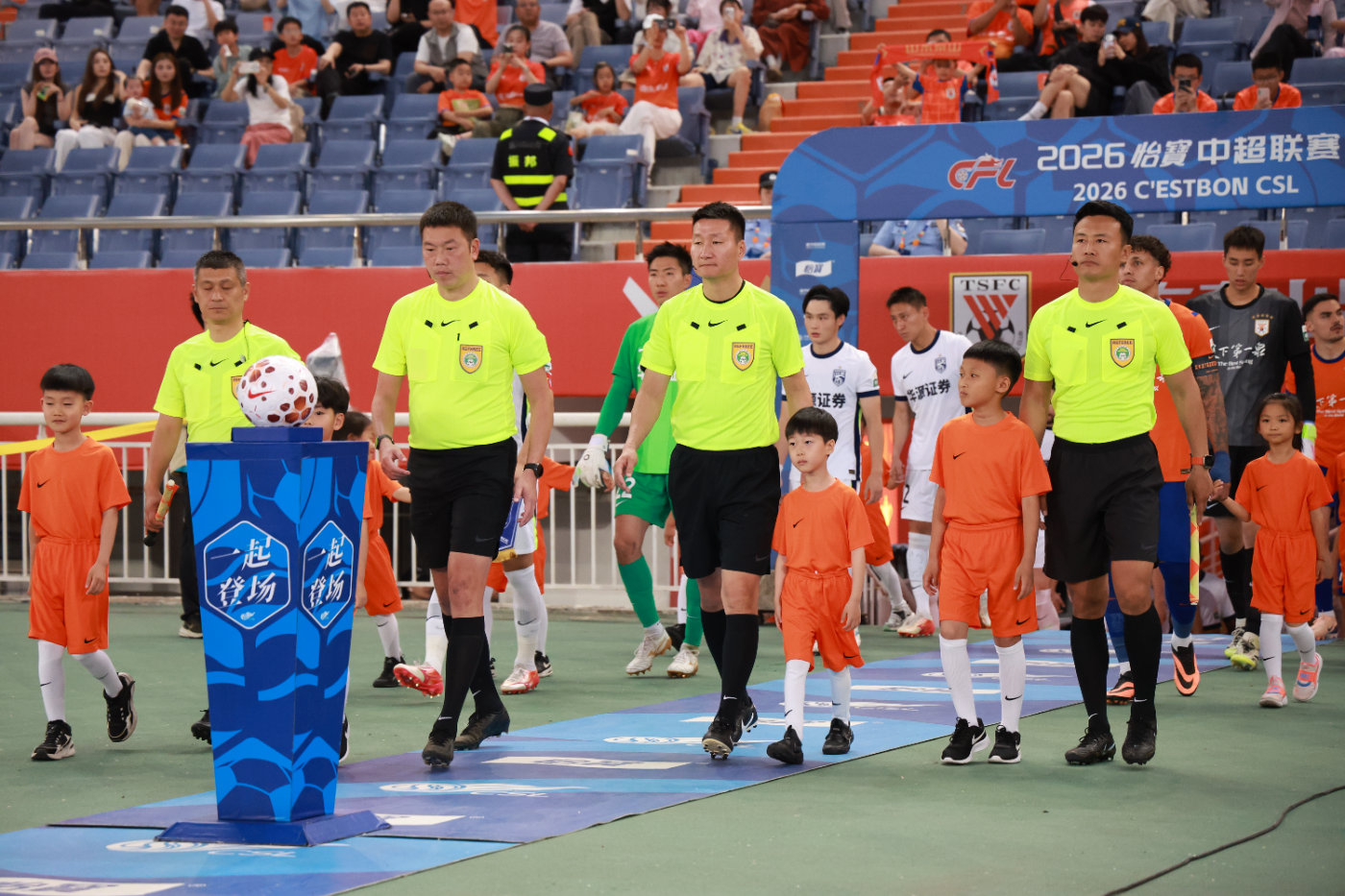
It can be said that the CFL's crackdown has yielded positive results. League governance is gradually entering a regular disciplinary management track, with management pressure shifting from the CFL to clubs. Players and coaches have shown increased professional respect, rule awareness, and emotional management skills. Through unified standards, transparency, and predictable disciplinary measures, the CFL has initially established a positive image as a league manager. Thanks to the CFL's strong measures, the atmosphere of CSL matches has noticeably improved, and professional discipline and league self-governance have been enhanced simultaneously.

Verbal abuse on the pitch, especially racially discriminatory remarks, has been difficult to prove due to high stadium noise, posing a challenge for disciplinary bodies across various leagues. In October last year, some Rongcheng fans directed racist abuse at Henan's foreign player Achimpong, and the CFL issued an unprecedented heavy penalty: Rongcheng club was fined 500,000 yuan, and Section 113, Rows 1–5 of Rongcheng's home stadium were required to be empty for one match.
This year, the CFL took a positive step by penalizing verbal abuse among players, which is hard to prove. On April 5, Tongliang Long player Li Zhenquan insulted Zhejiang's foreign player Mitritsery. Five days later, the CFL issued a groundbreaking "lip-reading" disciplinary decision. It established that on-site multi-angle video capturing lip movements could serve as key evidence, and imposed a heavy penalty on Li Zhenquan. This proactive attitude in seeking reliable technical means for evidence collection demonstrates the CFL's courage in purifying the match atmosphere.
After Li Zhenquan's punishment, a "Li Zhenquan effect" emerged in the CSL, with players covering their mouths when speaking, fearing being caught on camera for lip-reading. However, FIFA has introduced a new rule: if players cover their mouths during a confrontation, it will be considered verbal abuse, and the referee has the authority to show them a red card. This rule will be implemented globally after the World Cup. The CFL's earlier "lip-reading" penalty undoubtedly aligns with FIFA, showing zero tolerance for verbal abuse, especially racial discrimination, on the pitch.
On April 11, Port player Yang Shiyuan's "leg concussion" turning into a "head concussion" incident sparked widespread controversy. Since the "concussion rule" was introduced to Chinese football in the summer of 2024, exploiting the rule has become common. However, this year the CFL acted swiftly, releasing the "Optimization Plan for Brain Concussion Substitutions in Chinese Football Professional League Matches" in just 10 days, promptly closing the loophole.
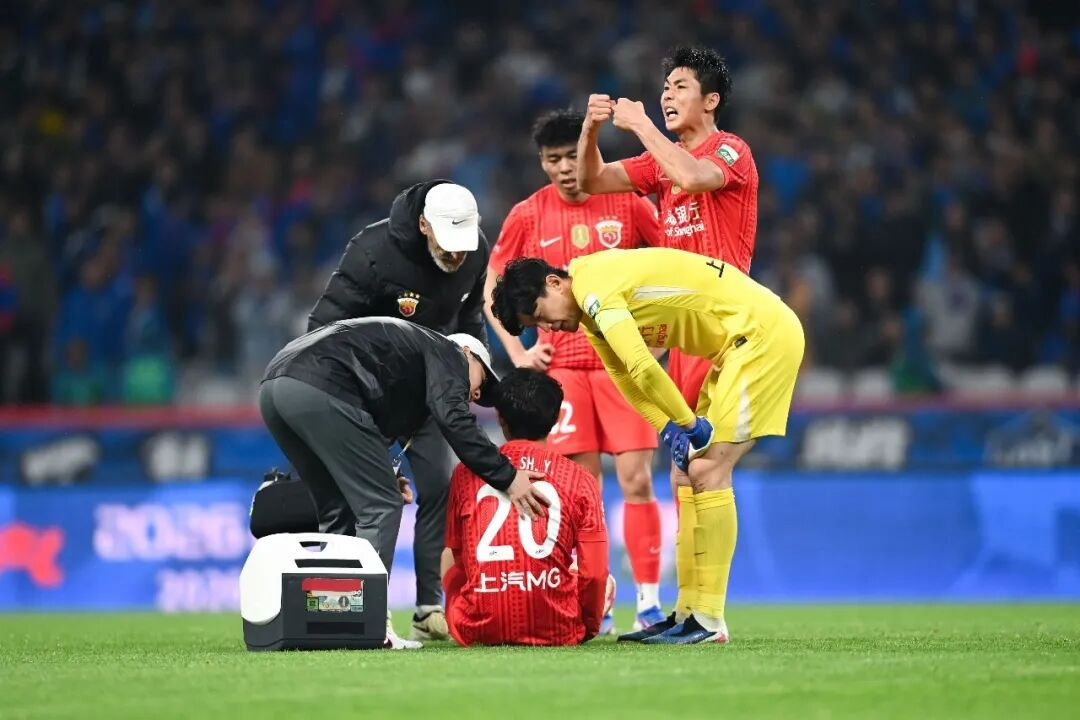
The Optimization Plan stipulates that players substituted under the "concussion clause" must go to a local hospital for medical attention immediately and submit a hospital-issued medical report within 48 hours. Players replaced under the concussion clause cannot return to the field for six calendar days (including the day of substitution) and can normally return on the 12th calendar day. If they need to return early between the 7th and 11th calendar day, two conditions must be met simultaneously: they must have already missed one match, and they must provide a medical report from a top-tier hospital clearly confirming recovery and fitness to play.
The core "patch" of the timely Optimization Plan is to increase the personnel and tactical cost for clubs, shifting from zero cost for exploiting loopholes to at least one match absence when using a concussion substitution. This forces teams to refocus on normal substitution strategies. While this "one-size-fits-all" approach may cause core players with actual concussions to hesitate before being substituted, compared to the widespread sports fraud of exploiting the rule, it is the most effective detailed regulation so far and deserves recognition.


Wonderfulshortvideo
raphinha assist today lamine yamal goal today brace today vs levante


Follow for more pokemon content! So what do I do with them now?…

arda guler assist today guler vs rayo vallecano mbappe goal today jude bellingham goal today
Cristiano Ronaldo and Al Nassr vs Al Khaleej
HIGHWAYMAN WINS THE BETFRED ST LEGER! 🏆
DESERT CASTLE DOMINATES! 🏆🍾

mbappe ballon d'or interview lequipe mbappe edit mbappe interview
 Links
Links
 Contact
 App
App


