



World Cup 2026: US deploys unprecedented 'medical shield'



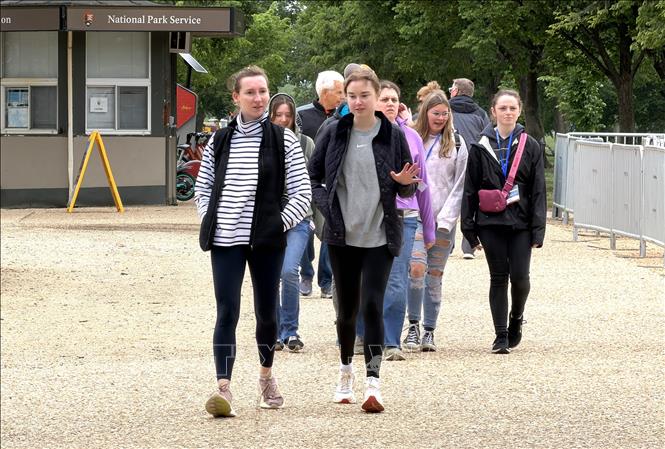
According to a Vietnam News Agency correspondent in Washington, preparations are underway amid concerns from many public health experts about the risk of infectious disease spread at crowded events, especially as Ebola continues to flare up in parts of Central Africa and measles cases in the US keep rising.
The 2026 World Cup will take place in 16 cities across the US, Canada, and Mexico, with the US alone hosting 11 cities. Of the 48 participating teams, 39 will be based or train in the US, bringing a large influx of international fans over consecutive weeks. Experts say the unprecedented scale of the tournament makes public health one of the biggest challenges for the host nation.
Jennifer Nuzzo, Professor of Epidemiology and Director of the Pandemic Center at Brown University School of Public Health, noted that gathering large numbers of people from many countries over an extended period always carries the risk of medical emergencies. According to her, hospitals and health agencies need to be fully resourced to handle a potential surge in patients beyond normal levels.
In response to these concerns, the US Centers for Disease Control and Prevention (CDC) is deploying a specialized surveillance system for the World Cup. The US Department of Health and Human Services (HHS) said the CDC has created a dedicated disease tracking dashboard for the tournament to help local and state health authorities quickly update emerging risks.
Regarding Ebola, the US currently enforces strict controls on travelers from affected areas, including the Democratic Republic of Congo, Uganda, and South Sudan. Eligible entrants must undergo screening at designated airports in Houston, Atlanta, New York, and Washington D.C.
Players of the Democratic Republic of Congo national team, currently training in Europe, are also required to complete a 21-day quarantine before entering the US. In Houston, where the DR Congo team is scheduled to play Portugal on June 17, medical facilities have already established emergency response plans. Dr. Luis Ostrosky, Chief of Infectious Diseases at the University of Texas Medical Center, said local authorities have prepared a comprehensive plan though they hope not to use it.
However, experts say Ebola is not the biggest risk for the 2026 World Cup. Respiratory diseases such as COVID-19, seasonal flu, respiratory syncytial virus (RSV), along with gastrointestinal illnesses like norovirus, are considered more realistic threats.
In particular, measles is becoming a top concern. Measles cases in the US in 2026 have already surpassed the total for the previous year, and recent outbreaks show that even a single case can force health authorities to trace dozens of contacts.
Experts warn that if a measles case appears linked to World Cup matches, hotels, or team training sites, contact tracing and disease control could become an extremely complex logistical challenge.


Wonderfulshortvideo

raphinha assist today lamine yamal goal today brace today vs levante


Follow for more pokemon content! So what do I do with them now?…

arda guler assist today guler vs rayo vallecano mbappe goal today jude bellingham goal today

Cristiano Ronaldo and Al Nassr vs Al Khaleej

HIGHWAYMAN WINS THE BETFRED ST LEGER! 🏆

DESERT CASTLE DOMINATES! 🏆🍾

mbappe ballon d'or interview lequipe mbappe edit mbappe interview
 Links
Links
 Contact
 App
App


