



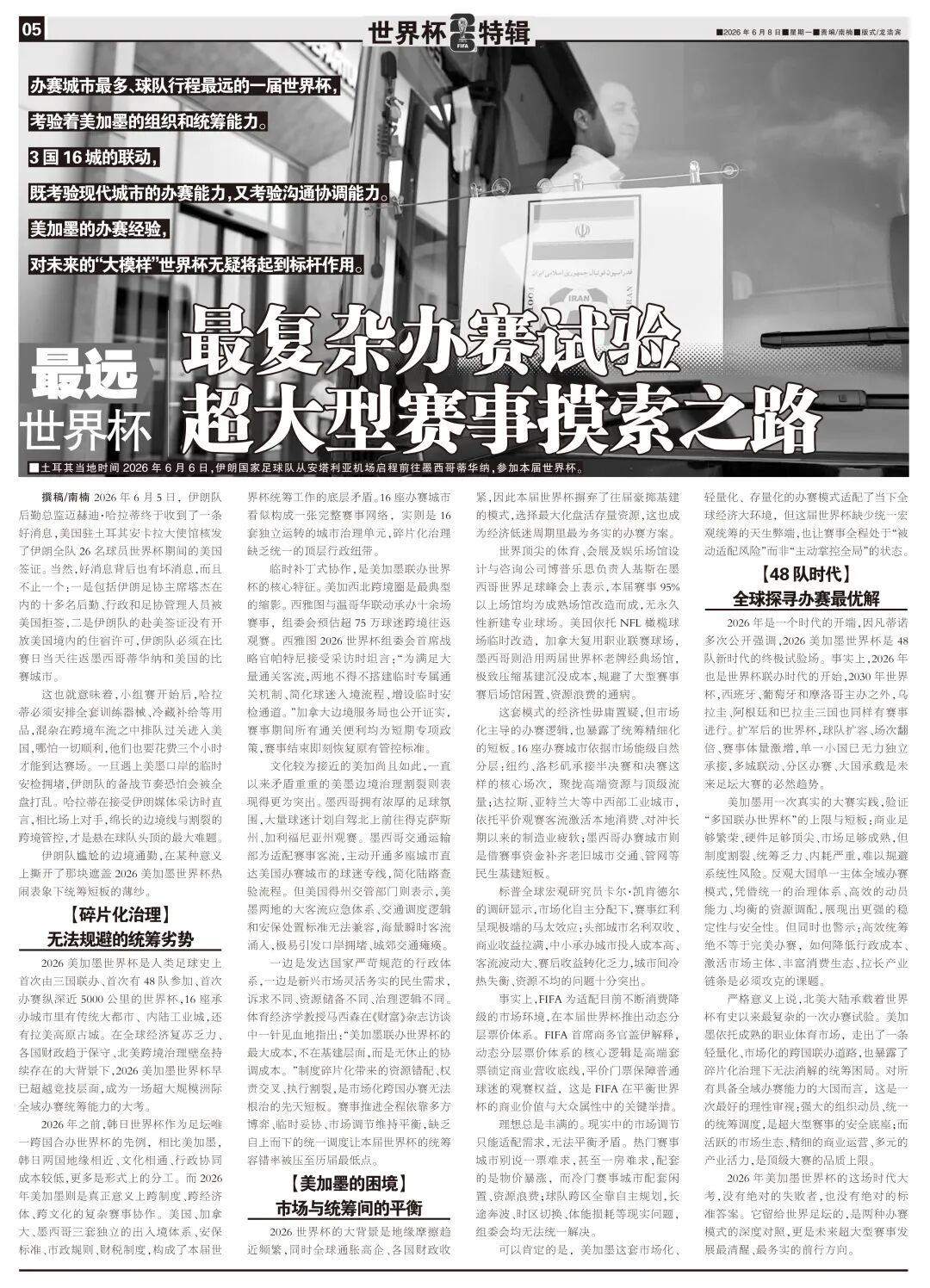
The "farthest" World Cup: The most complex hosting experiment, a journey of trial and error for mega-events


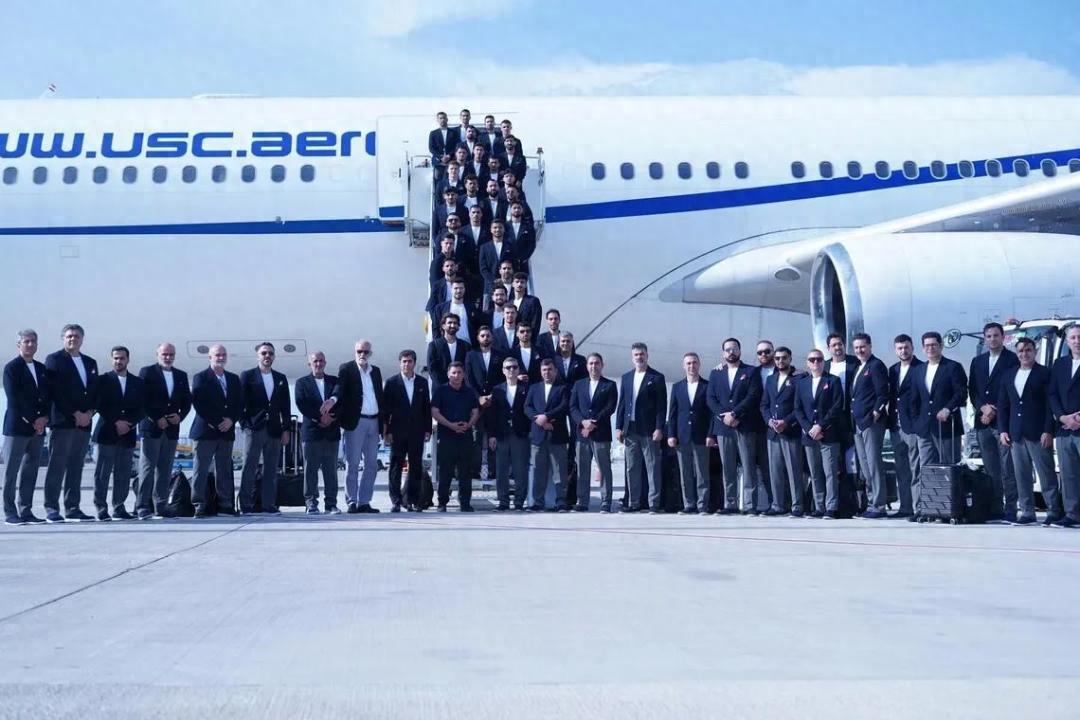
Iran's national team arrived at their base in Mexico
Written by Nan Nan On June 5, 2026, Iran's后勤总监 Mehdi Khalati finally received good news: the U.S. Embassy in Ankara, Turkey, issued visas for all 26 Iranian players for the World Cup period. Of course, there were also downsides, and more than one: first, more than a dozen support staff, administrators, and football association officials, including Iran's Football Federation President Taj, were denied U.S. visas; second, the visas for the Iranian team did not include permission to stay overnight in the U.S., forcing them to travel between Tijuana, Mexico, and the U.S. match cities on game days.
This means that after the group stage begins, Khalati must arrange for all training equipment, refrigerated supplies, and other items to cross the border with the flow of vehicle traffic into the U.S. Even under the best circumstances, it would take them three hours to reach the stadium. If there is temporary congestion at the U.S.-Mexico border due to security checks, the team's preparation schedule could be completely disrupted. In an interview with Iranian media, Khalati stated bluntly that, compared to their on-field opponents, the long border and fragmented cross-border management pose the biggest challenge hanging over the team.
In a sense, the Iranian team's awkward border commute tears open the veil of coordination shortcomings hidden beneath the bustling surface of the 2026 U.S.-Canada-Mexico World Cup.
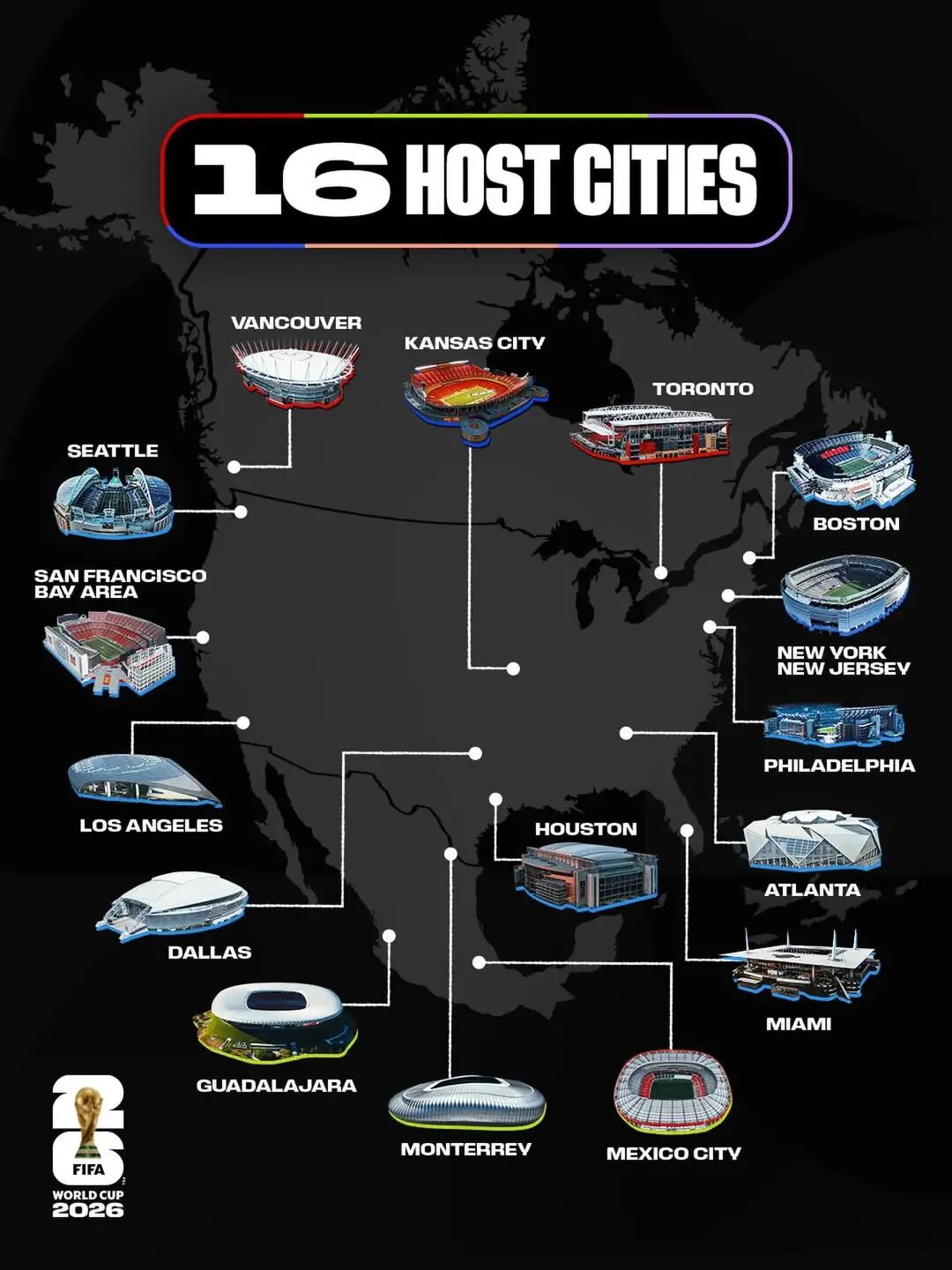

The 2026 U.S.-Canada-Mexico World Cup is the first in football history to be co-hosted by three countries, the first with 48 teams, and the first with a hosting depth of nearly 5,000 kilometers. Its 16 host cities include traditional metropolises, inland industrial hubs, and ancient highland cities in Latin America. Against the backdrop of sluggish global economic recovery, conservative fiscal policies across nations, and persistent cross-border governance barriers in North America, the 2026 World Cup has transcended the realm of sport to become a massive test of cross-continental mega-event coordination capabilities.
Before 2026, the Korea-Japan World Cup was the only precedent for a jointly hosted World Cup. Compared to the U.S.-Canada-Mexico edition, Korea and Japan are geographically close, culturally similar, and had lower administrative coordination costs, making their partnership more of a formal division of labor. In contrast, the 2026 World Cup involves a genuinely complex collaboration across different systems, economies, and cultures. The three separate immigration and customs systems, security standards, municipal regulations, and fiscal regimes of the U.S., Canada, and Mexico form the underlying conflict of this tournament's coordination. The 16 host cities appear to form a complete event network, but in reality, they are 16 independently operating urban governance units, lacking a unified top-level administrative link in the face of fragmented governance.
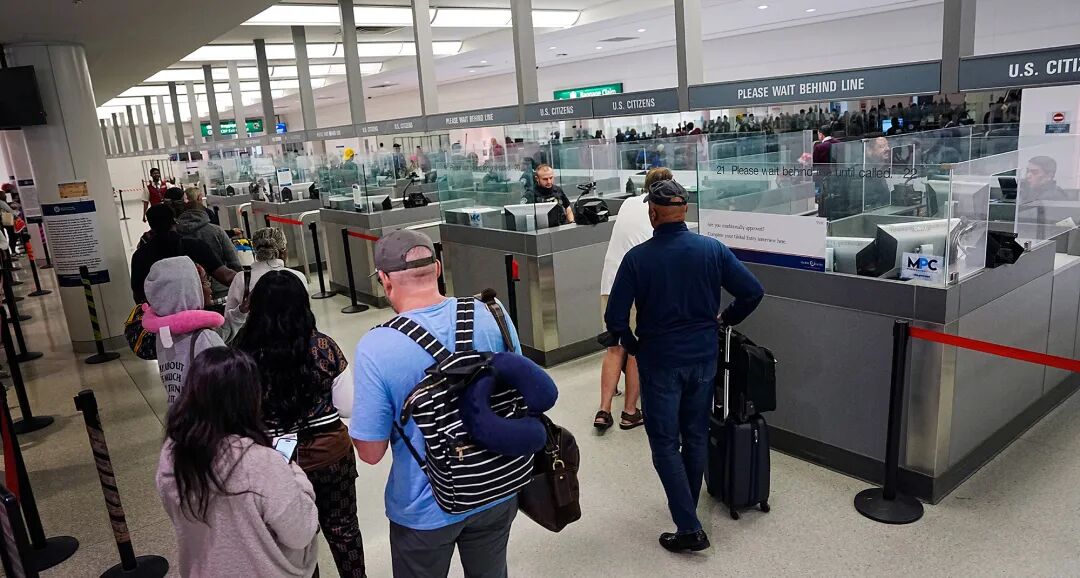
Temporary patchwork collaboration is the core characteristic of the U.S.-Canada-Mexico co-hosting model. The cross-border region in the Pacific Northwest is the most typical example. Seattle and Vancouver are jointly hosting more than a dozen matches, with organizers estimating over 750,000 fans crossing the border to attend games. Patni, chief strategy officer of the Seattle 2026 World Cup organizing committee, admitted in an interview: "To accommodate the massive flow of passengers through customs, the two cities had to set up temporary dedicated clearance mechanisms, simplify fan entry procedures, and add temporary security checkpoints." The Canada Border Services Agency also publicly confirmed that all customs facilitation measures during the event are short-term policies that will revert to normal standards immediately after the tournament ends.
If this is the case for the culturally similar U.S. and Canada, the long-standing conflict-ridden U.S.-Mexico border governance is even more fragmented. Mexico has a strong football culture, with many fans planning to drive north to Texas and California to watch matches. Mexico's Ministry of Transportation proactively launched direct fan bus routes from multiple cities to U.S. host cities, simplifying land border inspection procedures. However, U.S. traffic authorities in Texas stated that the emergency response systems, traffic management logic, and security standards for large crowds between the two countries are incompatible. The sudden influx of massive crowds could easily cause border congestion and suburban traffic paralysis.
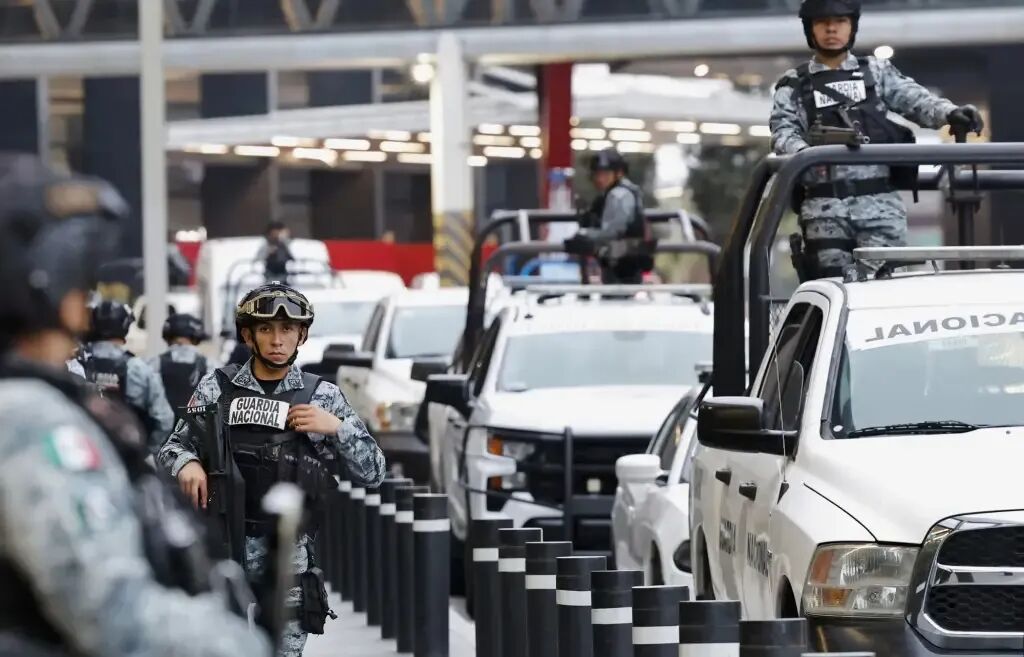
On one side is the strict and standardized administrative system of developed nations; on the other is the flexible and pragmatic needs of an emerging market. Their demands, resource reserves, and governance logic differ. Sports economics professor Matheson pointed out in a Fortune magazine interview: "The biggest cost of the U.S.-Canada-Mexico World Cup is not in infrastructure, but in endless coordination costs." The misallocation of resources caused by institutional fragmentation, overlapping responsibilities, and execution gaps are inherent shortcomings that market-driven cross-national event hosting cannot fully resolve. The event's progress relies on multi-party negotiations, temporary compromises, and market adjustments to maintain balance, lacking top-down unified coordination, which has pushed the tournament's margin for error to the lowest in history.

The backdrop of the 2026 World Cup includes increasingly frequent geopolitical frictions, high global inflation, and tightened fiscal policies in many countries. As a result, this tournament has abandoned the previous model of lavish infrastructure spending, opting instead to maximize the use of existing resources. This has become the most pragmatic hosting approach in a period of economic downturn.
Populous, a world-leading sports, exhibition, and entertainment venue design and consulting company, said at the World Football Summit in Mexico that over 95% of the venues for this tournament are renovated existing facilities, with no permanent new stadiums built. The U.S. temporarily converted NFL stadiums, Canada reused professional league venues, and Mexico used its classic stadiums from two previous World Cups, drastically cutting sunk costs in infrastructure and avoiding the common problem of idle venues and wasted resources after major events.
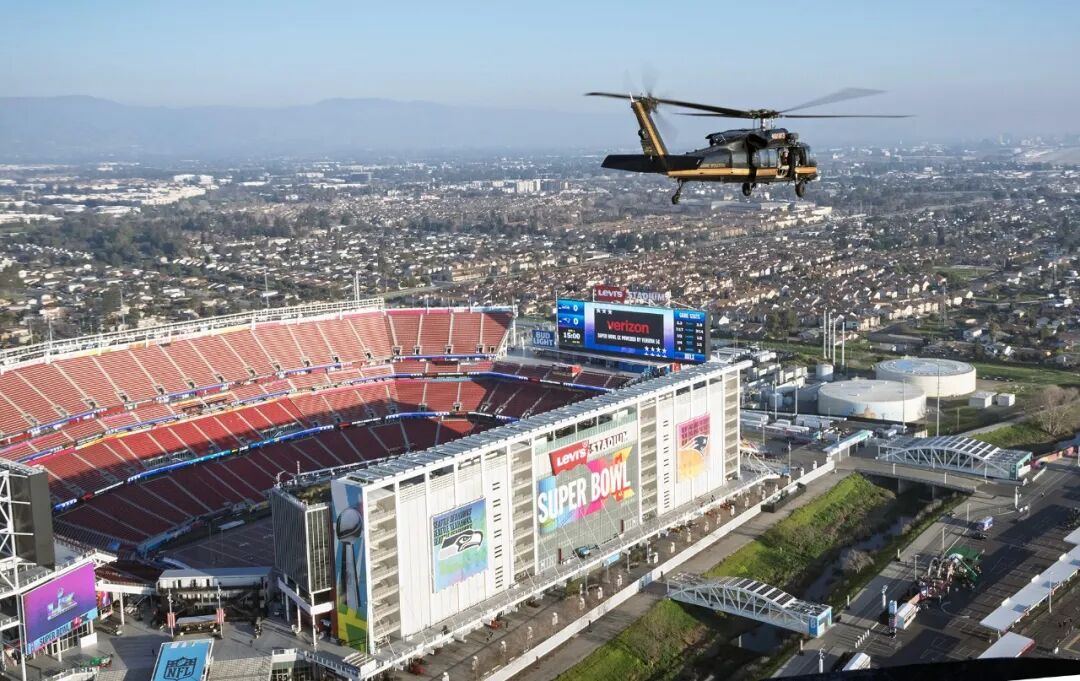
The economic efficiency of this model is undeniable, but the market-driven hosting logic also exposes shortcomings in fine-tuning coordination. The 16 host cities are naturally stratified by market capacity: New York and Los Angeles host core matches like the semi-finals and final, attracting high-end resources and top-tier traffic; Dallas and Atlanta, as Midwestern industrial cities, rely on affordable spectator traffic to stimulate local consumption and offset the long-term decline in manufacturing; Mexican host cities use event funds to fill gaps in aging urban infrastructure like transportation and utilities.
Research by Carl Kekendall, a macro analyst at S&P Global, shows that under market-driven allocation, the benefits of the event exhibit extreme Matthew effects: top-tier cities reap both fame and profit with maximized commercial returns, while smaller host cities face high investment costs, volatile visitor flows, and weak post-event revenue conversion. The imbalance between cities—some hot, some cold, with uneven resources—is very pronounced.
In fact, FIFA has introduced a dynamic tiered pricing system for this World Cup to adapt to the current consumer downgrading environment. FIFA's chief commercial officer Guy explained that the core logic of this system is that premium packages secure the bottom line of commercial revenue, while affordable tickets ensure fans' access to matches. This is a key measure by FIFA to balance the World Cup's commercial value and mass appeal.

Ideals are always ambitious. In reality, market adjustment can only match demand, not resolve contradictions. In popular host cities, it's not just hard to find tickets but also hard to find a room, accompanied by soaring prices. In less popular host cities, facilities sit idle and resources are wasted. Teams have to plan their own travel across regions, facing long distances, time zone changes, and physical fatigue—issues that the organizing committee cannot uniformly address.
It is safe to say that the market-driven, lightweight, and asset-based hosting model of the U.S.-Canada-Mexico tournament fits the current global economic climate. However, the inherent lack of unified macro-coordination means the tournament is in a state of "passively adapting to risks" rather than "actively controlling the overall situation."


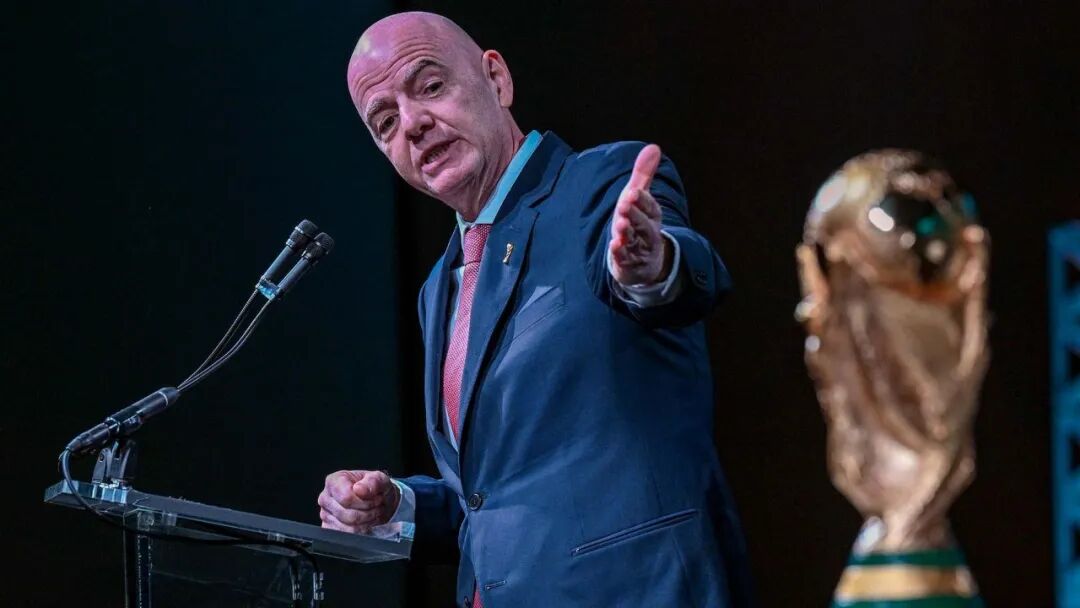
2026 marks the beginning of an era. Infantino has repeatedly emphasized that the 2026 U.S.-Canada-Mexico World Cup is the ultimate testing ground for the new 48-team format. In fact, 2026 also signals the start of an era of co-hosted World Cups. For the 2030 World Cup, Spain, Portugal, and Morocco will be the main hosts, with matches also being played in Uruguay, Argentina, and Paraguay. With the expanded tournament, the number of teams has increased, matches have doubled, and the scale of the event has surged. No single small country can host it alone; multi-city coordination, regional event hosting, and large-nation capacity are inevitable trends for future major football tournaments.
The U.S.-Canada-Mexico event provides a real-world large-scale test of the strengths and weaknesses of "multi-country co-hosting": commerce is sufficiently prosperous, infrastructure is top-notch, and the market is mature enough, but institutional fragmentation, weak coordination, and high internal friction make it difficult to avoid systemic risks. In contrast, the single-nation, full-territory hosting model, with its unified governance system, efficient mobilization, and balanced resource allocation, demonstrates greater stability and security. However, it also serves as a warning: efficient coordination does not equal perfect hosting. Reducing administrative costs, activating market players, enriching consumer ecosystems, and extending industrial chains are challenges that must be overcome.
Strictly speaking, the North American continent is hosting the most complex World Cup experiment in history. The U.S.-Canada-Mexico event, relying on a mature professional sports market, has forged a lightweight, market-driven cross-national hosting path, while also exposing the coordination dilemmas inherent in fragmented governance. For any large nation capable of hosting across its entire territory, this is an excellent opportunity for rational reflection: strong organizational mobilization and unified coordination are the safe foundation for mega-events; a vibrant market ecosystem, refined commercial operations, and diverse industrial vitality define the upper limit of a top-tier tournament's quality.
The monumental test of the 2026 U.S.-Canada-Mexico World Cup has no absolute losers and no single standard answer. What it leaves for the world of football is a deep comparison of two hosting models, and a clear, pragmatic direction for the future development of mega-events.


Wonderfulshortvideo

raphinha assist today lamine yamal goal today brace today vs levante



Follow for more pokemon content! So what do I do with them now?…

arda guler assist today guler vs rayo vallecano mbappe goal today jude bellingham goal today

Cristiano Ronaldo and Al Nassr vs Al Khaleej

HIGHWAYMAN WINS THE BETFRED ST LEGER! 🏆

DESERT CASTLE DOMINATES! 🏆🍾

mbappe ballon d'or interview lequipe mbappe edit mbappe interview
 Links
Links
 Contact
 App
App


