



World Cup 2026: Exploring the Unique Team Bases



Now, as the entire football world descends on the US, Canada, and Mexico to watch 104 matches and travel across the region via dozens of flights, teams are turning high school campuses into training grounds, staying in university dormitories and luxury hotels, while contending with the harsh summer heat of America.
The diversity of geographical and climatic conditions also creates vastly different experiences for the teams. Based on the Universal Thermal Climate Index, a measure of how weather affects human comfort, the Democratic Republic of Congo’s base in Houston will have the harshest climate among all World Cup bases this year. With a score of 83 out of 100, Houston surpasses even Boca Raton (Florida) and Playa del Carmen (Mexico) in terms of oppressive heat.
In stark contrast to Houston’s extreme weather is the luxury that some top teams have chosen. Fresh off a flight from Paris, the French team naturally refuses anything less than five-star accommodations. Les Bleus will enjoy buffet breakfasts and plush carpets at the Four Seasons Hotel in Boston. They plan to stay long-term, as France is one of the top contenders for the title.
Beyond comfort, geographical location also plays a key role in selecting bases. Thanks to its central position in the “land of the free” and its high-quality football training facilities, four bases in Kansas City—dubbed the “Football Capital of America”—were quickly snapped up by strong teams. With priority given to higher FIFA-ranked teams, Argentina, England, and the Netherlands secured their spots early. Algeria also chose to train in nearby Lawrence, Kansas.
However, not every team has the advantage of short travel distances. Bosnia and Herzegovina had not yet qualified for the World Cup when the group stage draw took place. But after eliminating Italy to earn their spot, they quickly chose Real Salt Lake’s stadium in Utah as their base. Bosnia and Herzegovina’s playing venues are the most widely dispersed among all teams, with two trips to the West Coast and one to Ontario, totaling nearly 7,500 miles of flying just to complete the group stage matches.
Some other choices have surprised fans. Few imagined the scenario of “Spain in Chattanooga,” but it has become reality. La Roja chose to set up camp in Tennessee for the entire tournament. Their base is the prestigious Baylor School, a private institution with a 279-hectare campus and a 50-meter swimming pool. If 18-year-old talent Lamine Yamal were studying here instead of playing at the World Cup, the annual tuition would be around $71,000.
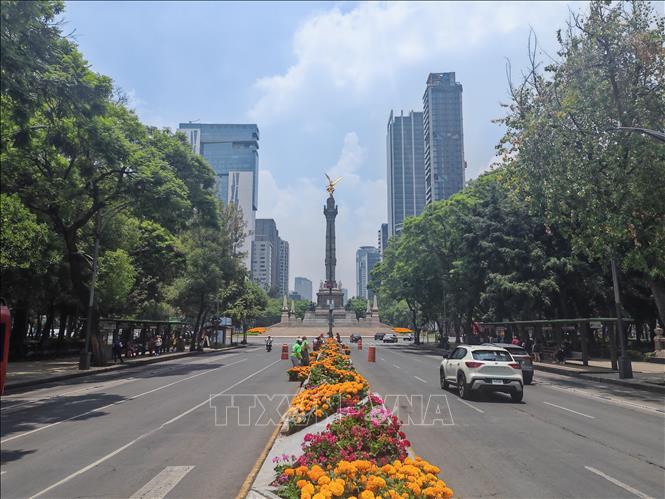
Meanwhile, host or co-host teams enjoy greater logistical advantages. Co-host Mexico has a relatively light travel schedule. El Tri will play all three group-stage matches on Mexican soil, including two at the legendary Azteca Stadium, just a few kilometers from the national team’s training center south of Mexico City. The remaining match takes place in Guadalajara, about 280 miles (450 km) away.
The US team also prioritized convenience when choosing their base. American athletes often refer to major tournaments as “business trips,” and that’s especially true for the US men’s team. By selecting Irvine, California, as their base, they favored convenience over luxury, as it is close to SoFi Stadium and other West Coast venues. Another option was the US Soccer Federation’s new $250 million training center near Atlanta, but since all three group-stage matches are on the West Coast, the US team chose Irvine.
If the US opted for practicality, Uruguay is considered to have the most enviable base of the tournament. Uruguay may not be the top favorite for the title, but they have won the “base race.” The South American team chose to spend their summer in Playa del Carmen, Mexico, only leaving the beach for matches against Saudi Arabia, Cabo Verde, and Spain in the group stage.
Beyond resorts and luxury hotels, some teams have chosen school environments as their quarters. Croatia has to travel to Dallas, Toronto, and Philadelphia for group-stage matches, but will recover between games at the Episcopal High School boarding school in the suburbs of Washington, D.C. During their stay, players can enjoy the extensive library, relax in the pottery studio, or even prepare applications for Ivy League schools.
These diverse choices reflect the unprecedented scale of the 2026 World Cup and highlight the significant disparities in playing and travel conditions among teams. FIFA reports that the travel distances between each team’s base and their group-stage venues vary widely. Mexico will travel only about 922 kilometers in total, while Bosnia and Herzegovina will fly nearly 12,000 kilometers for their three group-stage matches.


Wonderfulshortvideo

raphinha assist today lamine yamal goal today brace today vs levante



Follow for more pokemon content! So what do I do with them now?…

arda guler assist today guler vs rayo vallecano mbappe goal today jude bellingham goal today

Cristiano Ronaldo and Al Nassr vs Al Khaleej

HIGHWAYMAN WINS THE BETFRED ST LEGER! 🏆

DESERT CASTLE DOMINATES! 🏆🍾

mbappe ballon d'or interview lequipe mbappe edit mbappe interview
 Links
Links
 Contact
 App
App


