



Changing Coaches: Chinese Super League Cautious, China League One Reckless



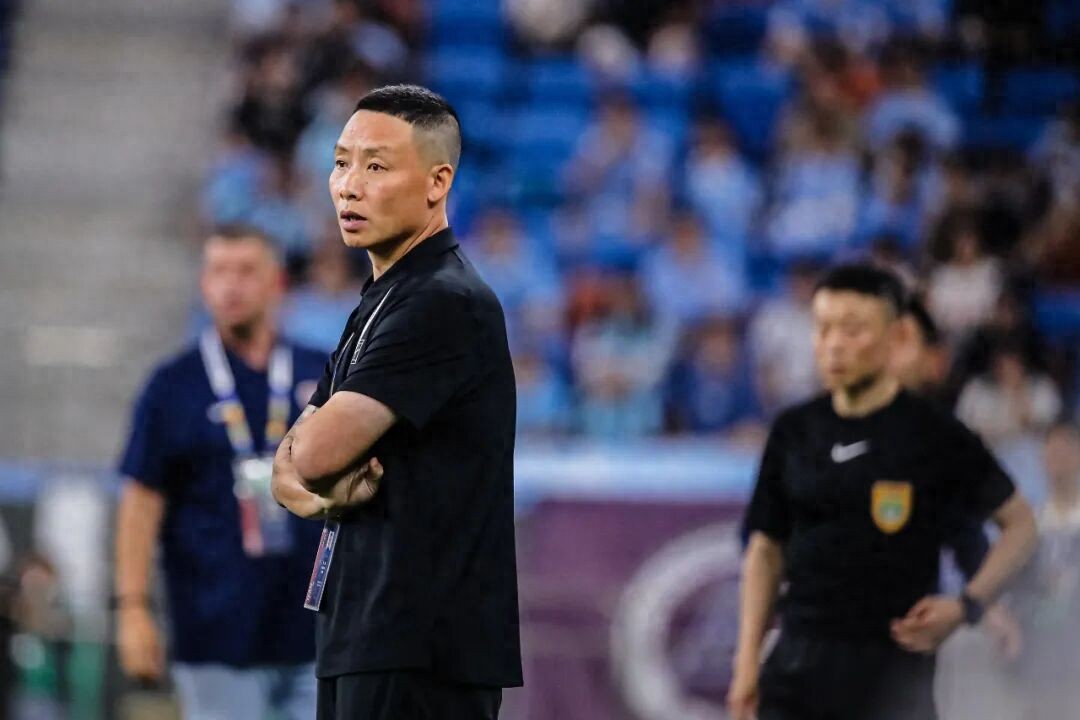
Journalist Lu Mi reports In a fourth-round FA Cup match on the evening of June 19, Shaanxi Union, playing at home, forced a 1-1 draw with Zhejiang Green City within 90 minutes and advanced after a 5-4 penalty shootout, creating a huge surprise. Following the game, Shaanxi Union’s caretaker manager Jawad concluded his interim duties, and the club confirmed that Chen Tao—recently let go by Shenzhen Peng City—would assume the coaching role. It is understood that Chen Tao's contract runs for one and a half years, with the goal of leading Shaanxi Union to promotion to the Chinese Super League next year.

Chen Tao’s appointment at Shaanxi Union is just the latest coaching change in the Chinese Super League and China League One. In fact, as of June 21, eight teams across the two leagues have already changed their head coaches mid-season.
The first half of the 2026 season has shown starkly different trends in coaching changes between the Chinese Super League and China League One: in the CSL, due to factors such as point deductions for multiple teams and reduced spending, clubs have been more cautious about replacing their managers. Up to the end of the 16-match first half, only three teams—Liaoning Tieren, Wuhan Three Towns, and Shenzhen Peng City—had made mid-season coaching changes. Among them, promoted side Liaoning Tieren saw a notable improvement in points after the change, Wuhan Three Towns’ defensive issues remain unresolved, and Shenzhen Peng City’s switch occurred during the break, meaning their new coach has yet to face a league test.
At the CSL level, because nine clubs faced varying degrees of point deductions before the season started, both clubs and fans have adopted a more tolerant attitude toward team results amid significant upheaval. Additionally, with spending constraints, replacing a coach is approached with greater caution, as it incurs extra costs.
Liaoning Tieren, a newly promoted team this season, had strong domestic squad depth, brought in several experienced players, had decent foreign signings, and a solid financial situation. Before the season, they were widely considered a dark horse. However, once the league began, their performance surprised everyone negatively, losing match after match, which sparked fan dissatisfaction and alerted the club’s management. After a 4-0 away defeat to Henan FC, their fourth consecutive loss, the dismissal of Li Jinyu was put on the agenda. Subsequently, on May 6, the club officially announced Li Jinyu’s departure, with South Korean coach Seo Jung-won taking over.

Under Li Jinyu, the team had 2 wins, 1 draw, and 6 losses in 9 rounds, earning 7 points and falling to third from bottom in the standings. Seo Jung-won officially took charge from Round 11 onward, achieving 3 wins, 1 draw, and 1 loss for 10 points, lifting the team from near the bottom to seventh place, a mid-table position. With 10 points in five matches, Seo Jung-won’s impact was the most effective among coaching changes, as he also revived the foreign players’ form.
Following Liaoning Tieren, Wuhan Three Towns was the next to change coaches. Mexican coach Mora attempted to build the team around possession-based play, but the results were poor, making it difficult for the team to earn points. After a particularly disappointing 3-1 home loss to relegation rival Qingdao Hainiu, calls for a coaching switch reached a peak. Three Towns had no choice but to part ways with Mora. While they contacted Suárez, they had Deng Zhuoxiang lead the team on an interim basis. Deng managed three consecutive draws before Suárez took over in Round 14.
Mora led the team for 10 rounds with a record of 2 wins, 2 draws, and 6 losses, conceding an average of 2.1 goals per game. Since Suárez took charge, he has only overseen two matches, but although there has been no drastic transformation, the team managed draws against two strong sides, Shandong Taishan and Yunnan Yukun. The defensive issues need to be properly addressed by Suárez during this break, as they are crucial to the team’s survival hopes.
Immediately after the first half of the league concluded, Shenzhen Peng City announced that their "firefighting" coach from last year, Chen Tao, had been dismissed. In early June, they officially appointed Belgian assistant coach Robbie Neilson as the new boss.
During Chen Tao’s tenure of 15 rounds, Shenzhen Peng City recorded 5 wins, 2 draws, and 8 losses. New coach Robbie Neilson has so far only led the team in a single FA Cup match and has yet to be tested in league competition. His ability remains unknown, and this break is an opportunity for him to reorganize the squad, prove himself, and justify the club’s decision to change coaches.

Compared to the cautious approach in the CSL, coaching changes in China League One have been relatively reckless. Since the start of the league (only 11 rounds played so far), five teams—Ningbo, Shijiazhuang Gongfu, Nanjing City, Meizhou Hakka, and Shaanxi Union—have changed their managers, with some doing so more than once.
Among the wave of coaching changes across the CSL and China League One, Ningbo’s change yielded the most obvious results, while Nanjing City also did well. On April 27, Nanjing City officially announced that head coach Rodney had resigned, moving to the role of technical director and assistant coach. He had previously led the team to 1 win, 2 draws, and 3 losses, placing them 12th in the China League One standings. Subsequently, general manager Zhang Xiaofeng took over as interim head coach, achieving 3 wins, 1 draw, and 1 loss, lifting the team to 6th place—a clear improvement.
The most turbulent situations were seen at Shijiazhuang Gongfu and Meizhou Hakka. Before reaching the halfway point of the China League One season, they had already changed coaches multiple times, yet still failed to escape their struggles. Shijiazhuang Gongfu sits third from bottom, only one point above the relegation zone, while Meizhou Hakka is at the very bottom, four points adrift of safety.
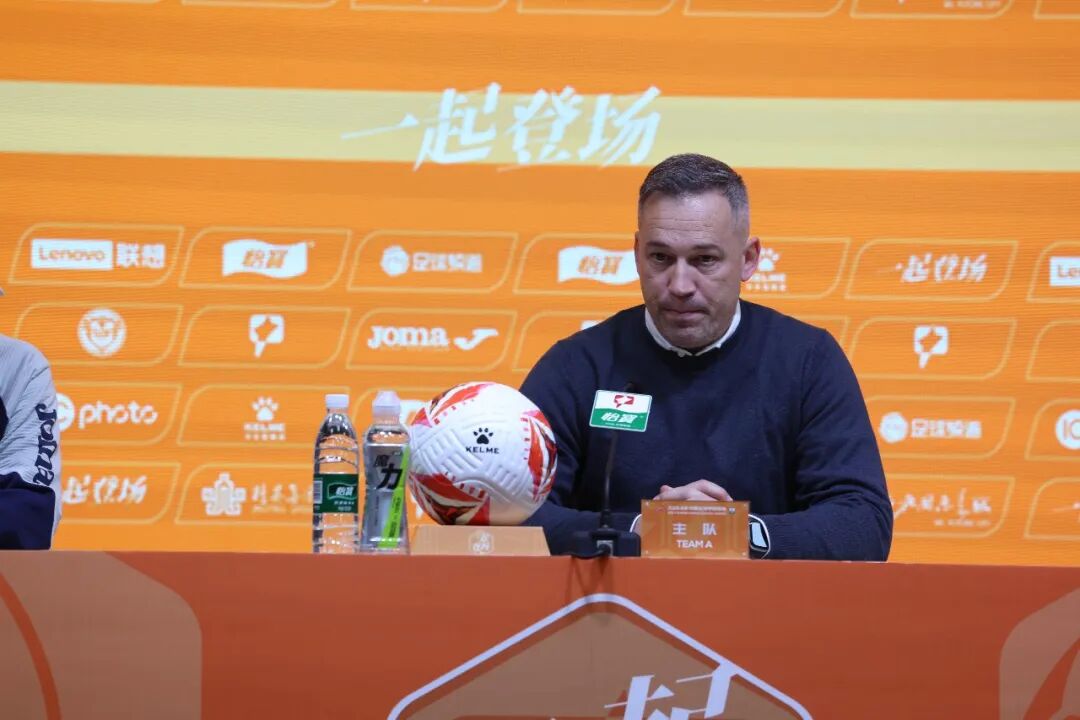
Shijiazhuang Gongfu coach Tato
Shijiazhuang Gongfu’s performance this season has taken a serious downturn. At the start, Niu Hongli led the team for four rounds, achieving 1 win and 3 losses. The club announced on April 15 that Niu Hongli had resigned, with assistant coach Xiao Zhanbo taking over on an interim basis. Xiao managed two rounds without solving the winless problem, recording 1 loss and 1 draw, prompting the club to quickly appoint Spanish coach Tato, formerly of Shenzhen Peng City. Starting from Round 7 against Guangxi Hengchen, Tato has led the team for five league matches without a single win, managing only two draws. From Niu Hongli to Xiao Zhanbo to Tato, Shijiazhuang Gongfu has not won a single match since April, with a season record of 1 win, 3 draws, and 7 losses, placing them third from bottom. Remarkably, they have scored only 4 goals in 11 rounds—a very rare statistic. This suggests that the club’s problems are not limited to the head coach; the management should also reflect on themselves.
Meizhou Hakka has had a bumpy ride in China League One this year, suffering two point deductions totaling 9 points. Their first head coach of the season, Gino, led the team to 2 wins and 4 losses. After a heavy home defeat to a recently changed Ningbo side in Round 6, they changed coaches again. Club general manager Zhang Xiaorui took on the role of head coach concurrently, but the team only managed one victory in the May fixtures. After May ended, they made a third change, with Zhang Xiaorui removed from both the general manager and head coach positions, replaced by the Zhu Jiong coaching team. So far, Zhu Jiong has only overseen one match—a 1-1 away draw against Wuxi Wugou—and has yet to turn the team’s fortunes around.


Wonderfulshortvideo

Leeds United demolish Newcastle at elland road


Throwback to this League Cup game between Liverpool and Spurs ⚽️⚽️
Lamine genius 🪄

raphinha assist today lamine yamal goal today brace today vs levante
Follow for more pokemon content! So what do I do with them now?…

arda guler assist today guler vs rayo vallecano mbappe goal today jude bellingham goal today
Cristiano Ronaldo and Al Nassr vs Al Khaleej
 Links
Links
 Contact
 App
App


