



CAHN Club and the ambition to reach Asian level



The V-League 2025/26 title is a statement of domestic status for CAHN Club, yet the real test for Coach Alexandre Polking's squad is in the demanding AFC Champions League Elite competition.
The domestic title of the 2025/26 season is not merely about restoring CAHN to the top of Vietnamese football. For them, this seems only the starting point of a journey filled with great aspirations on the continental stage.
The ticket to the AFC Champions League Elite playoff has officially opened a new chapter, where the V-League champions must prove their competitiveness against top continental football powers. The AFC Champions League Elite is currently the highest measure of club value in Asia, bringing together elite teams from Japan, South Korea, Saudi Arabia, and Australia—clubs that not only possess expensive players but also have sustainable management foundations.
The draw has pitted Coach Mano Polking's side against Adelaide United in the AFC Champions League Elite 2026/27 playoff. Though not as glamorous as West Asian clubs, the Australian team is a real obstacle with its physically demanding and highly disciplined style of play. To advance deep in Asia's most prestigious tournament, CAHN must demonstrate that they can stand shoulder to shoulder with the region's strongest representatives in both tactical thinking and competitive grit.
Currently, CAHN's core consists of many national team players who have gained extensive experience in the Asian Cup and World Cup qualifiers. However, the gap between a strong domestic club and an Asian-level club lies in squad depth and consistency throughout the long season.
Movements in the transfer market show that the club's leadership is preparing extremely seriously. Adding quality foreign players is a crucial step as the team must juggle multiple fronts, including the 2026/27 ASEAN Club Championship, where they will face Port FC (Thailand) and Johor Darul Ta'zim (Malaysia).
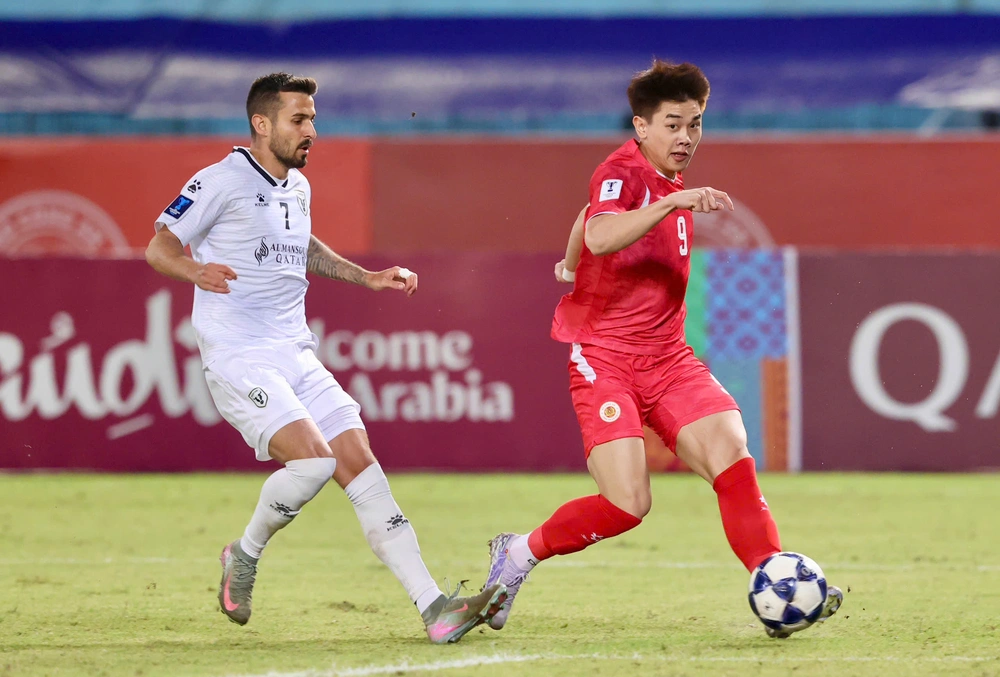
Đình Bắc of CAHN during the match against Macarthur (Australia) in the AFC Champions League Two 2025/26. Photo: Hoàng Linh
Besides CAHN, Vietnamese football has another representative, Thể Công Viettel, in the Asian cups for the new season. By maintaining 7th place in the East region rankings, Vietnamese football continues to secure two slots in continental tournaments. Thể Công Viettel has earned a direct spot in the group stage of the AFC Champions League Two for the 2026/27 season.
Recently, domestic football has seen several clubs investing heavily with the determination to rise on the continental stage. However, things have not gone as hoped. One of the biggest issues is consistency and squad depth. In the domestic arena, many Vietnamese clubs rely significantly on a few outstanding individuals. When stepping onto the continental stage, where the intensity is higher and tactical demands are stricter, this reliance is easily exploited. Additionally, the strategy for using foreign players needs to change—not just having impressive résumés, but players who truly make a difference and elevate the entire team.
At the systemic level, the V-League still needs to improve to become a real launching pad. Match intensity, pitch quality, organization, and professionalism must be uniformly standardized. When the domestic league is strong enough, clubs will have the foundation to step onto the continental stage without being overwhelmed by the big waters.
Nevertheless, it's undeniable that Vietnamese football has made certain progress. The cumulative points of Vietnamese representatives in AFC tournaments over recent seasons have improved, and the national ranking has also risen compared to earlier periods. But relative progress does not mean absolute competitiveness. As other football nations also develop strongly, merely "moving up" is not enough; one must move fast and sustainably.
This serves as a reminder that the gap between Vietnamese football and continental standards still exists. To narrow that gap, clubs need long-term strategies, sustainable investment in youth development, modern management, and clear tactical identities. If they dare to face reality and reform boldly, Vietnamese clubs can dream of truly reaching the level of Asia's club competitions in the not-too-distant future.


Wonderfulshortvideo

Leeds United demolish Newcastle at elland road



Throwback to this League Cup game between Liverpool and Spurs ⚽️⚽️

Lamine genius 🪄

raphinha assist today lamine yamal goal today brace today vs levante

Follow for more pokemon content! So what do I do with them now?…

arda guler assist today guler vs rayo vallecano mbappe goal today jude bellingham goal today

Cristiano Ronaldo and Al Nassr vs Al Khaleej
 Links
Links
 Contact
 App
App


