



'The Japan Way' and the question for Vietnamese football


The year was 1992. Japan had never played in a World Cup. There was no professional football. The J-League was only just being developed. The JFA then unveiled an audacious, almost comical goal: to become world champions by 2092.
Thirteen years later, the JFA shortened the target to 2050. They had reason to do so: Japan (along with South Korea) had co-hosted the 2002 World Cup, where they advanced past the group stage for the first time. In 2005, the JFA Declaration was published—a commitment that raised eyebrows across the football world: building a football community of 10 million people and winning the 2050 World Cup on home soil.
In June 2026, Japan drew 2-2 with the Netherlands in a tense extra-time match, beat Tunisia 4-0, and are locked in a tight race with the Dutch for top spot in Group F. Japan remains the only Asian team still carrying realistic hopes at the tournament in North America. That is part of 'The Japan Way'.
The most remarkable feature of the JFA’s 58-page plan is not its tactical diagrams or physical benchmarks. It is the statement on the very first page: the goal of becoming 'the happiest nation in the world through football'.
Japan firmly rejects the mindset of 'winning at all costs'. They believe true victory must come with enriching lives and bringing joy to the community. This humanistic philosophy relieves pressure on players, allowing them to play creatively and always maintain a spirit of 'if you lose this round, we’ll try another'.
In an analysis of The Japan Way, the British newspaper The Independent wrote: 'Football, in the Japanese view, is a means to build society or a part of society. That philosophy, when consistently implemented over decades, creates a foundation entirely different from a model focused on immediate results. To solve the physical challenges faced by Asians, instead of trying to compete with European powers in muscle strength and height, Japan chose its own path: speed.
Their strategy focuses on identifying 'when, where, and how to apply speed' most effectively. In defense, they prioritize quick pressing to regain possession; in attack, they demand extremely fast passing and thinking to get forwards into shooting positions in the fewest possible seconds. This 'seamless transition' style helped them defeat major opponents like England and Brazil in pre-tournament friendlies.'
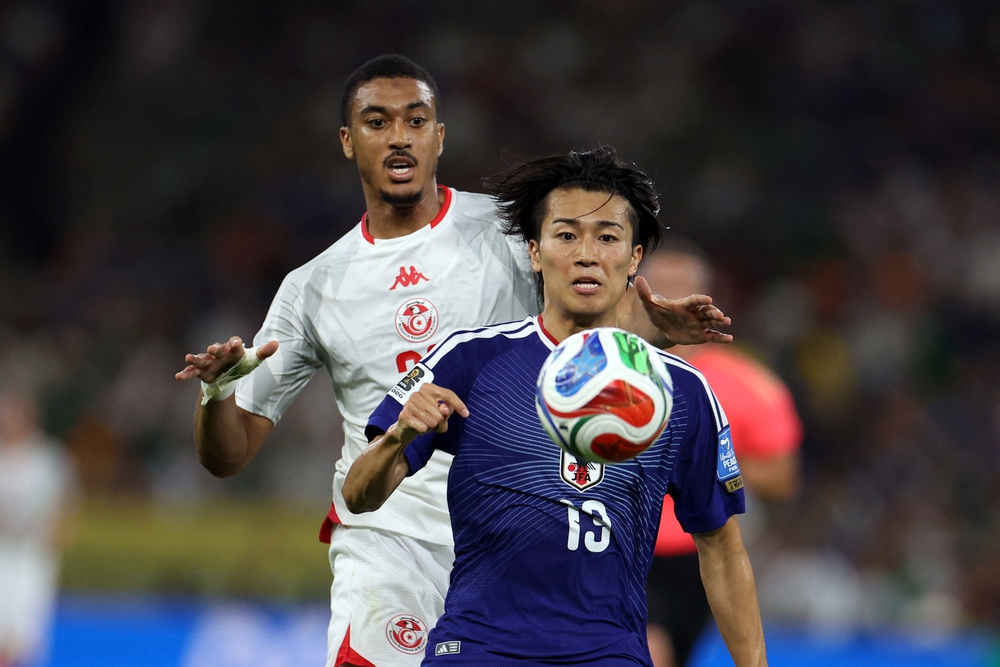
The Japanese national team (in dark shirts) is currently the best-performing Asian side at the 2026 World Cup. Photo: AFP/VNA
This system is not just on paper. The JFA integrates community clubs at the secondary school level into the national training network, ensuring that every child, regardless of initial ability, has access to consistent tactical education. When the talent pool is wide enough and training quality is uniform enough, player development becomes predictable, no longer left to chance.
The truth is that at one point, the Vietnam Football Federation (VFF) even passed a resolution to choose Japan as their 'teacher'. But now, with Japan so far ahead in the football world, the question is not 'can we do what they did?', but rather 'where are we starting from?'
To answer that question, a document similar to the JFA Declaration is needed—a long-term manifesto, not tied to anyone's term in office, not shaken by any single result in the ASEAN Cup or SEA Games. This is what has remained unchanged for over three decades, regardless of who sits in the Japan coach's seat: speed, happiness, system.
In theory, Vietnamese football still has strategies and visions spanning 10 to 30 years. But they share one common flaw: there has never been a summary of each phase or a review of previous strategies. Most evaluations still rely on the national team's results rather than taking a comprehensive view of the entire system.
Take the 2018-2021 period as an example: the national team reached great heights, but no one questioned why the number of professional clubs did not increase, the total number of matches in the system did not increase, and the competition formats for youth leagues remained unchanged. On a foundation that does not keep pace with the global professional model, how can there be a basis to believe that the national team's performance can reach new levels?
The biggest lesson from 'The Japan Way' does not lie in any tactical diagram. Japan did not try to become Brazil or Germany. They tried to become the best version of themselves. The 2026 World Cup is living proof of a 34-year plan progressing on schedule. In fact, the Japanese are even talking about winning the title this year. They are not dreaming. Simply because they have designed that ambition.


Wonderfulshortvideo

Leeds United demolish Newcastle at elland road


Throwback to this League Cup game between Liverpool and Spurs ⚽️⚽️
Lamine genius 🪄

raphinha assist today lamine yamal goal today brace today vs levante
Follow for more pokemon content! So what do I do with them now?…

arda guler assist today guler vs rayo vallecano mbappe goal today jude bellingham goal today

Cristiano Ronaldo and Al Nassr vs Al Khaleej
 Links
Links
 Contact
 App
App


