



Tennis is not just a European sport; every Asian capital deserves to host an ATP event.



Recently, one of the pioneers of Asian tennis and former Indian star Amritraj said in an interview: "I believe every Asian capital deserves to hold a tournament. This was true in the 70s and 80s. Hong Kong, Singapore, Manila, Bangkok, Tehran, Seoul, Osaka, and Tokyo all once hosted tournaments...Today, those events have disappeared! We need to hold tournaments in Asia, Africa, or South America. Tennis is not just a European game! We need ATP 250 events to ensure tennis remains a global sport." This tennis legend’s criticism highlights an awkward reality: ATP tours that once spread across Asia are quietly shrinking and concentrating in Europe.
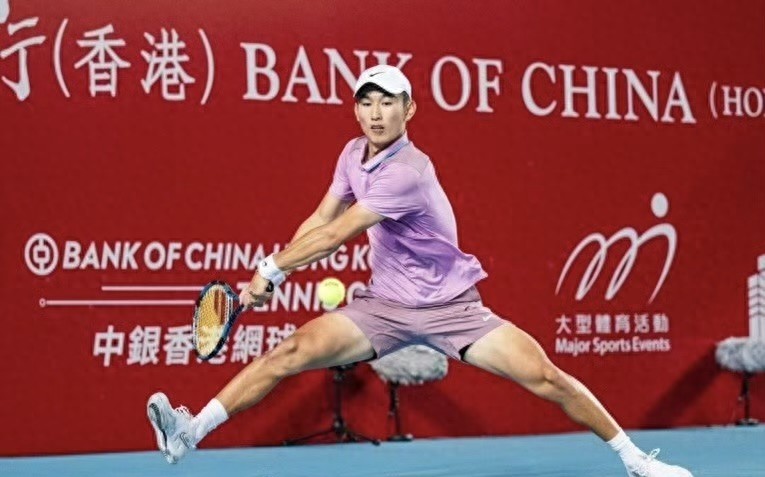
Amritraj’s memories are not unfounded. Looking back at the tennis calendars of the 70s and 80s reveals a vibrant global map: the dazzling nights of the Hong Kong Open, Singapore’s tropical charm, the unique courts in Bangkok, the Middle Eastern flair of the Tehran elite event, the oriental allure of the Seoul Open, and the cultural blend of Osaka and Tokyo tournaments. Tennis then truly had a spirit of global adventure, with players needing to travel the world extensively.
“There was a stop in Bogotá, and I also played in Caracas,” Amritraj recalls, sketching a map that has since vanished. South America’s passion for tennis has never faded—from Buenos Aires to Santiago, from São Paulo to Lima, fans filled the stands, cheering every thrilling rally. Yet today, most of these tournaments have disappeared from the ATP calendar, downgraded or replaced by European events.

Why has the ATP reduced 250-level tournaments? Economic considerations are undoubtedly the primary reason. Compared to Europe’s mature tennis market, events in Asia, South America, and Africa often face bigger commercial challenges: time zone impacts on broadcast revenue, limited sponsor investment, differences in audience purchasing power, and additional costs for players traveling long distances.
However, this purely economic calculation overlooks the ecological diversity necessary for the long-term development of a sport. For tennis to truly be global, it cannot rely solely on the Grand Slams’ worldwide broadcasts and a handful of superstar players. Local tournaments are the foundation for cultivating home audiences, inspiring youth interest, and building tennis culture. When children in a country can only watch tennis on TV but never experience matches live, it’s hard for the sport to take root there.

Amritraj’s call touches the essence of sporting spirit: inclusiveness and broad participation. Tennis needs a variety of venues, climates, altitudes, and atmospheres—from the highlands of Bogotá to the sea level of Bangkok, from humid Singapore to dry Tehran. This diversity not only tests players’ versatility but also enriches the appeal of tennis itself.
The idea that “every Asian capital deserves a tournament” is not unrealistic. Currently, Tokyo and Beijing host 500-level events, and Hong Kong holds a 250-level event, but many cities are excluded. Numerous Asian cities with large populations and economic growth potential are fully capable of supporting 250-level tournaments. The key lies in whether the ATP is willing to offer support to help these tournaments through their early development stages.

South America’s situation is particularly striking. This continent has produced clay court specialists like Kuerten, Del Potro, and Cuevas, with a deep tennis culture. Fans in Brazil and Argentina are as passionate as those in any European country. However, today there are very few ATP events in South America, forcing players to travel long distances to Europe to compete, which not only adds to their burden but also cuts off local fans from direct access to high-level tennis.
Africa’s situation is even more severe. Apart from a few events in North Africa, there is almost no ATP tour presence south of the Sahara. This means tennis talents across the continent must leave home to seek opportunities in Europe or North America, with many giving up halfway due to financial reasons.

The policy of reducing 250-level tournaments may stem from ATP’s desire to raise the overall quality of events. Indeed, some smaller tournaments suffer from organizational issues, insufficient prize money, and poor facilities. But the solution should not be simply cutting them; rather, more support should be provided to help these events improve.
The ATP could adopt a tiered support strategy: offering technical assistance, management guidance, and initial subsidies to tournaments in emerging markets; establishing regional tennis development funds; adjusting the calendar to reduce players’ long-distance travel burdens; and building long-term partnerships with local governments and sponsors.

When a sport thrives only in certain regions, its growth is inevitably limited. Tennis’s charm lies in its ability to cross languages, cultures, and borders, becoming a universal sporting language. But this universality needs to be nurtured through direct experience, not just through screens.
Amritraj’s appeal reminds us that the globalization of sports should not just be about commercial expansion but also cultural sharing. Every continent, every region, every city eager for tennis should have the chance to witness high-level matches on their own soil and nurture their own tennis heroes.

“There is room for everyone!” This is not only about the allocation of tournament slots but also a choice about the future face of tennis. When the ATP decides to reduce 250-level events, it is effectively choosing a more centralized, more commercialized but potentially more monotonous tennis future. The alternative—a more dispersed, diverse, and inclusive tennis world—is waiting to be rediscovered and rebuilt.
The allure of tennis lies in its diversity: different surfaces, climates, and cultural backgrounds shape playing styles. If all tournaments concentrate in just a few regions, this diversity will gradually vanish, turning tennis into a homogenized sport. Protecting smaller tournaments is protecting the richness and global appeal of tennis itself.

Perhaps now is the time to revisit the shrinking calendar and rethink tennis’s future. After all, the boundaries of tennis courts should not be defined by national borders on a map but by the limitless passion in the hearts of those who love the sport.(Source: Tennis Home, Author: Mei)

 Links
Links
 Contact
Address:UNIT 1804 SOUTH BANK TOWER, 55 UPPER GROUND,LONDON ENGLAND SE1 9E
Number:+85259695367
E-mali:[email protected]
 App
App


