



Djokovic’s strength begins with discipline.



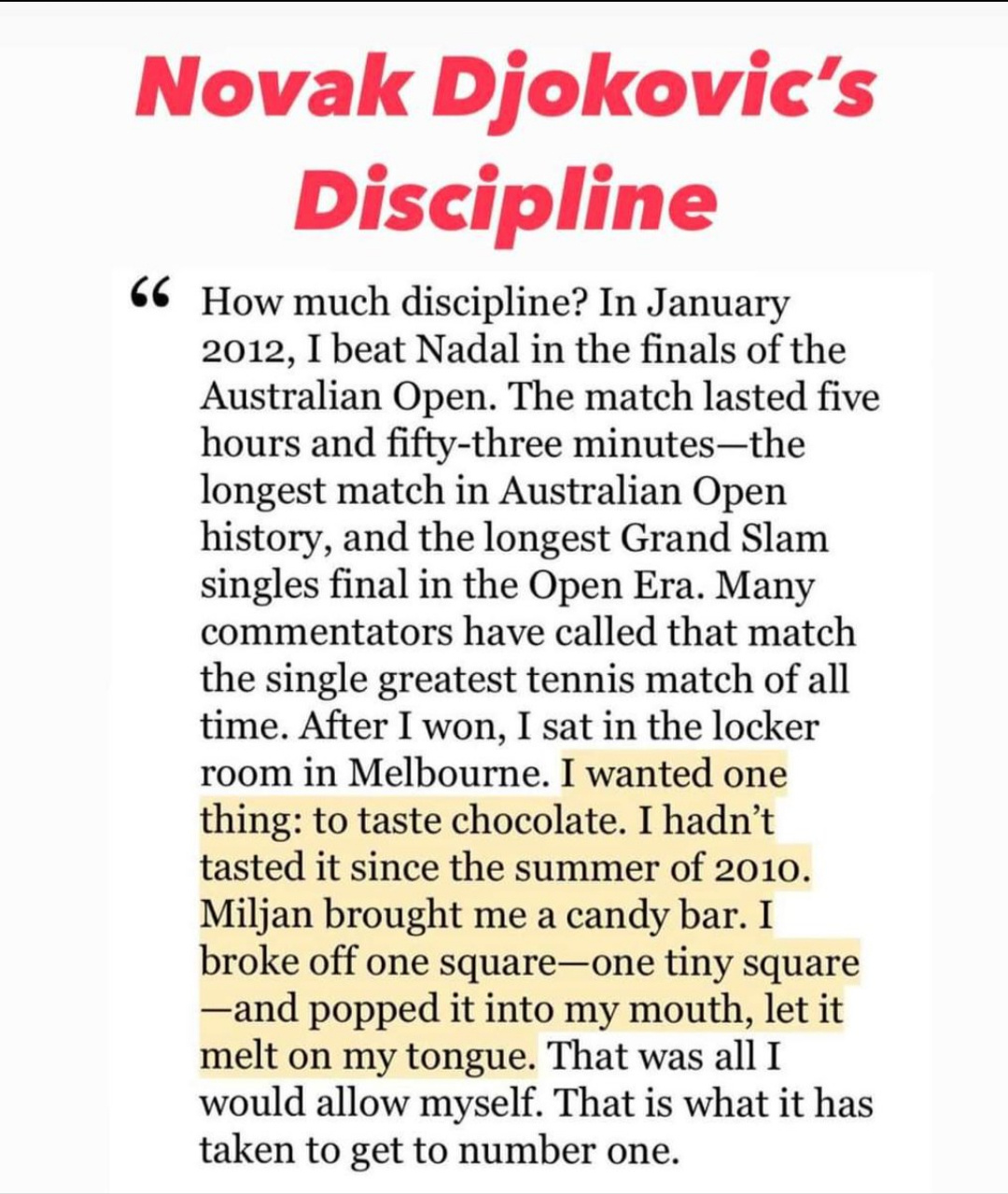
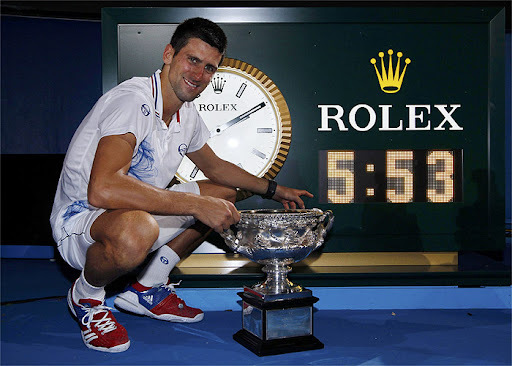
In January 2012, Djokovic overcame Nadal in the Australian Open final. The contest stretched nearly six hours, marking the longest match in the history of the Australian Open and the lengthiest Grand Slam singles final since the Open Era began. Numerous analysts have called it the greatest tennis match of all time.

After the match, both players were nearly unable to stand from exhaustion. Following such a grueling final, any form of self-reward would be understandable. Yet Djokovic reflected on that unforgettable match by saying, “After winning, I sat in the Melbourne locker room. I only wanted one thing: to taste some chocolate. Since the summer of 2010, I hadn’t eaten chocolate at all.”Milyan brought me a piece of chocolate. I broke off a tiny square, just a small bit, and placed it on my tongue, letting it slowly melt.
That was the entirety of what I allowed myself.
That was the price I paid to reach world number one.”
After claiming that historic Australian Open title, Djokovic’s way of celebrating became even more striking than the victory itself. It wasn’t a night of indulgence but a moment of extreme restraint. He rewarded himself with chocolate for the first time since 2010, but the portion was so minimal it was purely symbolic.
The essence of this story goes far beyond dietary control. It reveals a core trait of top athletes and peak performers in any field: discipline is not about asceticism but about conscious choice. It means deliberately and continuously forgoing immediate pleasures unrelated to a grand, clear goal.
Djokovic’s power lies in the internal order he established, with becoming the best as the absolute principle. Within this system, every choice is measured by one question: Does this help my long-term goal? When winning Grand Slams and staying number one become ingrained missions, countless small decisions—rejecting certain foods, insisting on extra rest, rigorously following training—stop feeling like painful sacrifices and instead become natural, even empowering actions. He is not battling desire but executing a higher priority directive.
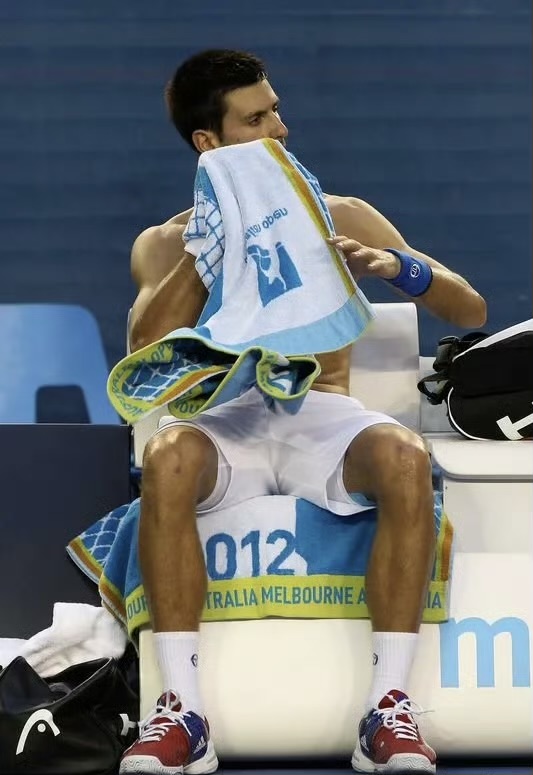
This discipline forges a formidable stability and resilience. Tennis matches are often decided by tiny margins, a test of physical, technical, and mental endurance. While opponents might take shortcuts or lose focus when tired, the person who has internalized discipline as habit can still reliably perform their tactics and mental routines under extreme pressure. His advantage is the compound effect of thousands of daily choices. That nearly six-hour final was the ultimate expression of this daily accumulation. His body and mind had been honed into a precise instrument built for moments like this.
Therefore, Djokovic’s discipline is admirable not for its form but for its purity of purpose and thorough execution. It teaches us that great achievements are never random bursts of inspiration but the careful crafting of a focused life. It is breaking down the answer to “What kind of person do I want to be?” into countless quiet, firm yes-or-no decisions every day and hour.

The small reward he gave himself after reaching the top is precisely the deepest symbol of this life philosophy: he was so used to delaying gratification that when the greatest reward finally came, he still enjoyed it with that same concise and astonishing restraint, serving his goal.
This is not sacrifice; it is choice. And countless choices like this ultimately define the texture of a champion and draw the invisible yet unbreakable line between excellence and mediocrity.(Source: Tennis Home, Author: Mei)

 Links
Links
 Contact
Address:UNIT 1804 SOUTH BANK TOWER, 55 UPPER GROUND,LONDON ENGLAND SE1 9E
Number:+85259695367
E-mali:[email protected]
 App
App


