



From Alcaraz to Osaka to Pegula: Why do they dismiss their veteran coaches at their peak?



Prior to this year's Australian Open, Alcaraz unexpectedly fired Ferrero, the distinguished coach who played a crucial role in securing six Grand Slam victories and the top world ranking for him.
This unusual move carries two key points: the timing is critical, as Alcaraz is at the height of his career, striving for a career Grand Slam; and the outcome is intriguing since Ferrero’s contribution was significant, making the decision seem somewhat like discarding a loyal helper after use.
More than a month has passed since the incident, and the reasons behind it have been thoroughly investigated, mainly revolving around issues such as salary disputes, personality and philosophy clashes, future goals, tennis academy competition, and daily coordination challenges.
Whatever the reasons, the public’s ultimate question remains — why do players fire their veteran coaches at the peak of their careers?
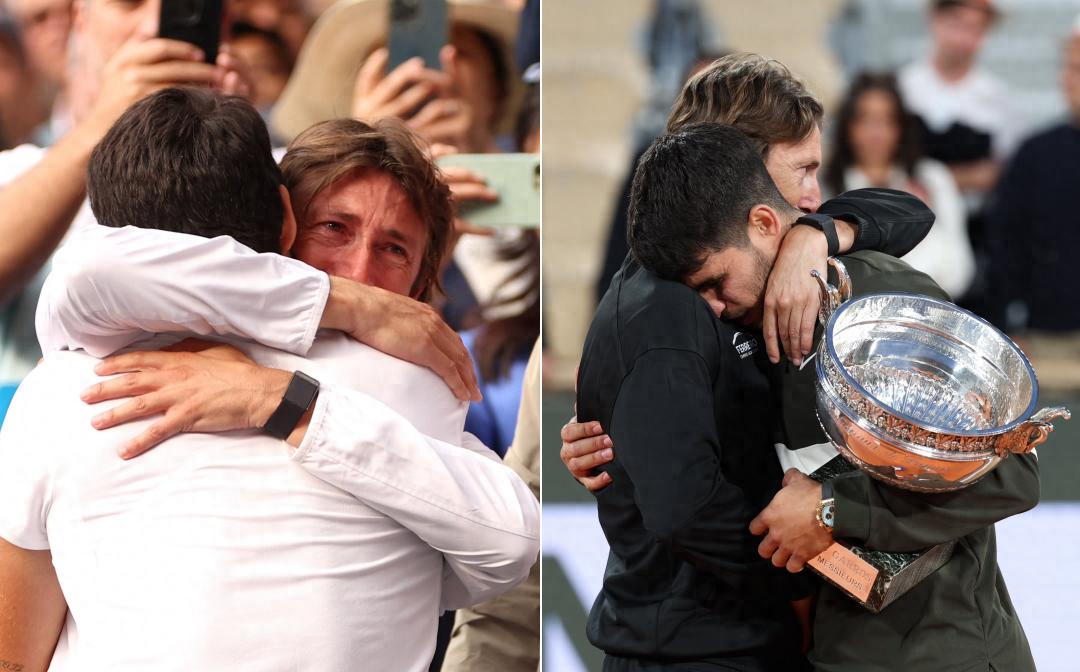
Recently, renowned tennis commentator Pete Bodo offered an interesting analysis and answer to this question. Let’s see how he views the situation.
Alcaraz, the current world No.1, who seems to be turning into a social media star, wrote online: "We have reached the summit, and I think if our sporting paths must part, it should start from there — from the place we have always worked hard for and longed to reach."
This statement is gracious, yet it still shocked commentators and left fans in tears and frustration. Ferrero was recently named ATP’s Coach of the Year for 2025. The development is astonishing, like a driver firing his team leader right after winning the biggest race of the year, or someone ending a pastoral honeymoon abruptly — one can only guess that during that time they were not truly in sync.
In a social media post, the abandoned coach responded: "This day is hard to find the right words for. Farewells are never easy, especially after sharing so many experiences together. We worked hard, grew together, and shared unforgettable moments."

This is also a dignified expression, but behind Ferrero’s elegant words lies a different emotion. After making routine predictions about Alcaraz’s future success, Ferrero couldn’t help but add: "I really wish I could continue."
Reading these sentences is truly heartbreaking.
Great tennis players today are celebrities. They do baffling things and carefully craft their words, reviewed repeatedly by agents and PR teams to ensure nothing slips. Social media lets players and their circles control their narratives. Fortunately, these are often transparent. Has any coaching relationship ended like a bad romance, without abundant mutual admiration and flattering gratitude? Don’t coaches get fired for demanding huge raises, failing to meet goals, clashing philosophies, chronic bad breath, or boundary violations?
Perhaps these displays of affection aren’t the worst thing. Without those filtered reports, sports might lose some of the magic fans crave and instead resemble mundane or even melodramatic real life. Fans eventually understand that no matter how harmonious the coach-player relationship is — some are truly beautiful — it is essentially a financial transaction, a contract of employment.
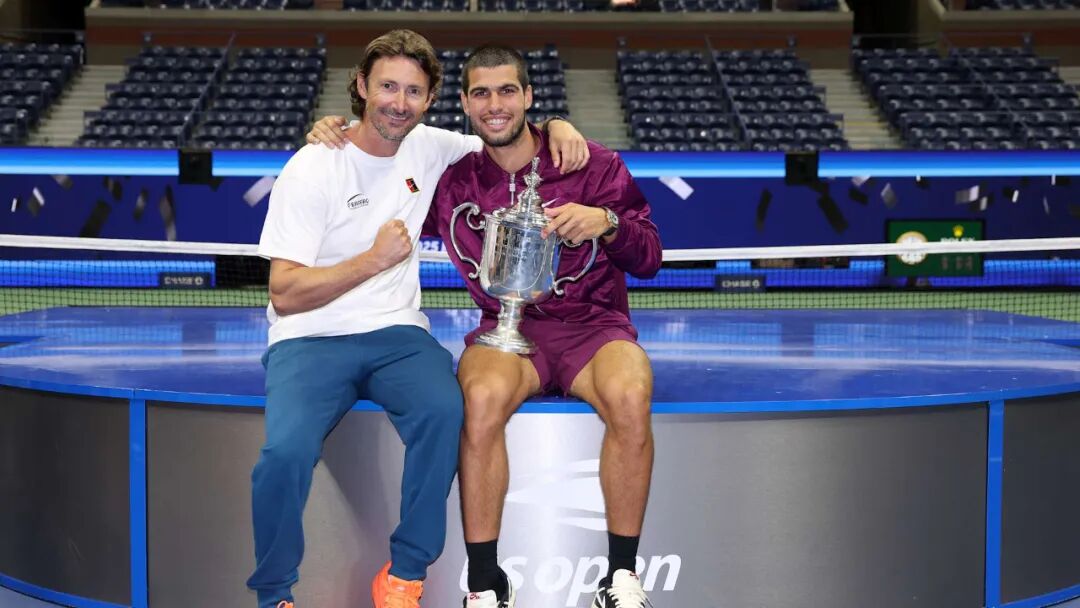
Ferrero won the French Open and, after retiring, ran a tennis academy in Spain. Over the past seven years, he coached Alcaraz’s professional career. Their partnership was facilitated by IMG agent Albert Molina, who discovered Alcaraz at age 11 and signed him. Coincidentally, Ferrero was also an IMG client, which brought the mentor and protégé together.
Of course, there are exceptions to these matchmaking and transactional processes. Rafael Nadal, the most decorated champion, was coached early in his career by family member and uncle Toni Nadal, unlike many other champions. Family-based relationships tend to last longer and are less arranged. Who could forget Marion Bartoli or Stefanos Tsitsipas ordering their fathers/coaches off the court — something rarely seen in more "professional" setups?
Over the years, Ferrero gradually became a father figure whose authority was legitimized by Alcaraz’s results. His presence was deemed necessary; without him, Alcaraz might lose the drive to train or — heaven forbid! — forget how to win matches. In their past collaboration, Alcaraz proved to be a highly motivated hard worker. Now, he may no longer need Ferrero nagging him to sleep by 10 p.m. Having matured, Alcaraz wants to take the driver’s seat, inevitably pushing Ferrero to the passenger or even back seat, a shift that will be awkward for both.
Additionally, coaches demanding excessively high bonuses might be a major reason for dismissal, a trend that has become common. Djokovic parted ways with Ivanisevic in early 2024 after six years together, during which he won 12 Grand Slam titles.
This trend is especially evident in the WTA. In 2019, just two weeks after winning the Australian Open, Naomi Osaka suddenly fired Sascha Bajin, who had been named WTA’s Coach of the Year in 2018 only weeks prior.
David Witt expressed his surprise when his pupil Jessica Pegula, whom he coached for five years and helped rise to world No.3, suddenly dismissed him in February 2024. Just days before the 2025 US Open, Coco Gauff fired Matt Daly after winning the 2025 French Open under his guidance. Taylor Townsend ended her partnership with John Williams after winning a Grand Slam doubles title and reaching No.1 in doubles that year.
In his farewell letter, Alcaraz wrote: "We started this journey when I was just a kid, and during this time, you accompanied me through an incredible journey both on and off the court. I have truly enjoyed every step we took together."
Over time, Alcaraz grew from a toddling child into a sports giant, surpassing Ferrero’s achievements, while Ferrero faces the easily forgotten reality — poetically put, holding hands is often meant to end in parting.
To put it simply in a common Chinese saying — all good things must come to an end.(Source: Tennis Home, Author: Yun Juan Yun Shu)

 Links
Links
 Contact
Address:UNIT 1804 SOUTH BANK TOWER, 55 UPPER GROUND,LONDON ENGLAND SE1 9E
Number:+85259695367
E-mali:[email protected]
 App
App


