



From "Innocent" to a Four-Year Ban: British Tennis Player Moore Sues WTA for $20 Million


By February 2026, over half a year had elapsed since Tara Moore received a four-year ban from the Court of Arbitration for Sport (CAS). The ex-top British doubles player, born in Hong Kong, refused to stay quiet and filed a $20 million claim against the Women's Tennis Association (WTA), blaming them for "neglecting their duties" which ruined her professional life. This case not only concerns an athlete's innocence but also exposes deep fractures within tennis’s anti-doping system regarding fairness, resources, and burden of proof.
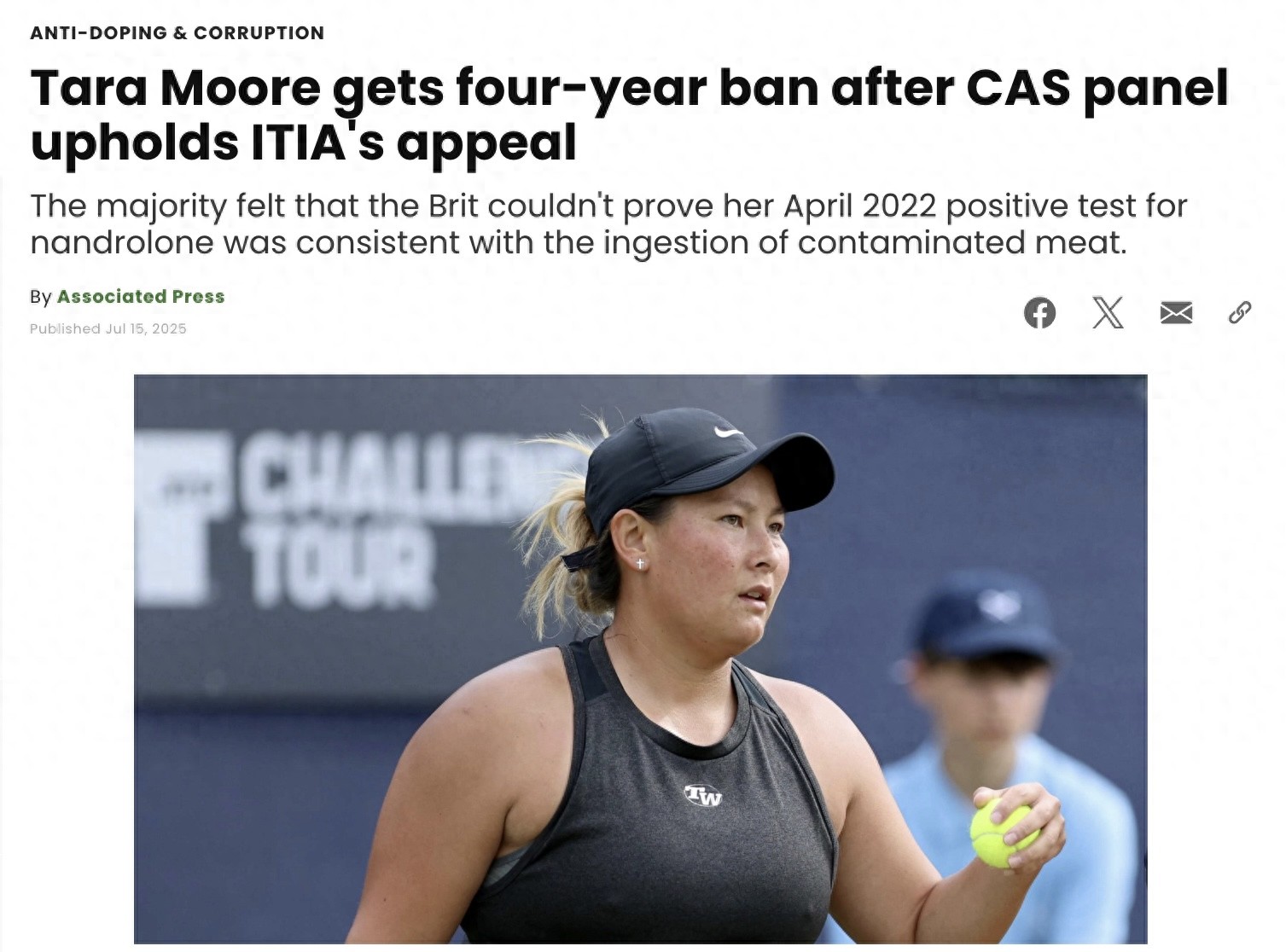
The incident began at the Bogotá tournament in Colombia in May 2022. Moore’s doping test revealed the presence of banned substances boldenone and nandrolone, leading to her provisional suspension. Moore consistently denied intentional doping, insisting that the positive result was caused by consuming contaminated meat locally.
In December 2023, an independent tribunal accepted her explanation, ruling that the positive test stemmed from contaminated meat, found no fault or negligence on Moore’s part, and lifted her suspension. This allowed her to return to competition in April 2024, even qualifying for Grand Slam events like Wimbledon and the US Open.
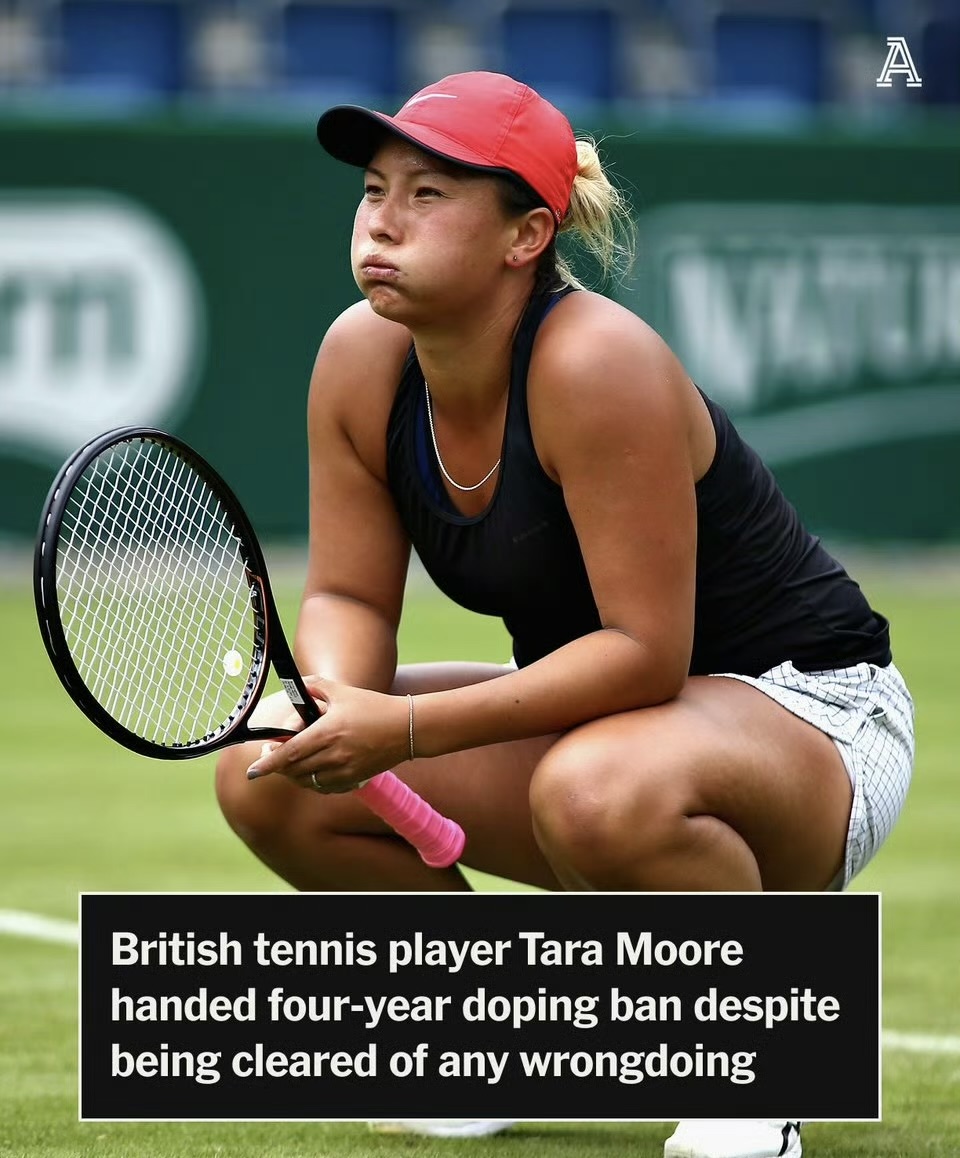
However, the International Tennis Integrity Agency (ITIA) appealed this decision. In July 2025, the Court of Arbitration for Sport issued a reversal: Moore was banned for four years. After deducting the 19 months of provisional suspension she had already served, she would not be eligible to compete again until 2028 at the earliest. CAS stated that Moore failed to prove the doping levels matched contamination from meat and could not demonstrate the violation was "unintentional."
Facing a ruling that nearly ended her career, Moore did not give up the fight. In February 2026, her legal team filed a lawsuit in the Southern District Court of New York, seeking $20 million in damages from the WTA.
Moore’s lawyer, Daniel Weiss, told the New York Post bluntly that Moore is a double victim: first due to the WTA’s negligence, and second because of a fundamentally flawed anti-doping system that presumed guilt without any evidence of wrongdoing.
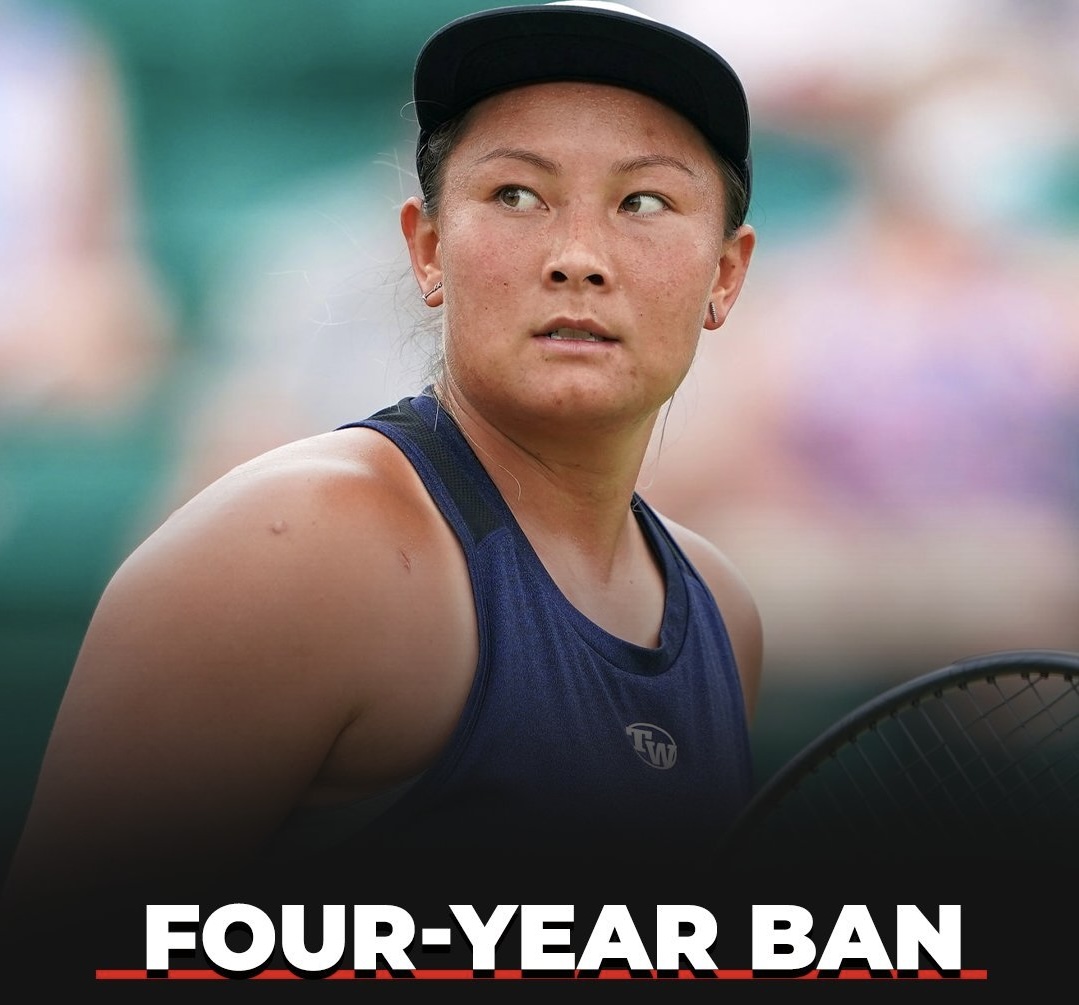
The lawsuit’s key argument centers on a "lack of warning." Moore’s team pointed out that one month before her positive test in April 2022, male player Robert Farah also tested positive in Colombia due to meat contamination. While the WTA had issued warnings about meat contamination risks at other tour stops, no such alert was given for the Bogotá event. Her attorneys argue that had the WTA fulfilled its duty to warn as elsewhere, Moore’s misfortune might have been avoided.
During the CAS hearing, Moore submitted evidence showing that among 21 players tested at the event, three initially tested positive for boldenone (later reduced to two by CAS). Such a substance, with a global occurrence of only 0.03%, appearing clustered at one venue should have raised strong concerns about environmental risk. However, the CAS panel ruled this did not impose a duty on ITIA or WTA to issue a warning.
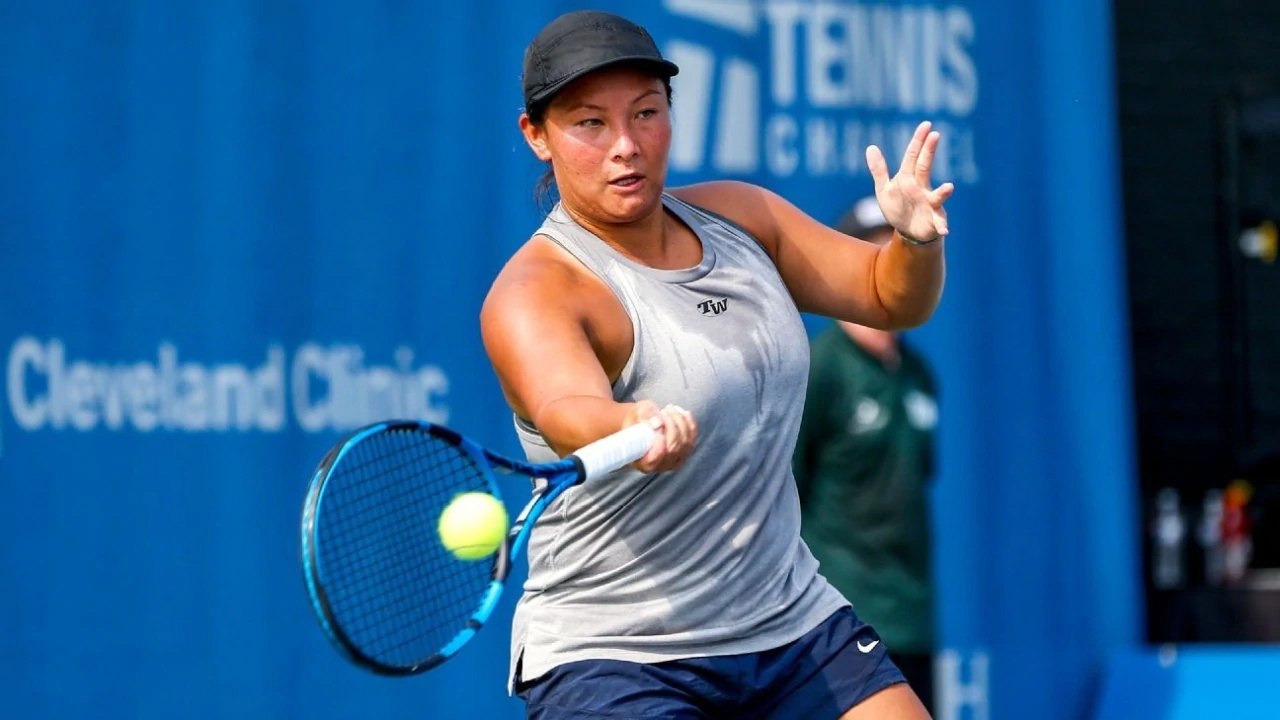
The Moore case caused a major uproar not only because of the fluctuating rulings but also due to the stark contrast with other recent high-profile doping cases.
In 2024, former world number ones Jannik Sinner and Iga Swiatek both tested positive, but their outcomes differed greatly. Swiatek, with her team’s rapid submission of lab reports proving contamination from melatonin supplements, was banned for only one month. Sinner successfully argued contamination from a physiotherapist’s finger wound, resulting in a three-month ban. In contrast, despite multiple players testing positive at the same event, Moore received the maximum penalty due to insufficient evidence.
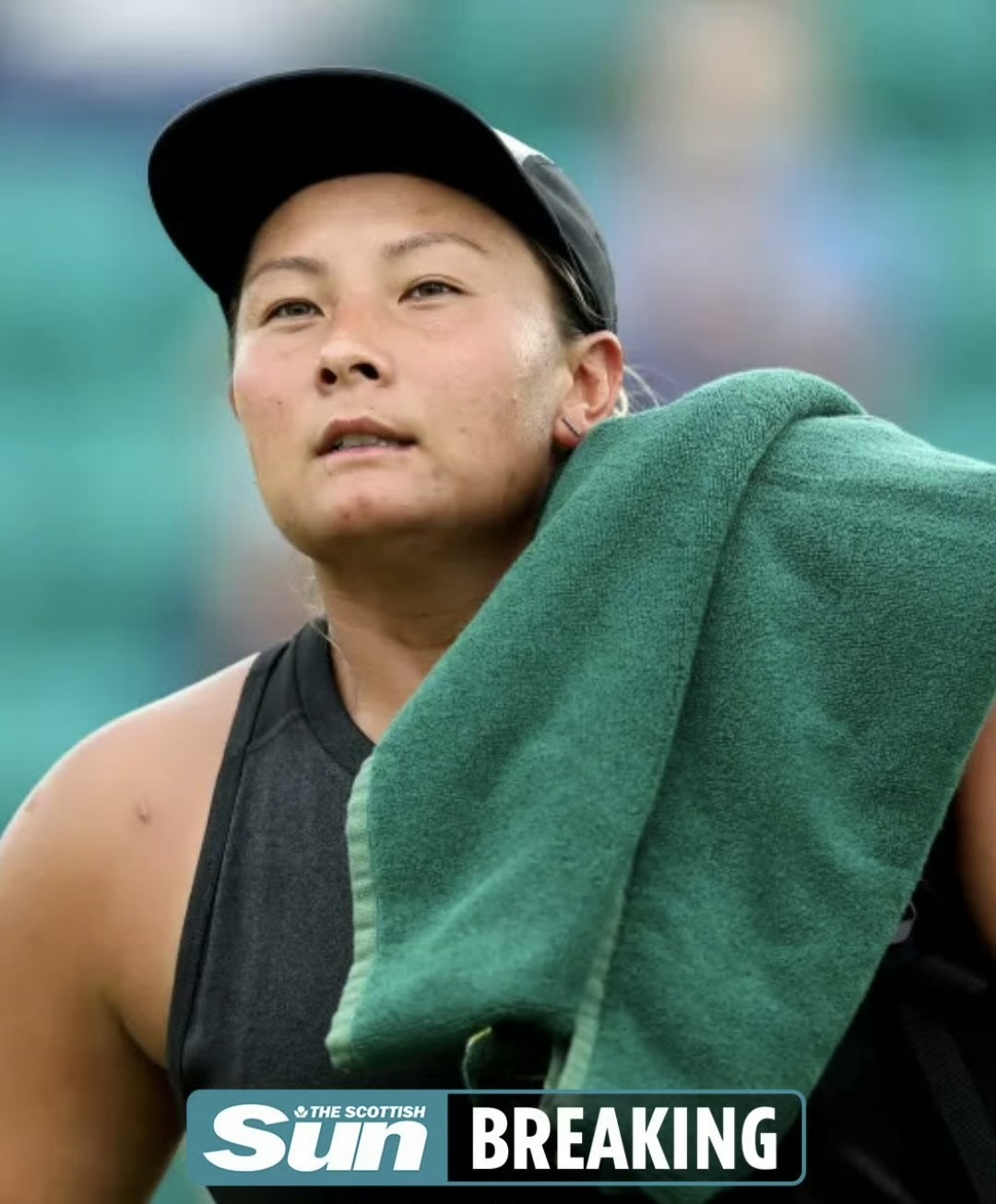
German player Eva Lys questioned the core issue: "What happens to players who accidentally consume contaminated meat in South America? Why didn’t Tara Moore receive the same one-month suspension?" Moore has incurred hundreds of thousands of pounds in legal and testing fees, while Swiatek earned $9.85 million in prize money in 2023 alone, enabling her to afford top legal defense. As Novak Djokovic remarked, "When a player can pay huge legal fees, the quality of their defense inevitably differs."The inequality of resources is translating into inequality in verdicts.
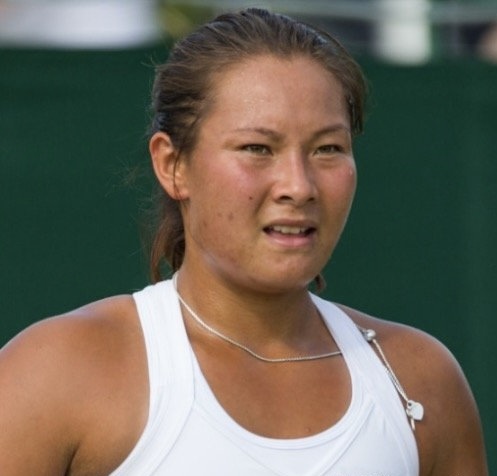
For the 32-year-old Moore, a four-year ban effectively means the end of her career. Once Britain’s top doubles player, she was a marginal figure in the glamorous tennis world with little influence. Now, she pins her hopes on the court case to prove she is not only a victim of anti-doping rules but also of administrative negligence.
The WTA responded, stating: "The arbitration was conducted by neutral arbitrators, and there is no reason to overturn the decision." Regardless of the outcome of this lawsuit, the Moore case leaves an unsettling question: when anti-doping justice varies based on a player’s financial power, is the system truly defending fairness or merely privileging the powerful?(Source: Tennis Home, Author: Mei)

 Links
Links
 Contact
Address:UNIT 1804 SOUTH BANK TOWER, 55 UPPER GROUND,LONDON ENGLAND SE1 9E
Number:+85259695367
E-mali:[email protected]
 App
App


