



Austin Open Pioneers "Rage Room" for Players, Sabalenka Faces Online Criticism Over Alleged Refusal to Wear Rainbow Wristband



This week, two off-court news stories closely related to players have sparked distinctly different discussions in the tennis world. On one side, the WTA250 Austin Open innovatively introduced a "Rage Room" for players to privately vent emotions, earning widespread praise; on the other side, world No. 1 Aryna Sabalenka, though absent from the entire Middle East season, has been caught in a whirlwind of controversy on international social media over rumors about "refusing to wear a rainbow wristband."
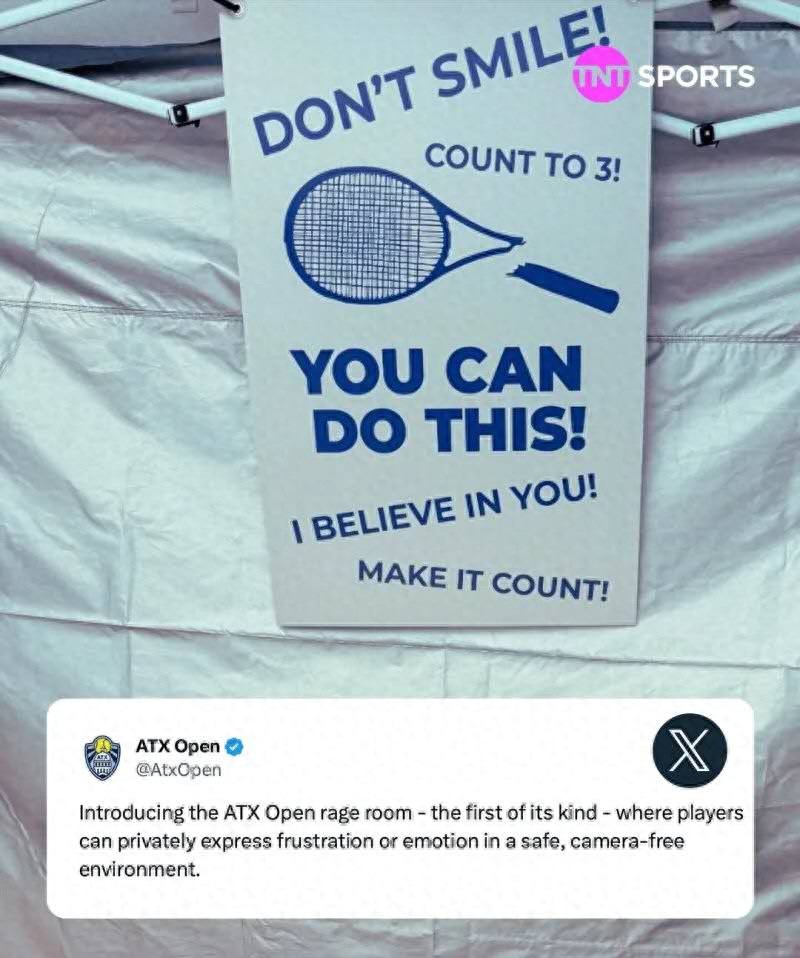
The ongoing WTA250 Austin Open has set up an unprecedented facility this year—the "Rage Room." Tournament officials announced that this special room will allow players to safely release frustration and negative emotions in a "completely confidential, camera-free" environment.
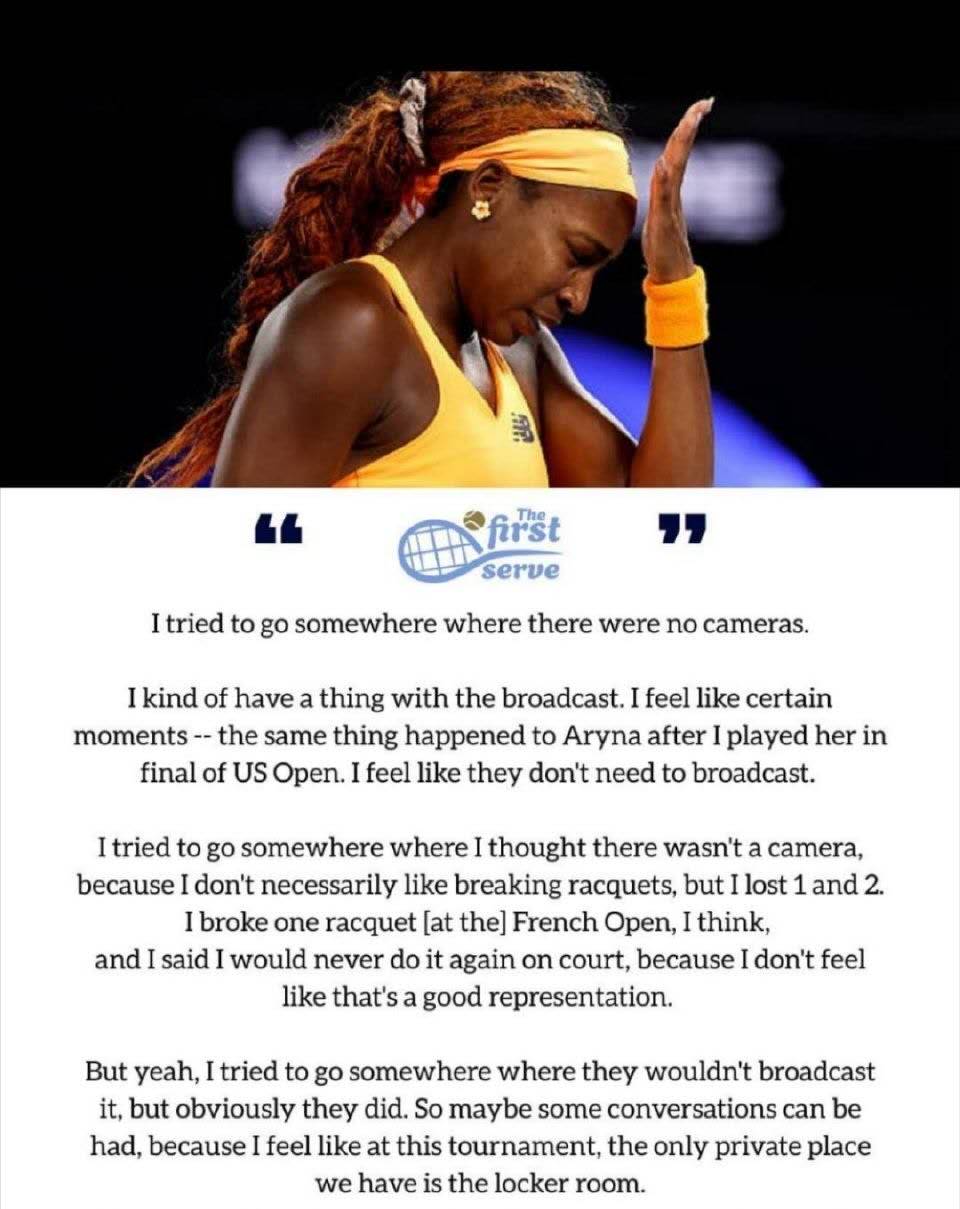
The direct catalyst for this initiative came from an incident at last month's Australian Open. At that time, American star Coco Gauff, after a surprising quarterfinal loss, barely contained her anger and smashed her racket in the player tunnel—a moment captured and broadcast by tournament cameras, triggering widespread debate about player privacy. Many tennis stars, including Iga Świątek and Novak Djokovic, have publicly called for respecting players' off-court personal space and freedom from intrusion.
The Austin Open's "Rage Room" is a proactive response to such appeals. Photos from the site show walls adorned with motivational and reassuring slogans such as "Don't laugh," "Count to three," and "I believe in you," even featuring an image of a broken racket. Tournament organizers posted on social media: "Proudly introducing the Austin Women's Open Rage Room, where players can privately express frustration or negative emotions in a safe, camera-free environment."
Similarly, the concurrent ATP Dubai tournament this week also arranged a "Smash Room" truck for fans. Chinese rising star Jerry Shang shared after trying it: "I smashed some things. It was loud and the atmosphere was quite intense, but it felt good. You can let all your emotions out there instead of carrying that frustration onto the court."
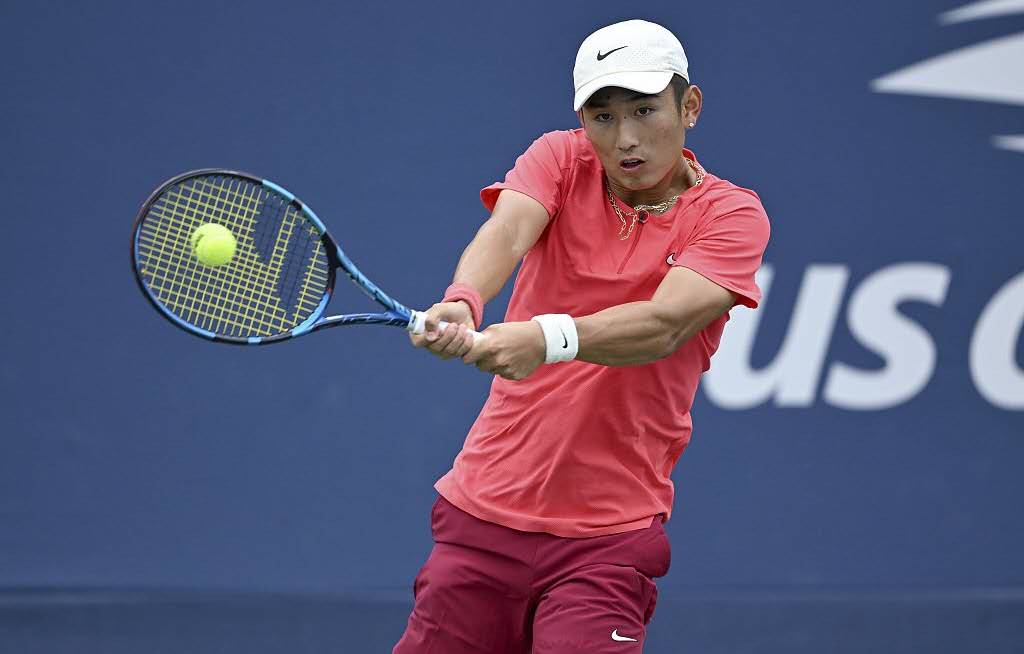
Just as the tennis world applauded the warmth and creativity of the "Rage Room," world No. 1 Aryna Sabalenka, who did not participate in the Middle East season, found herself unexpectedly targeted on social media.
Recently, a post spread widely on international social media. The poster claimed that Aryna Sabalenka had "refused to wear the LGBT rainbow wristband in future season matches," accompanied by strong wording stating her position: "Tennis should focus on matches, competition, and victory, not serve as a platform for political or ideological propaganda."
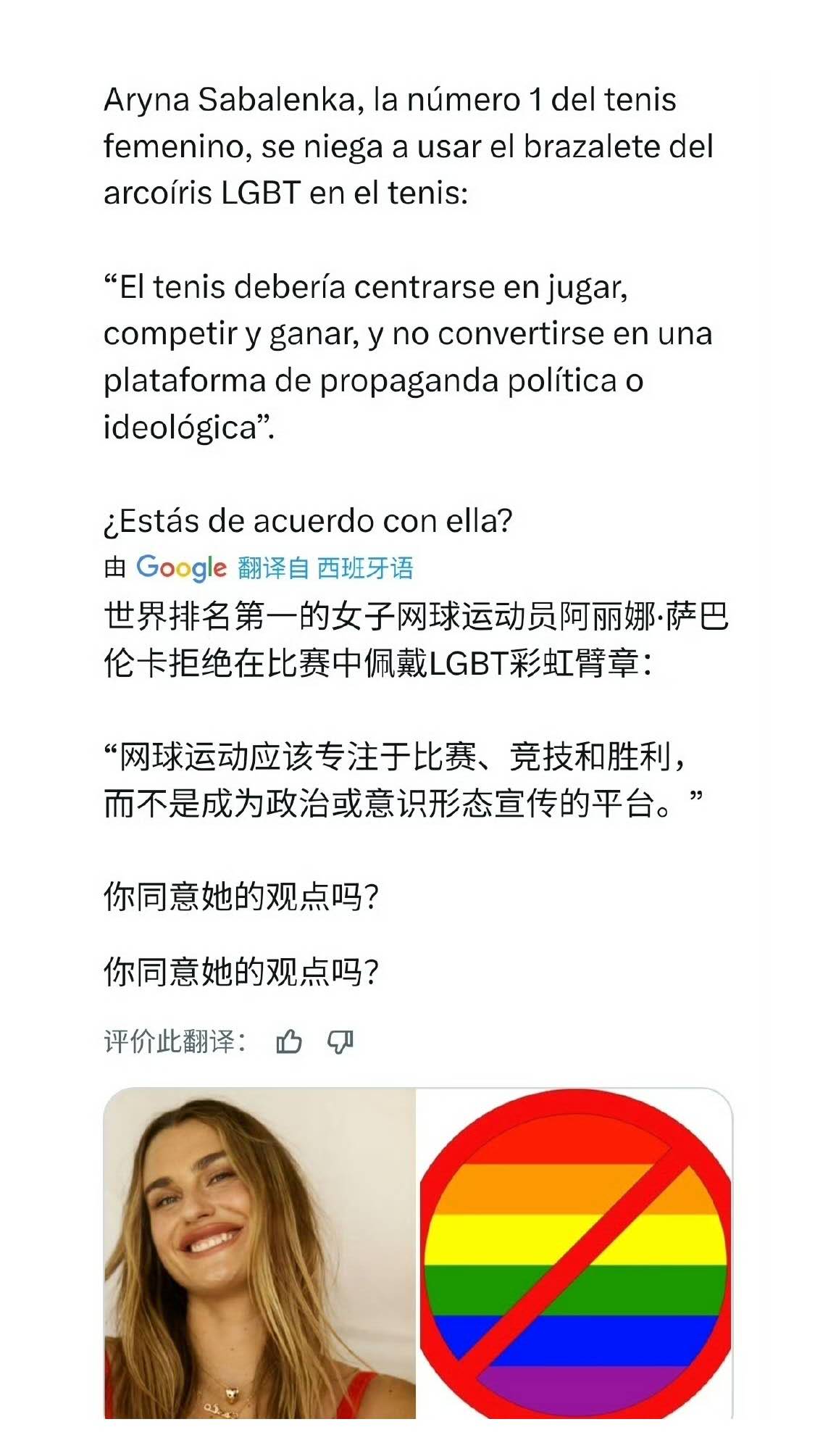
This news quickly gained traction, with public opinion splitting sharply. Supporters viewed her as "brave for expressing a personal stance in the face of 'political correctness,'" while critics accused her of "lacking inclusivity and failing her social responsibility as world No. 1."
However, the authenticity of this news has been questioned from the start. Observant netizens noted that Sabalenka has been on a break since her Australian Open victory, withdrawing from both the WTA1000 tournaments in Doha and Dubai, and has not attended any public events or made such "strong statements." Her personal social media accounts have also never posted related content.
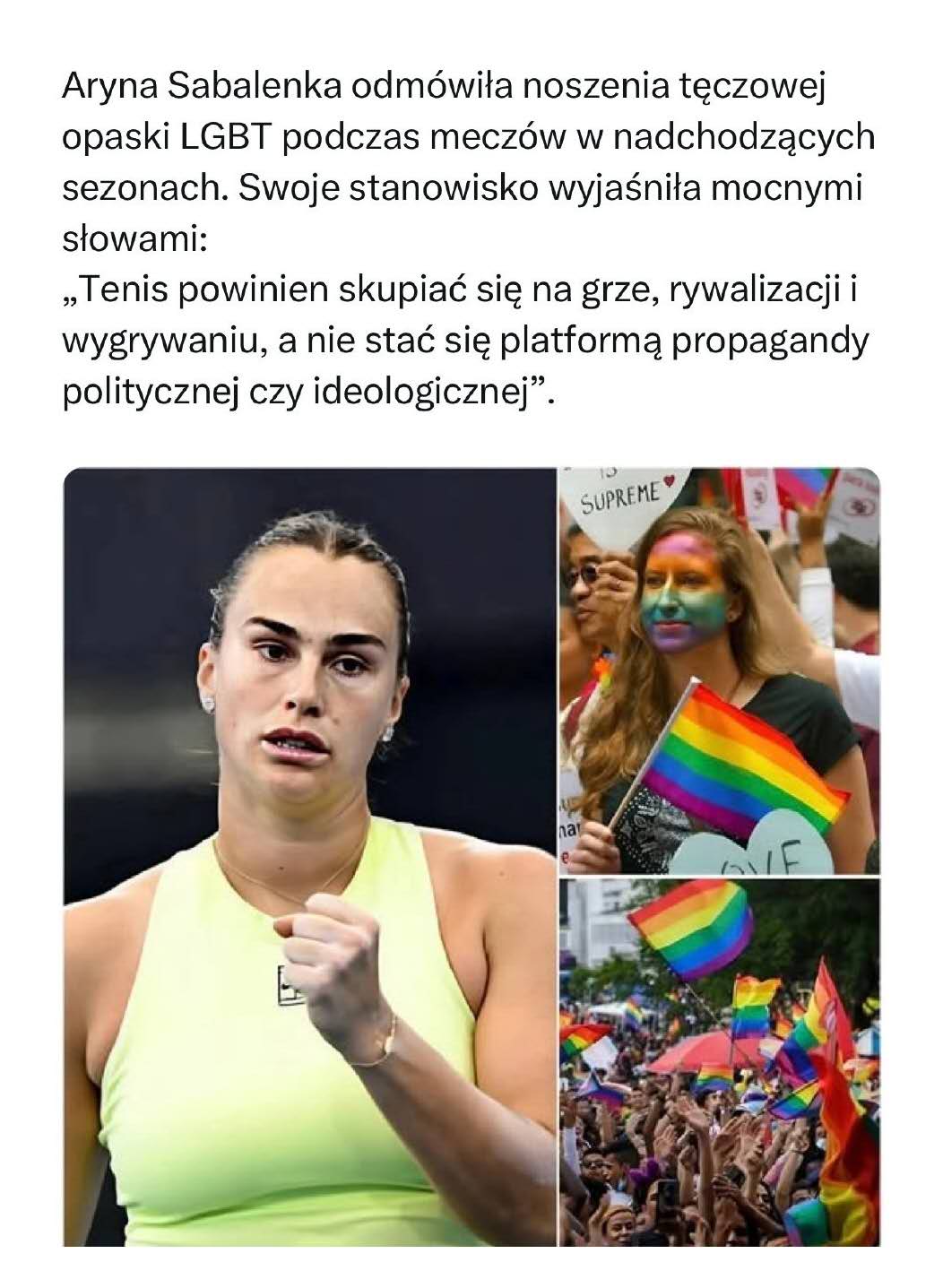
This is not the first time a top tennis player has been "ventriloquized" on such controversial topics. International social media seems keen on using athletes' names to stir ideological debates, with Serbian star Novak Djokovic having been a previous target. Many users commented on the posts: "Fake news again? I've seen this script before," "They'll make up anything for clicks," "Sabalenka is minding her own business at home, and drama falls from the sky."
Some fans joked helplessly: "Sitting quietly at home, drama falls from the sky—such is the burden of fame for top players." More rational voices pointed out: "If she really wanted to express a stance, she would do so in a press conference, not through an anonymous forum post."
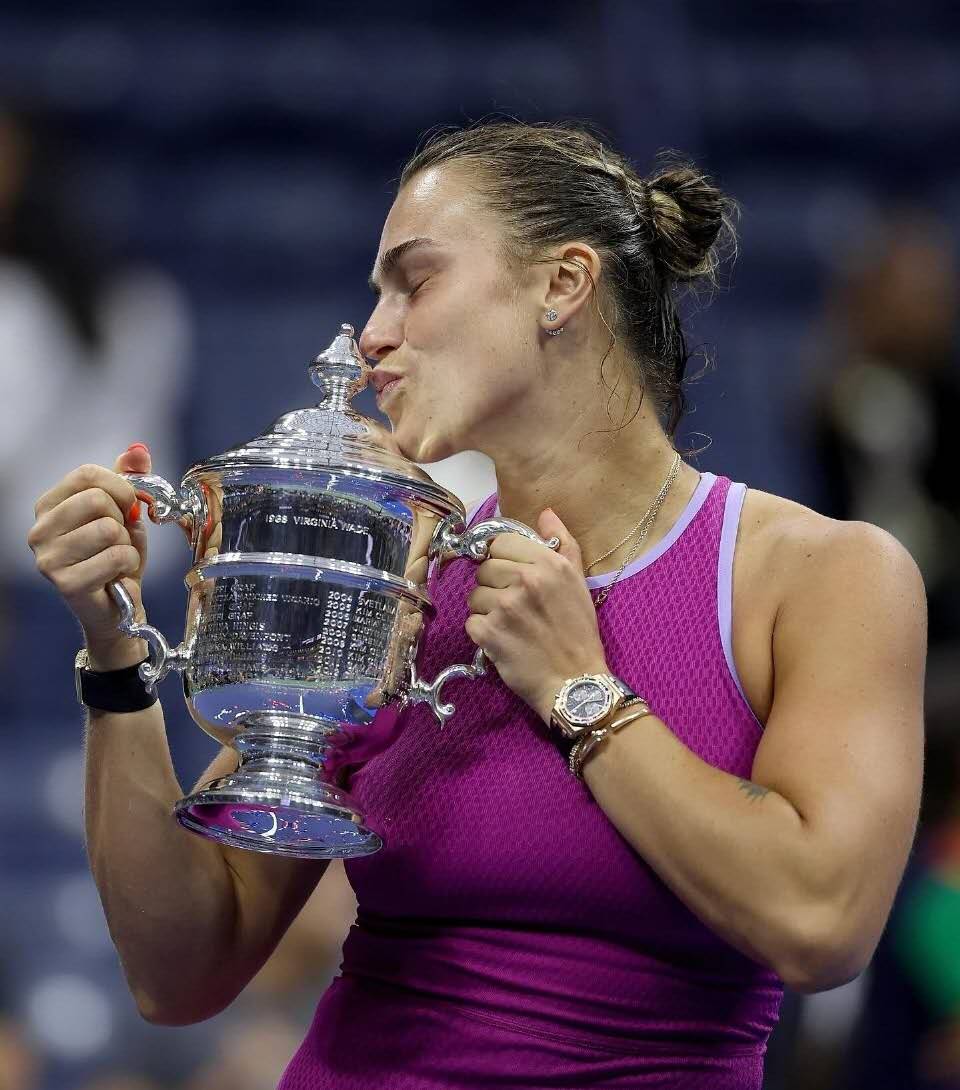
Indeed, both the Austin Open's "Rage Room" and the "rainbow wristband" controversy surrounding Sabalenka highlight the off-court realities of professional players.
The former represents the tournament's proactive care for players' mental health and respect for their basic human emotions. Following the Gauff racket-smashing incident, public opinion largely agreed that players under high-pressure match conditions should be allowed moments of "imperfection." The creation of the "Rage Room" is precisely a dual safeguard for players' privacy and their right to emotional release.
The latter reveals how, in the age of social media, athletes can be swept into unrelated舆论 storms at any time. A statement never made, a position never taken—just a screenshot and some text can ignite an online frenzy or trial.
As of now, Sabalenka and her team have not responded to the rumors. For most rational fans, rather than trusting an unverified anonymous leak, they prefer to look forward to the world No. 1's return to the court in the upcoming North American Sunshine Double—that is the true focus of tennis.(Source: Tennis Home Author: Lu Xiaotian)

 Links
Links
 Contact
Address:UNIT 1804 SOUTH BANK TOWER, 55 UPPER GROUND,LONDON ENGLAND SE1 9E
Number:+85259695367
E-mali:[email protected]
 App
App


