



Medvedev: Dense Schedule Isn't the Issue; Ranking System Forces Players to Chase Points



The former world No. 1, seeded third at the ATP 500 Dubai tournament this week, progressed to the semifinals by ousting Shang Juncheng, Stan Wawrinka, and Mackenzie McDonald. He is set to battle top seed Felix Auger-Aliassime for a place in the championship match. Post-match, Medvedev elaborated on issues including the ATP calendar and the burnout experienced by elite players, presenting his vision when questioned about possible remedies.
“From what I understand, I think players would agree to increase the number of mandatory tournaments. Currently it's about nine, including the four Grand Slams. We could add a few more and then cancel all the other events—that's the only way to shorten the tour schedule.” He referenced Danish star Holger Rune's unexpected injury in Stockholm last year, which led many to question why the then-world No. 11 was playing three consecutive ATP 250 events. “Everyone said, ‘You don't have to play those,’ but if he wanted to qualify for the Turin Finals, he had to go, even if they weren't mandatory,” Medvedev stated.
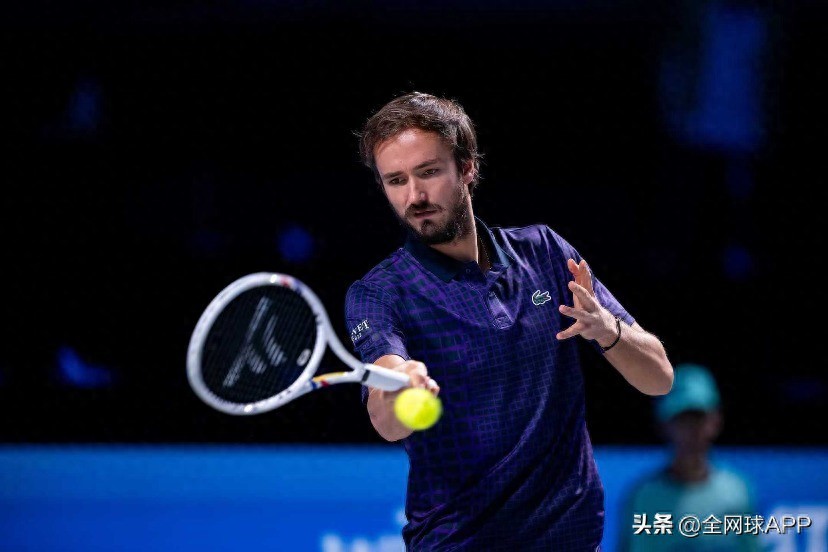
Photo of Daniil Medvedev
He believes the problem of player burnout lies not in a packed schedule, but in the ATP's relentless ranking system and the race for ATP Finals qualification. In his view, the solution is not to compress the calendar or shorten the season (a call made in recent years by many top players including Carlos Alcaraz and Iga Świątek). Instead, Medvedev envisions a “streamlined tour”: top players competing in the same events during the same weeks. This structure would prevent players from “point-hunting” at lower-level 250 and 500 tournaments to boost their rankings, thereby reducing pressure across the entire tour.
“My idea is to keep just the four Grand Slams and the 11 Masters 1000 events, nothing more. Other tournaments could have no points or something similar—not exhibitions, but without ranking points.” The current ATP tour system includes 16 ATP 500 and 30 ATP 250 events. Tournament organizers have strong commercial incentives to avoid their events being downgraded to “exhibition-like” status, and the ATP Tour cannot buy back already sold tournament licenses. Medvedev admitted, “Tournaments won't step back voluntarily because they would lose money; it's a business. Given the current state of the ATP Tour, I don't think this system will ever change, at least not while I'm playing.”
The ATP ranking is determined by the sum of points from up to 18 tournaments. For top players, this includes the four Grand Slams, eight mandatory ATP 1000 Masters events, and six “other best results”—which can come from the United Cup, Monte-Carlo, ATP 500s, ATP 250s, Challengers, or ITF events. The ATP Finals points are added separately to the year-end ranking. The WTA ranking calculation is similar, comprising seven WTA 1000 events and seven “other best results.” However, WTA Top 10 players face restrictions on the number of WTA 250 events they can enter per year, typically a maximum of two (up to three). They are generally barred from playing WTA 125 events, and points from WTA 125 and ITF tournaments do not count toward WTA Finals qualification—restrictions that do not exist on the ATP tour.
In Medvedev's opinion, removing or reducing points from smaller events could bring meaningful change. “Last year I played seven tournaments in a row; I had to. I started the year in poor form, thinking I'd get 100 points here, 200 points there, so my seeding would be better next year. If those events had no points, at least the decision-making would be easier. But this likely won't happen.”
(Text/Editor: Dato, Photo: Visual China Group)

 Links
Links
 Contact
Address:UNIT 1804 SOUTH BANK TOWER, 55 UPPER GROUND,LONDON ENGLAND SE1 9E
Number:+85259695367
E-mali:[email protected]
 App
App


