



Vietnamese Tennis: The 'Giant' That Is Its Own Worst Enemy



The sound of a ball bouncing on a hard court was once the melody of sporting sophistication and aspirational ambition in Vietnam. But for the past two years, that melody has been drowned out by the dry, repetitive "clack-clack" of plastic balls. Pickleball is not merely a trend; it is a harsh test for Vietnamese tennis, which, in the form of an aging giant, is making things difficult for itself and is consequently failing this exam.
Looking back at history, Vietnamese tennis has had its brilliant chapters. Lý Hoàng Nam was once a successful "anomaly," a solitary peak reaching international stature, planting in fans' hearts the belief that a winning formula had been found in a sport where Vietnamese athletes do not have many physical advantages. The presence of four Southeast Asian players in the main draw of the Australian Open this past January is proof of the region's potential.
But let's be clear: Hoàng Nam is the result of individual effort and isolated investment, not the product of a systematic talent production line. As that peak begins to show signs of fatigue, the vast, desolate void behind it is exposed, barren and lacking vitality.
At the 33rd SEA Games, the team came away empty-handed, without a single medal—a result within expectations. Lý Hoàng Nam, who won the historic men's singles gold in 2019 and successfully defended it in 2022, along with Trịnh Linh Giang, Trương Vinh Hiển, Trần Phương Anh… have successively switched from tennis to pickleball. Many tennis courts have been converted for the new, more profitable sport, attracting even young athletes.
Tennis remains a popular sport in Vietnam. Following Lý Hoàng Nam's success, there was public expectation that the sport would explode. In terms of development potential, tennis still leads as a sport with both depth and breadth, thanks to its established training system and long history.
However, operations still seem to follow an outdated model: low prize money, a lack of stable sponsorship, vague reward mechanisms, failing to motivate professional athletes. While pickleball offers attractive income from advertising, sponsors, and Asian tours (like the PPA Tour)… tennis falls short if these criteria are used for comparison.
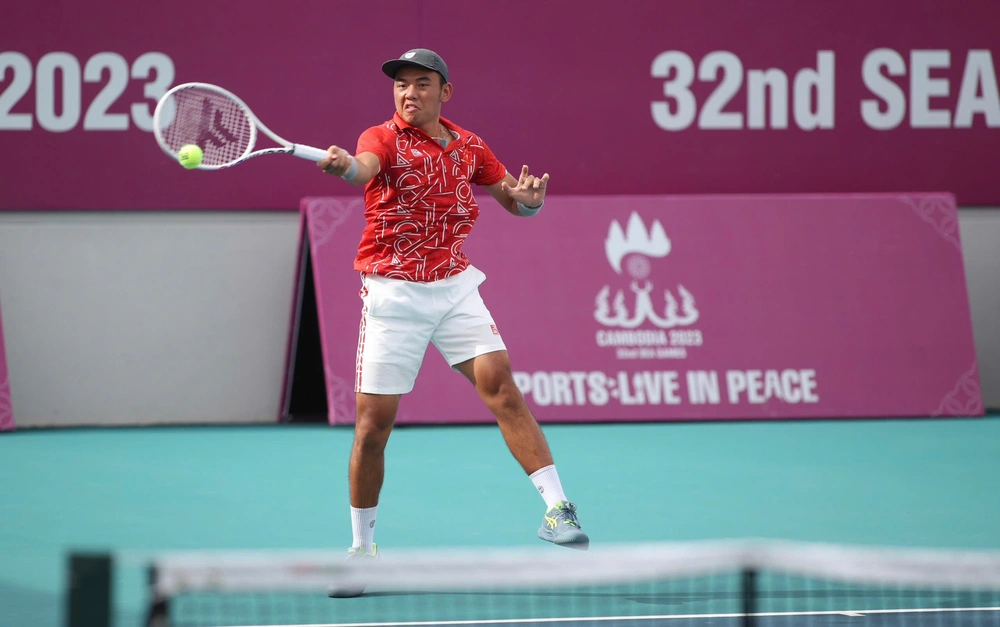
After Lý Hoàng Nam, Vietnamese tennis has not produced another male player of similar caliber. Photo: Hoàng Linh
The rise of pickleball over the past two years is like a strange wind fanning the embers that have been smoldering within tennis itself. Don't blame pickleball for "stealing" players or talent.
The bitter truth is far harsher: Vietnamese tennis is pushing its own children to the other side of the net. Pickleball opens a new "promised land" with lower costs and faster opportunities to earn money from coaching and advertising.
Calling it a "migration" for benefit is perhaps not wrong. When a sport cannot sustain those who pursue it, the fault lies not with those who leave, but with the system that failed to generate surplus value.
Vietnamese tennis is making things difficult for itself by clinging to old thinking, lacking systematic tournaments, and lacking strong connections between youth training and professional pathways. More importantly, its efforts to attract players through promotion and marketing are just an outdated version.
Recent efforts by the Vietnam Tennis Federation (VTF) to "build a foundation for the future" or the challenges of "renewing itself" mentioned in the media are positive signals worth noting.
Not everything is gloomy. The VTF has begun to awaken: The National Outstanding Players Tournament returns in 2025 after a 6-year hiatus with a prize fund of 500 million VND. In 2026, the VTF plans to organize 22 international tournaments (4 ATP Challenger 50, 4 ITF, and a series of U14-U18 junior events). The domestic tournament system is also being expanded, combined with socialization to support young athletes.
The problem lies within us. If we do not quickly renew the mechanisms, increase prizes, expand sponsorship cooperation, and create long-term pathways for athletes, Vietnamese tennis will push itself to the margins.
If the strategy remains limited to amateur tournaments or short-term training camps, it will only be superficial cuts on the "tip of the iceberg" of deeper issues. Hopefully, the pressure from pickleball will provoke a sense of pride in tennis stakeholders, compelling them to change.

 Links
Links
 Contact
Address:UNIT 1804 SOUTH BANK TOWER, 55 UPPER GROUND,LONDON ENGLAND SE1 9E
Number:+85259695367
E-mali:[email protected]
 App
App


