



Zhou Yi and Sun Fajing's 40,000 yuan departure fee issue finds a solution, Zheng Qinwen first responds to unfollowing Pere Riba


While the ATP's demand for 5,000 euros per player for a UAE charter flight stirred controversy, the PTPA's timely intervention brought a sigh of relief for trapped players including Zhou Yi and Sun Fajing.
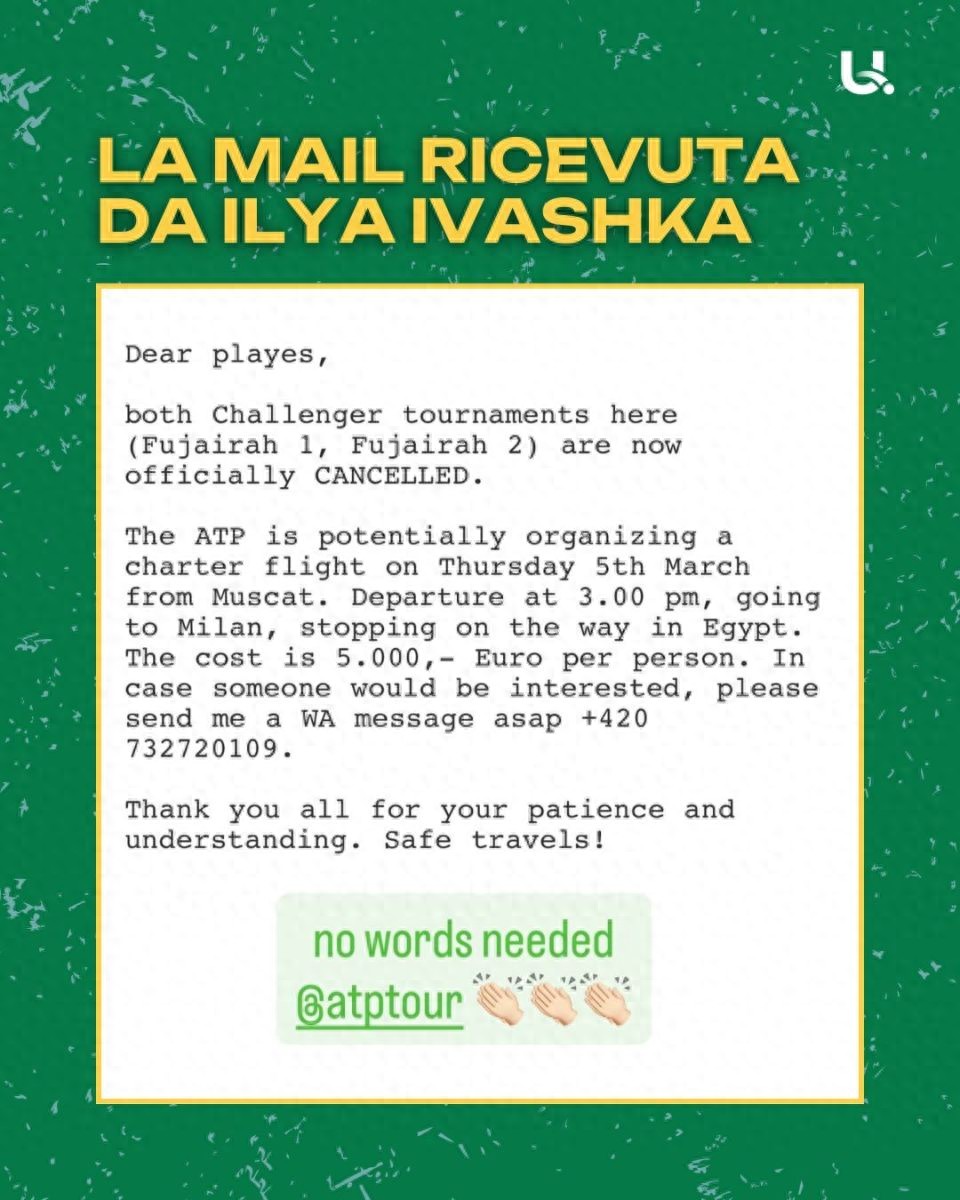
Foreign media previously reported that after the unexpected cancellation of the Fujairah Challenger, the ATP arranged a charter flight from Muscat, stopping in Egypt en route to Milan, to ensure the safe departure of players and their entourages from the Middle East.
Just as everyone was applauding the ATP's considerate move, an unexpected revelation from a participating player quickly shifted the narrative away from its positive momentum.
According to the player's social media post, each player was required to pay 5,000 euros (over 40,000 RMB) for departure; accompanying personnel would need to pay an additional 5,000 euros each.
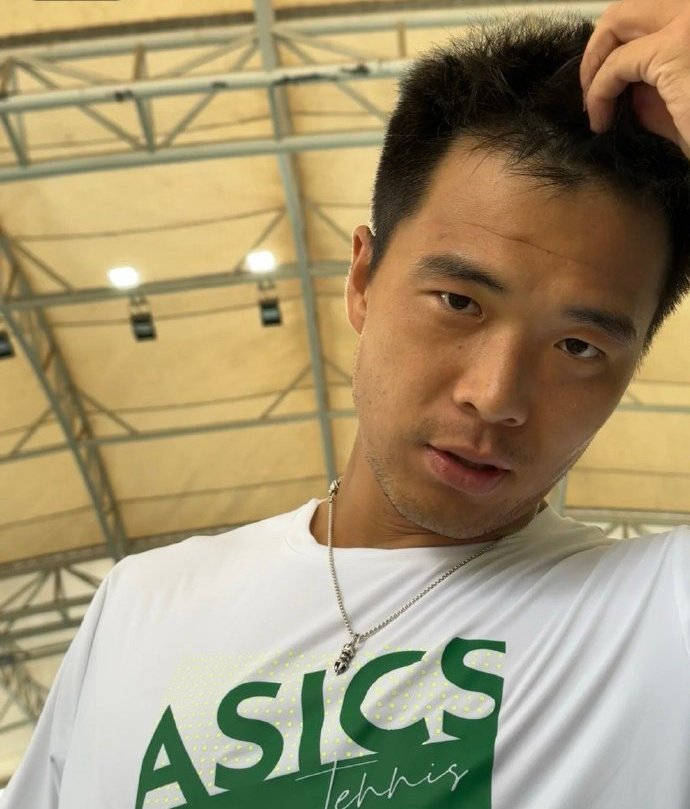
This revelation was like a boulder dropped into a calm lake, instantly triggering a significant wave of public reaction.
Many players objected to this payment, primarily feeling that after traveling far to compete, facing a sudden tournament cancellation was unfortunate enough without earning prize money, and being burdened with a substantial departure fee added considerable pressure.
External opinion on the matter can be summarized simply: all costs should be borne solely by the ATP, and players should not be saddled with this financial burden.
The reasoning is that the Fujairah Challenger champion's prize is 9,500 euros, with the runner-up receiving only 5,000 euros. Since the first round wasn't completed, making players pay is clearly inappropriate. If the ATP were too poor to cover the costs, sharing the burden might be understandable. However, the ATP profits handsomely from events annually; covering this expense in a special circumstance would hardly make a dent, so why not do it?
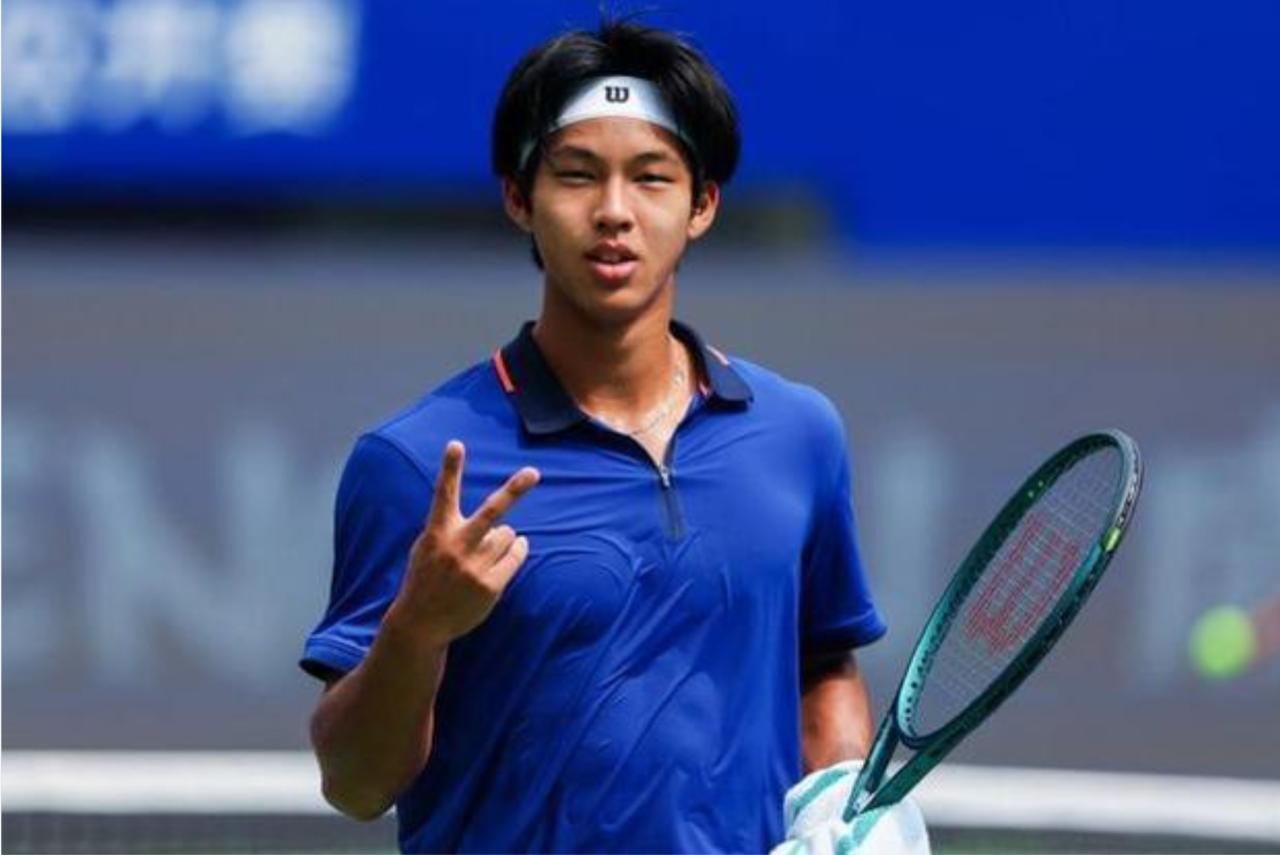
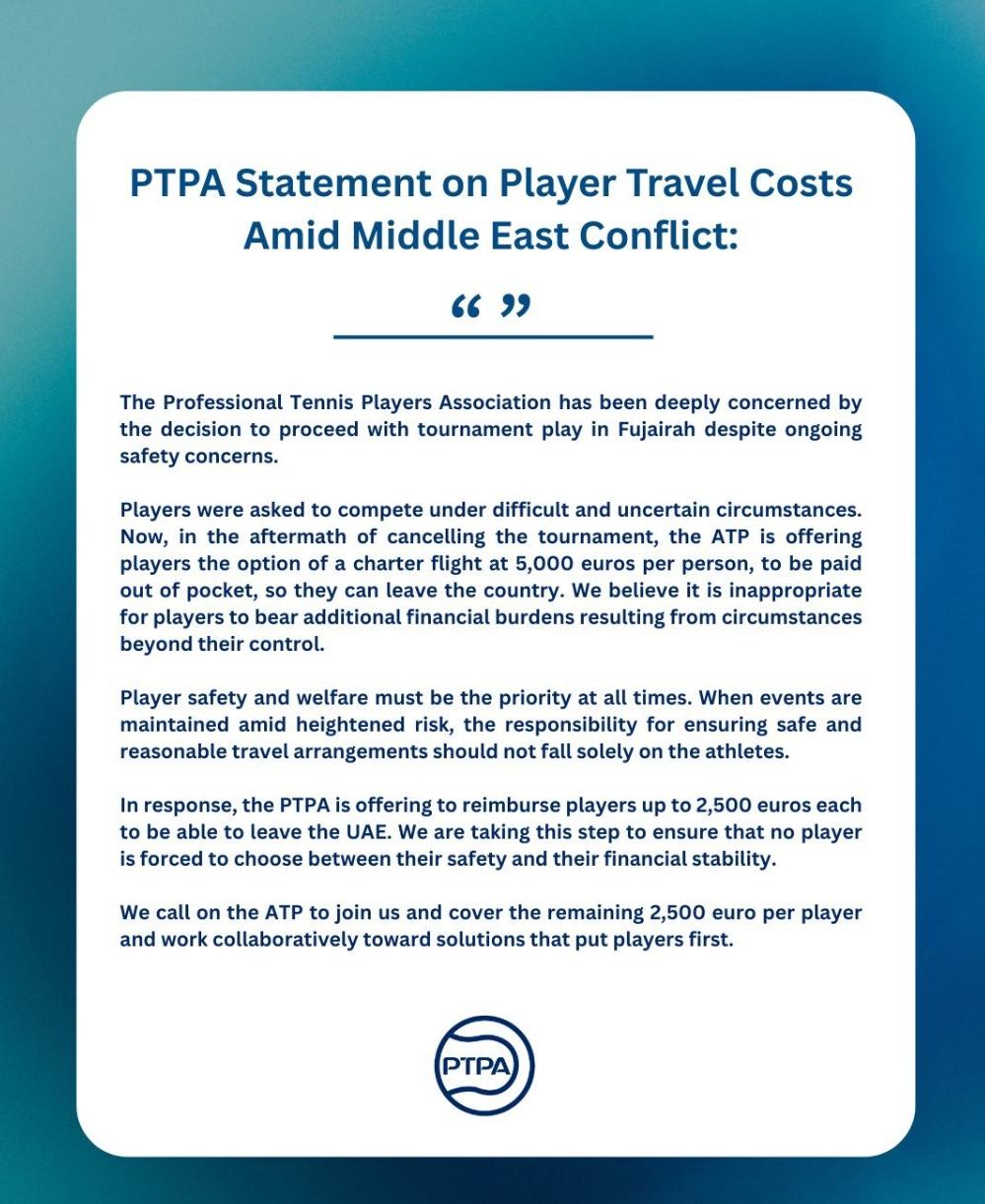
As this issue gained traction online, with heated debates over the fairness of charging players 5,000 euros, the PTPA's immediate statement was met with widespread approval.
In its statement, the PTPA emphasized "strong opposition to imposing additional financial burdens on players beyond their control," clearly stating that individual player payment was unreasonable. It proposed a solution: the PTPA would cover 2,500 euros per person, with the ATP responsible for the remainder.
Many praised the PTPA's solution as the best way to truly help the stranded players, avoiding making them 'sweat and bleed' at a critical time. Most Challenger-level players are not financially well-off, and adding to their hardship during such a period is unnecessary.
Some even stated bluntly that with the PTPA taking a stand and offering to cover half the departure costs for everyone, the ATP should now respond decisively. If the wealthy ATP is unwilling to cover the remaining half, "upon reflection, it is somewhat disheartening."
Whether the ATP will agree to the PTPA's proposal or generously cover all costs to demonstrate greater goodwill is something the tennis world is awaiting further news on.
Additionally, regarding Zheng Qinwen unfollowing her accomplished coach Pere Riba, China's top female player addressed the matter directly for the first time at Indian Wells.
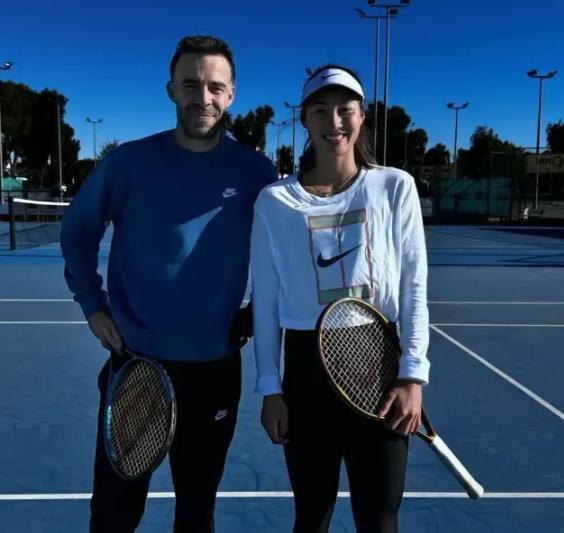
During Indian Wells media day, when asked about this sensitive topic, Zheng stated directly that the unfollowing was accidental—a slip of the hand—and not an indication, as widely speculated, that her partnership with Pere Riba had ended.
Zheng also clarified that her collaboration with Baghdatis is temporary, and Pere Riba remains her coach, "He is just taking a temporary break from the team for a period of time."
This implies that Pere Riba is currently on leave for personal reasons, necessitating a temporary replacement.
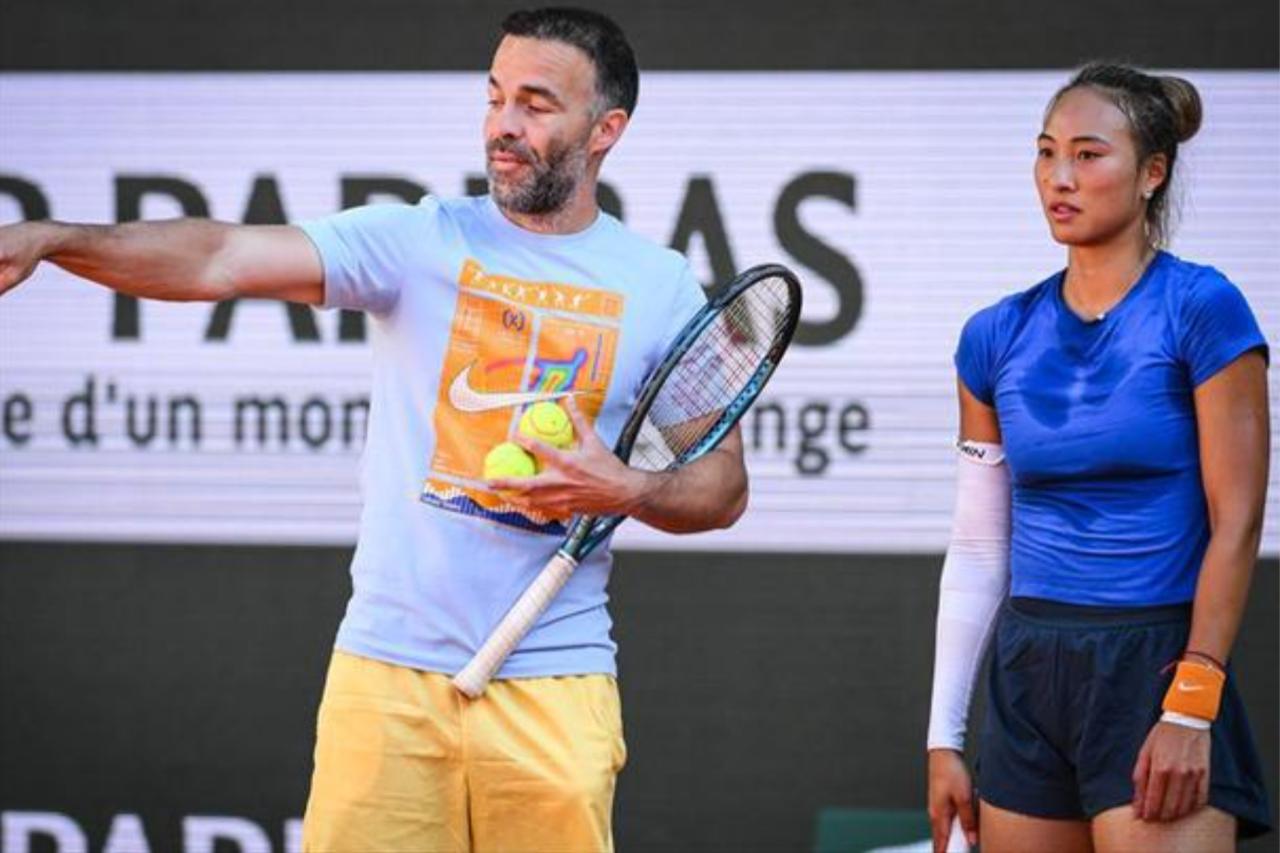
The public finds Zheng's explanation reasonable partly because similar situations have occurred before.
At the 2025 Australian Open, Pere Riba was unable to accompany Zheng due to required surgery, forcing him to take leave. Bertini then served as Zheng's interim coach until Pere Riba's return, after which the temporary arrangement ended.
Since this is not the first time such a situation has arisen, and with Pere Riba again needing to leave the team, it is entirely understandable that Zheng, eager to improve her ranking, would seek a temporary coaching partnership.

After media reports clarified this, it also shed light on another detail: why Pere Riba continued to follow Zheng on social media after she unfollowed him. Clearly, it wasn't one-sided persistence. If Zheng had truly dismissed him from the team, a proud man like Pere Riba would likely have unfollowed her as well, to avoid the perception of clinging on after being let go—no man would tolerate such speculation, as dignity matters.(Source: Tennis Home, Author: Moon River's Starry Sky)

 Links
Links
 Contact
Address:UNIT 1804 SOUTH BANK TOWER, 55 UPPER GROUND,LONDON ENGLAND SE1 9E
Number:+85259695367
E-mali:[email protected]
 App
App


